🔊*New Research* @BMJMentalHealth
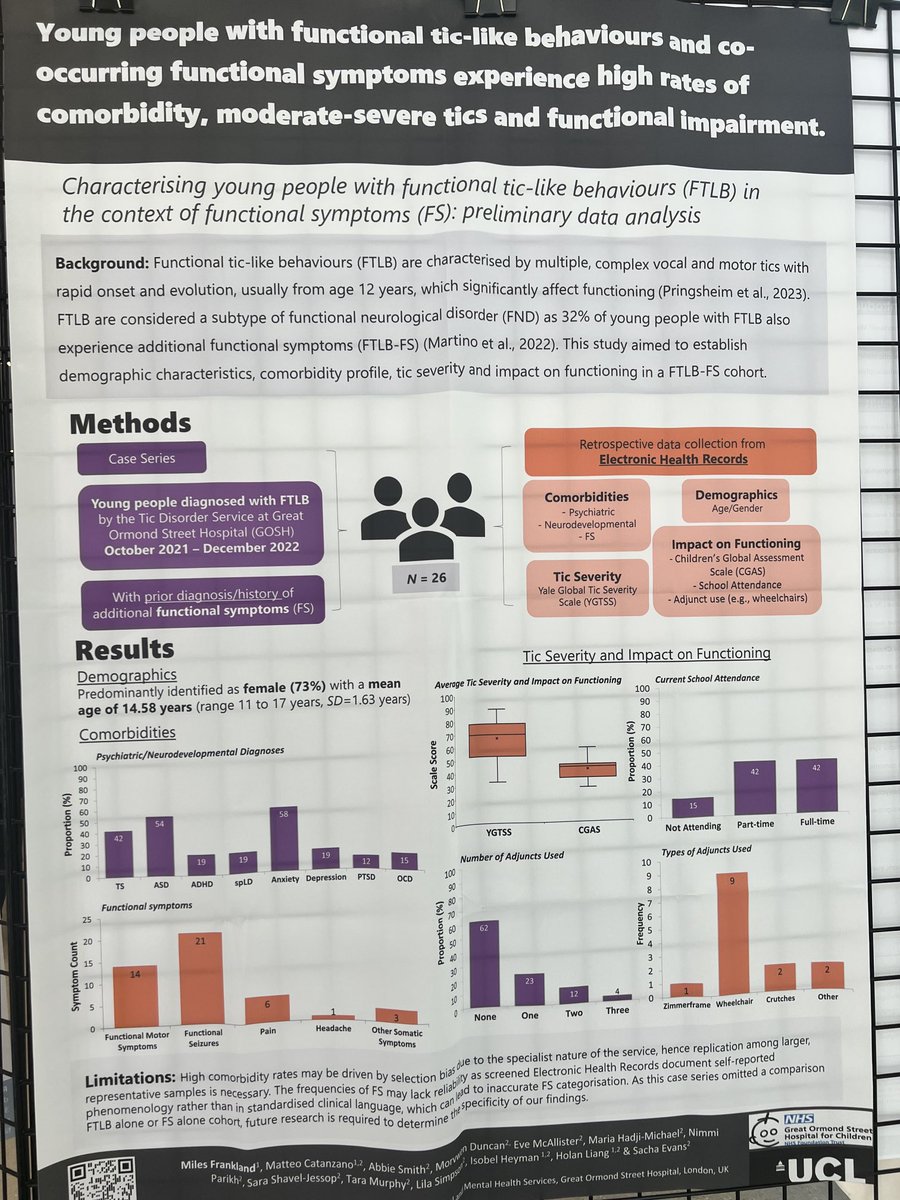
This article is a systematic review that synthesizes qualitative research on the experiences & needs of parents with children or young people aged 5-18 who have diagnosed mental health difficulties, highlighting the impact on parental well-being & the need for tailored support interventions.
@fam6@DrHowardLiu@BarbaraRoblesMD@CYPMHSResearch@Tamsin_J_Ford
To access the full article, please use the link below:
https://t.co/7rs7QVtEIm
Much discussion about benefits of outreach teams in mental health.
And promises to “learn the lessons” from the Nottingham tragedy - a phrase that infuriates families.
But the real question is why we unlearned past lessons & what this tells us about future safety. 🧵
Great to hear about the impact of @MarcosGHernando and @GerryMitchell2 book
Thanks for the mention as well!
Watch our interview with them here: https://t.co/S5DaRISlLd
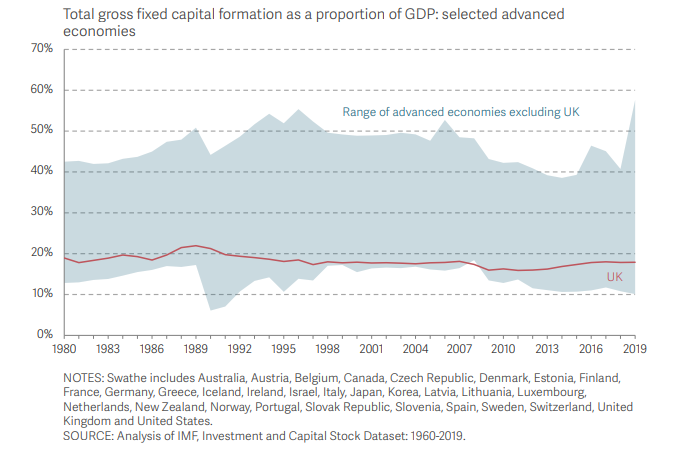
.@MarcosGHernando and @GerryMitchell2, authors of 'Uncomfortably Off', discuss the impact of their book. By delving into the issue of the #WealthDivide, they shed light on how reducing #IncomeInequality could benefit all, even the top 10% of earners.
https://t.co/2r8YzW5VzU
Was a pleasure doing this interview with Rebecca @RidleyWrites 🙏 She completely got the book.
Why we wrote it and why its message may take time to resonate.
#UncomfortablyOff paperback OUT TMW!!
Also @PodcastRelaxed gets a plug as does @NEON_UK@policypress@MarcosGHernando
The (Dying) Art of Prescribing an In-patient Admission 🚨
Much like the declining use of Clozapine, MAOIs, and Lithium, the practice of prescribing a well-organised and targeted inpatient admission is gradually losing its prominence.
Here are my insights as an inpatient psychiatrist over the last 8 years and why it’s one of the most powerful interventions in psychiatry. 👇
There is a misconception in psychiatry that in-patient psychiatry is only about the acutely unwell or acute psychosis.
This cannot be further from the truth.
In my role, I navigate through a myriad of cases, covering a broad spectrum, often at the end of multiple opinions and referrals from across the country.
Inpatient psychiatry, while capable of addressing acute cases, offers a unique advantage beyond the acute spectrum.
1. It sets up a powerful foundation for Understanding and Problem Solving.
2. It allows the psychiatrist, the team and the patient the opportunity to maximise the potential of treatment.
3. The aim is to maximise patient functioning
“If I had an hour to solve a problem, I'd spend 55 minutes thinking about the problem and five minutes thinking about solutions”. (Einstein)
The Value of In-patient Admission:
Information is Vital:
When it comes to problem-solving, the most valuable ingredients are information points.
In-patient admission helps generate a concentrated source of information.
Consider it a melting pot where insights from registrars, psychologists, social workers, occupational therapists, nursing staff, and medical colleagues blend, compressing years of information into just a few weeks.
Add information points from the patient and family through daily observations, which act as powerful material for problem-solving.
A unique holding and containing environment:
Daily throughout the entire duration of the admission, a psychiatrist holds and contains the patient's information in their mind that doesn’t stop at the end of the day.
This process taps into the potency of the Zeigarnik effect in learning—where interrupted or incomplete yet crucial tasks demanding focus enhance the learning process.
Each implemented step prompts the psychiatrist to contemplate the anticipated change or outcome.
A process of RPE minimisation that is fundamental to learning and problem-solving.
The Initial Stages:
The initial phase of the admission often involves psychopharmacology (symptom relief moving to more targeted pharmacology as the formulation evolves), as a significant amount of treatment resistance involves untreated biological/medical components.
In the initial stages, it's not just about treating the severe symptoms; it's about enhancing pattern recognition.
Robust pattern recognition is built upon four pillars:
Phenomenology - Neuroscience - Psychopharmacology - Treatment Choice
The most effective approach to boost pattern recognition involves repeatedly cycling through the stages of:
Predict - implement - evaluate - change
within a condensed timeframe.
Consider it akin to mini-audits, and more significantly, envision the invaluable learning from this iterative process!
Inpatient admission condenses years of interventions into a compact, well-defined, and strategically managed process.
It ensures the patient can witness tangible changes, like improvements in cognition, activity, sleep, and perception (PACES), all to achieve reasonable homeostasis.
This part is relatively easy.
Testing Hypotheses (System 2 Thinking):
An in-patient admission curtails the psychiatrist's dependence solely on their judgment.
It underscores the principle that 'improvement is a multi-opinion endeavour.'
The unconscious yearning for improvement within the doctor is subjected to the litmus test of actual improvement, as observed by other team members.
Moreover, accountability takes centre stage.
The management of medication-induced side effects becomes the responsibility of the psychiatrist, operating within the broader team framework.
This meticulous approach ensures thoughtful consideration in the choices of treatments.
Moving on….The Psychodynamic World
As we move through the latter parts of admission, psychotherapeutic interventions take centre stage.
Recognising when pharmacological treatment takes a back seat to psychological input evolves through pattern recognition.
The powerful aspect of in-patient admission is that (almost always) the outside psychodynamic world starts replicating within the inpatient setting.
For individuals grappling with protracted illnesses, the shift from an internal to an external world frequently comes with a burden of anxiety.
This shift signifies a transition from a reward-deficit state to a reward-conducive state (emphasis on reward, not necessarily pleasure) - a journey into the world of reward learning.
However, for patients who perceive the external world as threatening, traumatic or untrustworthy, rewarding learning becomes a confronting experience.
The outcome is often the manifestation of fear and anxiety in some individuals, which needs careful navigation.
And No!- The Answer isn’t just Trauma Therapy!
Fears and defenses start surfacing; transference and countertransference reactions start playing out within the inpatient therapeutic environment.
The inpatient admission becomes a window into their unconscious psychodynamic world.
It allows for a unique insight into the patient's automatised behaviours (predictions), allowing for the initial aspects of psychotherapy to be explored.
Consider this: a patient asking, "Have I done something wrong?" opens a unique door into their world.
The significance of self-doubt and the fear of making mistakes become significant factors, influencing treatment, medication, treatment providers and self-evaluation. It's a nuanced aspect that deserves attention.
Unique connections surface during inpatient admission.
Statements like "You remind me of my brother" provide glimpses into the psychodynamic world of interpersonal relations as individuals progress.
A Glimpse into the Patient's Therapeutic Enviro-System :
An environmental assessment helps identify how much the external environment intrudes, even in a contained space.
Even in a seemingly 'disconnected' environment, with restricted external interactions, phone calls and texts offer a glimpse into the stressors ; cognitive and emotional demands, providing valuable material to work on later.
Identifying goals becomes a pivotal step in the latter stages.
While some find that improvement in cognition, activity, and emotion is sufficient for reward learning, others, grappling with core unconscious conflicts, need more.
This is where psychological strategies come into play, involving families to ensure a conducive external environment for reward, learning, and consolidation of gains.
In essence, an inpatient admission is about creating a unique therapeutic enviro-system, providing a compact yet comprehensive insight into a person's life within a short period.
How long?
Optimal timings fall between 4 to 6 weeks, extending to 8 weeks for more complex cases.
Biological improvements usually kick in between 3 to 5 weeks.
Beyond four weeks, the focus is often on fears, defenses, and coping strategies employed by the patients.
A caveat:
Patient admission durations vary.
Patterns emerge, with some showing significant improvement in three weeks, often bypassing the need for intense psychological interventions.
For others, time is a significant factor.
Unfortunately…
Reducing inpatient admission to acute cases with a quick-fix approach contributes to a revolving door phenomenon, entrenching illnesses over extended periods.
The short durations of admissions miss the opportunity to prevent this 'chronicity'.
Life-Changing: (A message for 'newer' psychiatrists)
Many psychiatrists might not fully grasp how much improvement is possible with a targeted inpatient admission for those considered the most unwell.
Many psychiatrists may not fully grasp the steep learning curve (for the psychiatrist) achievable with a targeted in-patient admission and careful observations over a defined time period.
The structured, targeted inpatient admission is surely in need of revival.
Share if you liked this (:
@rcpsychLDN A huge congratulations to Dr. Amrit Sachar on being awarded Psychiatrist of the Year at the @rcpsychLDN awards! 🏆
Your exceptional skills and compassionate care are transforming lives.
#RCPsychLDNAwards
WATCH: https://t.co/zpUGZQa25f
Our interview with @campbellclaret is out now…
we discussed his new book, votes at 16, Keir Starmer, Climate Change and tuition fees
It's been a good month for great docs. If you get the chance to see Tish, you should do that. Review here https://t.co/s83spZBDeU but more importantly, hi and look at some of her brilliant photos https://t.co/5XZsUvvEeR