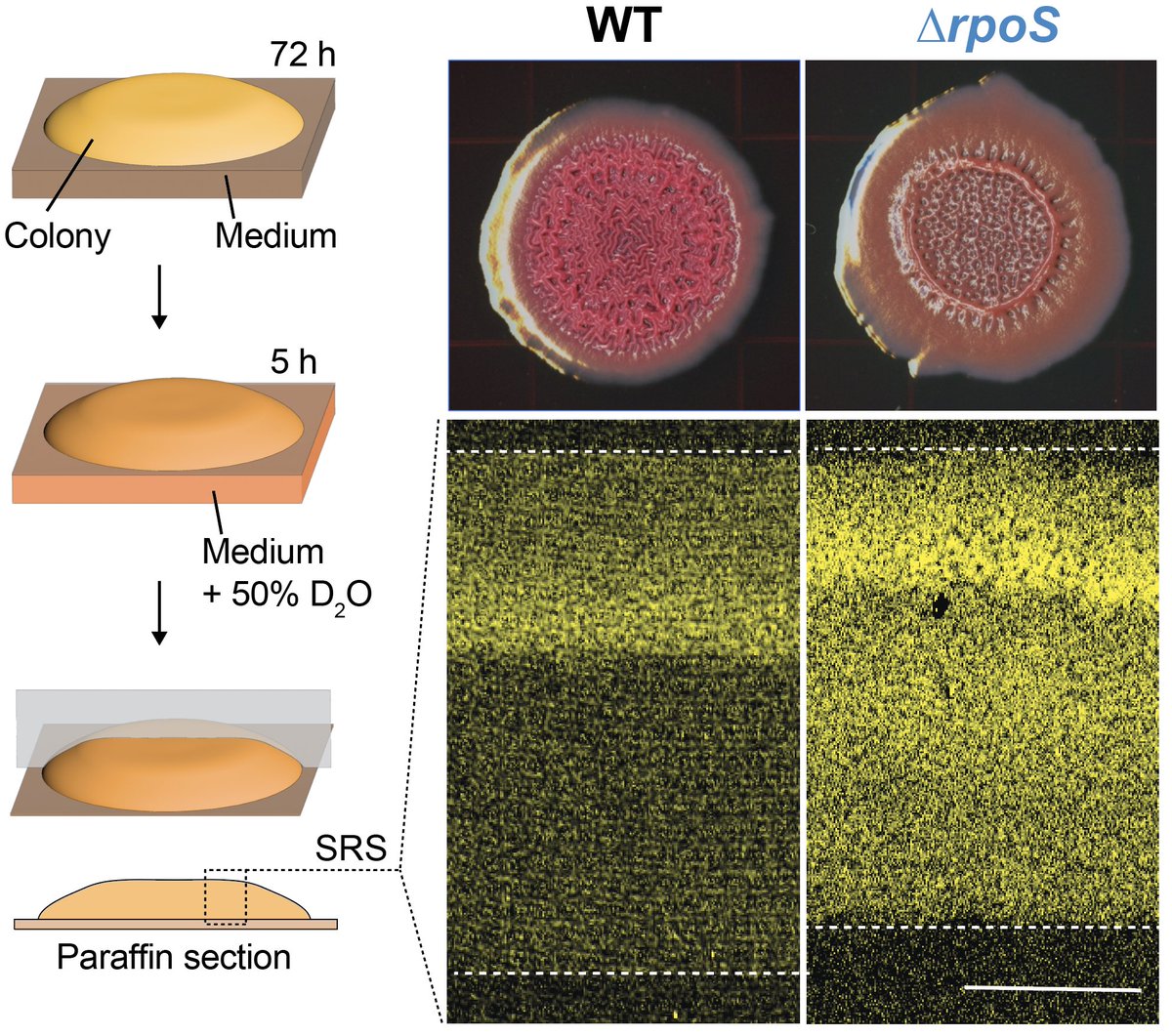
Toxin or substrate? That depends on where you are in the biofilm. Check out our latest preprint on cross-regulation between P. aeruginosa subpopulations! Great work by @BioCREvans, @MarinaSmiley6, Sean Asahara Thio, Alexa Price-Whelan with @TheMinLab! https://t.co/XvexKDML2B
Light and temperature cycling regulate respiratory activity in P. aeruginosa. So excited that this study is finally posted on @biorxivpreprint! Great work by @lj_kahl, Kelly Eckartt, @dianakmoralesg, and @lexa_mari
https://t.co/agtgCaDiTC
Primordium is now offering everyone the chance to sample our full-plasmid sequencing service for FREE - never use Sanger sequencing again! Please retweet this message and we'll DM you a coupon to sequence 5 ENTIRE PLASMIDS 100% FREE, no CC or PO needed. https://t.co/U4WeR2ftjL 5/
Are you fascinated by how one cell can divide itself in half to make two cells? The Margolin lab has an open position at UTHealth in Houston, Texas for an outstanding and motivated postdoctoral fellow or research scientist: https://t.co/c2ybXjdfWT
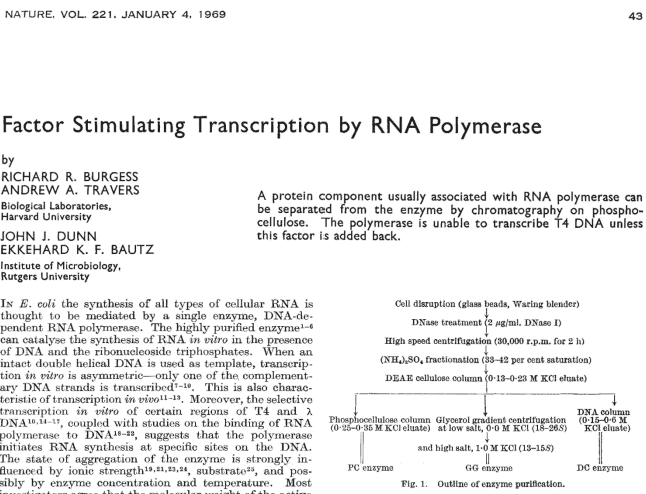
#OnThisDay, on January 4, 1969, Ekkehard Bautz and John Dunne of the Waksman Institute, together with Richard Burgess and Andrew Travers of Harvard, reported the discovery of sigma factor (https://t.co/ee4dDHO2uf).
Our study of R-body production in Pseudomonas aeruginosa has been accepted (pending editorial revisions) at Nature Communications! Authors include @bryan_swang, @avasquezr, @JeanyoungJo, @lexa_mari, @Chr_Sieben. See the updated manuscript at https://t.co/aQ0hgFT315 (1/2)
To study the hundreds of two-component signaling proteins in P. aeruginosa, scientists created a library of deletion strains of each of the 64 histidine kinases encoded in this organism. The results from studying these mutants are published in @AppEnvMicro https://t.co/1hpKonGggn
@elisa_vesely @NkrumahGrant I'd use Oufti from the @JacobsWagnerLab! https://t.co/hD3r5ZMBFN It's predecessor worked really well with my previous heterogeneity analysis
What are the spatial organization of metabolism and metabolic interactions in colony biofilms? 👇
Spatial and temporal transcriptomes & metabolomes show:
Alanine cross-feeding determines E. coli colony growth!
with @Fdiazpascual@laahrs@LinkLabs and...
Biofilms of P. aeruginosa PA14 (but not PAO1! 🤔) produce R-bodies, coiled polymers that extend into mini javelins 😱 and contribute to virulence in worms and plants. Great work by @bryan_swang! https://t.co/3RLnUBLBie
@brandius @elisa_vesely If you're looking for a solid sci-fi book, I'd recommend Dark Matter by Blake Crouch. It's not a big series, but it also has some timeline/universe stuff. I thought it was a good easy read!
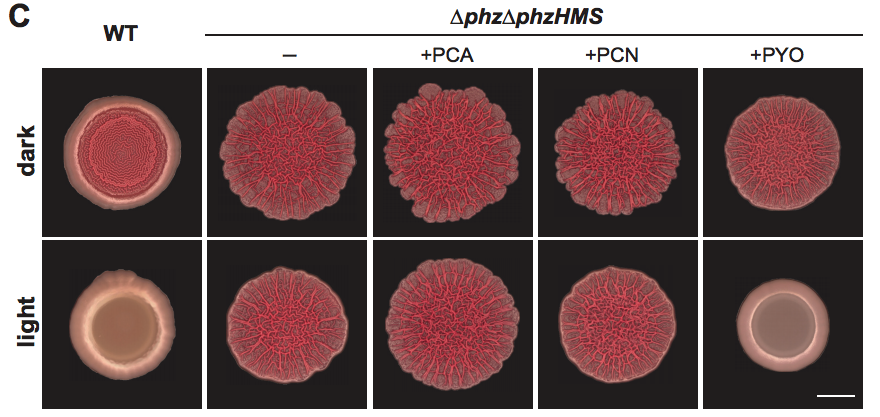
Microbiology Monday: P. aeruginosa, a bacterium that causes biofilm-based bacterial infections, produces this colony morphology. But DYK this morphology is produced when grown in the dark but not when grown in the light?
Learn more in @JBacteriology: https://t.co/B1YUow1EL9
Light triggers regulatory responses in animals and plants, but the response in non-phototrophic bacteria is less understood. A new paper in @JBacteriology reports that light inhibited biofilm maturation in Pseudomonas aeruginosa. https://t.co/TauOiwIVEm
Phenazine oxidation by a distal electrode modulates biofilm morphogenesis
- new @BiofilmJournal publication from @laahrs and Kenneth L. Shepard groups at @Columbia
https://t.co/XAj7QoPl4M
Light-mediated decreases in cyclic di-GMP levels inhibit structure formation in Pseudomonas aeruginosa biofilms
@JBacteriology by @lj_kahl@lexa_mari and @laahrs
https://t.co/IdgGDTNEeV
Extracellular DNA promotes efficient extracellular electron transfer by pyocyanin in Pseudomonas aeruginosa biofilms https://t.co/x4fvGX1Mes #biorxiv_micrbio
Our latest work exploring the global modifications in Pseudomonas aeruginosa metabolism when consuming the infection relevant carbon sources, acetate and glycerol -made possible by an @EMBO STF visit to Prof. Wittman and @M_kohlibri at @Saar_Uni.
https://t.co/kTiyhpZ39T