BioNTech founders Uğur Şahin and Özlem Türeci have named their new Mainz company: Arife SE, focused on next-generation mRNA medicines.
BioNTech contributes rights and technology in exchange for a minority stake, milestone payments and royalties.
[Gründerszene, September 24, 2026]
@iskander@nvidia@AllThingsApx You might also be interested in BenchMHC, our open-source Python framework to reproduce, retrain, and evaluate peptide-MHC presentation models.
https://t.co/PIK1Qz9kw7
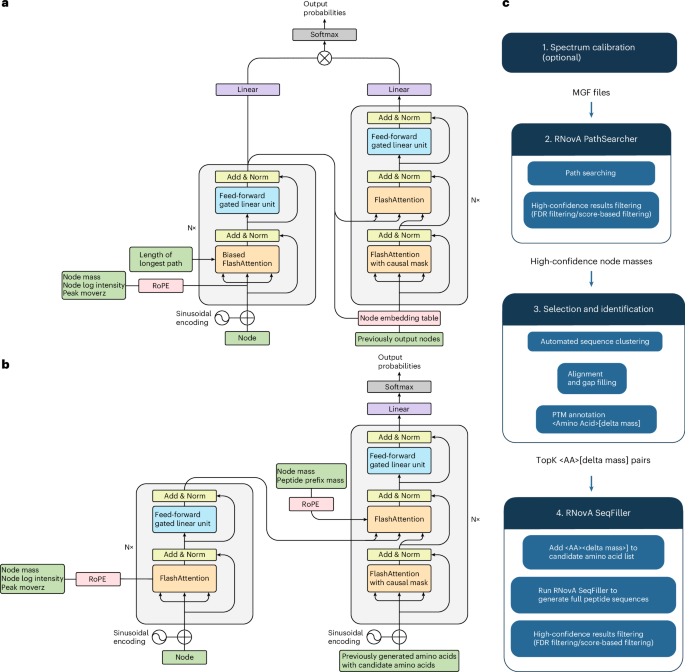
GyroNovo: Error-Guided Fragment Imputation with Mass-Aware Attention for De Novo Peptide Sequencing
Abdellah El Mekki, Laks V. S. Lakshmanan, Muhammad Abdul-Mageed
https://t.co/PvvjzmwWyM [𝚌𝚜.𝙻𝙶]
💬Code: https://t.co/mtHEb094Aa
We were at 1.21% on ARC-AGI-3 just three months ago. Time flies! Happy to say we’re currently in first place on both ARC-AGI-2 and ARC-AGI-3. One month to go🚀
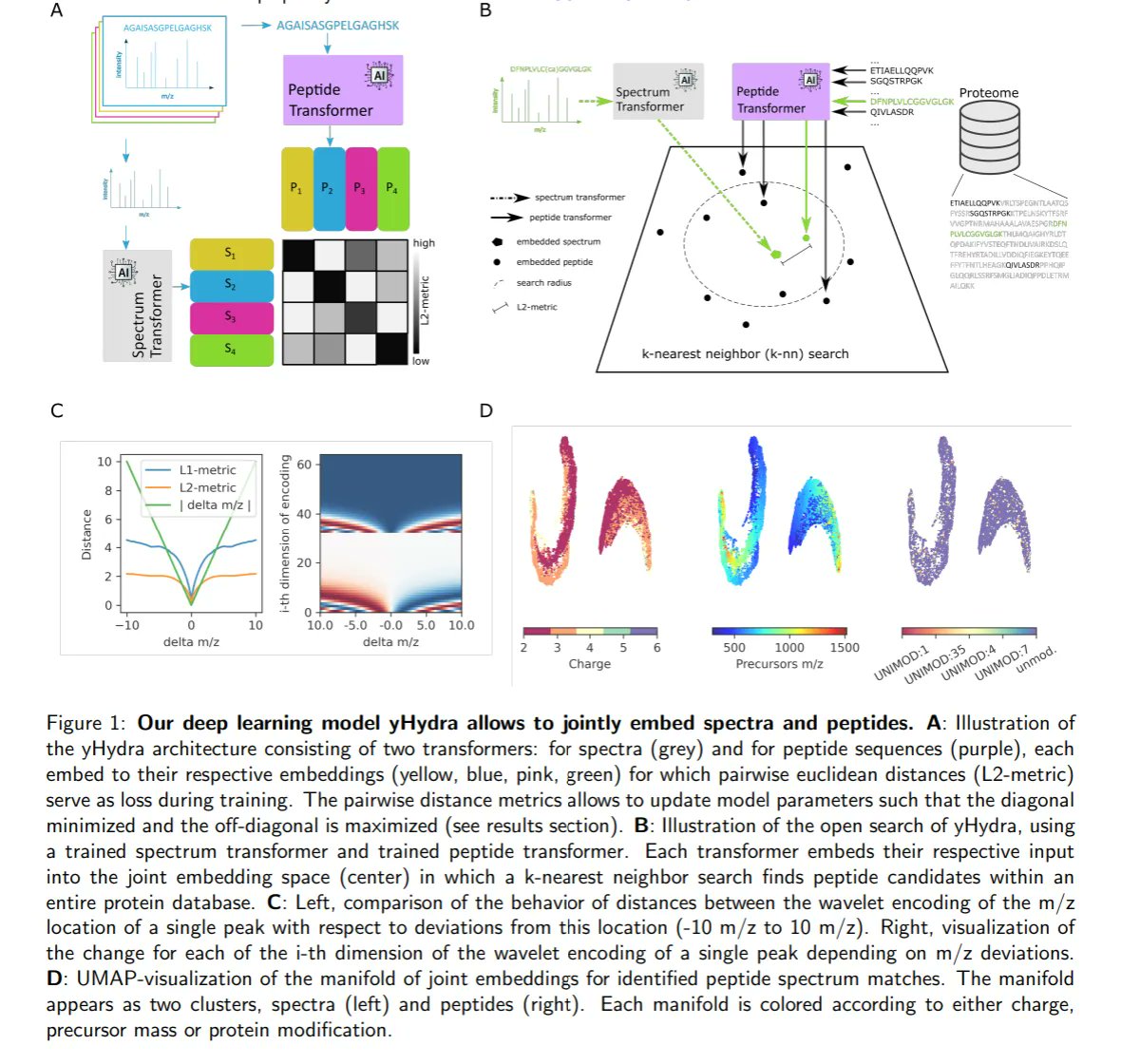
yHydra: Deep Learning enables an Ultra Fast Open Search by Jointly Embedding MS/MS Spectra and Peptides of Mass Spectrometry-based Proteomics | https://t.co/iWdf31IiVs #proteomics
Can LLM agents coordinate in long-horizon, open-ended worlds?
We evaluate 13 modern LLMs in a new benchmark where agents must work together to explore, communicate, trade resources, craft tools, build structures, and fight mobs.
TL;DR: Most agents struggle, averaging only ~6% normalised return. Yet on the hardest setting, zero-shot Gemini 3.1 Pro performs comparably to the best MARL agent trained for 1 billion environment steps.
More broadly, we find coordination is a distinct bottleneck beyond long-horizon task competence, with communication having the largest effect in our harness ablations. 🧵👇
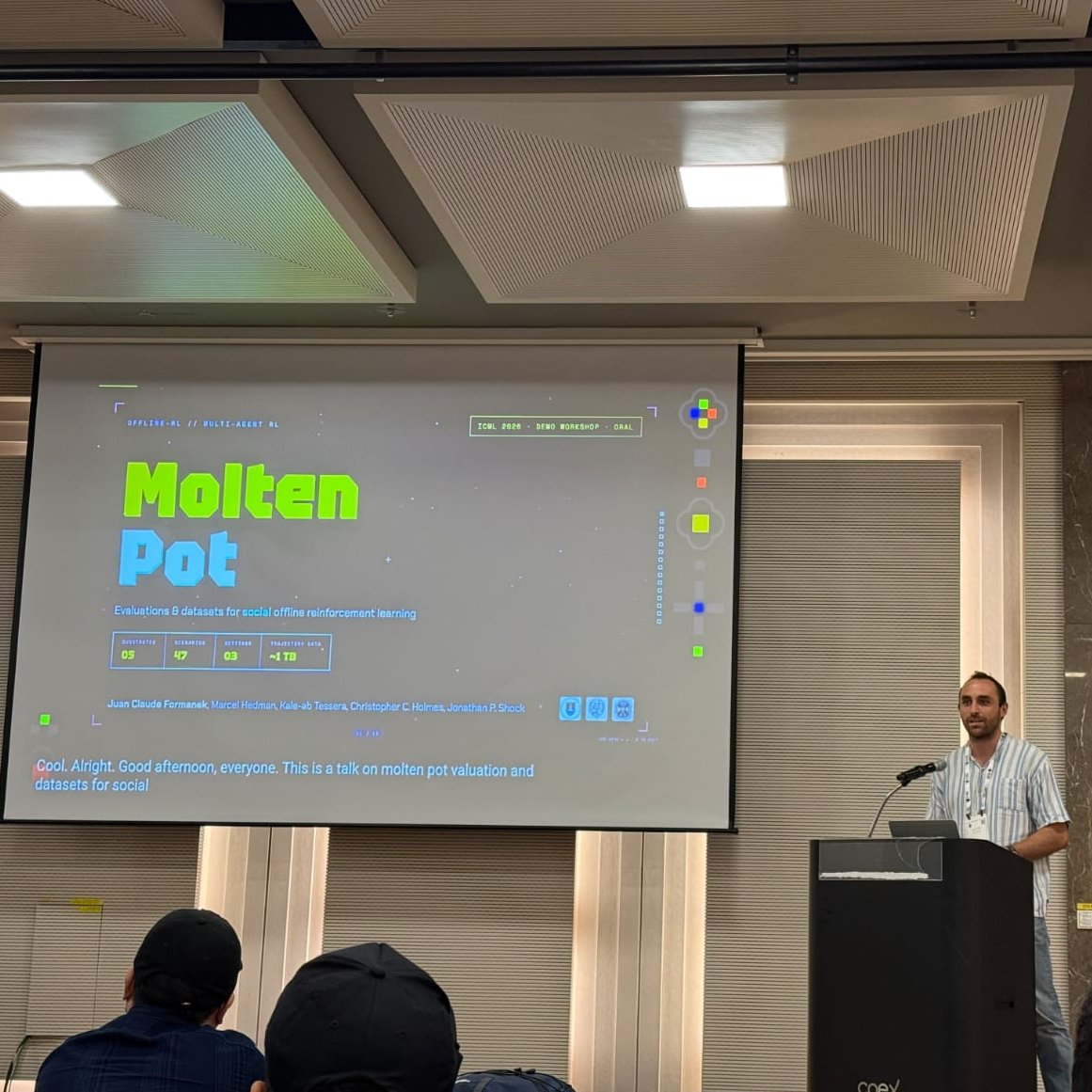
Just gave a presentation at an #ICML workshop on our Molten Pot: Evaluations and Datasets for Social Offline Reinforcement Learning! 🤖💬🤖Really happy that this paper received the Runner-up Best Paper Award 🥈
And congrats to co-lead author @hedman_marcel 🚀
Awesome work led by @ClaudeFormanek & @hedman_marcel, where we introduce a new benchmark & evals for offline RL in mixed-motive, social environments. 🚀
The work also received the Best Paper Award runner-up award at the ICML DEMO workshop 🥈🔥
Def check it out -> https://t.co/rkdcG2r0tm
AI can now read protein sequences directly from mass spectrometry data without relying on existing databases.
That could transform proteomics, biomarker discovery, and precision medicine.
Read more: https://t.co/ruzrAOUCSl #Proteomics#MachineLearning#ProteinSequencing #Bioinformatics #PrecisionMedicine #Biotechnology #MassSpectrometry
Foundation models come to mass spectrometry proteomics
Identifying proteins from their fragments is a foundational task in biology. A mass spectrometer breaks peptides into pieces, measures the masses, and software then tries to match each spectrum back to a peptide sequence. Two approaches have dominated for decades: database search (match against known proteomes) and de novo sequencing (infer the peptide directly from the spectrum). Both are bottlenecked by the same step, scoring how well a candidate peptide explains a spectrum.
Deep learning has been entering this field for years, mostly as feature extractors feeding traditional engines like MaxQuant or MSFragger.
Jiale Zhao and coauthors introduce pUniFind, is a multimodal foundation model trained on over 100 million peptide-spectrum matches from open database searches. Spectra and peptides get their own encoders, and the model is pretrained with cross-modality tasks: predict the spectrum from the peptide, predict the peptide from the spectrum, score peptide-spectrum pairs jointly. Database search and de novo sequencing become two views of the same model.
The numbers are remarkable. In immunopeptidomics, where peptides come from non-tryptic digestion and are very hard to identify, pUniFind finds 42.6% more peptides than Open-pFind. In modification-rich de novo sequencing, it identifies 60% more peptide-spectrum matches than existing methods, despite working in a 300 times larger search space. In regular de novo, it recovers 38.5% more peptides, including 1,891 that map to the human genome but are absent from reference proteomes. A deep learning quality control filter raises consistency with RNA-Seq evidence from 65.4% to 85.0%.
What makes this an ML story is the architecture choice. End-to-end scoring with a shared latent space replaces hand-crafted feature pipelines, and the same backbone serves both database search and de novo sequencing without retraining.
For drug discovery, immunotherapy, and antibody engineering, peptide identification is the bottleneck for neoantigen discovery and biomarker pipelines. Tools that find more peptides at the same FDR, especially in non-tryptic and modification-rich settings, expand what is detectable from existing data. That changes what is worth running in the lab.
Paper: Zhao et al., Nature Machine Intelligence (2026) — journal license | https://t.co/U05n5GbjZR
@NielsRogge@arxiv Fantastic! Will the site automatically parse code repositories and HuggingFace datasets/spaces/models from the text or can we add those ourselves too?
@NielsRogge@ilyasut Would you be open to also include preprints published at bioRxiv @biorxivpreprint ? A lot of the AI for Science preprints are published there.
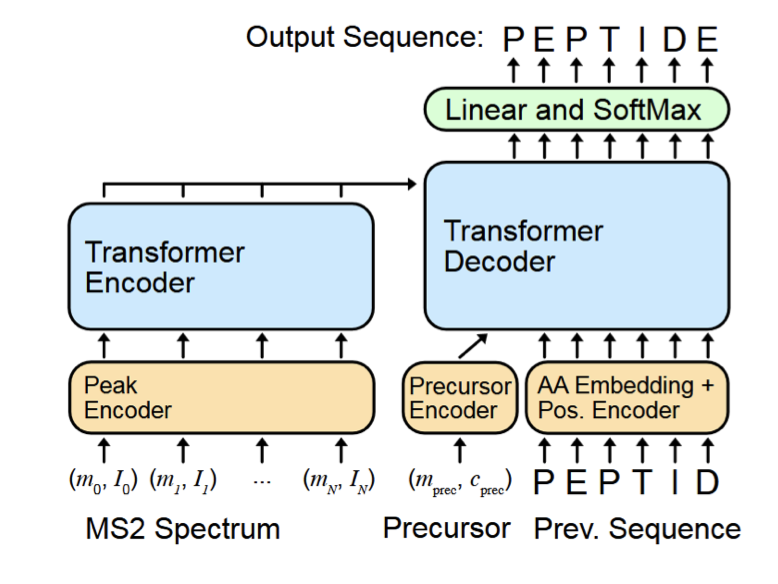
Diffusion Decoding for Peptide De Novo Sequencing
A new study investigates diffusion decoders for peptide de novo sequencing, addressing limitations of traditional autoregressive models like cascading errors and inefficient use of high-confidence regions.
The research demonstrates that while simply replacing a transformer decoder with a diffusion decoder initially lowered performance, incorporating the DINOISER loss function significantly improved amino acid recall by 0.373 compared to the Casanovo baseline.
This work highlights the potential of diffusion decoders to enhance model sensitivity and advance peptide de novo sequencing by allowing sequence generation to start from any peptide segment, leveraging high-confidence parts.
Despite the improvements in amino acid recall, the models with diffusion decoders still showed limitations in peptide precision and coverage, often producing sequences longer than the ground truth with noise at the end.
The study used Casanovo as a development framework due to its relatively lower computational demands and higher performance, training and evaluating models on a combined tryptic and non-tryptic dataset.
The authors explored three different diffusion decoder designs (Casanovo-DS, Casanovo-DM1, and Casanovo-DM2) and evaluated various loss functions, finding DINOISER to be optimal for amino acid recall.
Knapsack beam search was also investigated but resulted in worse metric performance and significantly increased training time, from approximately 1.5 hours to 35 hours for the tested models.
Future work aims to address the issue of excess noise in predicted sequences, explore hyperparameter tuning for diffusion decoder models, and conduct fair comparisons with other state-of-the-art methods using consistent datasets.
📜Paper: https://t.co/b7AbuWOIxj
#PeptideSequencing #DeepLearning #DiffusionModels #MassSpectrometry #Bioinformatics
Pairwise Attention: Leveraging Mass Differences to Enhance De Novo Sequencing of Mass Spectra
1. This study introduces Pairwise Attention (PA), a transformer-based model that explicitly encodes pairwise mass differences between spectrum peaks as a learned bias, significantly improving de novo peptide sequencing accuracy.
2. Inspired by how experts manually interpret MS2 spectra—by detecting consistent mass differences between peaks—PA integrates this inductive bias directly into the attention mechanism of the transformer encoder.
3. PA adds only 0.1% more parameters to the model while achieving a 14.2% (6.7 percentage point) improvement in peptide-level precision at 100% coverage over a baseline transformer, and a 7.2% (3.6 point) gain over the state-of-the-art Casanovo.
4. The learned pairwise mass difference bias allows the model to better capture fragmentation patterns like b- and y-ions, enhancing interpretability and boosting accuracy on both clean and noisy spectra.
5. Evaluation on the nine-species benchmark (versions V1 and V2) shows consistent gains for PA across all species, outperforming Casanovo on most tasks, especially for species with fewer spectra or lower data quality.
6. On an independent bacterial dataset, PA generalized better than both the base model and Casanovo, achieving an 8.5 percentage point precision gain—demonstrating robustness beyond benchmark data.
7. Despite the added memory and training time cost (~31% slower), PA’s improvements are robust across datasets, model configurations, and random seeds, suggesting the utility of domain-specific feature engineering in deep learning.
8. The PA model architecture retains the standard decoder from Casanovo but modifies the encoder with a Fourier-encoded pairwise m/z difference matrix, injected into the self-attention layers as a learnable bias.
9. Results show that the base transformer may struggle to fully learn pairwise spectral features from scratch, whereas explicitly encoding this structure improves convergence and final performance.
10. The authors provide an open-source implementation of the PA model, enabling integration with other transformer-based mass spec models, and setting a new standard in interpretable, domain-aware de novo sequencing.
💻Code: https://t.co/Az60fWnTxl
📜Paper: https://t.co/Ar6xwhmBuH
#MassSpectrometry #DeNovoSequencing #Proteomics #TransformerModels #DeepLearning #Bioinformatics #MS2 #PeptideIdentification #AttentionMechanisms #ComputationalBiology






![Memoirs's tweet photo. GyroNovo: Error-Guided Fragment Imputation with Mass-Aware Attention for De Novo Peptide Sequencing
Abdellah El Mekki, Laks V. S. Lakshmanan, Muhammad Abdul-Mageed
https://t.co/PvvjzmwWyM [𝚌𝚜.𝙻𝙶]
💬Code: https://t.co/mtHEb094Aa https://t.co/bfLBz43Vgd](https://pbs.twimg.com/media/HTacLUrXUAAFmhw.png)