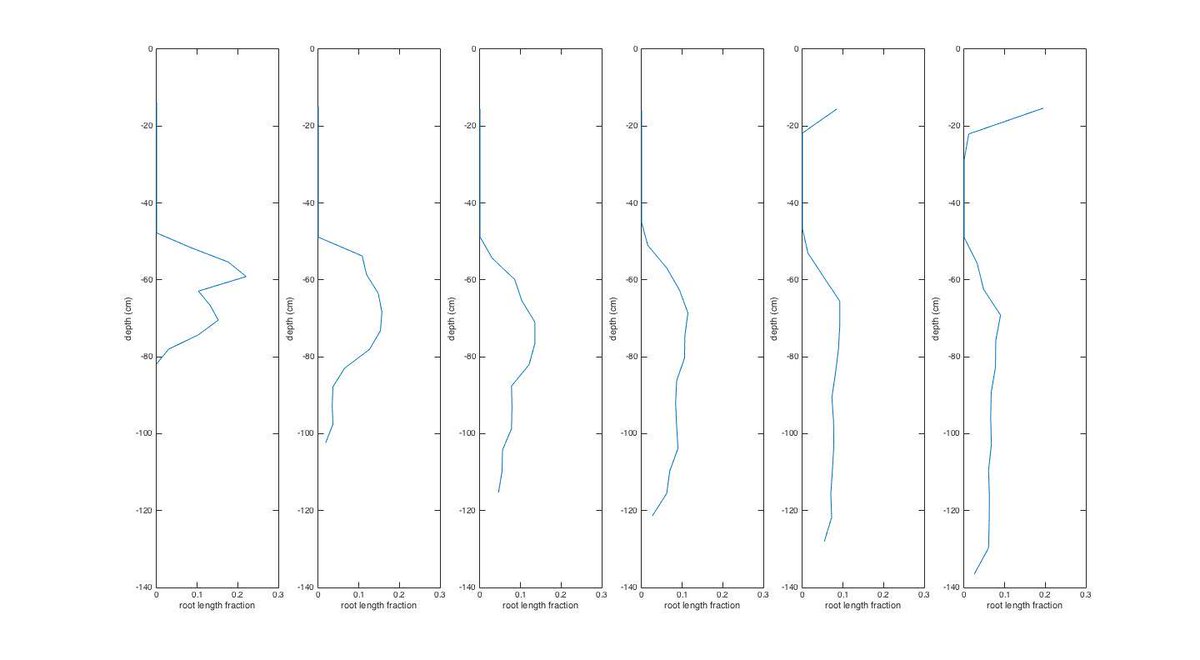
We've plotted the density distributions of young beet roots. By studying these graphs for different elongation rates (different beet varieties), we hope to confirm or reverse our initial hypothesis: a higher elongation rate allows better resistance of beet to nematode
Slight climate shifts can affect optimum water use in plant communities: Journal paper projects how plants respond in 'dry gets drier, wet gets wetter' world https://t.co/935PBuTtDY
"We find that respiration losses of carbon dioxide by plant respiration is 30% higher than previous estimates, and is expected to increase more than expected under global warming."
Read more at: https://t.co/lUXPy9J2wx #climatechange#modeling
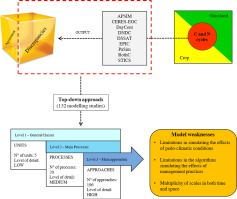
The abundance of agro-ecosystem models for simulating C and N fluxes developed over recent decades creates a difficulty because predictions show large variability. Here is a recent review to determine the state-of-the-art in modeling agricultural systems https://t.co/F9C8EJFaG9
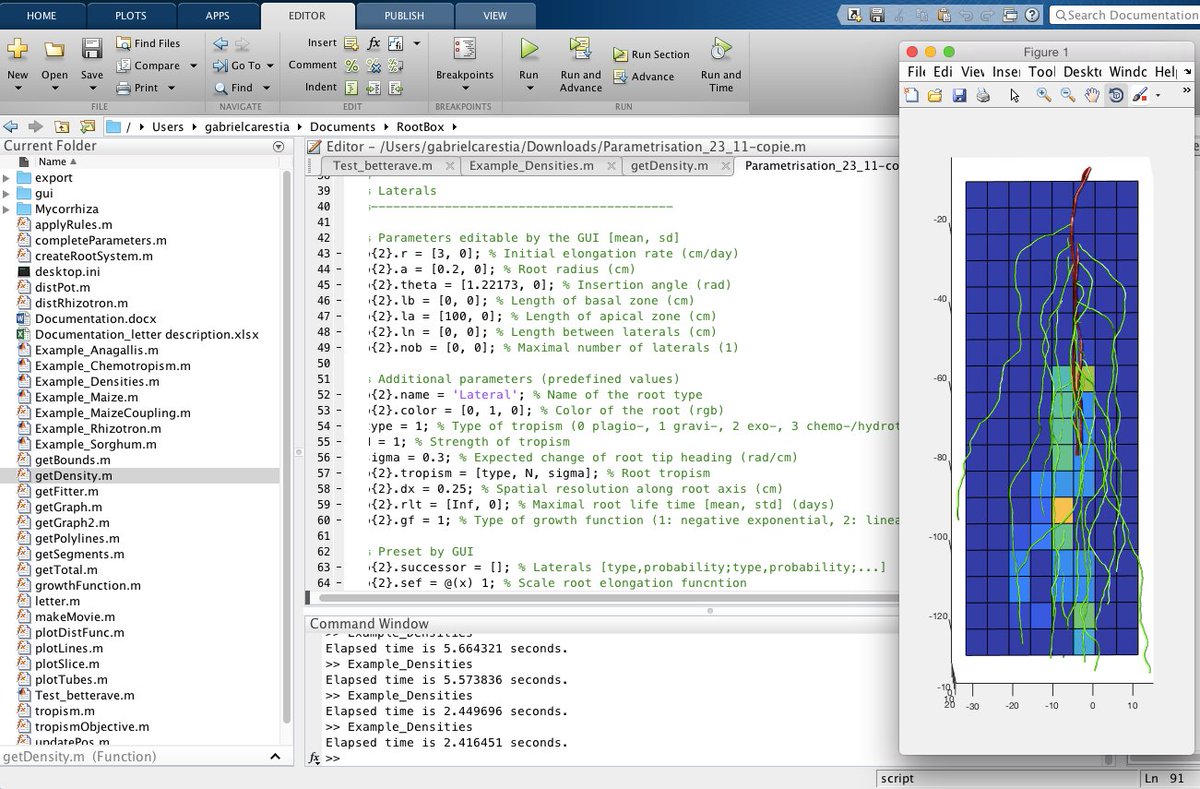
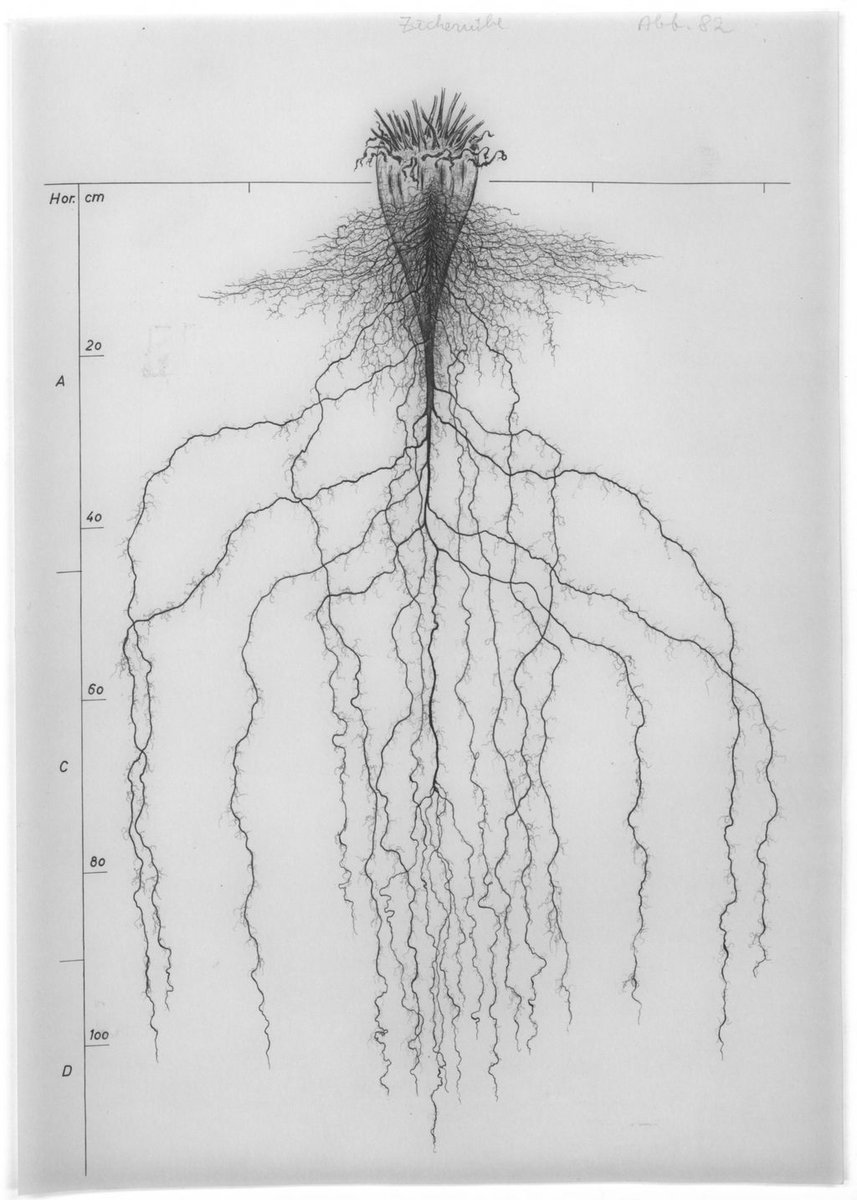
Using the root atlas from the University of Wageningen, we try to find the input root parameters to enter in rootbox to model the root system of beta vulgaris. @WUR
Still with rootbox, we are checking whether different growth kinetics (faster elongation rates) are responsible for the resistance of certain beet varieties. @IRBAB_KBIVB#proofofconcept#sugarbeet
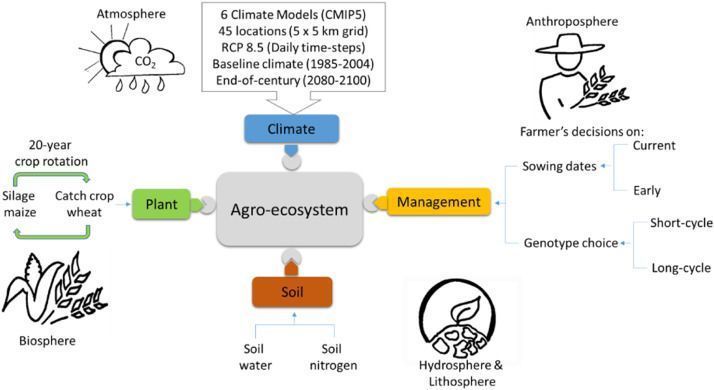
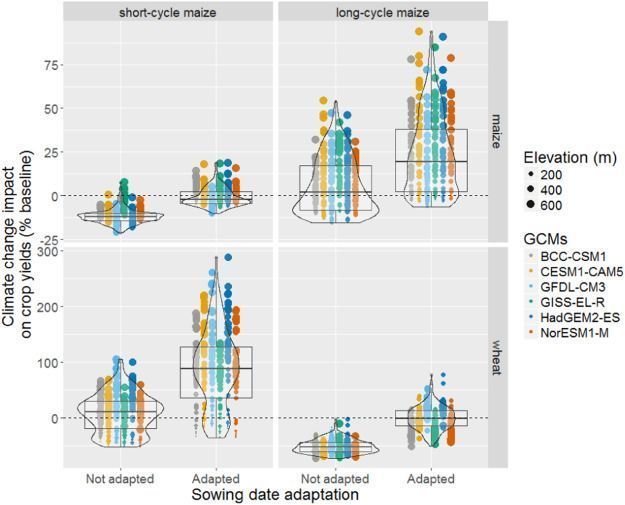
In this study, scientists used multi-crop rotations in place of isolated monocultures to better represent local production systems and its adaptation to #ClimateChange in #NZL. #APSIM#RCP Read here : https://t.co/iktbXvdZvP