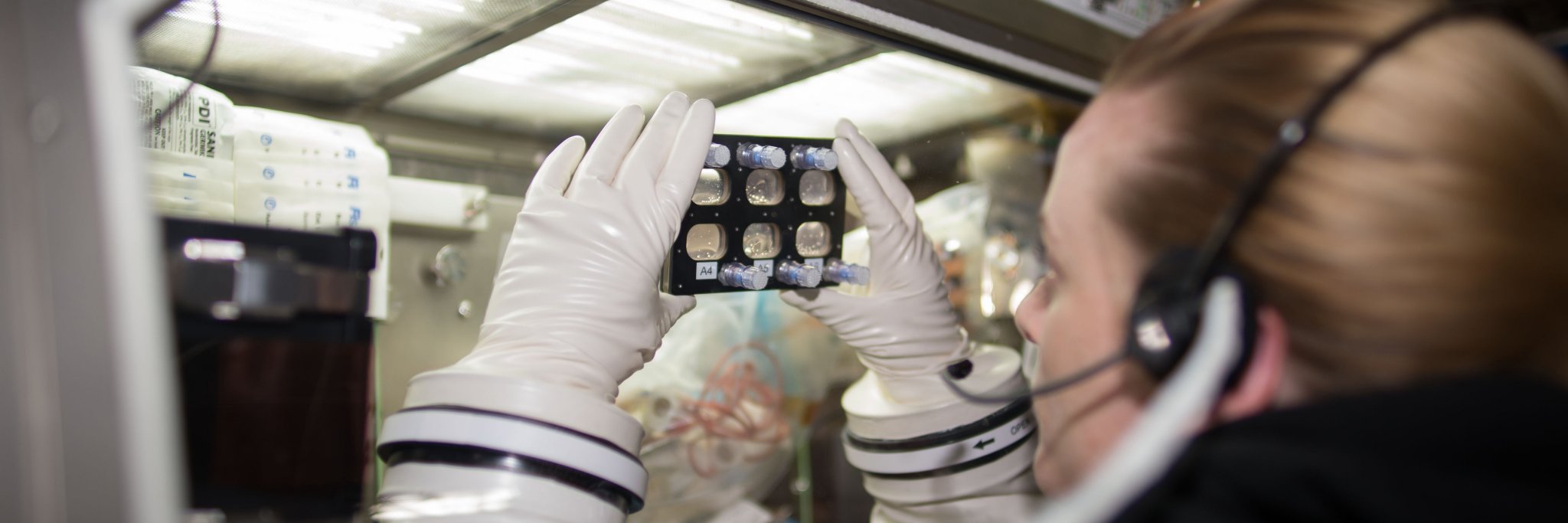
Engineered Heart Tissue-2 (EHT-2) is scheduled to launch to the ISS Tuesday evening on board SpaceX CRS 27. Sponsored by NIH NCATS, NASA and the ISSNL in partnership with BioServe, John’s Hopkins University, Brown University and University of Washington.
Immunosenescence, an NIH NCATS sponsored research project studying the effects of microgravity/aging on the immune system, is all buttoned up and getting loaded into the rocket! Go SpaceX CRS-25! #UCSF , #BioServeST,
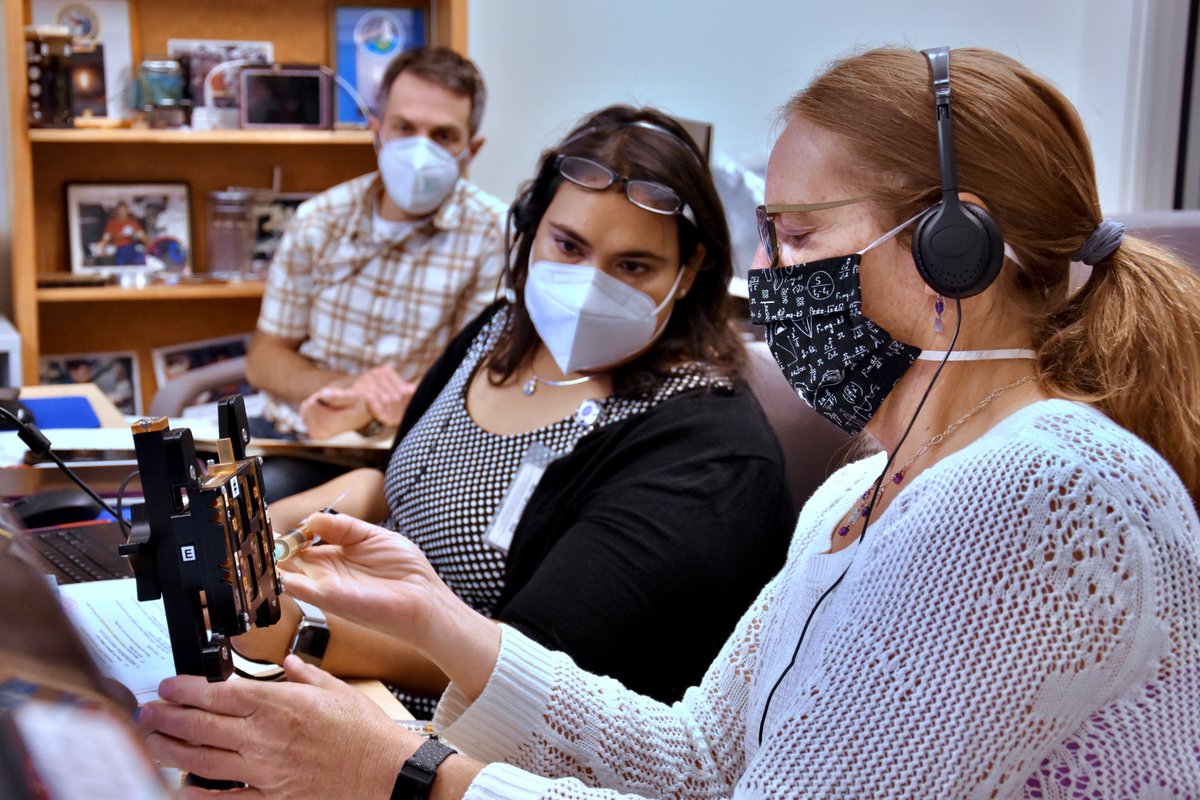
@ISS_CASIS@CP_News@Space_Station Thank you Colgate Palmolive for trusting us to implement your experiment on board the ISS. We enjoyed working with your team and appreciate all of the extensive testing to ensure success!
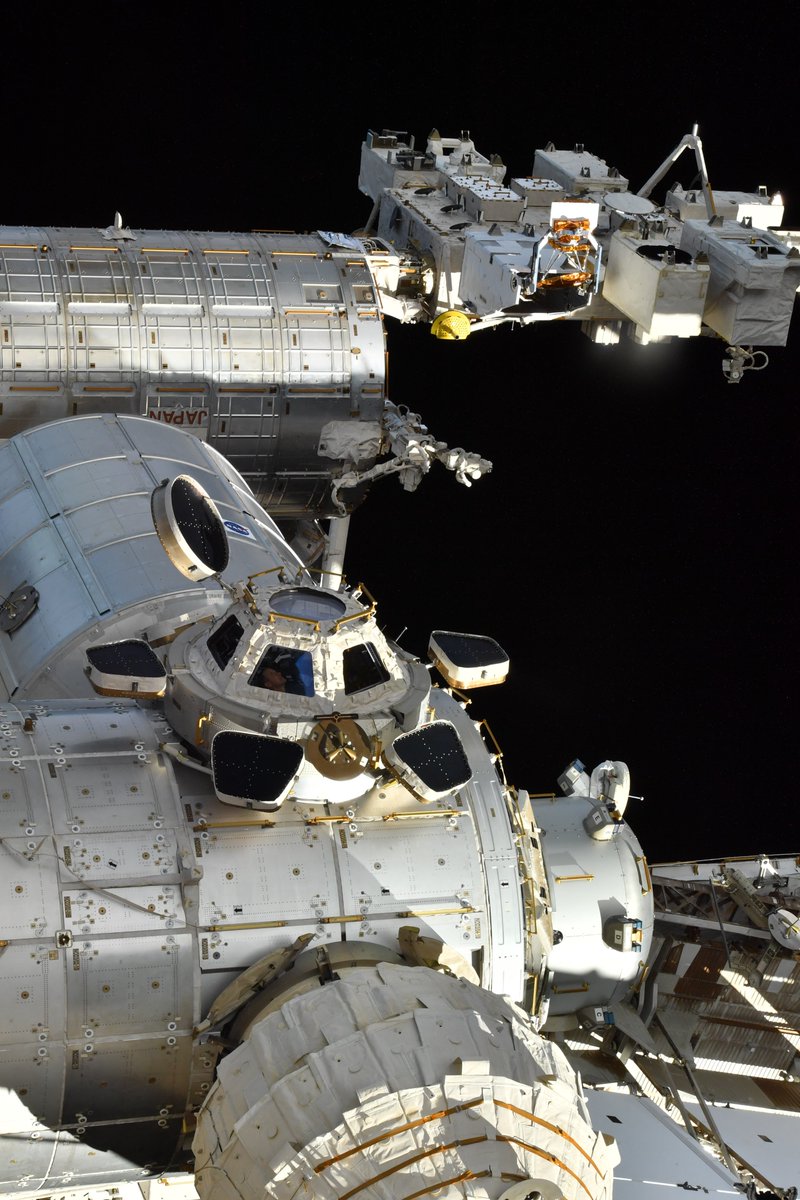
A window in the newly added Russian module offers this view of the @Space_Station. That’s me in the Cupola, taking in the sights of our spectacular planet.
New research announcements out from ISSNL and NSF:
https://t.co/PE7cRI8zRs
https://t.co/ZvjPCbJ2Jx
BioServe has extensive expertise supporting technology development and tissue engineering on board the ISS. Contact us today!
Yesterday @SpaceLuisZea represented us on a panel with @SenBillNelson about how small businesses help @NASA reach their goals! They discussed how our work aids the future of human space exploration all while bringing benefits back to people on Earth! #SpaceSymposium
On Aug. 28 at 3:37 a.m. ET, @SpaceX's cargo Dragon spacecraft will launch to the @Space_Station to deliver new science investigations, supplies and equipment for the international crew.
📺 Prelaunch events start on Aug. 27. Here's how you can tune in: https://t.co/KeGd7YjkD8
The study tests human skeletal muscle cells from donors on Earth. The cells form a 3D early stage muscle fiber here on @Space_Station in the BioCell unit. @Astro_Sabot uses a microscope to allow researchers on Earth to observe and track the cellular transition.
Microgravity speeds up bone and muscle loss, allowing us to study such conditions faster in space than on Earth. I’m working on the Cardinal Muscle experiment, which could pave the way for quicker testing of muscle loss treatments! https://t.co/xQ1WBrf6hP
🏋️ A very cool flex💪 @Astro_Megan & I working on the Cardinal Muscle experiment that could help slow age-related muscle loss on Earth. #MissionAlpha@ISS_Research
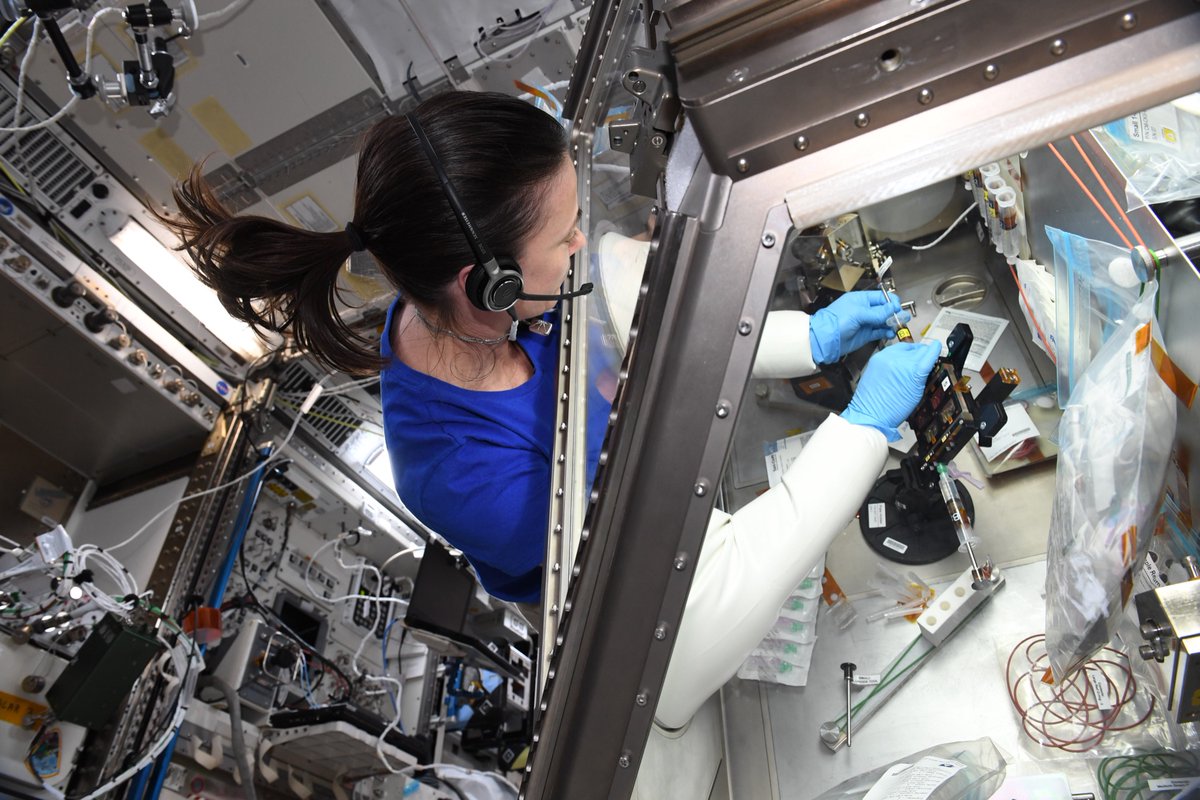
The third day of the Cardinal Muscle operations kicked off around 2:50 AM this morning here in Boulder (8:50 AM up on the @Space_Station .) Today we worked with @Astro_Megan and @Thom_astro to perform BioCell media exchanges, job well done to everyone!
@Erdayastronaut Very cool! We at @BioServeST have sent yeast on #SpaceShuttle and to #ISS multiple times. In fact, we are soon sending yeast around the Moon on Artemis I, together with our collaborators, in our Deep Space Radiation Genomics experiment. Go yeast! https://t.co/p12vtvdLGS
Our @CUBoulder@CUEngineering students gathered yesterday to cheer on the launch carrying Cardinal Muscle! As a part of our team they learn about and contribute in big ways to every payload we manage. #BeBoulder
The S.S. Ellison Onizuka has successfully launched from @Nasa_Wallops and Cardinal Muscle is on its way to the @ISS_Research where muscle loss research championed by @NganHuang of Stanford University will soon be underway, stay tuned!
The next #Cygnus cargo mission to the station will deliver over 2,300 pounds of new science experiments including a muscle study and 3-D printing investigation. #SpaceToGround