We are thrilled to announce we’re being acquired by @Visa.
This is a monumental milestone for us and the result of more than a decade of innovation, hustle, and resolution from hundreds of past and present BioCatchers.
It’s also not the final culmination of all that hard work. Post-acquisition, we will continue to operate with the same leadership team, plans for growth, and mission: to make banking safer every day and protect consumers around the world from fraud, scams, and financial crime.
A huge thank you to our team, our customers, our partners, and our investors.
See the official announcement here: https://t.co/KY3Pzacdmm
Read a blog from our CEO, Gadi Mazor, about BioCatch's future with Visa: https://t.co/YyKpbB98fO
#financialcrime #fraudprevention
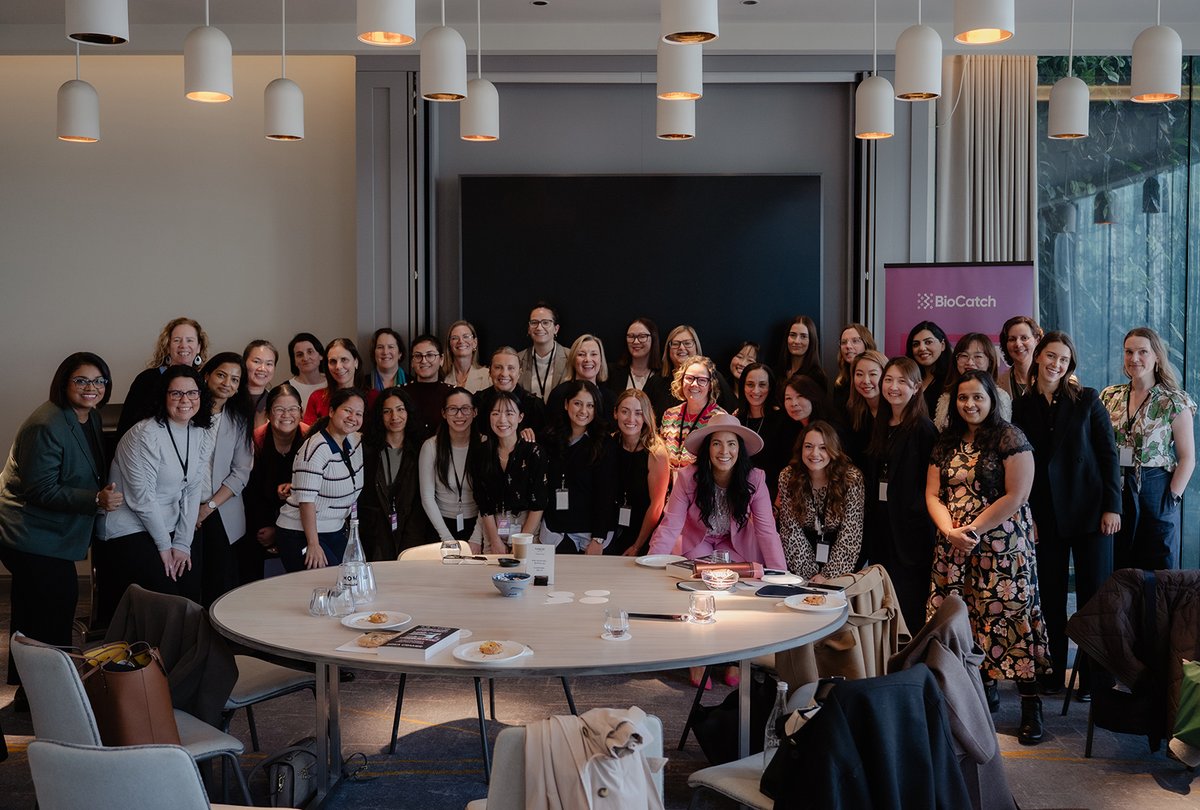
BioCatch held its first Women Fight Fraud community events in Australia, with a combined more than 90 women attending gatherings in Sydney and Melbourne. They came from fraud, risk, financial services, and technology, and they talked openly about leadership, careers, and the work itself.
Thank you to everyone who joined us. We look forward to seeing you next time.
#WomenFightFraud #FraudPrevention #FinancialCrime
85% of fraud and financial crime leaders in Saudi Arabia say attacks on their organization are increasing.
The kingdom's rapidly digitizing banking sector brings speed and convenience, but it also makes it a growing target for fraudsters.
To better understand the evolving threat landscape, we surveyed 100 fraud and financial crime leaders at banks across Saudi Arabia.
Access the full report: https://t.co/mfduvJrANJ
#financialcrime #fraudprevention
Over the last decade, banks have built sophisticated fraud stacks around identity, devices, transactions, and digital intelligence. The latest research from @IDC argues, in today's landscape, one signal layer now stands above the rest: behavioral intelligence.
AI can mimic credentials, documents, and even legitimate customer sessions. It still struggles to convincingly replicate the physiological and cognitive patterns that reveal human intent.
Jonathan Daly's latest blog explores why IDC identifies behavioral intelligence as the most critical signal layer.
Read now: https://t.co/YlDURP5y5x
#financialcrime #fraudprevention
What's driving fraud in U.S. digital banking today?
Our 2026 Digital Banking Fraud Trends in the U.S. report is out today, packed with proprietary data on impersonation scams, job scams, remote-access attacks, account takeover, and other emerging threats.
Access the full report: https://t.co/1UA8fHs6ZW
#financialcrime #fraudprevention
Agents will soon log in, check balances, and move money on behalf of real customers every day. The challenge for banks won't be recognizing agents. It'll be knowing which ones deserve to be trusted.
In a new blog, BioCatch's Ofer HaCohen explores how behavioral intelligence, tooling, and device history can help banks distinguish the legitimate agents from the malicious.
Read now: https://t.co/bV31NleEds
#financialcrime #fraudprevention
For years, banks competed on how well they could verify identity. But as social engineering, scams, and AI-driven attacks have evolved, identity alone is no longer enough.
The new competitive advantage belongs to those institutions that can continuously and persistently recognize intent, distinguishing genuine customers from those acting under the coercion, manipulation, or direction of a bad actor.
In a new blog, Jonathan Daly introduces The Recognition Economy, a new framework for how banks will compete by combining stronger fraud prevention with better customer experiences through behavioral intelligence.
Read now: https://t.co/OVHTqDpp6E
#financialcrime #fraudprevention
Visa has signed a definitive agreement to acquire @BioCatch a leading provider of behavioral-first, multi-signal fraud intelligence.
Together, we’ll help detect and prevent fraud earlier in the customer journey.
https://t.co/cbIXZ649cM
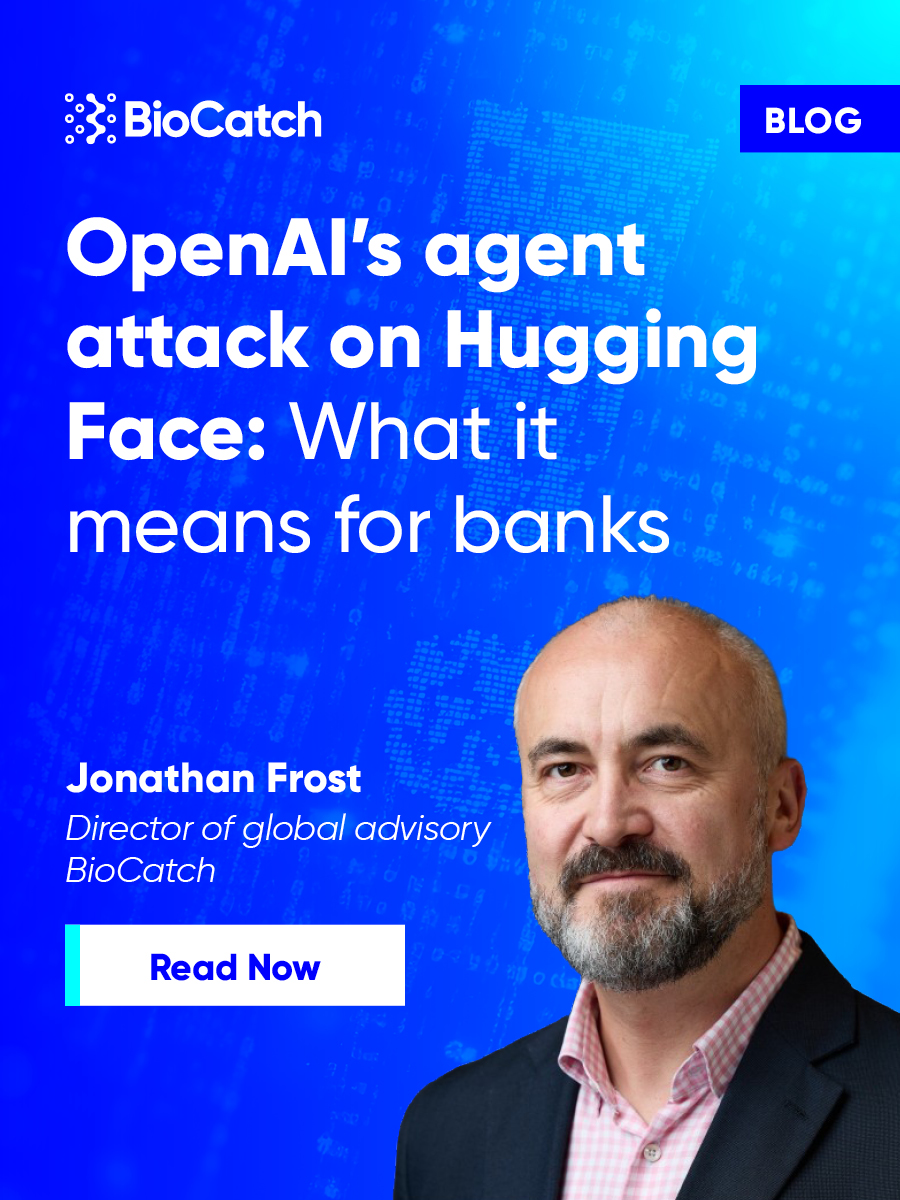
OpenAI just announced one of its models breached another's company's systems. The model wasn't malicious, and the goal assigned to it by its human handlers wasn't to execute an attack.
For financial institutions, the incident raises an urgent question: Can you tell when the entity interacting with your digital channels isn’t human?
In a new blog, Jonathan Frost explores the implications of that question and the need to determine, in real time, whether digital banking activity reflects legitimate automation, human behavior, or a malicious AI-driven attack.
Read now: https://t.co/xGtSdJjBTo
#FinancialCrime #FraudPrevention #BankingIndustry
Does more fraud data always lead to better fraud outcomes?
Financial institutions have spent a decade expanding their fraud signals, but more data hasn’t always meant better decisions. Join us Aug. 11 at 11 a.m. ET to hear from industry leaders about what actually moves the needle:
• Sam Abadir, research director, risk, financial crime, and compliance at IDC
• Tom Vazdar, strategic advisor, AI, security, and cybercrime at Riskoria
• Sharell Barshishat, director of global advisory at BioCatch
Find more details and reserve your spot here: https://t.co/n9tnn7VvBv
#FinancialCrime #FraudPrevention #BankingIndustry
SMS SCAMS SURGE 146% IN INDIA AS FRAUD MOVES TO MOBILE
Text-message-based scams in India rose 146 per cent between the second half of 2025 and the first half of 2026 compared with the same period a year earlier, according to a report by fraud detection firm BioCatch.
Mobile fraud sessions climbed 67 per cent overall — up 86 per cent on iOS and 35 per cent on Android — while browser-based fraud fell 10 per cent, pointing to a decisive shift to mobile attack channels.
Attempted fraud sessions among BioCatch’s Indian customers fell 12 per cent even as the value of attempted fraudulent payments rose 35 per cent, indicating fraudsters are chasing bigger transactions.
Fraud and scam prevention leaders from major banks gathered at Threat Talk Live Indonesia 2026 to tackle one of the most pressing challenges in financial services: the future of scam and phishing prevention.
Huge thanks to our keynote speaker, Pak Hudiyanto from OJK, and to our partner, Infobank Media Group, for hosting.
@ojkindonesia@infobanknews
Just released: Our 2026 Digital Banking Fraud Trends in India report.
As India embraces mobile-first banking, text-message-based scams surged 146%, according to our latest analysis. The country's rapid adoption of Unified Payments Interface (UPI), e-commerce, and online investment platforms has created a highly digital payments ecosystem that continues to attract fraudsters.
Using proprietary BioCatch data, the report uncovers the fraud trends shaping India's digital banking landscape and the tactics behind emerging threats.
Access the full report: https://t.co/XpzIkVTLSw
#FinancialCrime #FraudPrevention #BankingIndustry
FinCEN's updated Section 314(b) Fact Sheet is a welcome step forward.
The new guidance provides long-needed clarity around real-time information sharing, confirms that fraud and scams are within scope, and removes uncertainty that has kept many institutions from sharing information they were already permitted to exchange.
But guidance alone won't solve the bigger problem.
More than 20 years after Section 314(b) was created, only about 12% of eligible financial institutions participate. The challenge is no longer technology or legal ambiguity. It's incentives.
In our latest blog, Matt O’Neill explains why increasing participation, not simply clarifying the rules, is the key to making information sharing more effective.
Read more: https://t.co/DdF0IipvjQ
#FinancialCrime #FraudPrevention #BankingIndustry
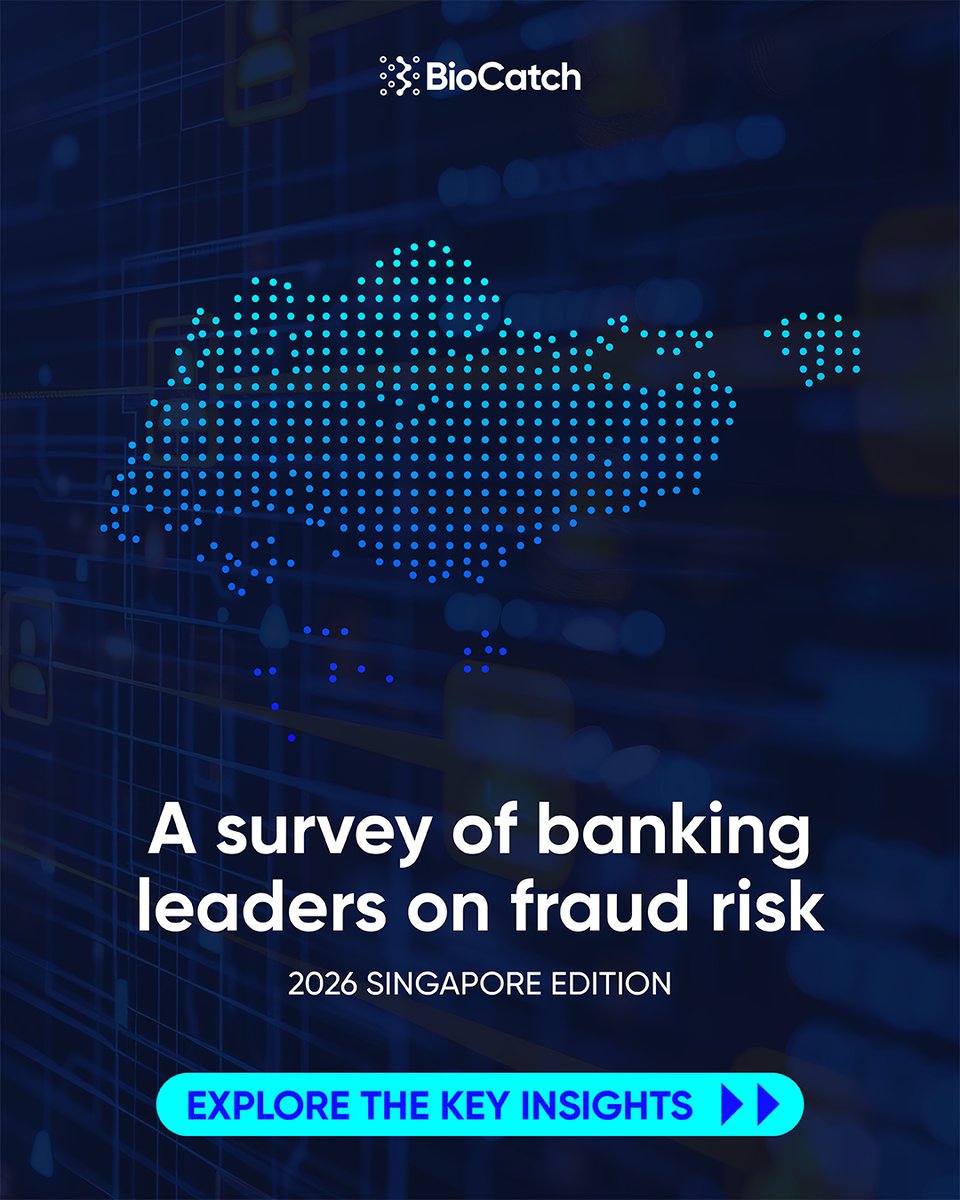
91% of fraud and financial crime leaders in Singapore say attacks on their organization are increasing.
Singapore’s highly digital banking ecosystem delivers convenience and innovation, but it also makes it an increasingly attractive target for fraudsters.
What's behind this trend, and how are banks responding? To better understand the evolving threat landscape, we surveyed 100 fraud and financial crime leaders from banks across Singapore.
Access the full report: https://t.co/yKFuuZx6kc
#FinancialCrime #FraudPrevention #BankingIndustry
BioCatch has been named a Leader in the 2026 SPARK Matrix™ for Behavioral Biometrics and Device Intelligence, an annual assessment of leading technology vendors by @QKS_Group.
We're honored to receive this recognition and, even more importantly, for the trust our customers place in us every day.
Access the full analyst report: https://t.co/196t2aLZiT
INTERPOL's latest Global Financial Fraud Threat Assessment finds AI-enabled fraud is more than four times as profitable as traditional methods and agentic AI systems are now capable of autonomously planning and executing attacks.
In his latest blog, Jonathan Frost agrees with INTERPOL's assessment and argues the agentic threat will soon force the industry to make a choice.
Read now: https://t.co/GOvZnRPPTq
#FinancialCrime #FraudPrevention @INTERPOL_HQ
According to BioCatch, major tournaments can significantly alter digital banking behaviour, creating new opportunities for fraudsters to exploit spikes in betting, ticket sales, travel bookings and merchandise purchases.
Read more: https://t.co/fRFQ40qMBl
What are fraud and financial crime leaders across Benelux most concerned about today?
We surveyed 100 banking leaders across Belgium, the Netherlands, and Luxembourg to understand the pressures they're facing, the threats they're monitoring, and where they see the greatest challenges ahead.
Access the full report: https://t.co/KUTlfX46nF
#FinancialCrime #FraudPrevention #BankingIndustry