🦠 New study in Bioinformatics Advances: “Transcriptional profiling and co-expression integration for the filtering of relevant bacterial sRNA–mRNA interactions: Application to Staphylococcus aureus biofilm”
Read it here: https://t.co/grRCM1cOyl
Authors include: @MARISAFABIANAN1
This integrative framework combines sequence-based sRNA–mRNA prediction from four tools with differential-expression and co-expression network evidence to prioritize regulatory candidates across six S. aureus strains. The pipeline narrowed 1.73 million candidate interactions to 1,290 prioritized pairs, including ten sRNAs consistently upregulated and four consistently downregulated in biofilm across all strains.
TorchGWAS is a GPU-accelerated framework that uses batched operations and an overlapped streaming pipeline for covariate-adjusted linear GWAS across large phenotype panels. On an NVIDIA H100, it completed 4.57 billion associations across 8.9 million variants, 512 phenotypes, and 35,365 samples in 28–59 seconds, matching PLINK 2.0’s test statistics to within 1.3×10⁻¹².
🧮 Recently published in Bioinformatics Advances: “1100 synthetic benchmark problems for dynamic modeling of cellular processes ”
Read more: https://t.co/O8yIpDsp9H
The synthetic problems reproduce the statistical characteristics of their templates while spanning a broader, more continuous range of optimization difficulty and parameter identifiability.
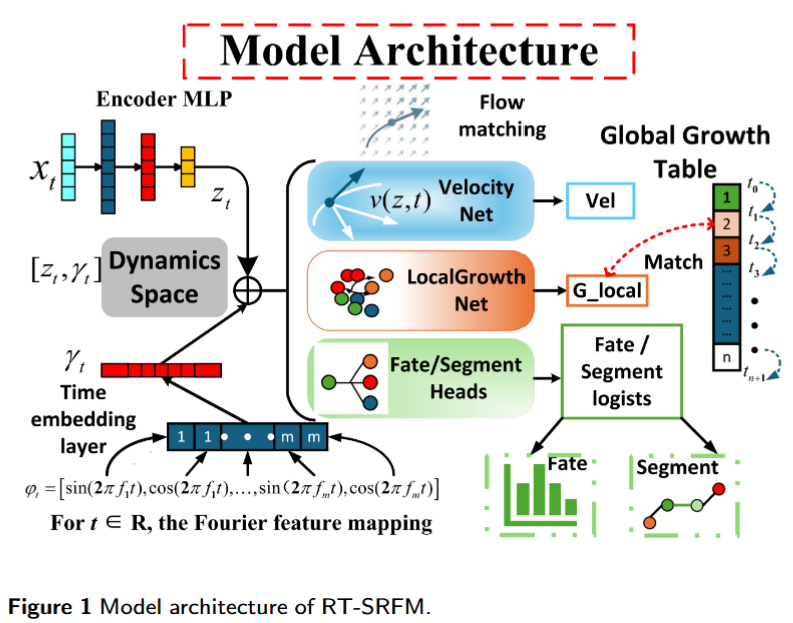
🧬 New in Bioinformatics Advances: “RT-SRFM: A transport-growth-fate latent dynamical framework for developmental single-cell time series ”
Access it here: https://t.co/JrKN5aEcF3
@Alexbateman1 His influence spans more than 600 publications, a citation count exceeding 460,000, and over 50 trainees who now lead their own research groups. Tributes can be shared at https://t.co/p2lOvzoggi.
In Memoriam in Bioinformatics Advances: “Peer Bork (1963–2026): Pioneer of computational biology, architect of bioinformatics resources, and visionary microbiome researcher”
Read the tribute here: https://t.co/V7TBTsOn1a
Author: @Alexbateman1
@Alexbateman1 Over three decades, Peer pioneered protein domain discovery (WW, HEAT, BRCT), built foundational resources including SMART, STRING, eggNOG, and iTOL, and transformed microbiome science with the 2011 discovery of human gut enterotypes, cited nearly 10,000 times.
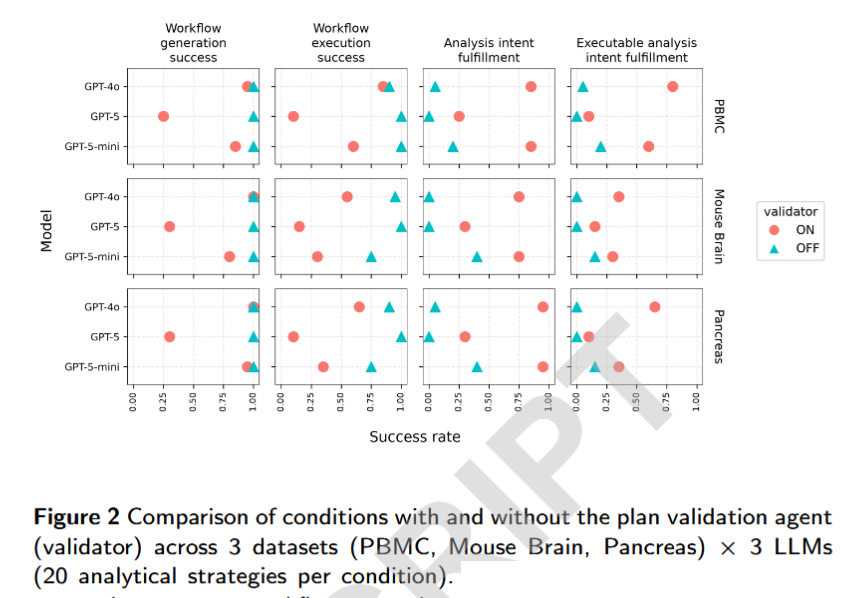
🔬 New study in Bioinformatics Advances: "Bridging LLM-based agents and workflow languages for automated multi-perspective analysis of scRNA-seq data"
Find it here: https://t.co/bD0poNY4Ed
Validation raised the executable analysis intent fulfillment rate from 0.061 to 0.378, with parallel execution achieving up to a 29.9-fold speedup over sequential runs.