A new report on EMBL-EBI resources by Frontier Economics shows how tools like UniProt save time, boost productivity and support interdisciplinary collaboration.
Read the report highlights: https://t.co/CfekllziiE
New webinar:
Accessing RNA data programmatically with the Rfam and RNAcentral APIs
📅 Thursday 25 June 2026, 14:30–15:30 (BST)
🔗 Registration is free but essential:
https://t.co/djvw4YemR7
@RNAcentral@RfamDB#bioinformatics
We’ve added more protein structure data to UniProt!
We now import data from the 3D-Beacons collaboration of macromolecular structural data providers and for the first time include small angle scattering data.
Check CAMK2A to see some of the new data: Q9UQM7
@SIB@EMBLHamburg
There are changes coming to the @uniprot reference proteomes resource.
Reference proteomes will remain in UniProtKB, while others will move to UniParc.
Read more:
https://t.co/pqj6pKObCA
Uniprot is a collaboration between EMBL-EBI,
@ISBSIB & the Protein Information Resource.
Celebrate excellence in #computationalbiology and #bioinformatics! Nominate members of the community for #ISCB awards!
Submit your nominations here: https://t.co/6ZHDU2LYY2
Today UniProt says goodbye to its @emblebi curation team leader, Sandra Orchard.
Her expertise, dedication and enthusiasm have had a lasting impact on the team. We wish her continued success in all her future endeavours.
Please share your memories or well wishes in the comments
We're thrilled to announce SeqHub, an AI-enabled platform for biological sequence analysis. SeqHub brings together sequence search, genome annotation, and data sharing in one place.
I dreamed of a single place where I could learn everything about my sequences. Today, a much more refined version of this dream takes form with https://t.co/1l5O5cP3tE, built by an incredible team at @tatta_bio. Our goal is to make sequence interpretation more intuitive and collaborative for everyone working with biological sequences.
Currently, SeqHub is optimized for microbial protein and genome analysis. As we expand beyond microbial data, we'd love your feedback to help shape what comes next. I'm deeply grateful to our team at Tatta Bio, and to our collaborators and funders, for making this vision a reality.
Check it out at https://t.co/vXbVqe507X!
@AnthropicAI I have a very useful @pfamdb project for Pfam curation which is speeding up work. But the skill generated from that project is incredibly frustrating. The basic instructions are forgotten between conversations. It just seems bad at instruction following.
The first #ISCBUK conference is accepting submissions! Bringing together the UK's #bioinformatics community, the meeting is a chance to share cutting-edge science, foster collaborations, and build networks.
📥Submit here: https://t.co/vdIB57PyGI
🇬🇧 Introducing ISCB UK! Join us April 21–22, 2026, in Cambridge for the first #ISCBUK conference connecting the #bioinformatics and #computationalbiology community in the UK.
✨ Abstract submissions now open!
🗓️ Deadline: Feb 5, 2026
🔗 https://t.co/vdIB57PyGI
@dimiboeckaerts@AllThingsApx@grok ipSAE is a better form of ipTM. It evaluates the ipTM score over only interchain residue pairs with PAE<10 (so confident not just interface pairs). It is asymmetric. Align on chain A residues, score B. or Align on B, score A. Min of those two = ipSAE_min. https://t.co/rk2klu4wqq
CATH turns 30 years old 🥳
They celebrate with a Symposium on September 16th! I'll be presenting our work: "An Atlas of Energetic Evolutionary Constraints Across Protein Families" Unbelievable selection of speakers! So if you are around London, Register:
https://t.co/mlrTzPXzQl
I’m happy to share that I’m starting a new position as Assistant Professor and Medvedev lab is open at the Department of Computer Science @UCF
I am seeking motivated PhD students to join my lab. Hiring details: https://t.co/Va7B34mL50 Please repost 🙂 #hiring#bioinformatics
Wanted to say a big thank you to @AnthropicAI. Today Claude has close to one shotted two scripts which have helped increase my productivity in building @PfamDB families. Claude is also largely writing the annotation based on @uniprot Swiss-Prot entries.
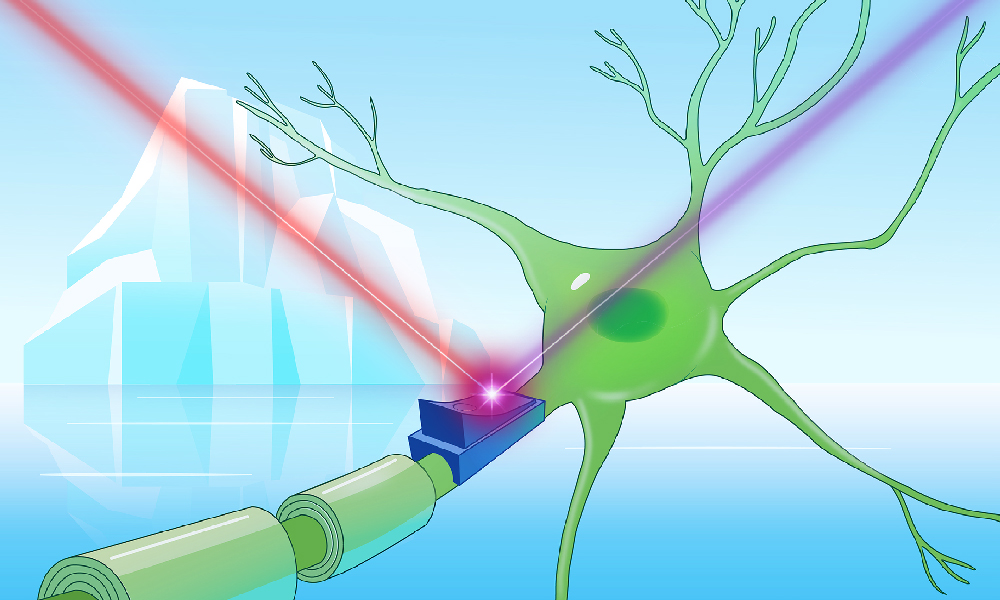
EMBL Hamburg scientists have discovered a group of mysterious microbial cold-loving molecules, ‘cryorhodopsins’ with extraordinary abilities.
They are the first observed molecules that can act as both on and off switches for electrical activity in cells.
https://t.co/RqUjxYDEdF