Biotechnologist & Biostatistician. I try to convert coffee into code and ideas for uncovering biological mysteries. PhD student @FraticelliLab @IRBBarcelona
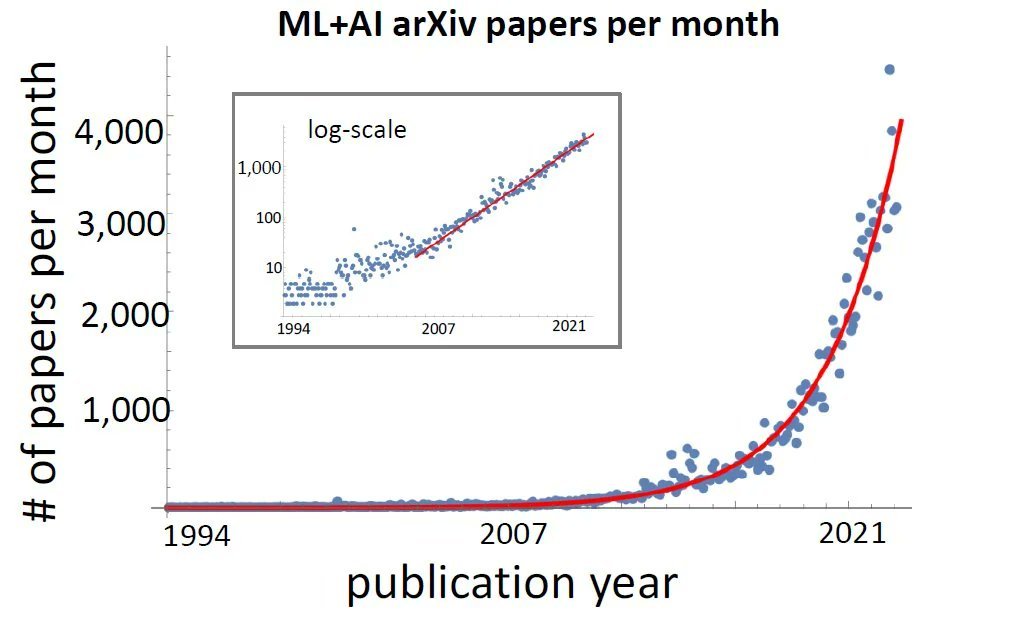
2/ Millions of papers a year, growing faster every year. Most aren't reproducible. Peer review is buckling. And every paper is a lossy compression of the work behind it — months of dead ends, judgment calls, and configuration tricks flattened into a clean story. The format was designed for a world where every reader was human. That world is ending.
I knew this was coming. We are so f*cked - fake and real now look the same.
We desperately need tools to show journals and researchers that data is real, not AI-generated.
I’m looking for an automated way to read others’s scientific data without giving credit or acknowledgement, and also claim full credit for insights from it. And I want it to have a fitting name
OAI: say no more
Yes we're all too busy publishing our own papers & hyping our own science but it really is our responsibility to also be part of the push and pull that is necessary to have a robust self correcting enterprise. 3/3
@dmitrypenzar I'm actually not sure whether (1) EVO2 is the problem (2) training on ClinVAR is the problem (3) the predictor threshold is very poorly calibrated (this is one of the hardest things). Or all three.
Not cool at all. My colleagues and I checked several well-known pathogenic variants, and they were predicted as VUS. Certain variants are simply missing (e.g, there is no information for rs879254374).
I like the idea, I don’t see any reason to use Evo2. Garbage in, garbage out.
AI for bio teams in academia & industry have been playing "offense" pumping out billion parameter models every other week that are worth less than a paper weight. How can anyone claim that the field needs "more offense" & less "rigor", when it requires literally the opposite?!?
Epigenetics is not a bystander in cancer. It links life’s exposures to disease risk.
It’s time to bring DNA methylation into the clinic for risk prediction.
https://t.co/SRCgdCN7JP
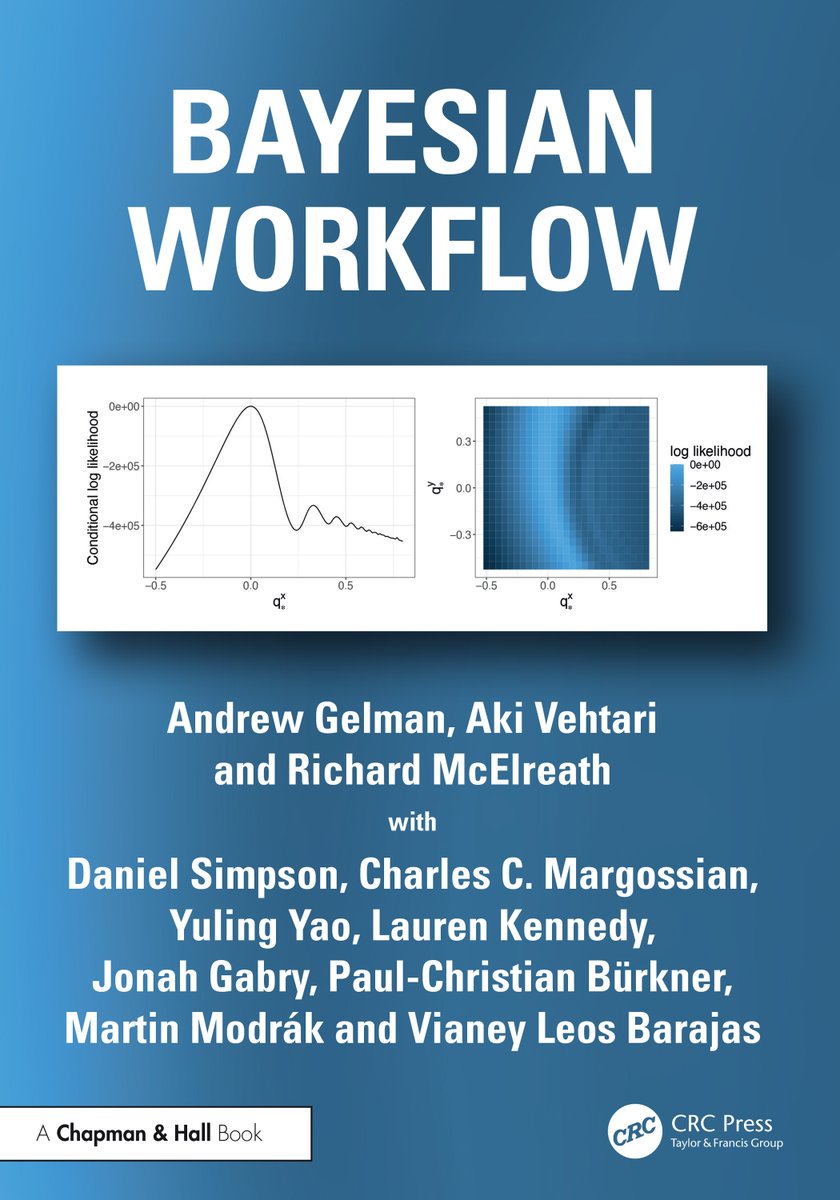
I was so pleased to be part of a great team writing a commentary on the draft FDA guidelines on Bayesian clinical trial designs. Should have been done 30 years ago, but better late than never
This argument, that what’s ultimately right and better may not appear to be the best solution now, is the best rebuttal I’ve heard to the current fervor for translational and applied research over basic science
Honestly feel kinda sad to see so many young scientists adopting and idolizing ultra hype culture. I think people don't really understand the medium and long term consequences to their own credibility and that of science as a whole.
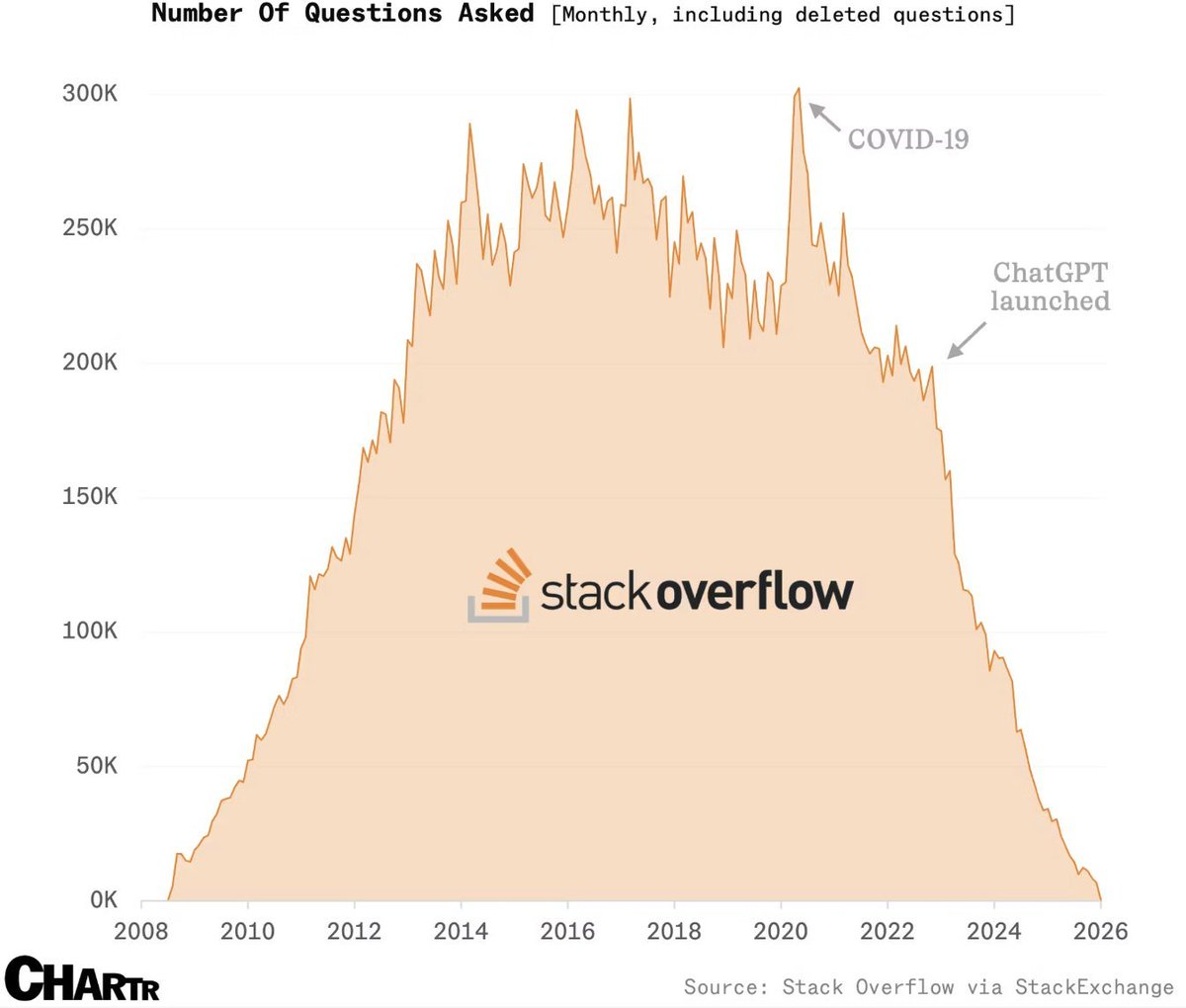
A really dangerous situation. Too many submissions. Too many generated papers. Little responsibility.
1. In 2026, more than 24,000 submissions were made to the International Conference on Machine Learning (ICML). It’s TWO times more than in 2025. To fight it, the organizers now require researchers to pay $100 for every subsequent paper.
2. LLM adoption has increased researcher productivity by 90% (there’s a recent paper in Science).
3. The number of papers is becoming far too high. Submissions to arXiv have risen by 50% since 2022.
4. There are simply not enough reviewers. Plus, many scientists no longer want to invest precious time in it for free.
5. We can’t easily identify AI-made papers from the genuine ones.
__
Important words from Paul Ginsparg, a co-founder of arXiv:
“AI slop frequently can’t be discriminated just by looking at abstract, or even by just skimming full text. This makes it an “existential threat” to the system.”
Basically, we’re getting closer to the tipping point.
📍 Many professors blame the AI.
But the problem is likely elsewhere:
1. Without a sufficient number of papers, many PIs can’t get funded. They have to prove their credibility to reviewers. Their proposals have to rely on prior publications. In many countries, there are some informal (or even formal) expectations for how many papers a group with a certain size has to publish to survive (funding-wise).
2. Our students / postdocs need papers if they want to be hired in faculty roles. Yes, some departments hire people with few publications. But the majority still want to ensure their faculty can get funded. If funding is partly a function of papers, this is used in decision-making.
3. The number of papers is important if you want to get high-level awards. Many of them are not given because you published one paper (even if it’s great). They are given because you made a meaningful CONTRIBUTION to the field. How do you make it? Publish more papers.
4. Tenure promotions in many places take the number of your papers into account (often indirectly). Your tenure may get delayed if you don’t publish enough. Not everywhere, but for many mid- to low-ranked universities this story is more or less the same.
+ There are many more to mention.
📍My opinion:
Much of this is rooted in how funding is distributed.
There is a strong correlation between the requirements at a university and the funding acquisition criteria.
If funding were based ONLY on the quality of published papers, universities would hire people for the quality of their science. If funding agencies strongly discouraged publishing too many papers, universities wouldn’t expect numbers from faculty during promotions. And some supervisors wouldn’t pressure students and postdocs to publish unfinished studies and low-quality data.
Yes, we need good detectors of fake papers.
But we also need the right policies and better funding allocation criteria.
The rate at which you learn is to a great extent a function of your metacognitive sensitivity -- your propensity to introspect and critique your own mental models and learning processes
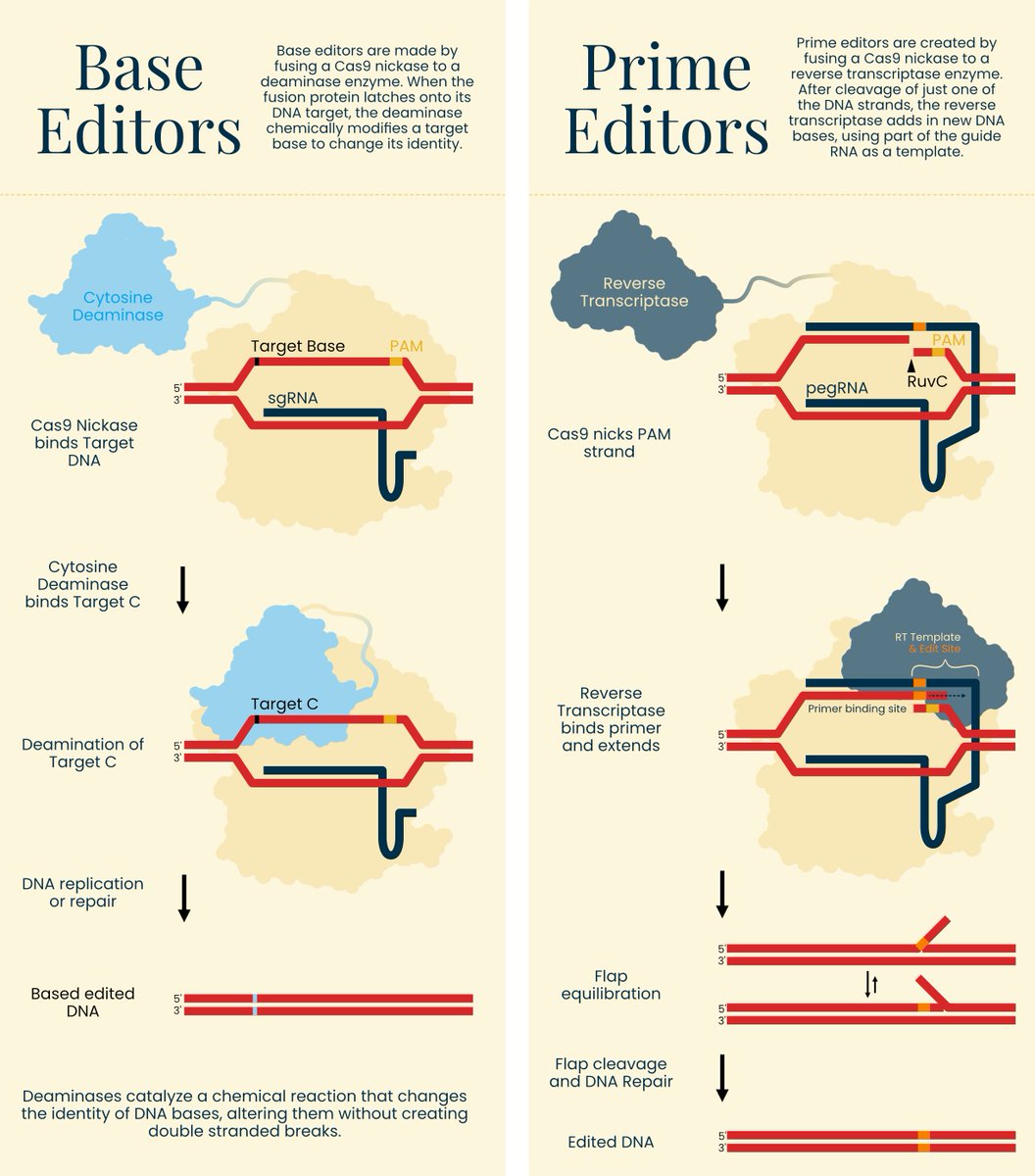
We've been working on this resource for months: A VISUAL GUIDE TO GENOME EDITORS.
Learn how tools like Cas9, Cas13, prime editors, and Bridge editors work - with diagrams!
We hope this becomes a valuable resource for the biology community and students.
Very cool work - a blood-based epigenetic clock for intrinsic capacity predicts mortality and is associated with clinical, immunological and lifestyle factors | Nature Aging https://t.co/T9s9g2VVID