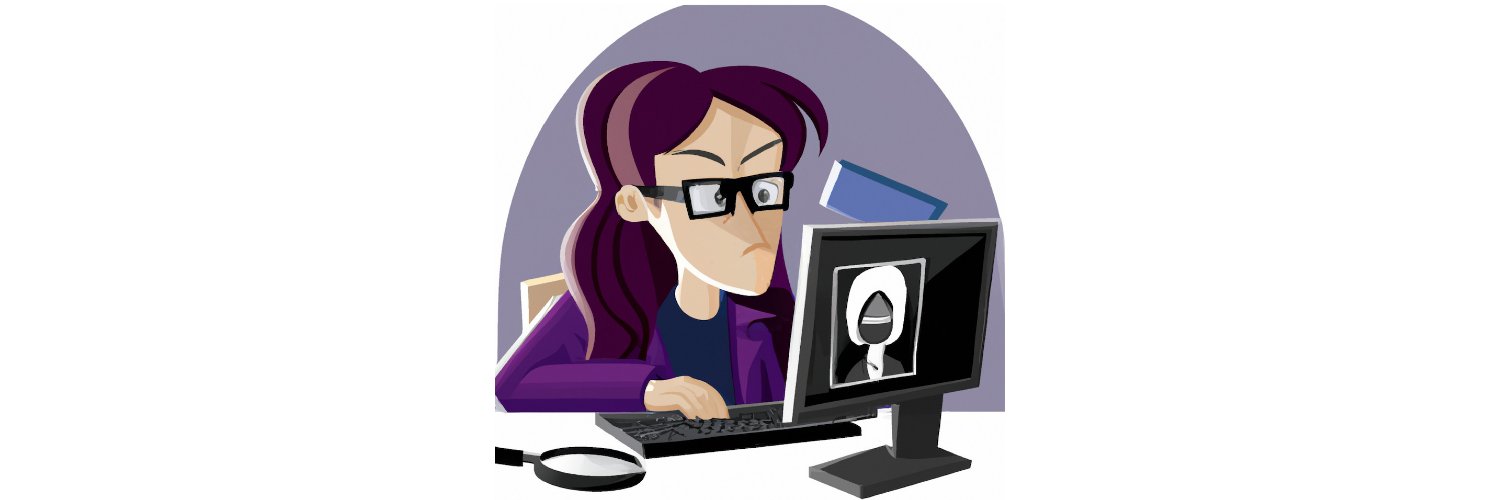
'Elisabeth Bik is a Dutch microbiologist. [...]
Then she opened a PhD thesis that had lifted text from somewhere else, and her eye caught something different.
A duplicated image.
She sat down and went through 20,621 published biomedical papers. By eye.'
https://t.co/912cJeyu2g
From my collection of Horrible Editorial Decisions, I present to you another installation of #ThisImageIsFine, published in @Sciencedirect's International Immunopharmacology, and which was promptly addressed with a ... Correction! 😱
#ImageForensics
https://t.co/IpFrO01WNV
Today I'm posting a new video to my YouTube channel! PubMed has stopped indexing Scientific Reports (for the time being at least)... Is anyone surprised? https://t.co/qlDtdtZ9VB
AI-generated research is testing the credibility of science
"It's absolutely flooding the scientific literature, and journals and publishers are struggling to keep up."
With quotes from Ivan Oransky, Michal Jojcik, and me.
Katharine Sorensen @TheBeiruter
https://t.co/hugefH8teQ
Scientific research has an artificial intelligence problem, and it goes well beyond AI-assisted writing.
Generative AI can now produce convincing scientific images, fabricate experimental datasets and invent academic references, making fraudulent research more difficult to identify and raising questions about the reliability of published findings.
A study published in Scientometrics in October 2026 estimated that the proportion of research papers containing AI-assisted writing rose from 9.8% in 2024 to 23.5% in 2025. While such assistance does not itself constitute misconduct, the technology's capacity to manufacture scientific evidence presents a far more serious challenge.
The problem is compounded by longstanding pressures within academia. Researchers are rewarded for publishing frequently, while commercial publishers can benefit financially from accepting more manuscripts.
Meanwhile, scientific journals are turning to AI-powered screening tools to detect manipulation and support peer review, creating a technological contest between increasingly sophisticated fabrication and detection.
Through interviews with research-integrity investigators Ivan Oransky, Elisabeth Bik and Michal Wojcik, The Beiruter examines how AI is amplifying existing vulnerabilities in scientific publishing.
Can scientific institutions protect the credibility of research without confronting the incentives that made the system vulnerable in the first place?
Read the full article by Katharine Sorensen below.
#TheBeiruter #AI #ScientificFraud #ResearchIntegrity #AcademicPublishing #Science #ArtificialIntelligence
https://t.co/RJbMrx5j9d
On se souvient que le HCERES écrit à propos de l'IHU-Mi "il est également indispensable que l’IHU s’engage activement dans une démarche de demandes de correction de la science".
4 ans plus tard, rien n'est moins vrai. Un exemple parlant est décrit ci-dessous.
1/21
@MichelleRM68 I would try 1) raising the bowl (put it on an upside down pot or whatever) and 2) a flatter saucer/plate. Some cats hate touching food with their whiskers.
STAT's Matthew Herper interviewed Elizabeth Holmes twice at the height of Theranos. Watching Nathan Fielder's new documentary reminded him of Holmes' unsettling ability to make people believe her, even when the facts tell a different story.
Tyler Schultz was one of the Theranos insiders who blew the whistle on Elizabeth Holmes. Today, he has a stern warning for audiences of Nathan Fielder's 'You Can See Everything': Holmes is more dangerous than she appears.
The Currency of the Journal Article Is Collapsing
As an editor I can say that we are being flooded with AI-assisted work.
By Anna Wexler
https://t.co/x2X4tHXcsU
@maartenmiller Die eerste maatregel is heel goed. Al die losse plastic zakken aan lantarenpalen waren een vreselijk gezicht en de meeuwen pikten de zakken open dus het was altijd een troep.
Lots of debate this week on whether journals should ban AI in peer review.
We actually tested this in our new preprint, and the results were pretty clear to me.
For context, I've reviewed for most of the big journals and evaluated 1,000 human reviews as an editor. I love to read and evaluate science.
TLDR: From now on I won't do any peer review without AI. For clinical trials, I'd even call human-only review dangerous 🧵