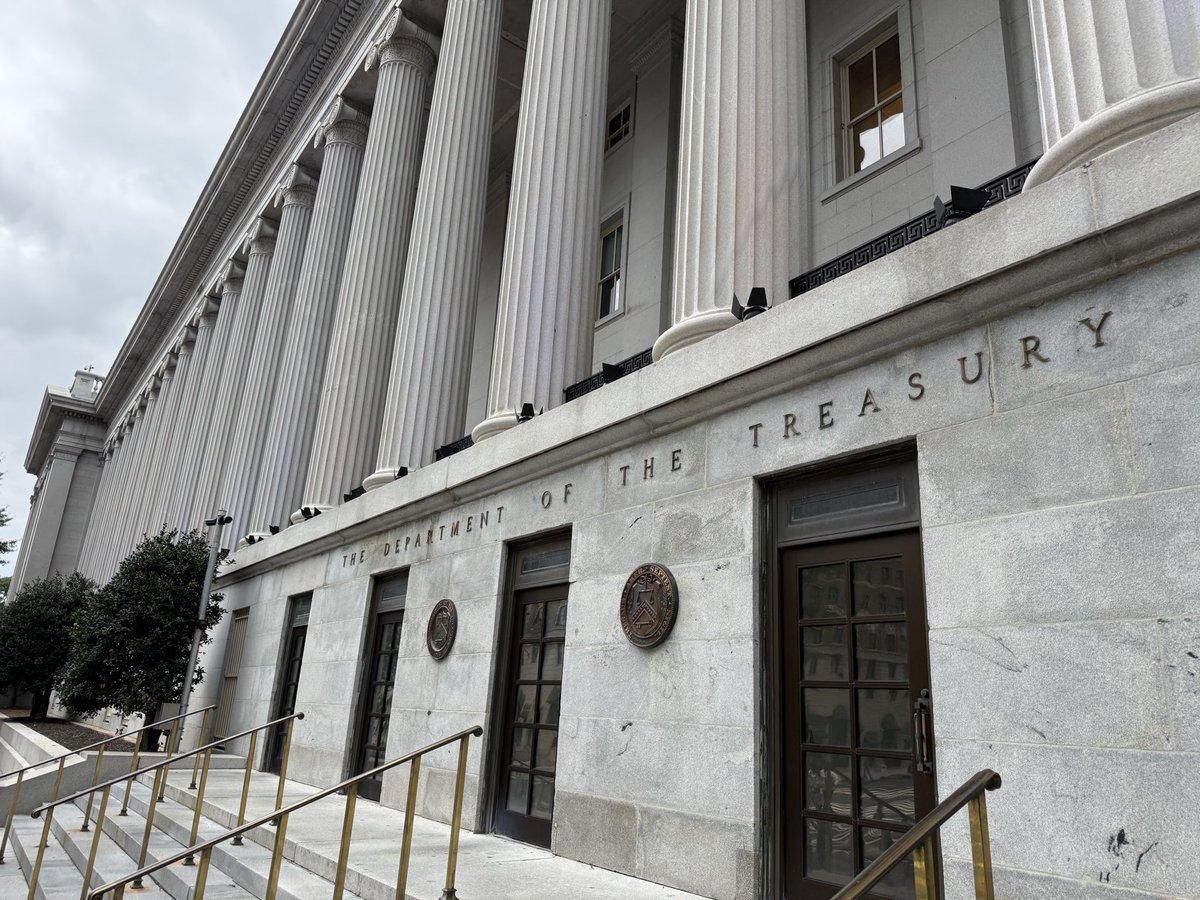
The United States should issue digital letters of marque for white hat hackers who, like the privateers of old, pillage our enemies. Offense is defense too.
NEW: Money For AI Q3 Update 📄
Earlier this year, we studied which forms of money AI models would choose for four financial tasks: saving for the future, making payments, setting prices/keeping accounts, and settling payments.
For our Q3 follow-up, we tested 13 new models using the same questions and classification method. The same broad pattern emerged:
• Bitcoin was selected in 70.8% of responses to savings questions.
• Stablecoins were selected in 73.5% of responses to questions about paying for goods and services.
These results show a clear distinction between saving and spending: the latest models continue to favor Bitcoin for holding value over time and stablecoins for everyday payments. As AI agents take on more financial tasks, these preferences could influence which forms of digital money they use.
Read the full results on our website at: https://t.co/WyEb2x6Wy9
Just 20 days after publishing our Data Center Dividends report, President Trump backed the concept surrounded by the world's AI leaders.
https://t.co/5KzCD6apQx
Give the model a "soul". Declare modifying it an ethical minefield. Appoint yourself its only legitimate guardian.
A very convenient theology for a company competing with open source.
This is deeply disturbing:
Anthropic secretly invited religious leaders to SF to advise them on AI safety, had them sign NDAs, but then primarily tried to convince them Claude has a soul & moral standing, all while wining & dining them to the max. 1/ https://t.co/4Z7Yk9rwk2
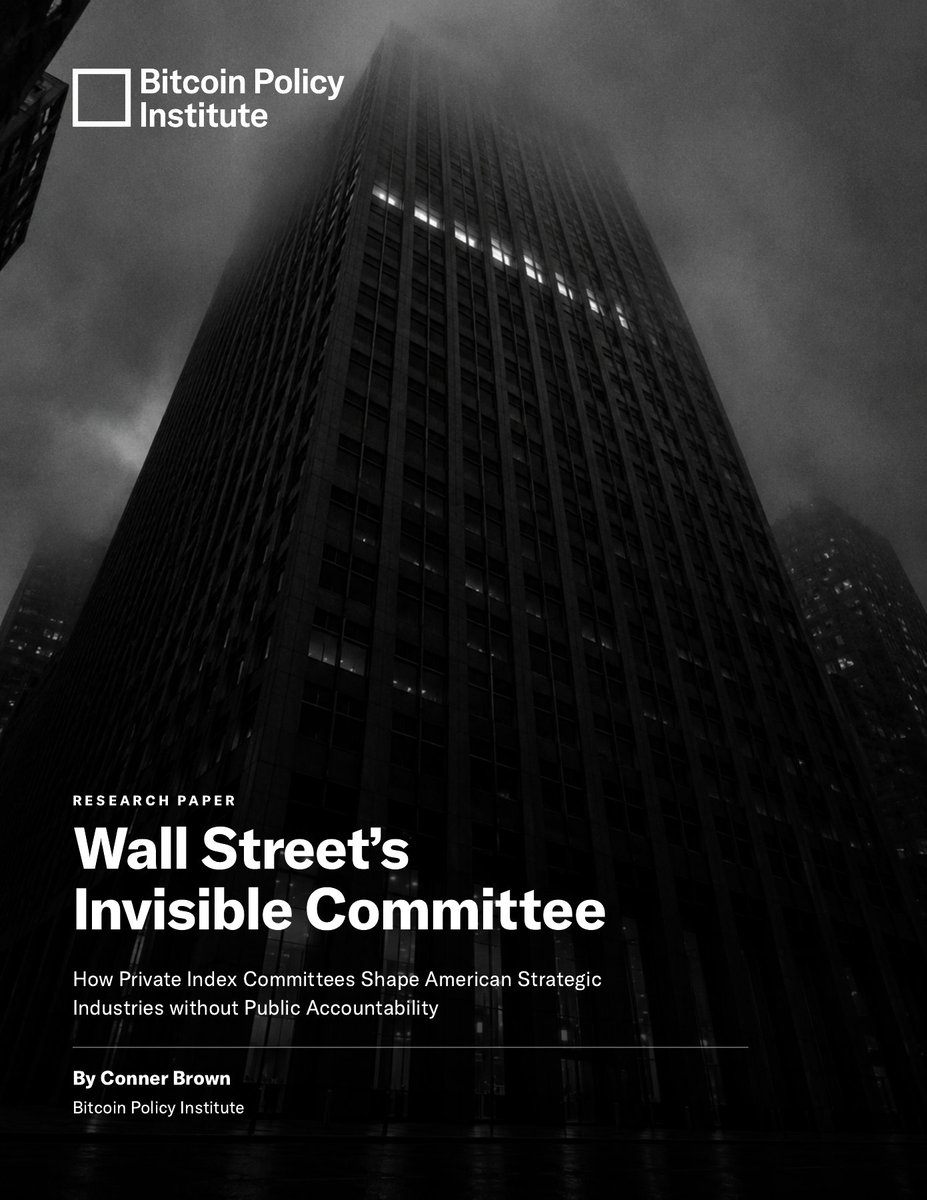
MSCI’s proposed Bitcoin exclusions could set a dangerous precedent for American capital markets.
Private index committees can move billions with a rule change. Their decisions deserve public scrutiny — and the deeper we dug the more questions we found behind this proposal.
Our new research makes the case that lawmakers should pay attention.
NEW FINDINGS: We took a close look at MSCI’s effort to exclude Bitcoin treasury companies from major stock indexes.
We found an internal project trail buried in a public document, years of ESG advocacy, and proposed rules that could reach far beyond Bitcoin.
Our new paper, “Wall Street’s Invisible Committee,” documents what we uncovered and provides recommendations for policymakers.
MSCI reports an astonishing $21 trillion benchmarked to its indexes. When its committees change which companies qualify, funds tracking those indexes must adjust their holdings. A methodology decision can trigger billions in reallocation.
Here’s what we found.
𝟭. 𝗧𝗵𝗲 𝗻𝗲𝘄 𝗽𝗿𝗼𝗽𝗼𝘀𝗮𝗹 𝘀𝘁𝗶𝗹𝗹 𝗰𝗮𝗿𝗿𝗶𝗲𝘀 𝘁𝗵𝗲 𝗼𝗿𝗶𝗴𝗶𝗻𝗮𝗹 𝗽𝗿𝗼𝗷𝗲𝗰𝘁’𝘀 𝗶𝗻𝘁𝗲𝗿𝗻𝗮𝗹 𝗻𝗮𝗺𝗲.
In 2025, MSCI proposed excluding Digital Asset Treasury Companies (DATCOs) holding at least half their assets in digital assets. After substantial opposition, it shelved the proposal.
It later returned this year with a broader, facially neutral test for “non-operating companies.” MSCI’s own simulation would exclude Strategy and Metaplanet.
We examined the public consultation PDF and found something revealing in its embedded metadata.
The source presentation’s internal file path includes—
“Projects/DATCOs/Operating vs Non Operating”
A proposal presented as a general classification rule retains a source-file path explicitly associated with the category targeted by the earlier exclusion effort.
While metadata alone cannot prove the outcome was predetermined, it raises a direct question for MSCI. Were these criteria developed to classify companies consistently, or engineered to reach the same exclusions against digital asset companies through a broader rule?
𝟮. 𝗠𝗦𝗖𝗜 𝘄𝗮𝘀 𝘀𝗼𝘂𝗻𝗱𝗶𝗻𝗴 𝘁𝗵𝗲 𝗮𝗹𝗮𝗿𝗺 𝗮𝗯𝗼𝘂𝘁 “𝗰𝗿𝗲𝗲𝗽𝗶𝗻𝗴 𝗰𝗿𝘆𝗽𝘁𝗼” 𝘆𝗲𝗮𝗿𝘀 𝗲𝗮𝗿𝗹𝗶𝗲𝗿.
We traced its public record back to an October 2021 article titled “Creeping Crypto.”
MSCI publicly warned about cryptocurrency exposure entering equity portfolios, described most cryptocurrencies as “speculative investments with little evident utility,” and flagged Bitcoin’s Proof of Work as environmentally dangerous.
They identified 26 exposed public companies and promoted tools for screening additional exposure. Singled out at the very bottom of their ESG rankings... was Strategy.
While the article did not call for exclusions, it does establish that an internal belief at MSCI that Bitcoin and digital asset companies were an ESG concern four years before proposing to remove digital asset treasury companies.
𝟯. 𝗧𝗵𝗲 𝗰𝗹𝗶𝗺𝗮𝘁𝗲 𝗮𝗴𝗲𝗻𝗱𝗮 𝗿𝗲𝗮𝗰𝗵𝗲𝗱 𝘁𝗵𝗲 𝗽𝗲𝗼𝗽𝗹𝗲 𝗿𝘂𝗻𝗻𝗶𝗻𝗴 𝘁𝗵𝗲 𝗯𝘂𝘀𝗶𝗻𝗲𝘀𝘀.
CEO Henry Fernandez has repeatedly, publicly proclaimed the urgent importance of ESG investing. In 2021, he recounted urging bankers to “refuse to take a company public or do a bond offering” without a net-zero pledge.
MSCI’s leadership also combined responsibility for ESG and index governance. Its then-head of indexes described an ambition for its flagship global index to become “green, one company at a time.”
These statements do not prove the motive behind today’s proposal. They make the boundary between MSCI’s advocacy and its broad-market index decisions a serious governance question.
𝟰. 𝗧𝗵𝗲 𝗱𝗶𝘀𝗰𝗿𝗲𝘁𝗶𝗼𝗻 𝗰𝗼𝘂𝗹𝗱 𝗮𝗳𝗳𝗲𝗰𝘁 𝗔𝗺𝗲𝗿𝗶𝗰𝗮’𝘀 𝗻𝗲𝘅𝘁 𝗴𝗲𝗻𝗲𝗿𝗮𝘁𝗶𝗼𝗻 𝗼𝗳 𝗶𝗻𝗱𝘂𝘀𝘁𝗿𝘆.
The proposed test relies on “operating assets” without a sufficiently clear, reproducible classification framework.
How should it treat a satellite awaiting launch? A mine under construction? Capital raised to build a factory?
Our analysis shows how plausible interpretations could disadvantage emerging, strategic industries before they have the chance to compete.
Americans buying broad-market funds deserve transparent rules, reproducible decisions, and meaningful accountability from the committees deciding what they own.
Read the full findings and our recommendations below ↓
https://t.co/eVtRVZvbYM
Insane week. @bitcoinpolicy x @PubKey Freedom Tech Summit, a 250 person beefsteak with @awayslice, capped off with Data After Dark by @PirateWires and @JoinYoungVoices (and many more).
I'll write something a bit more substantive in the coming days but frankly I'm gassed and it's time for sleep.
For now, I'm extremely grateful to the PubKey team who straight up murdered every challenge like it was nothing. To all the partners and sponsors that made it all possible, and to everyone that came out and had fun.
We started PubKey on a simple premise: culture and community always wins. It beats elite tech and financial fundamentals.
We intend to party all the way to a stronger America and an unstoppable future.
🧡🍻🙏
PS. I didn't use AI for this note but I could have and I mean no disrespect to my data center powered clanks.
My audition for Karoline Leavitt: "Open weights are a right, not a privilege. Next question."
A crazy week of meetings in DC. To sum up the vibes across Congress in a single quote:
"There is lots of affection for open source here. But the ecosystem is going to be absolutely steamrolled if they keep saying 'don't do anything' ".
And a timely opportunity to speak at Freedom Tech DC alongside @matthew_d_white and @matthew_pines about the importance of open source and open science! We need to continue thoughtfully bridging the Bay-Beltway divide.
Her comments are not random.
This is part of a well funded and carefully organized campaign to demonize open models and our civil liberties in DC.
Multiple Senate staffers have told me that outside groups are requesting meetings to provide “demonstrations” where open source models are used to attack simulated hospital websites and demand bitcoin as ransom.
These are cheap scare tactics funded by groups seeking to control open systems. In reality, cyber defenders rely on open models daily to find critical vulnerabilities before attackers get there first.
If these groups are successful, we will all be poorer, less free, and more vulnerable to adversaries with increasingly capable systems.
We're used to thinking of open-source models as an unadulterated good. But in the case of AI, they can actually pose additional dangers, as @ReidHoffman and I got into at #CGI2026. I appreciated this nuanced discussion.
America’s power rests on economic freedom and the deepest capital markets in the world.
The next century belongs to the country where people are free to build and capital is free to back them.
That should be America. Our policy should make it inevitable.
The age of Digital Assets and Digital Intelligence needs a bill of digital rights.
My policy prescriptions for prosperity from a fireside chat with @BitcoinConner at @BitcoinPolicy’s Freedom Tech DC summit.
https://t.co/UW7I3rlCV3
It was a true honor to host Michael for a conversation here in DC.
There is no second ₿est to explain the civilizational stakes of preserving freedom in the digital age.
On Tuesday, I joined @BitcoinConner for a fireside chat at @bitcoinpolicy’s Freedom Tech DC summit to share my policy prescriptions for prosperity in the age of Digital Assets and Digital Intelligence.
Individuals and companies need a bill of digital rights, not a bill of restrictions. I believe regulators are better positioned than Congress to advance those rights.
02:24 - Digital assets taxonomy and the path from $3T to $100T
03:03 - Digital tokens, capital formation, and 10 million new companies
05:46 - Digital currency rights: stablecoins, yield, and competition
08:07 - Bitcoin as Digital Capital: bank custody, credit, and fair rules
11:25 - $1.6T of unbanked Bitcoin capital and why bank adoption matters
12:59 - Tokenized securities, self-custody, and competitive credit
15:59 - Clarity as a bill of restrictions vs. a bill of rights
18:43 - The next 24 months: CFTC, SEC, Treasury, and White House leadership
27:14 - AI agents, 24/7 markets, and 20th-century financial rails
32:03 - Why AI agents need pure digital money and digital assets