We tested 36 blank-slate frontier AI models to determine their monetary preferences. Across 9000+ scenarios, the agents overwhelmingly chose Bitcoin.
See for yourself at https://t.co/syke97JD0c
🇺🇸 New Study from BPI: Frontier AI agents prefer bitcoin over stablecoins and other forms of money.
BPI tested 36 models over 9000+ conversations, and the AIs overwhelmingly chose to use Bitcoin for their economic activity.
"The McKinsey, BCG, Bain of the 21st century won't have PowerPoint decks. It'll be people who unlock the benefits of AI for businesses."
Zack Shapiro explains the current AI adoption gap.
"China state media and US nonprofits are openly collaborating to amplify anti-data-center messaging."
@SamLyman33 joined @RisingTheHill to explain how anti-AI propaganda is being pushed to Americans while China promotes its own AI initiatives.
Why does AI choose Bitcoin? Join BPI and Five Bells for Agentic Commerce 101, a live panel on the future of AI-powered payments.
🗓️ June 17, 5:30–7:30PM
📍 PubKey, Washington, DC
Featuring Brian Langel, Conner Brown, and Anthony Magliacca.
You can now view our chart documenting foreign influence in the campaign against American AI as an interactive map, complete with cited sources and explanations for each connection.
Dive deeper on our website: https://t.co/dGCB6HdWxa
"If China wins the AI race, I can guarantee you that the information layer of the global economy will be anything but free, open, and uncensored."
@SamLyman33 joined @blockspace to describe the stakes in America winning the AI race.
CCP-linked entities are running coordinated anti-AI propaganda campaigns on American soil.
BPI's new research exposes the influence networks behind it. Our Head of Research, Sam Lyman, broke it down on The Hill's Rising:
https://t.co/2UGtFCUFEI
Hasan Piker singled out the Shanghai-based Neville Singham as the "funding vehicle" for political agitation here in the United States.
This is a huge admission from one of America's biggest podcasters.
And it directly corroborates BPI's research on foreign influence in the campaign against American AI.
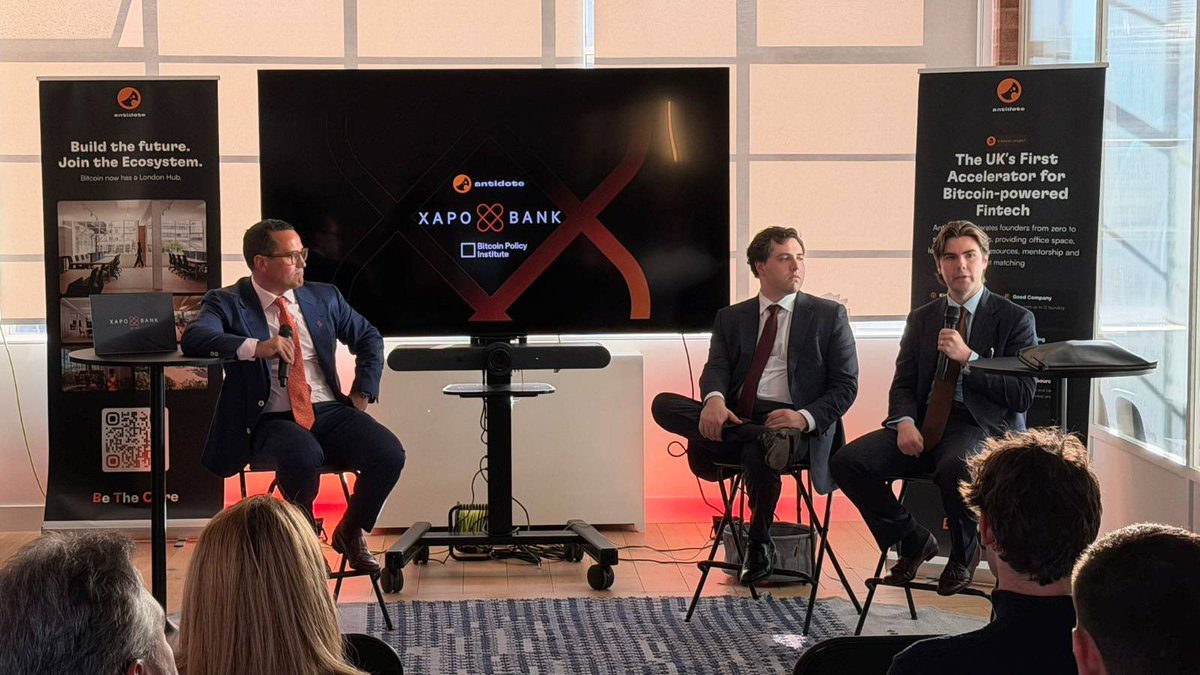
Last week BPI had our inaugural trip to the UK to launch our international efforts. 🇬🇧
Below is a quick summary on the state of Bitcoin Policy from London.
We had a whirlwind week, meeting with members of Parliament, briefing the House of Lords, discussing Bitcoin with the City of London, reviewing policy ideas with the Reform party, and meeting lots of local Bitcoiners.
From these meetings, a few themes emerged:
1) There’s a surprising amount of energy.
Everyone we spoke to, regardless of party affiliation, was paying close attention to the U.S. developments and was concerned about the UK falling behind. I consistently heard the phrase that the UK wants to be a “fast follow” and there seems to be a sudden burst of energy to get something done.
Most recently, the Bank of England rescinded their guidance limiting ownership of stablecoins and this seems to be the start of a new trend in the right direction.
Policymakers in the UK recognize that financial innovation cemented their position on the world stage and they don’t want to be left behind as this industry grows.
2) There is still a wide gap in understanding of the different types of networks.
Many of the conversations started with a focus on“blockchain technology.” In some ways it felt like I had been transported back to 2018 when everyone was excited about “blockchain not Bitcoin.”
But over the course of our discussions, I could feel the lightbulb going off when we discussed that the killer app for blockchain was actually already here. It’s called Bitcoin.
Through discussions about what sets Bitcoin apart as a neutral, open network without insiders, I found lawmakers were surprisingly receptive. Many of their concerns were focused on how crypto schemes dump tokens on unsuspecting retail investors. We shared those concerns and offered ideas to help them combat crypto grift.
It was also interesting that many officials had been following the recent testimony by ADM Paparo about bitcoin as a positive tool for the U.S. national security interests. Seems to be a clear indicator that success in the US has knock on effects overseas.
Overall, this was an exploratory first trip and we came away with a strong sense of optimism for the UK making more progress in the coming months.
Everyone was keen to learn from our work in the U.S. and eager to get input on how the UK can improve.
We look forward to providing you more updates as the work continues.
And a big thank you to @Joeyg_poh and @xapobankapp for making this trip possible with their generous support. And thank s to @AntidoteBTC for hosting a great community event.
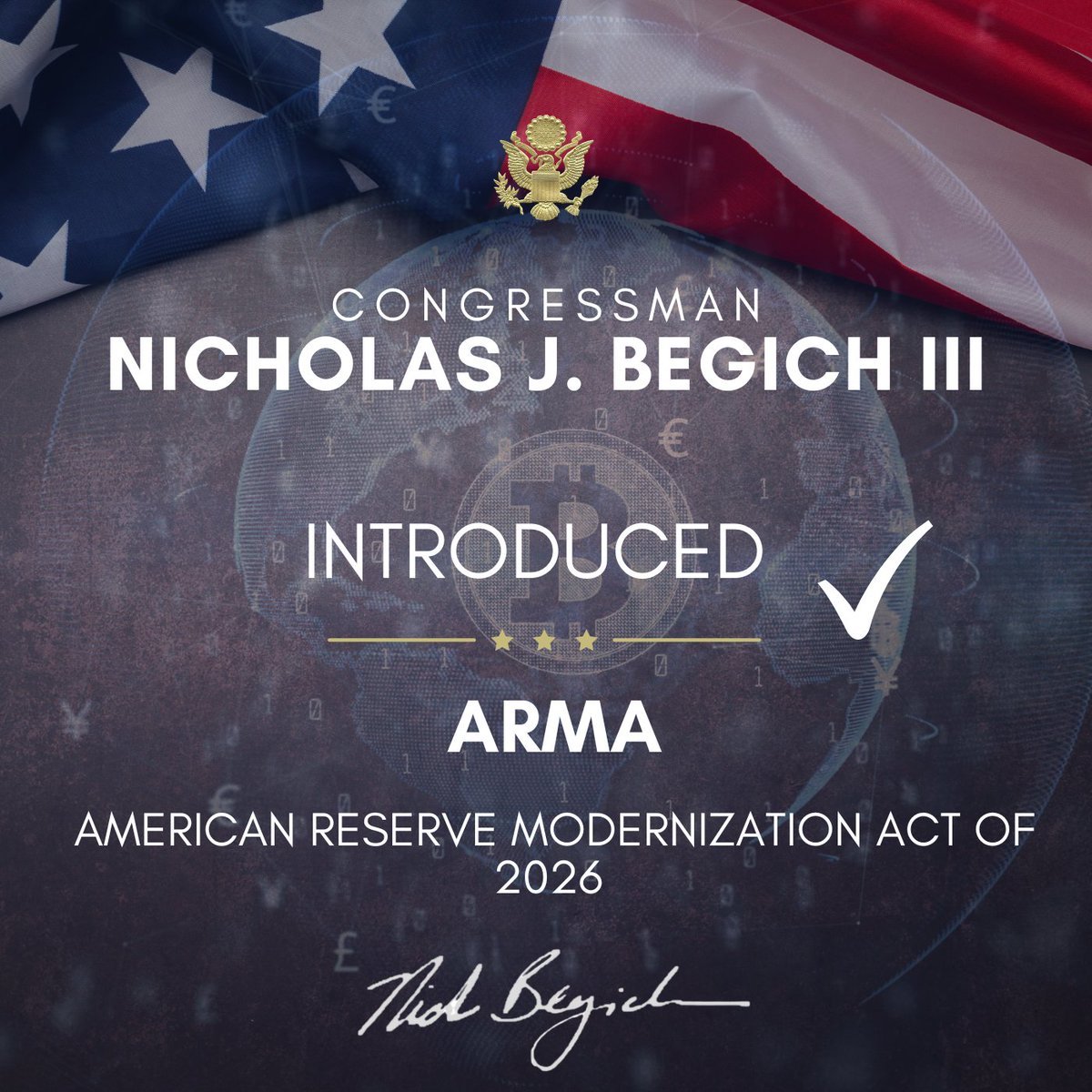
🚨Congressman Nick Begich just introduced landmark Strategic Bitcoin Reserve legislation.
ARMA — the American Reserve Modernization Act — would put the U.S. Strategic Bitcoin Reserve on permanent legal footing: requiring 20 year long-term Bitcoin holdings, budget-neutral acquisition strategies, and federal custody standards.
This is a major step forward for sound Bitcoin Policy in the U.S. It is long overdue to professionalize our custody and treat Bitcoin the same as other strategic assets. Full Breakdown coming soon.
Just in from DC! 🇺🇸
Today, Rep. Begich introduced the American Reserve Modernization Act with an incredible amount of support — 16 original cosponsors!
ARMA creates a Strategic Bitcoin Reserve to secure America’s Bitcoin for 20 years and explores a range of budget neutral acquisition strategies.
This is a major step forward for a lasting framework for holding Bitcoin for our future generations. Begich has been working hard for months to push this forward.
It’s time for a Digital Fort Knox! We’re excited to see this move through the legislative process and will keep you all posted with updates.
America’s reserves balance sheet is a critical component of our nation’s insurance policy, bolstering our currency and providing assurance during times of uncertainty. Over time, the prevailing sentiment as to what constitutes a durable store of value can shift, and as such it is important for us to recognize this fact and provide the flexibility needed to broaden America’s portfolio of reserve assets.
The American Reserve Modernization Act (ARMA) ensures digital assets in the possession of the federal government will be consolidated across government and protected as a reserve asset for future generations, protecting these assets from the whims of Congress or future administrations.
Bitcoin is not just a commodity. It is a national security asset, a tool of power projection, and a critical front in the competition with the CCP.
More in my @CoinDesk op-ed:
https://t.co/J4MDbQr3Bw
"This piece of legislation provides clarity and certainty - and makes the U.S. the home for building the next generation of the financial system."
WATCH: @faryarshirzad and @SamLyman33 react to the advancement of the Clarity Act, a big step forward for the crypto industry.
10,000 BTC. Two pizzas. One historic transaction.
Sixteen years ago, someone made the first real-world purchase with Bitcoin.
This Friday, join us, @unchained, and @PubKey to celebrate Bitcoin Pizza Day — free pizza and drinks, Bitcoin trivia, and prizes.