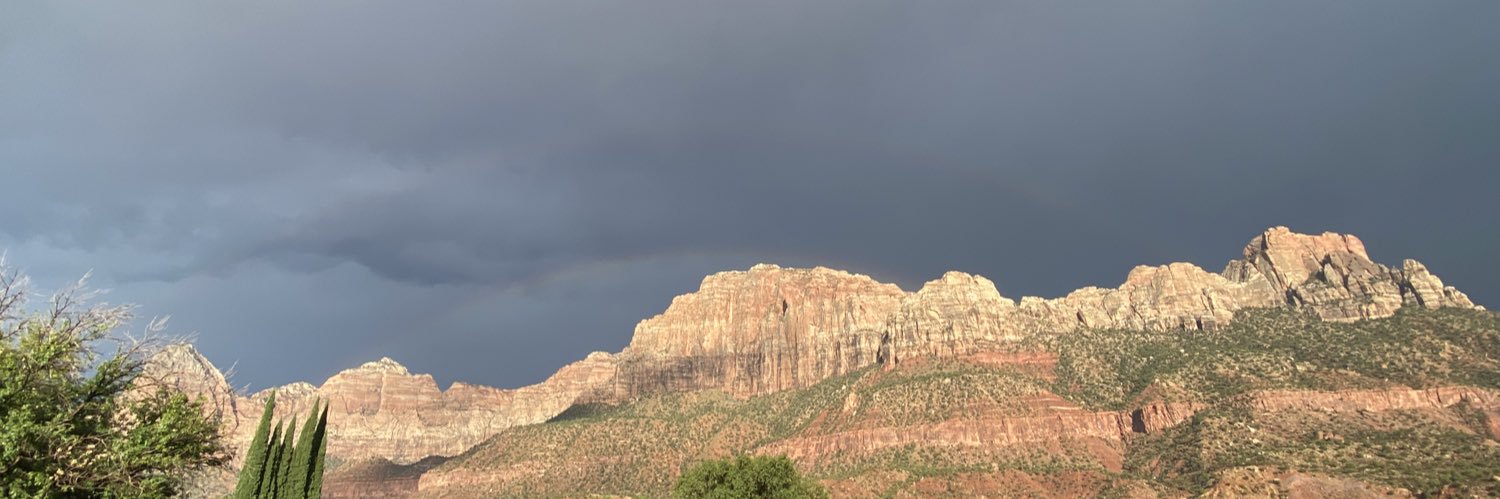
Feast your eyes 👀 on the future home of Dorothy 3 — our second AI development project co-located with the Briscoe Wind Farm.
I was on-site last week to check on the Wind Farm upgrade work, spend time with the team, and tour the new location.
Exciting times ahead as we kick off Test Fit and Master Planning.
$SLNH @SolunaHoldings@power_analys1s@disruptorinvest
Call me crazy but this seems like cryptic Alpha Signal to me.
Below is an example of just one recent data center deal that fell apart at Google.
Who better to replace this than Soluna. I would not be surprised by a Google deal. Our business models align perfectly.
———-
The most prominent recent example of a Google data center project that fell apart is the proposed campus in Franklin Township (southeast Indianapolis/Marion County, Indiana), withdrawn in September 2025. https://t.co/3DZdyI9mYm
Franklin Township / Indianapolis Project (Project Flo)
• Status: Cancelled/withdrawn in September 2025 (minutes before a scheduled Indianapolis City-County Council vote on rezoning, which was widely expected to fail). https://t.co/ZmrNxRQsul
• Scale: ~468–470 acres of farmland rezoned for a data center campus. Planned capacity of 250+ MW (one tracker) to around 400 MW (another data center database). Estimated investment of ~$1 billion (some local reports referenced up to $1.5 billion). https://t.co/r0sUFja1sO
• Reasons it fell apart: Intense local opposition from residents and some officials over the loss of farmland, high water consumption concerns (reports mentioned potential use of 1+ million gallons per day in some coverage), potential impacts on local electricity rates and grid infrastructure, quality-of-life issues (noise, traffic, etc.), and perceptions of secrecy around the project (including confidentiality agreements). Hundreds of protesters attended meetings, and the project faced significant political resistance. Google preemptively withdrew the rezoning application rather than risk a formal denial. https://t.co/PC8n3jUSqI
This project is frequently cited in coverage of the broader 2025–2026 wave of data center pushback in the U.S., where local opposition has blocked or delayed billions in projects.
Or find buyers who require A rated credit-if there were such a thing for BTC as collateral.
To me this is a credit rating issue, not a APR. If BTC had appropriate rating this is a much safer and equally attractive Fixed Income Product for financial planning.
Getting into an APR contest degrades the value of their stack.
What they need is regulatory reform in order to properly evaluate their stack vs others.
At that point ASST must pay more due to a lower credit rating. As they have a smaller stack. Just like how they evaluate Annuity Insurance Companies.
How do you figure all it takes is standard and poors to adjust their credit rating metrics and reevaluate their entire BTC stack.
Them among other credit evaluation metrics can easily be reformed and flip a switch on the whole industry.
It’s naïve to think that that won’t happen
$SLNH The Fortune piece about data center “water wars” is exactly why I think @SolunaHoldings approach could matter more than people realize.
Everyone talks about power as the bottleneck for AI data centers, and it is.
But water is becoming another major issue.
Communities are starting to push back when huge data centers come in and potentially stress local water resources.
That’s why this part from Soluna’s Q1 interview in @McnallieM podcast stood out to me.
@jbelizaireCEO said that for Kati 2 in Willacy County, the main local concern is water.
And instead of ignoring it, Soluna is designing around it:
“We are designing air-cooled systems with direct liquid closed-loop facilities.”
He also made it clear this is not supposed to be a data center “sucking massive amounts of water out of the ground” to cool itself.
That’s important.
If Soluna can offer both solutions at the same time – AI/HPC compute capacity + low-water impact on the local community – that is a huge advantage.
Because the future winners won’t just be the ones who find power.
They’ll be the ones who can deliver power-backed compute without creating new problems for the communities around them.
That is what makes Kati 2 interesting.
Power-first. Low-water. Community-aware. AI/HPC-ready.
https://t.co/LiePwlteyl
@ZynxBTC If MSTR and ASST make a run before MetaPlanet that will make the perfect swing trade opportunity.
MPJPY will clearly have a strong hold in the Japan market.
Let's hope this statement by Simon doesn't mean the execution of the pref strategy can't happen until April 2027:
Within Japan, we hold approximately 87% of all BTC held by listed companies as of May 2026, a position we intend to continue building. At the same time, we are preparing for the broader institutionalization of the asset class. On April 10, 2026, Japan's Cabinet approved an FIEA amendment bill establishing a regulatory framework for crypto-assets. Subject to Diet passage, the amendment is expected to take effect during fiscal year 2027 (April 2027 to March 2028).
----------
I suspect this is a more broad based legislator that won't inhibit the prefs strategy.
Are the issuance of Prefs and execution on said strategy dependent on this amendment? - If so that means no prefs till April 2027 at the earliest.
Or is it non dependent?
Within Japan, we hold approximately 87% of all BTC held by listed companies as of May 2026, a position we intend to continue building. At the same time, we are preparing for the broader institutionalization of the asset class. On April 10, 2026, Japan's Cabinet approved an FIEA amendment bill establishing a regulatory framework for crypto-assets. Subject to Diet passage, the amendment is expected to take effect during fiscal year 2027 (April 2027 to March 2028).