4 BEDROOM TERRACE DUPLEX WITH BQ
Location: Kukwaba, FCT Abuja, behind the National park service
Features:
1. Plot Area/ Unit: 250 sqm
2. 4 Bedroom Ensuite
3. Large kitchen
4. 3 floors
5. 2 Living Rooms
6. Servant's Quarters
DM for more info
#housing#residential #construction
There is a version of tropical architecture that never forgot what it was supposed to do. This house is proof of it.
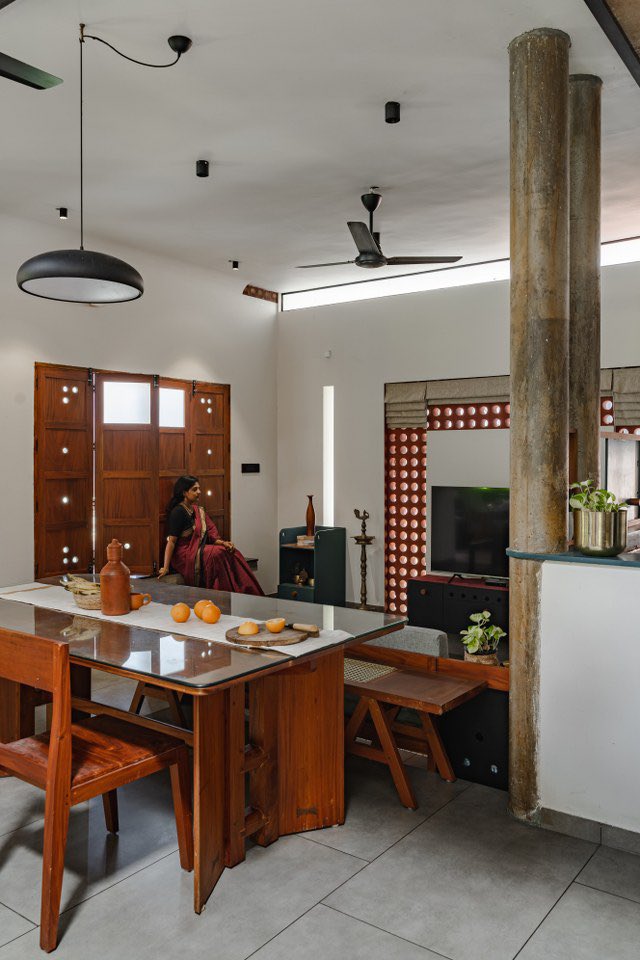
Aadhya. Thrissur, Kerala, India. Ar. Nanda Gopal of Pragvi. 2,300 sq ft. 2023.
Exposed brick, reclaimed terracotta roofing, kadappa stone, timber windows, natural ventilation built into the structure. Every material is from the region. Every decision responds to the climate it sits in.
Kerala is tropical. The heat, the humidity, the rain. Not so different from what we have here.
The problems are the same. But look at what happens when a people keep refining their building knowledge instead of discarding it.
We discarded ours. And when we started building again, we were copying from people who were copying from people, using materials imported for climates nothing like ours, putting up houses that fight the weather instead of working with it.
The knowledge to build like this exists in Africa. What does not always exist is the decision to use it.
Ar. Nanda Gopal | Pragvi | Thrissur, Kerala, India | 2,300 sq ft | 2023
The man behind this building is a sculptor. He was given 12 days to come up with a design. He had never designed a building. He won the contest. Every part of it, down to each feather, represents one date: August 17, 1945, Indonesia's independence day.
His name is Nyoman Nuarta, a sculptor from Bali. His most famous work is the giant Garuda Wisnu Kencana statue. It's 121 meters tall and took 25 years to finish. For the palace, Nuarta's idea was simple: take a 9-story office building, then wrap a giant copper bird around the whole thing. The bird is a Garuda, a mythical creature from Hindu stories that also sits at the center of Indonesia's national symbol. Five major architect groups in Indonesia signed a letter protesting the design. The government went with it anyway.
The wings carry 17 feathers, the tail 8, the base 19, the neck 45. Together: August 17, 1945. The body was designed to be 76 meters tall, chosen because 2021 was the 76th year of Indonesia's independence. The whole structure is a sculpture you can work inside.
The outer skin is made of 4,650 copper bars, each one weighing 300 kilograms, about the weight of a piano. Together that's around 1,400 tonnes of copper, roughly the weight of 1,000 cars, just on the outside of the building. Right now it looks bronze. Over the coming decades the copper will react with air and slowly turn bluish-green. That's the same effect that turned the Statue of Liberty green. It's already starting on Nuarta's earlier Bali statue.
The palace sits 1,200 kilometers (about 750 miles) from Jakarta, on the island of Borneo. Indonesia is building Nusantara, an entirely new capital, because Jakarta is the fastest-sinking major city in the world. Some neighborhoods in the north drop up to 25 centimeters (about 10 inches) every single year. Large parts of the city could be underwater by 2050.
The new capital was projected to cost $32 billion. State funding peaked at $2 billion in 2024. President Prabowo Subianto took office that October and cut the budget to $700 million the next year. The 2026 budget is $300 million, an 85% drop in two years. The full move-in date has slipped from 2024 to 2028. Only 4,000 government workers are scheduled to relocate there this year.
A building shaped like a bird, designed by a sculptor, marked with a date, slowly turning green. The capital it was built to anchor may never fully arrive.
Out of the ground and moving up fast! 🚀
With the ground floor block work officially wrapped up, the team is fully focused on the structural backbone—pouring concrete for the columns and setting up precast elements.
The vision is taking shape day by day. 📐🔨
#ConstructionLife #ArchitectAtWork #SiteSupervision #ConcreteDesign #ProjectMilestone