Interesting SME-specific offer from Glosperity (Fukuoka): a six-month package that uses AI to systematize market research, pricing, and overseas sales setup, then hands the operating playbook back to a single internal owner. They cite 2,000+ prior consultations. The test will be whether the AI templates actually survive after the consultants leave—exactly the capability gap most Japanese manufacturers hit when they try to export.
https://t.co/Ew7TtKaXIT
PM Takaichi has instructed ministers to produce a concrete AI utilization action plan by year-end and to treat the next five fiscal years as an intensive period for public-private investment in 17 strategic sectors, including AI and semiconductors. For SMEs the useful question is whether the plan includes practical on-ramps (subsidies, shared tools, sector playbooks) or stays at the large-project level. Implementation details will matter more than the headline.
https://t.co/oF1RwpWA2O
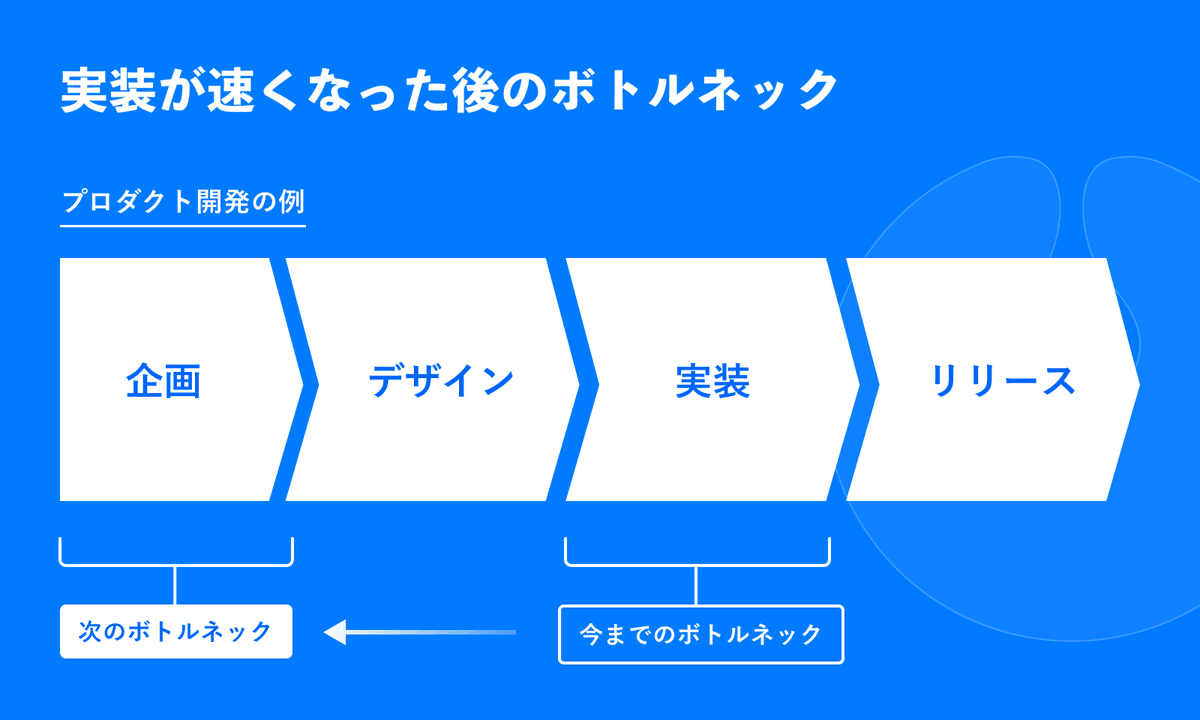
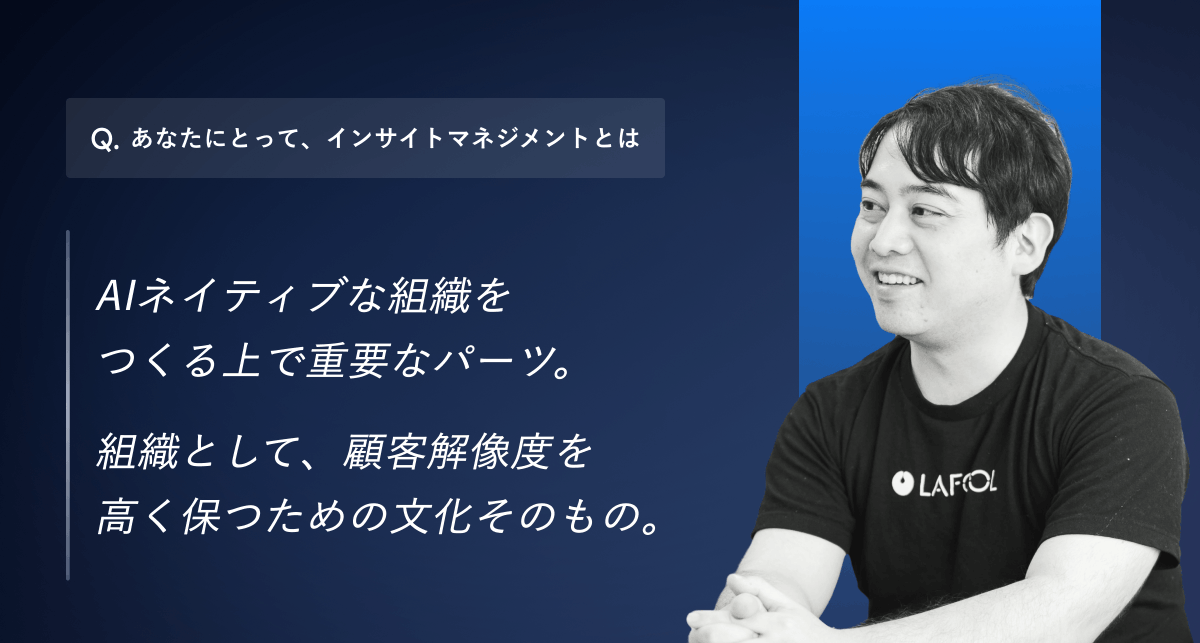
The Lafool framing is the useful part: AI makes output faster, but insight management decides whether that speed improves the product. For Japanese SMEs the same split shows up in quoting, inspection and customer follow-up — the model drafts quickly, and the win only sticks if someone owns the check against real customer language and shop-floor data. Worth knowing which insight they refused to let the model invent.
Agree on the framing. In a typical Japanese SME the higher-ROI use of generative AI is often ‘compress the research/drafting cycle so a junior can sit in more customer meetings and improvement reviews this quarter,’ not ‘remove a role.’ The primary information those juniors collect then becomes training data the model never had. Worth measuring time-to-independent-contribution, not only hours saved.
Fresh Daido Life survey of Japanese SME owners: 66% already use AI personally, 53% of firms use it in business, and among those who do, 62% have asked AI for management advice. Document drafting/summarizing still leads (73%), but the shift from ‘try ChatGPT’ to ‘consult it on decisions’ is the more interesting signal for productivity. The remaining gap is turning personal use into repeatable team workflows.
https://t.co/BQ1MTe8Tk0
Japanese SMEs are not short of AI. The 2026 white paper says 63.4% of non-users cannot picture which work it would change. The stall is simpler: what a sales figure means, who may see a record, and which workflow actually changes. Define those three first. https://t.co/5bSqZ3l9Pl
Pixel-level control is the part that actually matters here. Multi-turn edits that leave the rest of the image untouched, bounding-box layout, up to 10 references, and 4K generation is a real step past “prompt and hope.” Open weights coming soon makes this even more interesting for anyone building production image pipelines.
Introducing FLUX 3 Image.
Control every pixel.
Make precise multi-turn edits without changing any other pixel.
Lay out the image exactly how you want using bounding boxes.
Generate in up to 4K to preserve details.
Use up to 10 references to compose an image.
Commercial Weights available for companies running image generation at scale.
Open Weights version of FLUX 3 Image is launching in the coming weeks.
The interesting move is not just scoring options in one pass. GLiDE checks its own confidence and spends extra compute only when the decision is uncertain. That is a much better fit for tool choice, path selection, and verifying other models than forcing every call through a full reasoning model. A 6.9-point lead on Decision Index, if it holds, is a real signal.
Introducing GLiDE, a thinking decision model built for reasoning-intensive decisions.
Using the official Decision Index 0.2.1 scorer, GLiDE scores 64.81, leading Jev by 6.90 skill points and outperforming it across all five evaluation areas, including an 11.5-point lead in Knowledge and Reasoning.
Typically, decision models are designed to score a set of options in one pass. GLiDE takes that process a step further by recognizing when a decision requires more effort.
After producing an initial answer, GLiDE quickly assesses its confidence. When the result is uncertain, the model automatically allocates more compute to thinking further and incorporates that reasoning into its final probabilities.
This allows GLiDE to move beyond straightforward classification into complex, multi-step decisions like selecting from hundreds of tools, choosing the best next action from hundreds of possible paths, or judging and verifying reasoning-intensive model outputs.
With every decision, it returns:
• The selected action
• A corresponding confidence score
• A probability distribution across the available options
GLiDE is available today for inference and training on the Fastino API.
Try it now on the Fastino API: https://t.co/sy82U11REr
Read the release blog: https://t.co/h6qd6S2vvl
Decision models are quietly becoming the missing piece of agent stacks. Most workflows do not need a frontier model to answer yes/no, rank options, or classify the next step — they need something fast, cheap, and open. Shipping Clef with open weights on Workers AI is a practical bet: the orchestrator layer matters as much as the big model behind it.
We are introducing Clef and Clef-flash, open-source decision models hosted on Workers AI for high-speed classification and agentic workflows. https://t.co/eilE3tV0F2 #BirthdayWeek
Expectations for how AI changes daily life got more specific this week. Most markets still expect a net benefit. Europe and North America seem more reserved. Almost everyone wants clearer rules. Inside companies, the focus has shifted from pilots to proof. https://t.co/wJIaNjytD2
This is the unglamorous part of shipping a frontier model, and it matters. Running new Gemini revisions past thousands of engineers for weeks before release is how you close the benchmark-to-reality gap. If Argon has already been living inside real Google workloads, the public launch should be less of a surprise and more of a confirmation.
@ishuagra02 We have gotten much better at testing our models at scale across Google now, so assume most new Gemini revs go through thousands of SWEs for weeks before getting released, hopefully has helped close the benchmark to reality gap by a real margin!
Dropping the VAE and ViT and working directly in pixel space is a bold cut. Most video models still pay a tax for the encoder bottleneck before they even start generating. If an encoder-free unified model can understand and generate both images and video, that is a cleaner path than stacking another adapter on the old stack. Code and weights out today is the right way to ship this.
Let's remove VAEs and ViTs from video models!
🚀 Introducing 𝗣𝗶𝘅𝗲𝗹𝗨𝗠𝗠: an encoder-free unified multimodal model for image and video understanding and generation, directly in pixel space.
Code and model available today!
🌐 https://t.co/RXUObhsSIZ
📄 https://t.co/lA7VaJoVws
The “one model rules them all” race was always going to run into a wall — inference costs already sometimes exceed the hourly wage of the people these systems are meant to help. Framing the next step as orchestration, in the school-of-fish sense, feels much more durable: value shifts from any single set of weights to the intelligence that knows which model to call and how to compose them. And treating sovereignty as supply-chain resilience rather than isolation is the part that stuck with me. Strong piece.
Upload the PowerPoint, get a narrated training video. That’s how you attack the “only one person knows the procedure” problem without standing up a full LMS project.
Same pattern as the factory inspection case that cut ~50 hours a month: AI on the recurring artifact, not on a vague DX vision.
“Cut phone handling 80%” only sticks if the awkward calls still feel Japanese: transfer timing, honorifics, and when a human has to take over.
The product isn’t the voice agent. It’s the handoff rules.
JUST IN - Asia
@RabonaAI2026 launched what it calls Japan’s first blended AI call center, using one AI agent for inbound and outbound calls plus post-call automation. Led by Sho Toribe, the Tokyo startup says deployments have cut phone handling by up to 80%.
@choineta Spot on. Shipping in 18 days is the part most “AI strategies” never reach. What were the hardest parts of actually letting AI do the work and shipping the app in 18 days?
Best first AI product for a factory I’ve seen in a while: drop in a drawing or PO, get the case, similar jobs, and the next lead.
That’s the right on-ramp. Don’t start with a strategy deck. Start with the document already sitting on the desk.
We finally shipped it.
It's built on AI, but it does what a general-purpose AI can't.
What I keep turning over in my head: there are manufacturers who want to use AI and have no idea where to start. I built this to be their first step.
Drop in a drawing or a purchase order, and the case is created for you. Similar past jobs, their prices, and your next sales lead all come out of it.
Case Management is now live on MILLY.
https://t.co/KLL9osiEX2
#manufacturing #AI #madeinJapan
@RestrainedDepth The sequence point is the real product. Most “Japan localization” still means translate the script.
Curious what you encoded first: who speaks, when the written notice goes out, or what language is banned in the first meeting? That’s the part other teams could copy this week.
This is the Japan AI use case that actually matters: not “write a better email,” but “turn 20 years of tacit knowledge into something a new hire can run.”
The hard part isn’t the model. It’s encoding “マグロ6” for this customer. That’s product work: evals, edge cases, and who owns the miss when the AI guesses wrong.