Smart pivot of the age-based model by the NCAA to get rid of HS graduation/expected HS graduation as a trigger to start your eligibility clock. Basically makes the NCAA a U-23 league and keeps prep school alive as an option for players who graduate HS on the younger side.
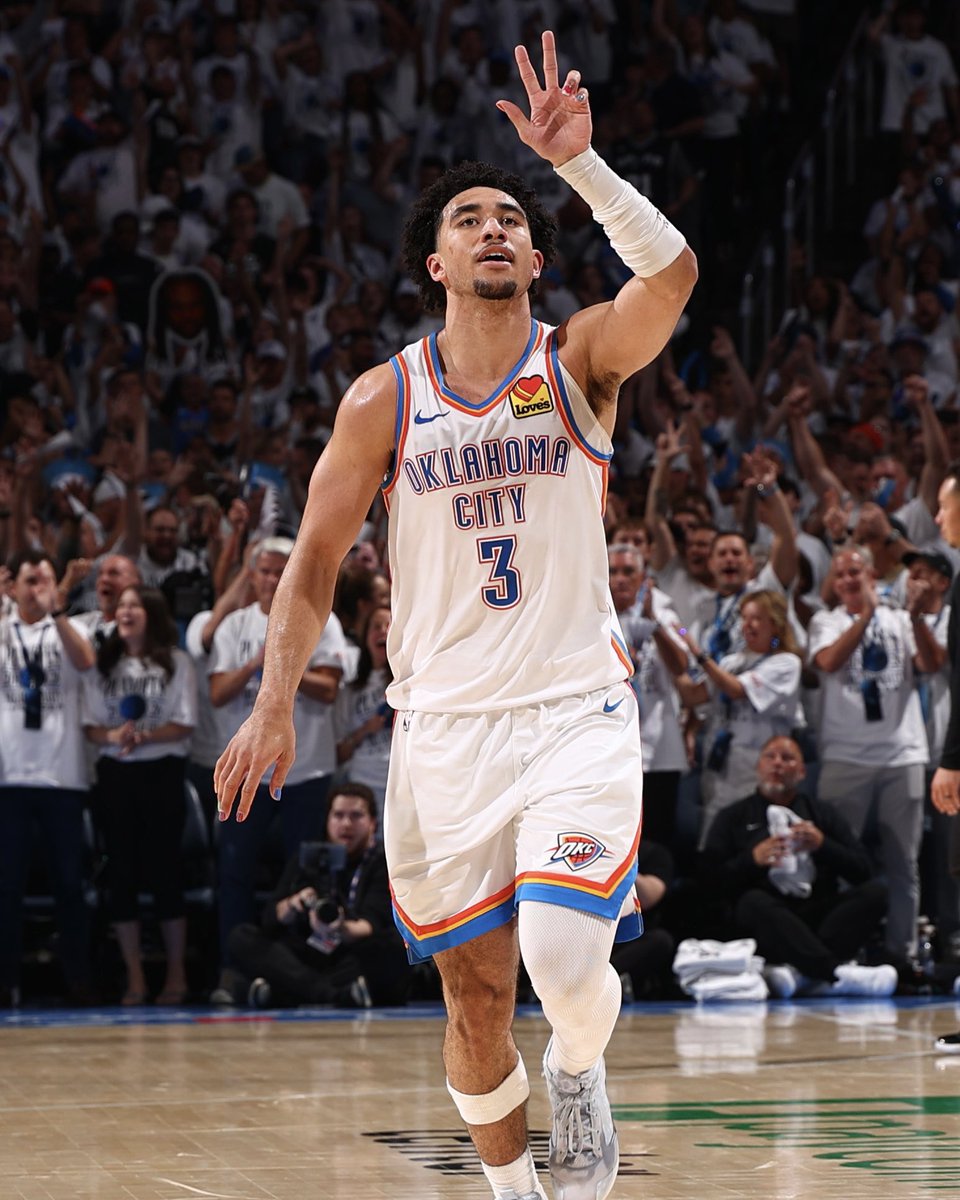
Jared McCain on if he’s trying to prove Daryl Morey wrong with his playoff run: “It’s never to prove anybody wrong. I try to keep a positive outlook. I like proving my support system right…No matter what, Daryl's still the guy that drafted me. I’ll always have love for him for that.”
A vote is not expected during Friday’s DI Cabinet call regarding the NCAA’s proposed 5-year, age-based eligibility rule. Discussion on the topic is expected to continue with action now anticipated at their next meeting the week of June 22.
Overwhelming support remains.
The earliest possible vote for the NCAA’s age-based eligibility model is expected to be at the Division 1 Cabinet meeting at the end of June, per an NCAA official.
If passed, the details of implementation for current student-athletes with eligibility remaining is TBD.
Here's why they did it 👇
The College Sports Commission has been rejecting millions of dollars in NIL deals — including deals for 18 Nebraska football players.
Class counsel called it "overreach."
The CSC called it "following the rules
everyone agreed to."
Translation:
The system designed to manage college sports money is already being accused of abusing its own power.
It's been ONE YEAR. 🗓️
Athletes‼️‼️Being on an athletic scholarship is a JOB.
And just like any job, you should clock in on time, handle your responsibilities, and execute the tasks your coaches assign. Film, lifts, treatment, study hall, practice, it all counts and is part of your job description.
Just like any job, there are other duties as assigned and overtime too, the things nobody applauds but everyone notices when they are not done. If you want a bigger role, more minutes, more trust, doing the bare minimum will not get you there and can lead to you being “released” from your role or put on an “improvement plan.”
Show up early. Be consistent. Produce. Be coachable. That is how you separate yourself. The ones who treat it like a job are the ones who last.
With the current state of college athletics, transfer portal activity at an all-time high, early recruiting pressures, NIL opportunities, and increased involvement from agents and third parties, we have to start asking a serious question: what education is actually happening at the high school level?
Because right now, most student-athletes are arriving on campus as freshmen with little to no understanding of the environment they’ve just stepped into. They don’t fully understand how the transfer portal works beyond “you can leave.” They aren’t being taught how to evaluate opportunities vs. situations. They don’t know how to navigate conversations with coaches when adversity hits. They don’t understand roster management, role development, or how quickly circumstances can change.
And when it comes to NIL, many don’t have a basic foundation in branding, contracts, or financial literacy.
Meanwhile, college athletics has evolved into something that mirrors a professional model, but we’re still onboarding athletes like it’s pre-NIL, pre-transfer portal days.
If the game has changed, the preparation has to change too.
Right now, that gap is too big, and athletes are the ones paying for it.
Florida just proposed putting college athlete
NIL money in a government trust fund.
They're calling it protection.
I'm calling it control.
Here's what's actually happening 🧵👇
NEWS: NCAA President Charlie Baker told ESPN today that he’s “pretty optimistic” that the new aged-based eligibility proposal will happen. The DI Board of Directors met today and will recommend to not implement this rule retroactively for graduates/exhausted eligibility. “If you’ve used up your eligibility, you’ve used it up,” Baker told ESPN of the tenor of the discussion.
A'ja Wilson, the WNBA's first ever four-time MVP, is signing a three-year, $5 million supermax contract to return to the Las Vegas Aces, sources tell me and @Andraya_Carter. The deal, which is the largest in WNBA history to date and fully guaranteed, was negotiated by Jade-Li English of Klutch Sports Group.
Agents should hold off on signing pro representation agreements with college athletes. The NCAA tells me there’s more information to come, but this rule change is specific to individuals who have not yet enrolled in college. Logistically, this sounds like a mess if an agent can sign a HS athlete to a pro representation agreement that then needs to be terminated once the player enrolls at a university.
These changes to eligibility rules were adopted by the DI cabinet & will be final Wednesday.
Notably, high school athletes can now accept prize money & sign with pro sports agents.
Athletes must also now withdraw from the NBA and other opt-in pro drafts to maintain eligibility.
2 years ago, I sat on a panel hosted by Sen. Ted Cruz. At that panel, Nick Saban said, "College sports is not a business." I'm reminded of that quote today, as Learfield, a business operating in the #NIL space, will be sold for roughly $2 billion to a private equity firm.
UPDATE: The NCAA DI Cabinet will hold a further discussion on age-based eligibility later today. This idea would essentially eliminate redshirts and give college athletes five years of eligibility starting when you graduate high school or when you turn 19. Whichever is earlier.
The NCAA is exploring a significant change to its eligibility rule, per Yahoo Sports’ @RossDellenger.
Next week, an NCAA committee will discuss a new age-based standard for athlete eligibility that would grant athletes five full years of eligibility from the time of their 19th birthday or their high school graduation.
No waiver requests, redshirts or exceptions will be permitted, except for a small group of outliers (those on maternity leave, military service or religious missions).