Seeing a robot do one task perfectly doesnt really impress me anymore!!
The real test is what happens when the room changes or the lights are different.
Thats where most robots still struggle because they remember the scene instead of the task.
I like how @axisrobotics is focused on teaching the logic of movement instead.
That feels way more useful if we want robots to actually work anywhere.
I used to think simulation was only there to test robots before they go into the real world.
But the more I read the more it makes sense that simulation should be where training actually starts.
You can create way more situations without spending months collecting data.
Thats one thing I like about what @axisrobotics is building. It feels like a much smarter way to scale Physical AI
On the real-world validation side, Dataset v2 long-horizon data collection is underway.
Early real-world results suggest that AXIS + DROID co-training can preserve useful learned priors on tasks like Pick Butter.
We will continue stress testing harder tasks to see whether AXIS diversity in semantics and spatial layouts improves real-world transfer.
This month will focus on DAgger/post-training pilot studies and Dataset v2 production.
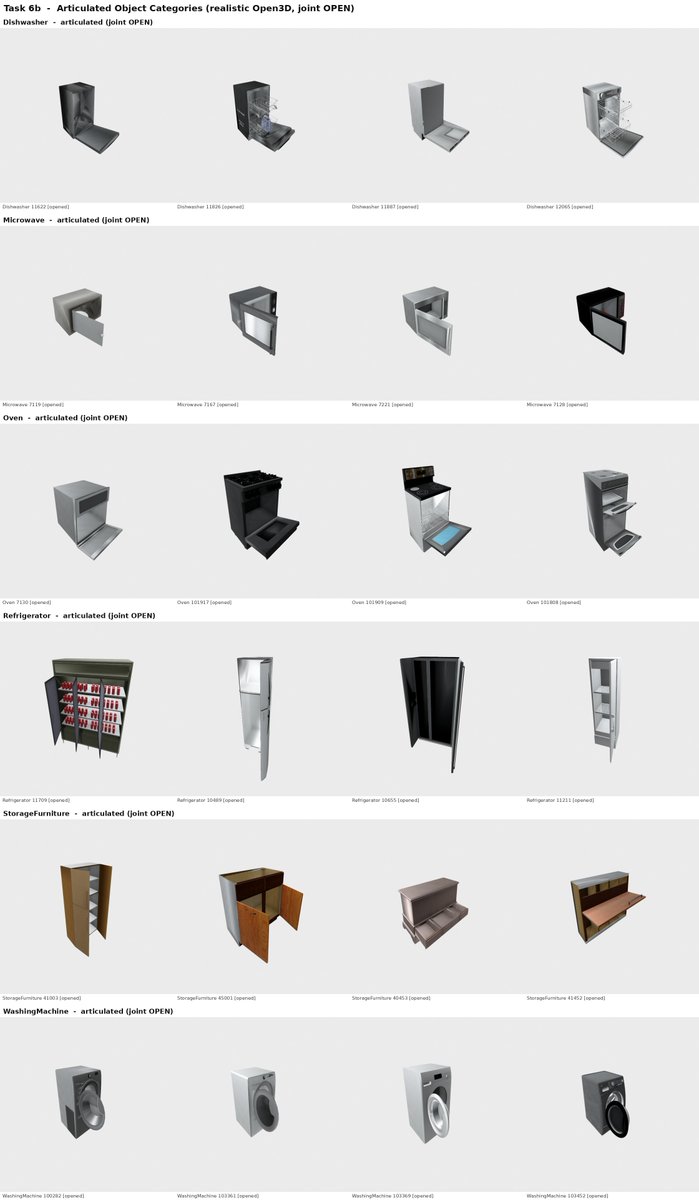
On the TaskGen side, articulated-object support expanded beyond the earlier six categories.
With an Articraft-style workflow, a coding agent can generate broader articulated assets, while a semantic LLM agent and DINO-based visual identifier retrieve better asset matches from prompts.
We are also improving description-to-checker automation, plus asset initial-state and orientation correction, to make generated tasks more stable and collectable.
On the model iteration side, the automated task-to-policy loop is now largely connected.
Task, policy, success rate, heatmap, backend replay video, inference visualization, reset, undo/redo, and randomization are all part of the same iteration story.
Directly collecting full failure-task demonstrations only produced limited gains, so we are shifting toward DAgger-style correction data. The database now distinguishes human intervention segments from original policy rollout segments and supports verification.
On the data quality side, verification and checker logic were strengthened in response to new cheating patterns.
This stricter verification path is being extended to new features such as bimanual tasks and DAgger collection.
In parallel, operation bugs, asset issues, frontend/backend inconsistencies, and replay problems were addressed. This ensures fewer low-quality trajectories enter the training pipeline and keeps manual review manageable.
On the teleoperation side, we continued improving direct gripper dragging, object selection with automatic pre-grasp movement, and bimanual control.
The goal is to skip low-information but high-effort actions—like manually moving the gripper close to the target—while preserving the high-value parts of the demonstration: contact, grasping, gripper closing, and correction.
After fixes around latency, sensitivity, penetration, and grasp stability, bimanual collection is more natural. The bimanual interface is now much smoother, preparing us for future mobile-bimanual tasks.
Axis Weekly
This week, we consolidated our June progress into a clearer data-loop direction: moving beyond standard short-horizon single-arm demonstrations toward complex-task data, correction data, and continuous model iteration.
Key updates:
- Teleoperation UX: We improved direct gripper dragging, object selection, and bimanual control to skip low-information actions and preserve high-value demonstration segments.
- Data quality: We strengthened verification and checker logic against new cheating patterns, extending stricter validation to bimanual tasks and DAgger collection.
- Model iteration: The automated task-to-policy loop is now largely connected, and we are shifting toward DAgger-style correction data to better distinguish human intervention from policy rollouts.
- TaskGen: Articulated-object support expanded beyond six categories, using a coding agent for asset generation and a semantic LLM agent with DINO for better asset retrieval.
- Real-world validation: Dataset v2 long-horizon data collection is underway, with early real-world results suggesting AXIS + DROID co-training preserves useful learned priors.
Details below 🧵
Yo! I just contributed to the general intelligence of Physcial AI with @Axisrobotics
I completed "Put the Lychee into the Bowl" with a score27.2/100 in 0 m 47s. Wanna challenge my work?
Check here: https://t.co/lWwaIovYiu
This is the bet we're making at @axisrobotics: robots don't need infinitely more real world data. They need training environments too diverse to memorize.