🔥🚨LATEST: 73-year-old R&B legend Chaka Khan has left her fans amazed after she released this video showing she still sounds as good as she did decades ago.
Happy 46th birthday to Michelle Williams!
A celebrated singer, actress, and member of Destiny’s Child, she has built a remarkable career across music and theater.
Clara Ester, one of the last living eyewitnesses to Dr. Martin Luther King Jr.'s assassination and a lifelong civil rights activist, has died at age 78. From marching in support of the Memphis sanitation workers fighting for fair treatment to rushing to Dr. King's side after he was shot, she dedicated her life to serving others and advancing the fight for justice. Her unwavering commitment to justice helped shape history, and we won't let the world forget her legacy. Rest in Power.
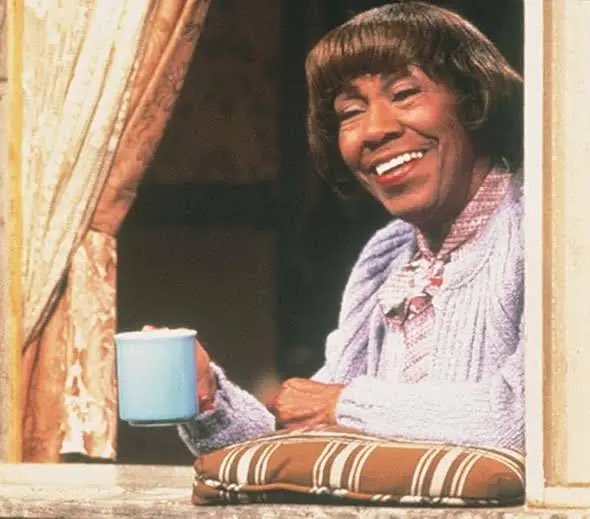
Happy Birthday Helen Martin
Martin’s career spanned 60 years - best known for her roles as Wanda Williams on Good Times and as Pearl Shay on 227.
She was a founding member of the American Negro Theater in Harlem.
BREAKING: Senator Raphael Warnock just announced that when Democrats retake power, he will push for investigations into the leaders in the Republican Party who pushed states across the nation to eliminate Black representation in Congress.
Thinking about the inner circle of Dr. Martin Luther King Jr. and the giants who stood beside him during the Civil Rights Movement, it’s powerful to reflect on two living legends who remain with us: Xernona Clayton, 95, and Ambassador Andrew Young, 94. ✊🏾🖤
Xernona Clayton was a trusted confidant of Dr. King and a dear friend of Coretta Scott King. She has spent a lifetime serving, building bridges, and preserving the legacy of the Movement. I call her the head Armor Bearer to the Kings—a woman who stood close, remained faithful, and continues to carry their legacy forward.
Andrew Young was one of Dr. King’s closest confidants, top aides, and key strategists—a central leader whose courage and commitment helped change America and the world.
Imagine the history these two carry in their hearts and memories—the conversations, the marches, the victories, the heartbreak, and the sacrifices. They didn’t just witness history. They helped make it.
We must honor our living legends while they are still here to receive their flowers. 💐
Thank you, Xernona Clayton. Thank you, Andrew Young. Thank you for your sacrifice. Thank you for your friendship. Thank you for your service.
The Movement lost many warriors along the way, but because of people like you, their spirit—and the dream—still live on. 🙏🏾✊🏾
“Well done, good and faithful servant.” — Matthew 25:21
#BlackHistory #CivilRightsMovement #MLK #MartinLutherKingJr #XernonaClayton #AndrewYoung #CorettaScottKing #LivingLegends #BlackExcellence #HonorOurLegends #BMBEmpowerNetwork
Mum Bett was the first black woman to sue for freedom and win in Massachusetts and won. As a free woman she took up the name Elizabeth Freeman.
She was W.E.B Du Bois great grandmother.
Her case served as precedent in the state that brought an end to the practice of slavery in Massachusetts.
Freeman's real age was never known, but an estimate on her tombstone puts her age at about 85. She was buried in the Sedgwick family plot in Stockbridge, Massachusetts. She died in 1829.
Freeman was among the first enslaved black Americans in Massachusetts to file a "freedom suit" and win in court under the 1780 constitution, with a ruling that slavery was illegal. Her county court case, Brom and Bett v. Ashley, decided in August 1781, was cited as a precedent in the Massachusetts Supreme Judicial Court appeal review of Quock Walker's "freedom suit". When the state Supreme Court upheld Walker's freedom under the constitution, the ruling was considered to have informally ended slavery in the state.
LIFE & TRIAL:
Elizabeth Freeman was illiterate and left no written records of her life. Her early history has been pieced together from the writings of contemporaries to whom she told her story or who heard it indirectly, as well as from historical records.
Freeman was born into slavery about 1742 at the farm of Pieter Hogeboom in Claverack, New York, where she was given the name Bett. When his daughter Hannah married John Ashley of Sheffield, Massachusetts, Hogeboom gave Bett, then in her early teens, to them. She remained with them until 1781, during which time she married and had a child, Betsy. Her husband (name unknown, marriage unrecorded) never returned from service in the Revolutionary War.
Throughout her life, Bett exhibited a strong spirit and sense of self. She came into conflict with Hannah Ashley, who was raised in the strict Dutch culture of the New York colony. In 1780, Bett prevented Hannah from striking her daughter Betsy with a heated shovel, but Elizabeth shielded her daughter and received a deep wound in her arm. As the wound healed, Bett left it uncovered as evidence of her harsh treatment.
Soon after the Revolutionary War, Freeman heard the constitution read at Sheffield and these words:
“ All men are born free and equal, and have certain natural, essential, and unalienable rights; among which may be reckoned the right of enjoying and defending their lives and liberties; that of acquiring, possessing, and protecting property; in fine, that of seeking and obtaining their safety and happiness." —Massachusetts Constitution, Article 1.
Bett sought the counsel of Theodore Sedgwick, a young abolition-minded lawyer, to help her sue for freedom in court. Sedgwick willingly accepted her case. He enlisted the aid of Tapping Reeve, the founder of America's first law school, located at Litchfield, Connecticut.
The case of Brom and Bett vs. Ashley was heard in August 1781 before the County Court of Common Pleas in Great Barrington. Sedgwick and Reeve asserted that the constitutional provision that "all men are born free and equal" effectively abolished slavery in the state. When the jury ruled in Bett's favor, she became the first African-American woman to be set free under the Massachusetts state constitution.
The court assessed damages of thirty shillings and awarded her compensation for their labor.
After the ruling, Bett took the names Elizabeth Freeman.
LEGACY:
The decision in the case of Elizabeth Freeman was cited as precedent when the State Supreme Judicial Court heard the appeal of Quock Walker v. Jennison. Walker's freedom was upheld. These cases set the legal precedents that ended slavery in Massachusetts. Vermont had already abolished it explicitly in its constitution.
If you love our content and would like to support the page, you can buy us a coffee here: https://t.co/K1AhtZuOFs