After months coupled with ping pong of pre entries and the tight admission process .We finally made it to @MakerereLaw .
The Lord is great and merciful .
We are well prepared for the four year journey ahead
With today's Constitutional Law paper, I have officially completed Year One (LLB 1). My sincere gratitude to my lecturers, friends, and Radical New Bar for being part of this journey.
On to the next chapter. Aluta Continua! ⚖️🔥
"THE RADICAL NEW BAR IS NOT ANTI-ADR”:
Speech by ULS Vice President @AsiimweAnthony2 at the ADR Awareness Conference organised by M/s. Butagira & Co. Advocates, in conjunction with Mbarara High Court, at Hotel Triangle, Mbarara on Friday, 5 June 2026
Distinguished members of the Bench, learned colleagues at the Bar, and members of the public and the press present, ladies and gentlemen,
I bring you warm greetings from the Radical New Bar Governing Council, led by our President, @IsaacSsemakadde. Many of you know that President Ssemakadde is currently in exile. A judge of the High Court, who felt stung by the President’s criticism, chose not to let “a hundred flowers bloom [and] a hundred schools of thought contend.”
Instead, judicial power was deployed swiftly in what felt like personal retribution. That decision, regrettably, received the backing of the former Chief Justice, a distinguished graduate of Pepperdine University’s LLM programme in Mediation and Alternative Dispute Resolution (ADR), and the founding convener of the African Chief Justices’ Forum, an institution that aspires to be a leading voice for ADR across our continent.
It is therefore with a heavy heart that I must recall the events of 7th February 2025. In response to a disagreement, the now-infamous words “Leave our home” were uttered, followed by declarations of total isolation, exclusion, and sanctions imposed upon the Bar and its elected leader. These actions appeared to breach established principles of natural justice and Bench-Bar comity. Many of us experienced that day as a historic low in the promotion of ADR — precisely the mechanism that the apex leadership of the Judiciary has long championed.
The pattern, sadly, DID NOT END there. At the commencement of this Law Year, on 5th February, the new head of the Judiciary once again issued thinly veiled threats of using its own machinery against its critics. We condemned those remarks in a strongly-worded statement of position the following day. These are not comfortable truths, but they are part of the context we must confront if we are to heal and move forward.
Our Experience with ADR
When this kind invitation reached me, I had to seek the indulgence of the RNB President and Council to step away, even briefly, from an important scheduled mediation of all Uganda Law Society matters before the eminent CJ Emeritus Bart Katureebe. On 13th May, the mediator had fixed the follow-up session for today at 11:00am, and our Council had already designated me leader for that process. Yet it was collectively resolved that this Bench-Bar dialogue in Mbarara was equally vital for the future of our profession. To facilitate my attendence here, President Ssemakadde agreed to personally convey my apologies to the mediator and all concerned parties.
I share this because mediation, by its nature, is private. We engage in it without announcement. However, there is an overriding public interest in understanding the Radical New Bar’s consistent philosophy and to dispell the false rumour that we are anti-ADR.
Let the record be clear: the Uganda Law Society, under our leadership, has never dragged any individual to court except the Government — through the Attorney General — in pursuance of our statutory public interest mandate under Section 3 of our enabling law.
Yet we have been sued relentlessly. The Society and members of the RNB Council have been sued in over forty separate matters in the High Court and magistrates’ courts since we took oaths in October 2024. Before December 2025, certain judicial officers in the Civil Division appeared reluctant to explore ADR. Instead, there were swift rulings, nearly always adverse to the Bar, with sweeping orders that sometimes exceeded what the applicants themselves had prayed for. Meetings were blocked, elections frozen, and our statutory representations to the Judicial Service Commission, Law Council - Committee on Continuing Legal Education and Training, NEMA, and other bodies effectively paralysed.
It was the Court of Appeal that offered a different path: first through the patient efforts of Justice Kiryabwire, then Justice Musisi, directing the parties towards mediation. When those efforts reached their logical conclusion, the Court scheduled our four consolidated appeals, including the President’s appeal against contempt, for hearing on 10th July 2025, signalling that litigation might be the only remaining route to clarity and collaboration.
Then, DCJ Zeija (as he then was) intervened, de-causelisting all ULS matters indefinitely on 7 July 2025, emphasising that the matters were not urgent in his view and that further mediation was required. That is where we remain today — stuck in appellate mediation with no mediator yet appointed.
At the High Court, the new leadership of the Civil Division has shown a refreshing and commendable openness to ADR. Last week, they adjourned all ULS-related matters to 24th September 2026 purely to give mediation a genuine chance. We have proposed, in writing to both the High Court and the Court of Appeal, a single, consolidated, multi-level mediation process. We await a response.
This ongoing mediation before CJ Emeritus Katureebe is therefore revolutionary. It is member-initiated, and member-driven. The credit for conceptualising and coordinating it goes to respected seniors such as Prof. Ssempebwa SC, Francis Gimara SC, Advocate Robert Rutaro, Advocate Zubeda Namutebi, and others — with the eminent former Chief Justice generously volunteering his time and wisdom. The conveners intend to bring on board other retired judges as co-facilitators on the mediation panel. Our Council and President fully back this process. We are working earnestly towards an honourable, out-of-court settlement with all parties.
Colleagues, let this dispel once and for all the false narrative that the Radical New Bar is anti-ADR.
Nothing could be further from the truth. We have chosen the harder, longer road of dialogue and reconciliation even when litigation seemed easier or more vengeful options were available to us.
We are not here to prolong conflict. We are here to normalise Bench-Bar relations and Bar-Government relations for the ultimate benefit of the people of Uganda whom we all serve.
To everyone in this room, I say this in closing: you have a role to play. In your judicial capacities, in your private capacities as senior counsel, as mediators, as friends and elders, we shall be reaching out. Whatever you think of the RNB, we hope you will support the spirit of genuine mediation. And when our matters eventually return to the cause list after ADR has been truly exhausted, let them proceed on merit, without procedural hindrance, or institutional prejudice, so that the Rule of Law and the administration of justice can be seen to be done.
May this gathering in Mbarara mark the beginning of a new chapter of mutual respect, professional solidarity, and collaborative service to our nation.
I thank you. God bless the Bench, the Bar, and the people of Uganda.
Asiimwe Anthony, Vice President, Uganda Law Society.
#BangTheTable #BackOnTrack #RNBVision2060
@ntvuganda@nbstv@ubctvuganda@bbstvug@nilepostnews@LarryMadowo@JudiciaryUG@JLOSUganda
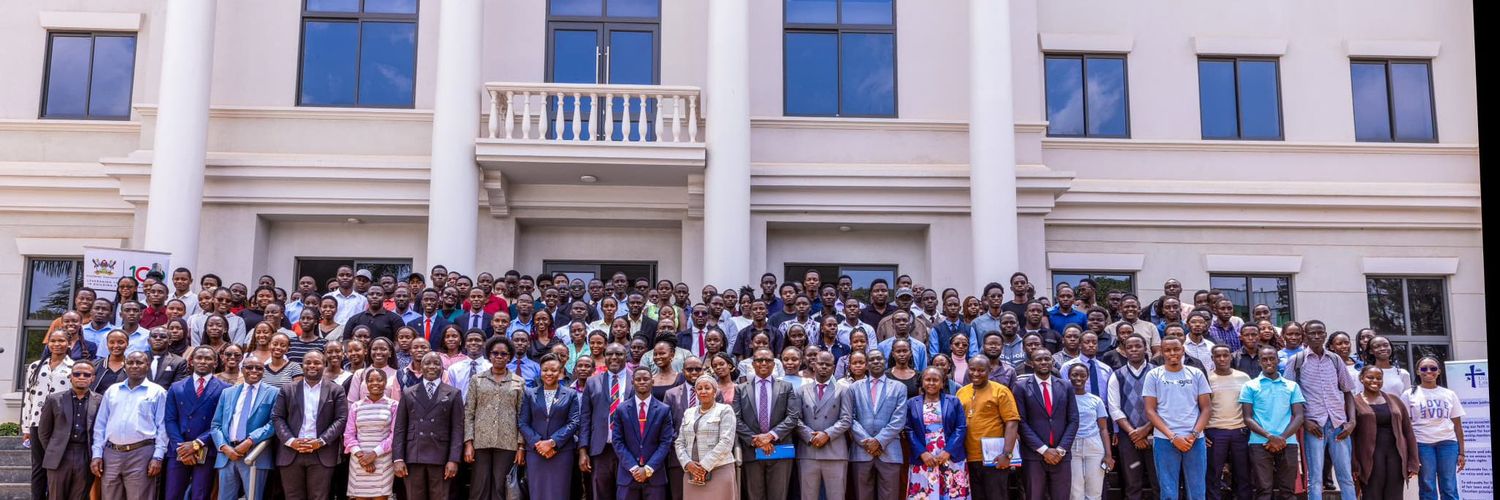
The first year of law school teaches more than law- it teaches discipline, resilience, and the art of thinking differently.
Congratulations to the Law Students of the 57th class @MakerereLaw@lawsocietymak on completing your semester two examinations.
Year 1: ✅
Year 2: ⏳




![ug_lawsociety's tweet photo. "THE RADICAL NEW BAR IS NOT ANTI-ADR”:
Speech by ULS Vice President @AsiimweAnthony2 at the ADR Awareness Conference organised by M/s. Butagira & Co. Advocates, in conjunction with Mbarara High Court, at Hotel Triangle, Mbarara on Friday, 5 June 2026
Distinguished members of the Bench, learned colleagues at the Bar, and members of the public and the press present, ladies and gentlemen,
I bring you warm greetings from the Radical New Bar Governing Council, led by our President, @IsaacSsemakadde. Many of you know that President Ssemakadde is currently in exile. A judge of the High Court, who felt stung by the President’s criticism, chose not to let “a hundred flowers bloom [and] a hundred schools of thought contend.”
Instead, judicial power was deployed swiftly in what felt like personal retribution. That decision, regrettably, received the backing of the former Chief Justice, a distinguished graduate of Pepperdine University’s LLM programme in Mediation and Alternative Dispute Resolution (ADR), and the founding convener of the African Chief Justices’ Forum, an institution that aspires to be a leading voice for ADR across our continent.
It is therefore with a heavy heart that I must recall the events of 7th February 2025. In response to a disagreement, the now-infamous words “Leave our home” were uttered, followed by declarations of total isolation, exclusion, and sanctions imposed upon the Bar and its elected leader. These actions appeared to breach established principles of natural justice and Bench-Bar comity. Many of us experienced that day as a historic low in the promotion of ADR — precisely the mechanism that the apex leadership of the Judiciary has long championed.
The pattern, sadly, DID NOT END there. At the commencement of this Law Year, on 5th February, the new head of the Judiciary once again issued thinly veiled threats of using its own machinery against its critics. We condemned those remarks in a strongly-worded statement of position the following day. These are not comfortable truths, but they are part of the context we must confront if we are to heal and move forward.
Our Experience with ADR
When this kind invitation reached me, I had to seek the indulgence of the RNB President and Council to step away, even briefly, from an important scheduled mediation of all Uganda Law Society matters before the eminent CJ Emeritus Bart Katureebe. On 13th May, the mediator had fixed the follow-up session for today at 11:00am, and our Council had already designated me leader for that process. Yet it was collectively resolved that this Bench-Bar dialogue in Mbarara was equally vital for the future of our profession. To facilitate my attendence here, President Ssemakadde agreed to personally convey my apologies to the mediator and all concerned parties.
I share this because mediation, by its nature, is private. We engage in it without announcement. However, there is an overriding public interest in understanding the Radical New Bar’s consistent philosophy and to dispell the false rumour that we are anti-ADR.
Let the record be clear: the Uganda Law Society, under our leadership, has never dragged any individual to court except the Government — through the Attorney General — in pursuance of our statutory public interest mandate under Section 3 of our enabling law.
Yet we have been sued relentlessly. The Society and members of the RNB Council have been sued in over forty separate matters in the High Court and magistrates’ courts since we took oaths in October 2024. Before December 2025, certain judicial officers in the Civil Division appeared reluctant to explore ADR. Instead, there were swift rulings, nearly always adverse to the Bar, with sweeping orders that sometimes exceeded what the applicants themselves had prayed for. Meetings were blocked, elections frozen, and our statutory representations to the Judicial Service Commission, Law Council - Committee on Continuing Legal Education and Training, NEMA, and other bodies effectively paralysed.
It was the Court of Appeal that offered a different path: first through the patient efforts of Justice Kiryabwire, then Justice Musisi, directing the parties towards mediation. When those efforts reached their logical conclusion, the Court scheduled our four consolidated appeals, including the President’s appeal against contempt, for hearing on 10th July 2025, signalling that litigation might be the only remaining route to clarity and collaboration.
Then, DCJ Zeija (as he then was) intervened, de-causelisting all ULS matters indefinitely on 7 July 2025, emphasising that the matters were not urgent in his view and that further mediation was required. That is where we remain today — stuck in appellate mediation with no mediator yet appointed.
At the High Court, the new leadership of the Civil Division has shown a refreshing and commendable openness to ADR. Last week, they adjourned all ULS-related matters to 24th September 2026 purely to give mediation a genuine chance. We have proposed, in writing to both the High Court and the Court of Appeal, a single, consolidated, multi-level mediation process. We await a response.
This ongoing mediation before CJ Emeritus Katureebe is therefore revolutionary. It is member-initiated, and member-driven. The credit for conceptualising and coordinating it goes to respected seniors such as Prof. Ssempebwa SC, Francis Gimara SC, Advocate Robert Rutaro, Advocate Zubeda Namutebi, and others — with the eminent former Chief Justice generously volunteering his time and wisdom. The conveners intend to bring on board other retired judges as co-facilitators on the mediation panel. Our Council and President fully back this process. We are working earnestly towards an honourable, out-of-court settlement with all parties.
Colleagues, let this dispel once and for all the false narrative that the Radical New Bar is anti-ADR.
Nothing could be further from the truth. We have chosen the harder, longer road of dialogue and reconciliation even when litigation seemed easier or more vengeful options were available to us.
We are not here to prolong conflict. We are here to normalise Bench-Bar relations and Bar-Government relations for the ultimate benefit of the people of Uganda whom we all serve.
To everyone in this room, I say this in closing: you have a role to play. In your judicial capacities, in your private capacities as senior counsel, as mediators, as friends and elders, we shall be reaching out. Whatever you think of the RNB, we hope you will support the spirit of genuine mediation. And when our matters eventually return to the cause list after ADR has been truly exhausted, let them proceed on merit, without procedural hindrance, or institutional prejudice, so that the Rule of Law and the administration of justice can be seen to be done.
May this gathering in Mbarara mark the beginning of a new chapter of mutual respect, professional solidarity, and collaborative service to our nation.
I thank you. God bless the Bench, the Bar, and the people of Uganda.
Asiimwe Anthony, Vice President, Uganda Law Society.
#BangTheTable #BackOnTrack #RNBVision2060
@ntvuganda @nbstv @ubctvuganda @bbstvug @nilepostnews @LarryMadowo @JudiciaryUG @JLOSUganda](https://pbs.twimg.com/media/HKHzckRWUAE-Jgq.jpg)


