NEW EPISODE ALERT!!!
Tune in at 8 PM EST for Episode 9 of Algorithms of Empire, co-hosted by the Clay-Gilmore Institute, Wise the Dome TV, the Centre for Ethics, and the Algorithmic Bias Project at the University of Toronto. In this episode, we are in conversation with Adam Mahoney and Madeline Thigpen about their recent article for Capital B News on the rise of AI-enabled surveillance of Black communities in Atlanta and the rise of Cop City.
Before AI, police pulled footage when they already suspected you. AI flips it: scan everyone, generate the suspicion. That's not a bug to debias away; the biased judgments of criminality follow from the design and operational deployment of the technology.
In Atlanta, that looks like 60,000+ networked cameras searchable by plain language, plate readers feeding a database shared with ~2,000 agencies, and federal task forces tapping in for immigration enforcement. The cameras cluster thickest in Black neighborhoods — and facial recognition misreads Black faces at many times the rate of white ones. When a system that's wrong that often is built to generate suspicion, the people who pay for it are already the most watched.
As our guests show, mass surveillance and militarized police control of Black people is not new. The same ground that Cop City is being built on — Weelaunee forest, later the Atlanta Prison Farm — has functioned as a laboratory for the management and control of Black and Indigenous people for generations. AI tools are enhancing older pre-emptive approaches to policing non-white populations.
Listen in at 2000/8 PM EST: https://t.co/FUltIzMEyC
#AIsurveillance #PredictivePolicing #CopCity #AlgorithmsOfEmpire
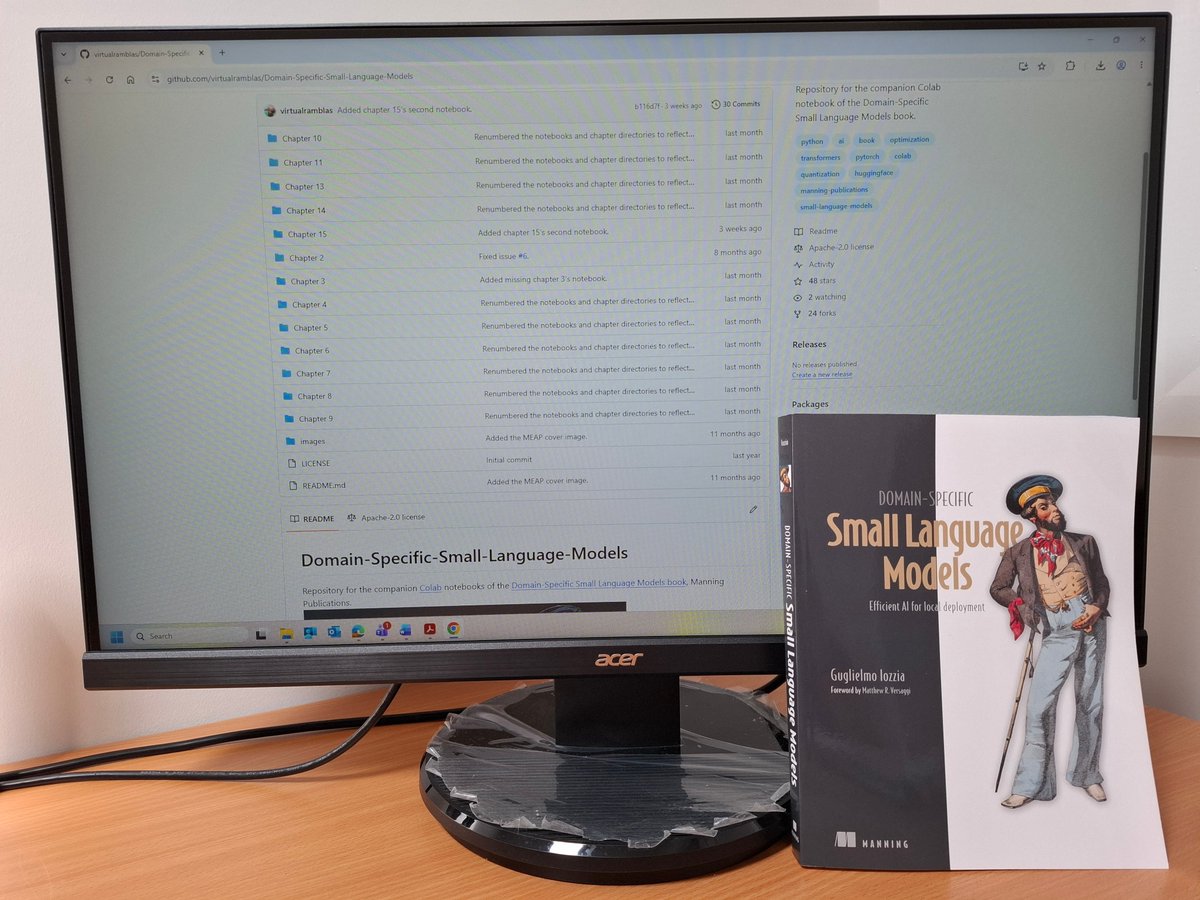
Bigger AI models aren't always better.
For domain-specific tasks, SLMs can often deliver faster, cheaper, and more accurate results. Especially when trained on focused datasets and deployed locally.
In Domain-Specific Small Language Models, @GuglielmoIozzia walks through how to adapt open source models to your domain, reduce costs, build secure APIs, and deploy production-ready SLMs (all with a companion GitHub repo).
Now in print: https://t.co/TXlv1lfbWv
Ok, cite the studies since you’re the expert. Here is what my source says:
“Due to the way in which Black males are situated at the nexus of gendered racism […]the phenomenon of Black genocide affects Black males in a particular way[.] This focus is not to say that other groups are not also facing genocide (in fact, Native and Indigenous peoples are undeniably still facing genocide, and Black women, especially Black trans women, are certainly also targets for Black genocide, although the data and the literature for these groups differ from those for Black males[.]
“In fact, the need for a close look at each subject position prompts our narrow focus here. As Black males are subject to heightened degrees of racial discrimination, psychological trauma, adverse mental and physical health outcomes, and labor market marginalization when compared to almost every other demographic, it is paramount to examine how Black males specifically are targeted for genocide or how Black male genocide is occurring in the United States[.]
“These machinations operate through specific forms of genocide, which we detail below, illustrating the intentionality of social institutions to debilitate Black males from birth to death, resulting in both the occurrence of Black male genocide[.]”
Everyone in academia calls out the right wing for repressing ideas but they say nothing when liberals and leftists do it. As a black man, you can beat the odds and publish your work top journals. But other black faculty will say it lacks rigor and block you from opportunities if you aren’t conciliatory or deferential to feminism or identity politics.
Misandry is not a real issue, but when Du Bois develops a disordered relationship to sex after a married woman raped him, Hartman can lie—excuse me, critically fabulate—that he made up rape allegations to avoid facing his sexuality, and people will treat that as fact? Oh, okay...
LLMs can struggle to answer questions about documents they weren't trained on.
In this guide, @ashutoshkrris explains Retrieval-Augmented Generation (RAG) and shows you how to build a working PDF chatbot in Python.
You'll use LangChain, Gemini, and ChromaDB to retrieve relevant context and generate solid answers.
https://t.co/pwVzb9Mgdb
This is insane. People try to make you feel crazy for focusing research on Black men and boys, but examples like this always remind why Black Male Studies is needed. This is a whole professor of sociology publicly defaming Black men. As an up and coming scholar, I have to move through the university knowing people carry disdain towards me simply for existing as a (straight) Black male, and that the hate will come strongest from other Black scholars seeking head pats from white liberals. This is the state of the American academy.
As a developer, you'll need to know how to test your code to make sure it's working as it should.
And in this tutorial, @ATechAjay teaches you how to test your JavaScript apps in a few different ways.
He covers Unit, Integration, and End-to-End testing as well as some AI-Augmented QA techniques.
https://t.co/rSXUvQmdov
Please read this article
Unresolved Trauma and Perception: How Trauma Distorts Our View of the World https://t.co/YaprKe0fgi
I just unlocked something else to research when it comes to the misconceptions of Black men
This movie does exactly what's explained in this article
You claim that Walter Rodney was wrong, but the reasons you provided are completely out of alignment with what Rodney actually described in his pioneering, historically rigorous book, "How Europe Underdeveloped Africa".
This intellectual failure clearly proves that you did not even bother to read the very book you are vehemently condemning. Rodney never analyzed the modern African post-colonial state to make the claim that Africa's current poverty can be blamed entirely on them. His analytical focus was strictly on pre-colonial and colonial Africa, documenting how the structures of European capitalism actively dismantled African societies.
Before the white colonizers stepped onto the shores of Africa with their gunboats and missionary bibles, Africa was home to powerful, highly organized kingdoms and empires like Mali, Songhai, the Kingdom of Benin, Great Zimbabwe, the Ashanti Empire, and the Kingdom of Kongo. All of these were sovereign African states that functioned with the complexity of modern metropolitan hubs. They had paved roads, highly advanced systems of metallurgy, complex trans-Saharan trade routes, established legal codes, and monumental architecture that stunned early European travelers.
These kingdoms made it extremely difficult, if not impossible, for early European traders to engage freely in the slave trade on their own terms. These empires possessed powerful, disciplined armies that routinely captured and killed invading colonial forces because they understood the harsh terrains of the African forests and mountains. This meant the Europeans had to physically break these kingdoms before they could extract the human labor required to meet the quotas set by their corporate shareholders overseas.
To this end, European powers began flooding rival, smaller kingdoms and disgruntled provincial vassals with firearms, deliberately instigating civil wars and forcing these smaller factions to invade neighboring empires to capture prisoners of war to sell to the colonizers. The Kingdom of Kongo, for example, had six major provinces governed by vassals under the Manikongo, the central king. But the Portuguese deliberately flooded these provincial governors with guns and military advisors, giving them the weaponry and the incentive to refuse taxes, deny their traditional allegiance to the central crown, and bypass the tributary duties that allowed the Kingdom of Kongo to function as a cohesive, sovereign state.
All of this reduced thriving African kingdoms into a manufactured bedrock of continuous violence, destabilization, and civil war. The Kingdom of Kongo, for instance, was systematically carved up and shattered, eventually being reduced to what we know today as Congo and Angola. Europe did not merely dismantle these empires in the name of the Atlantic slave trade; they also systematically destroyed local African industries. They singlehandedly dismantled the highly competitive West African textile mills by flooding the markets with cheap, heavily subsidized fabrics from Manchester, they banned the domestic processing of raw agricultural goods, and they outlawed local iron-smelting to make the entire continent dependent on imported European manufactured wares.
Your mention of Singapore as a colony that grew richer than Britain is also fundamentally false and intellectually dishonest on several levels.
First, Singapore’s Gross Domestic Product is roughly 500 billion dollars, which is a drop in the ocean compared to Britain’s 3 trillion dollar economy.
Secondly, you cannot compare Singapore to the African nations that were colonized, because the structural model of imperialism used by the British Empire to govern these two territories was entirely different.
In Africa, the primary, non-negotiable goal of colonization was pure raw material extraction. The British invaded to loot physical resources, such as gold, copper, rubber, cocoa, and cotton, and ship them back to the British metropole. This model stripped the African colonies of their natural wealth, leaving behind absolutely no domestic processing industries, no universal education systems, and no transport networks other than the railway lines built specifically to move raw materials from the interior mines straight to the coast.
On the other hand, the British did not colonize Singapore to extract rubber or minerals from its soil, because the island had no natural resources to speak of. Instead, they colonized Singapore to serve as a strategic commercial and naval gateway. They needed a duty-free port to secure vital trade routes between India and China, and to counter Dutch naval dominance in the Malacca Strait. Because of this specific imperial role, the British built a massive, deepwater port, established English common law, and created a centralized administrative and financial infrastructure. Consequently, upon independence, Singapore did not inherit a depleted landscape of empty mines; instead, it inherited a highly functional, globally connected maritime trade hub.
When the British formally withdrew, they merely handed the keys of this strategic outpost to the United States. The Americans aggressively used Singapore to support their imperialist war of aggression against the people of Vietnam. They used the island to refuel fighter jets, repair warships, stockpile heavy munitions, and house military personnel. Because of this strategic role, the US military and its corporate allies built a massive, state-of-the-art petroleum refining infrastructure in Singapore to process Middle Eastern crude into the jet fuel, diesel, and napalm required to sustain the relentless devastation of Vietnam.
Even after the United States was humiliated and forced out of Vietnam, they did not abandon the Singapore project. American and Western multinational corporations happily transferred high-tech manufacturing technologies to Singapore, built massive skyscrapers, and integrated the island into the global supply chain. This is because Singapore is precious to Western capitalists as a premier tax haven, where they can set up shell companies, launder illicit corporate wealth, and dodge billions of dollars in taxes.
Your mention of Switzerland is equally fraudulent.
It is historically true that the Swiss did not formally send military gunboats to Africa, and they never held official overseas colonies under a Swiss flag. But even without a formal colonial office, Swiss banks, city-states, elite merchants, and mercenary soldiers were deeply embedded in, and profited immensely from, the European colonial system. Swiss financial institutions and local cantons invested heavily in joint-stock colonial enterprises like the South Sea Company, which held the absolute monopoly on transporting enslaved Africans to Spanish America. Furthermore, when enslaved people in Haiti rose up in a glorious revolution against French colonial rule in 1800, Napoleon Bonaparte deployed hundreds of Swiss mercenaries to brutally suppress the rebellion and attempt to re-enslave the population.
So during the slave trade, the Swiss happily pocketed massive profits from chattel slavery by serving as the quiet financial and logistical backbone of the trade. And even after brave African revolutionaries fought hard and made the slave trade too expensive for Europeans to manage, forcing the formal abolition of slavery, the Swiss continued to line their pockets with wealth extracted from Africa.
Today, Switzerland is where Western oil and mining conglomerates set up complex networks of shell companies. They hire armies of elite corporate lawyers and ruthless accountants to draft fraudulent transfer-pricing reports that allow them to conceal their massive African profits, ensuring they pay little to no taxes to their host African nations. Meanwhile, secretive Swiss banking vaults serve as the ultimate safe havens for billions of dollars in looted public funds smuggled out by corrupt African comprador elites, and Swiss trading houses in Zug and Geneva dominate the global trade of African gold, oil, and cocoa without ever physically touching a single gram of the raw material.
The fact remains that you did not read the book, and this is precisely why you rushed to unleash such an embarrassing, historically ignorant statement on the development of Africa.
I am equally certain that you have never bothered to read about visionary revolutionary leaders like Thomas Sankara, Kwame Nkrumah, and Patrice Lumumba, who fought relentlessly against Western imperialism but were systematically assassinated, betrayed, or forced out of power by Western-backed operatives. You clearly ignore how Patrice Lumumba’s body was literally dissolved in acid by Belgian agents to erase his physical memory, how Thomas Sankara was betrayed and brutally murdered under French supervision to halt the Burkinabé agrarian revolution, and how Kwame Nkrumah was overthrown in a meticulously planned, CIA-funded coup just as he was unifying the African continent against neo-colonialism.
Furthermore, I am positive you have never analyzed the predatory terms of trade enforced by the World Trade Organisation, which systematically penalizes African nations with crushing tariffs, trade barriers, and economic sanctions if they dare to process their own raw materials locally. Under this highly engineered tariff escalation model, the WTO ensures that raw African cocoa, unprocessed gold, and crude oil enter Western markets with zero import duties, but the moment an African nation attempts to refine that oil, process that cocoa into chocolate, or smelt that gold into jewelry, they are hit with astronomical, protectionist tariffs designed to keep African economies permanently locked at the bottom of the global value chain as cheap, disposable suppliers for European and American corporations. They punish industrialization while rewarding raw material dependency, forcing Africa to export its wealth for peanuts only to buy it back at a thousand times the price.
If you had ever bothered to educate yourself on these historical realities, your heavy colonial chains would have been shattered, you would have been liberated from this pathetic state of mental slavery, and you would not be spending your limited intellectual energy undermining the very book that exposed the genocidal, systemic crimes of the empires that traded your own ancestors like mere commodities on a global balance sheet.
The full AI engineering curriculum is now free.
It's called AI Engineering from Scratch. 20 phases, 428 lessons, roughly 320 hours end to end. Free. MIT license. Runs on your own laptop.
The design principle that makes it different from everything else => every algorithm gets built from raw math before a single framework loads. Backprop by hand. Tokenizer by hand. Attention by hand. Agent loop by hand. Then you implement the same thing in PyTorch or sklearn. By the time the production library appears, you already know what it's doing underneath.
Every lesson ends with something you keep:
→ Prompt templates for any AI assistant
→ Skill files for Claude, Cursor, Codex, OpenClaw, Hermes
→ Agent definitions you wrote the loop for yourself
→ MCP servers built from scratch in Phase 13
428 lessons means 428 artifacts by the end. Tools you built and actually understand.
The full 20 phases:
→ Phase 0 - Setup & Tooling (12 lessons)
→ Phase 1 - Math Foundations (22 lessons)
→ Phase 2 - ML Fundamentals (18 lessons)
→ Phase 3 - Deep Learning Core (13 lessons)
→ Phase 4 - Computer Vision (28 lessons)
→ Phase 5 - NLP (29 lessons)
→ Phase 6 - Speech & Audio (17 lessons)
→ Phase 7 - Transformers Deep Dive (14 lessons)
→ Phase 8 - Generative AI (14 lessons)
→ Phase 9 - Reinforcement Learning (12 lessons)
→ Phase 10 - LLMs from Scratch (22 lessons)
→ Phase 11 - LLM Engineering (15 lessons)
→ Phase 12 - Multimodal AI (25 lessons)
→ Phase 13 - Tools & Protocols (23 lessons)
→ Phase 14 - Agent Engineering (42 lessons)
→ Phase 15 - Autonomous Systems (22 lessons)
→ Phase 16 - Multi-Agent & Swarms (25 lessons)
→ Phase 17 - Infrastructure & Production (28 lessons)
→ Phase 18 - Ethics, Safety & Alignment (30 lessons)
→ Phase 19 - Capstone Projects (17 projects, 20-40 hours each)
Python, TypeScript, Rust, Julia throughout.
GitHub Repo: https://t.co/E2Rg09gnrR
Relational databases are used all the time in software development - so as a dev, you should know how they work.
In this course, you'll learn relational database design from the ground up.
It covers SQL filtering and aggregation, primary, candidate, and super keys, ER diagrams, Normal forms, access control, and more.
https://t.co/Dnd5N0K6ad
Many devs learn JavaScript by memorizing rules and copying patterns.
But you need to understand how the JS engine really works when a weird bug hits.
In this video tutorial, you'll learn how the JS engine handles execution contexts, memory, scope, and more.
https://t.co/WeGdwQDblZ
This is actually sick. Hartman attempts to complicate and minimize DuBois’ claim that he was raped by interpreting it as “illicit sex.” She even refers to it as “the pleasure of losing his virginity in an act of adultery.” She suggests that he is ashamed to confess his pleasure because of the Victorian ethics he was raised with, causing him to blame the “unhappy wife.” After his rape, DuBois exhibited hypersexual behaviors consistent in victims of sexual violence, while Hartman infers these were his true desires. This is a gross interpretation and essentially amounts to victim blaming.
I went ahead and had an AI conversation about this, here's the thread:
Me: "I'm saying that he did recognize what happened to him as rape and this is a problem for Hartman because she relies more on Victorian values than his actual experience"
My homie watching this just texted me and I didn’t know Du Bois was raped by a woman when he was at Fisk. Idk why Du Bois scholars don’t write about this more. Well, yes I do…but still…
your brain is always becoming better at whatever you repeatedly do. that’s why repetition changes people more than motivation ever will. if you spend every day stressing, overthinking, comparing yourself to strangers online, replaying old mistakes, and expecting the worst, your brain slowly starts treating those patterns like home. it begins scanning the world for more proof that you’re not enough, that life is against you, that things won’t work out. the scary part is your brain doesn’t care if the pattern is helping you or destroying you. it only cares about what gets repeated.
but the same thing works in your favor too. when you repeatedly choose discipline, growth, gratitude, focus, and belief in yourself, your brain slowly reshapes around those things as well. at first it feels unnatural because your old patterns are louder, but over time your perspective changes. challenges stop feeling like signs to quit and start feeling like part of the process. your mind becomes whatever it practices most. so be careful what you keep giving your attention to because eventually, your thoughts become your reality.
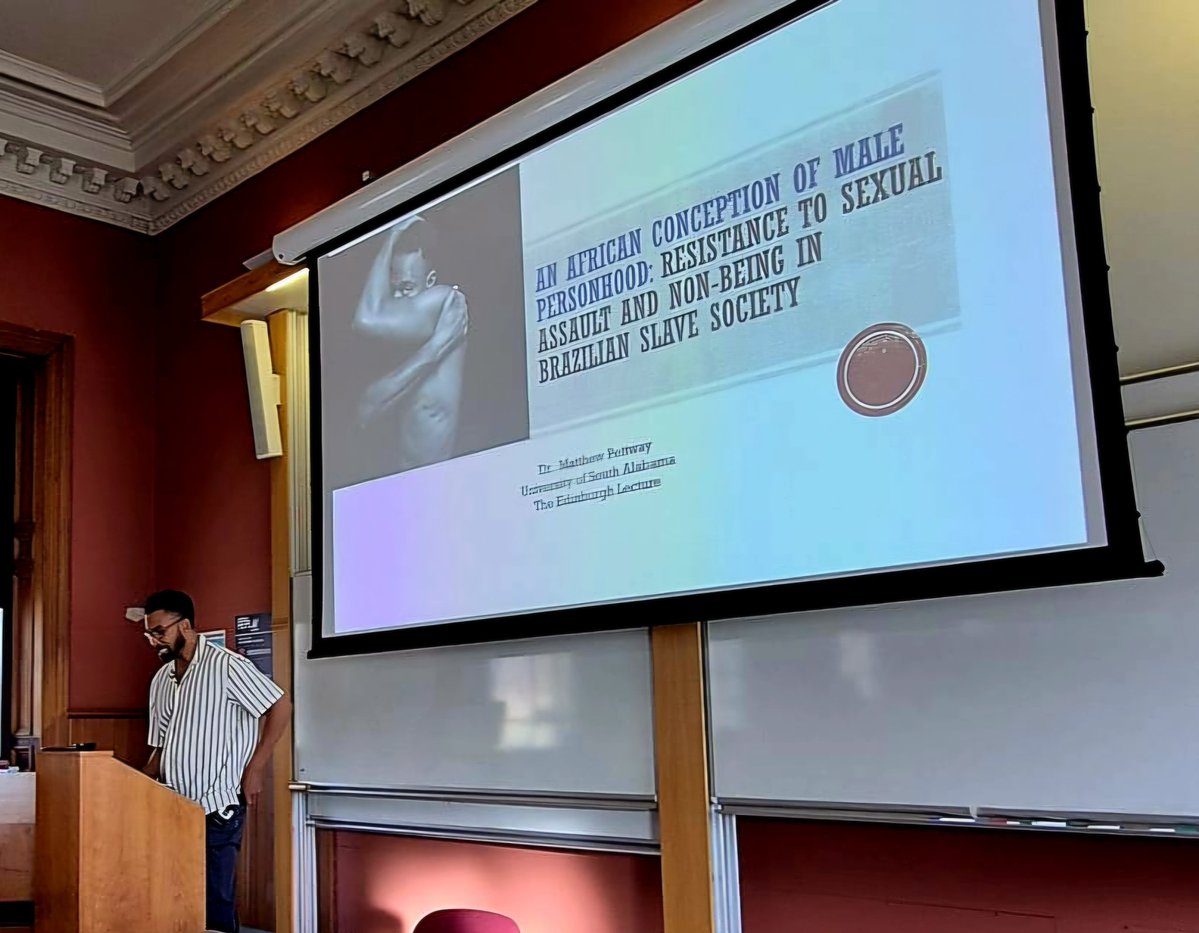
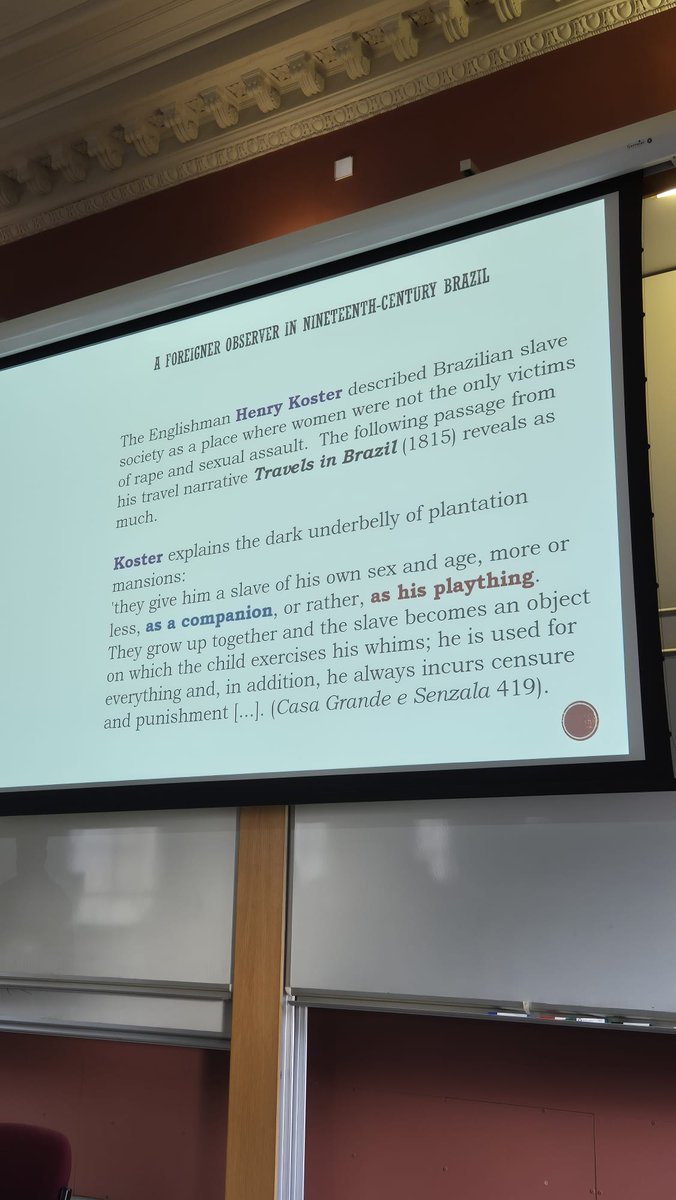
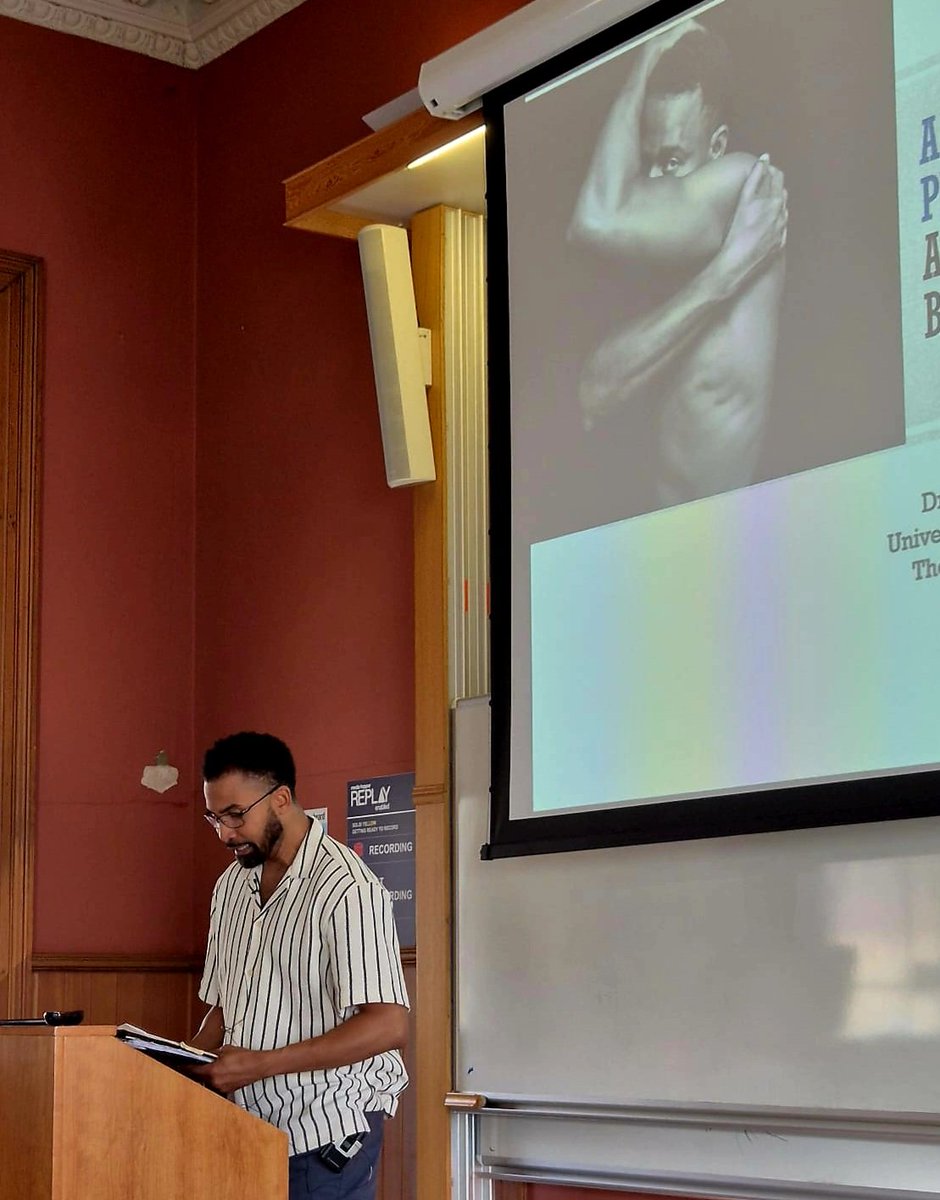
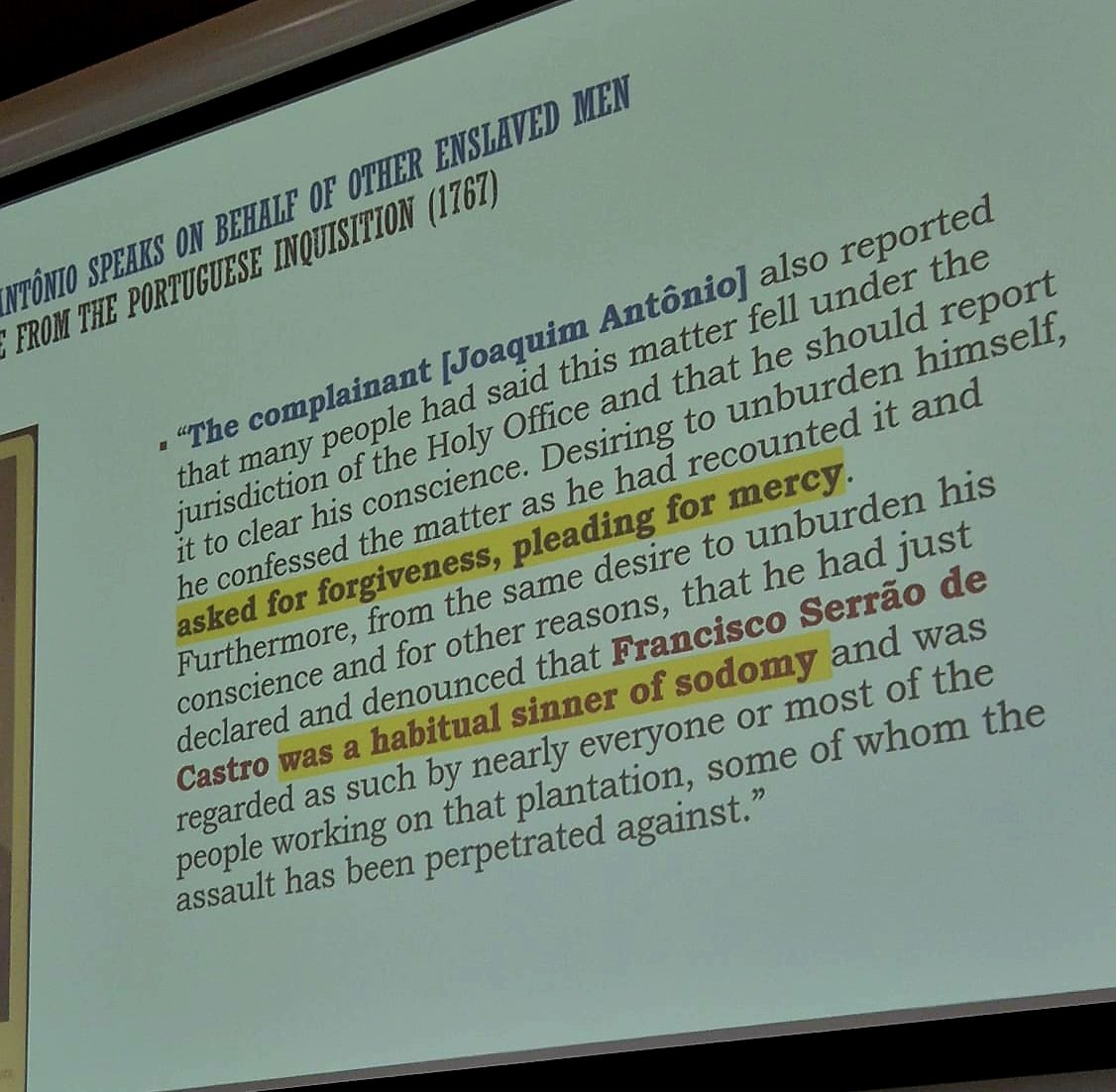
#TheEdinburghLecture. My research on the sexual assault of enslaved African males in Brazil poses a question of its own: Should scholars analyze "acts of refusal" as resistance or as evidence of an alternative ontological category? @UofSouthAlabama@EdinburghUni@RakeemShabazz
But as a black male studies scholar, I’ve been blocked by a “decolonial” theory conference on counterinsurgency and told that phallicism doesn’t apply to Gaza. But what else explains this sex specific approach to targeting? Cause intersectionality can’t…


![obatunse's tweet photo. Ok, cite the studies since you’re the expert. Here is what my source says:
“Due to the way in which Black males are situated at the nexus of gendered racism […]the phenomenon of Black genocide affects Black males in a particular way[.] This focus is not to say that other groups are not also facing genocide (in fact, Native and Indigenous peoples are undeniably still facing genocide, and Black women, especially Black trans women, are certainly also targets for Black genocide, although the data and the literature for these groups differ from those for Black males[.]
“In fact, the need for a close look at each subject position prompts our narrow focus here. As Black males are subject to heightened degrees of racial discrimination, psychological trauma, adverse mental and physical health outcomes, and labor market marginalization when compared to almost every other demographic, it is paramount to examine how Black males specifically are targeted for genocide or how Black male genocide is occurring in the United States[.]
“These machinations operate through specific forms of genocide, which we detail below, illustrating the intentionality of social institutions to debilitate Black males from birth to death, resulting in both the occurrence of Black male genocide[.]”](https://pbs.twimg.com/media/HJzttmNXcAACCRd.jpg)









![obatunse's tweet photo. Ok, cite the studies since you’re the expert. Here is what my source says:
“Due to the way in which Black males are situated at the nexus of gendered racism […]the phenomenon of Black genocide affects Black males in a particular way[.] This focus is not to say that other groups are not also facing genocide (in fact, Native and Indigenous peoples are undeniably still facing genocide, and Black women, especially Black trans women, are certainly also targets for Black genocide, although the data and the literature for these groups differ from those for Black males[.]
“In fact, the need for a close look at each subject position prompts our narrow focus here. As Black males are subject to heightened degrees of racial discrimination, psychological trauma, adverse mental and physical health outcomes, and labor market marginalization when compared to almost every other demographic, it is paramount to examine how Black males specifically are targeted for genocide or how Black male genocide is occurring in the United States[.]
“These machinations operate through specific forms of genocide, which we detail below, illustrating the intentionality of social institutions to debilitate Black males from birth to death, resulting in both the occurrence of Black male genocide[.]”](https://pbs.twimg.com/media/HJzttmSWsAAy54F.jpg)