We’re hiring
We're hiring Growth Partners.
BlockFinaX helps businesses protect themselves against foreign exchange (FX) risk. We're building a network of Growth Partners across Ghana and Nigeria to help introduce our solution to importers, exporters, and other cross-border businesses.
This opportunity is ideal for professionals who already have trusted relationships with business owners, finance teams, trade operators, freight forwarders, consultants, and other participants in the cross-border business ecosystem.
As a Growth Partner, you'll introduce qualified businesses to BlockFinaX and help them discover a better way to manage currency risk.
Compensation includes: • Introduction fees for qualified prospects • Commission on successful onboarding • A share of transaction fees generated by active clients
Training, materials, and ongoing support will be provided.
If you have a strong network and want to earn from the value you create, we'd like to hear from you.
Apply by emailing [email protected] with a brief introduction and details about the types of businesses you work with.
A friend had USDT invoices due in 20 days.
I told him: lock your rate.
He did ~at GHS 11.5 on BlockFinaX.
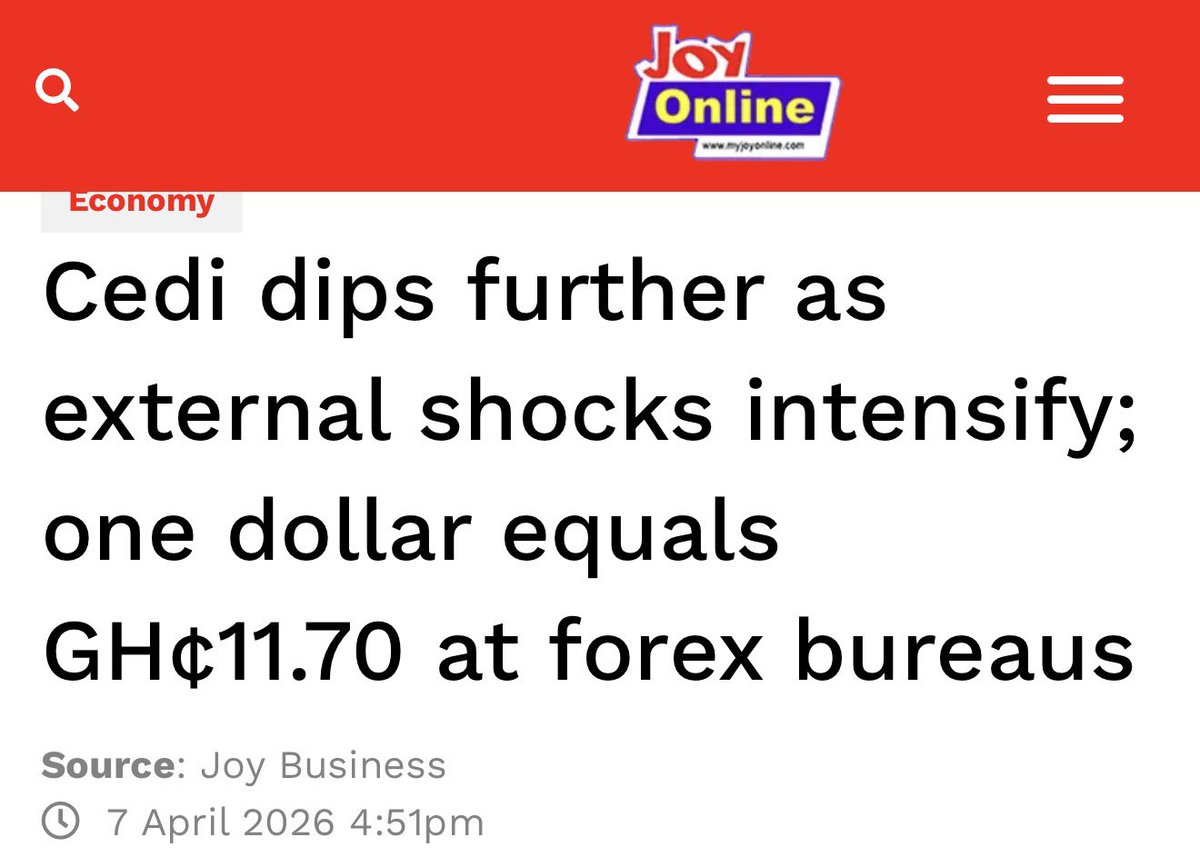
Today USDT is at GHS 12.5.
He saved GHS 1 per USDT. Zero stress. Zero loss.
Hedging isn’t for big banks. It’s for you. 🇬🇭
BlockFinaX is the solution to currency volatility. You hedge against currency volatility. You don't lose your earnings and capital because you're always protected
Live at Kenya Blockchain and Crypto Conference
Stablecoins will eventually become a default payment layer for businesses. Traditional financial institutions may resist at first, but over time they won’t have many better alternatives. Stable currencies bring speed, transparency, global accessibility, and lower settlement friction.
But adoption creates a second problem: FX volatility.
Businesses may import goods, settle invoices, or hold reserves in stable currencies, while their customers and revenues remain in volatile local currencies. The local currency still becomes the last-mile layer, and that mismatch quietly destroys earnings and working capital.
That’s the infrastructure gap we’re solving at @BlockFinax
We help businesses protect their earnings and capital from currency volatility through embedded FX protection infrastructure. As fintechs move money across borders, protection cannot remain a luxury product reserved for large institutions. It has to become a default layer built directly into payments, treasury, and settlement systems.
Our goal is to become the infrastructure layer behind every fintech moving money across borders, enabling businesses in emerging markets to operate with more predictability and less currency risk.
We’re looking forward to have a conversation with anyone building in the space. The future of payments is bright but volatile
In Ghana, many SMEs rely on imports—food, spare parts, pharmaceuticals, textiles—to run their businesses.
A typical order might be $200K, with payment due in 30–60 days.
Within that window, the cedi can move 10% against the dollar.
That instantly adds $20,000 to the cost of the same shipment.
For a business operating on 7% margins ($14,000), that movement doesn’t just reduce profit—it eliminates it and pushes the trade into a loss.
Traditional hedging solutions aren’t built for these businesses. Minimum ticket sizes around $500K put them out of reach.
So SMEs are left with two options: absorb the loss or increase prices and risk losing customers.
This is the everyday reality for import-driven businesses in Ghana and across similar markets.
FX volatility isn’t just a macro issue. It directly determines whether businesses remain profitable or not.
We just placed #1 in the $33,333 Ripple Effect Sales Sprint on @Artizen
$22,222 in prize money
BlockFinaX is now at $32,000 toward a $75,000 goal. The momentum is real.
By supporting us, you’re building a future where SMEs don’t lose $35B every year to FX and commodities price fluctuations.
https://t.co/oxm96PuHOu
𝐀𝐟𝐫𝐢𝐜𝐚 𝐡𝐚𝐬 𝐚 𝐬𝐢𝐥𝐞𝐧𝐭 𝐜𝐚𝐩𝐢𝐭𝐚𝐥 𝐚𝐧𝐝 𝐞𝐚𝐫𝐧𝐢𝐧𝐠𝐬 𝐤𝐢𝐥𝐥𝐞𝐫 𝐧𝐨 𝐨𝐧𝐞 𝐢𝐬 𝐭𝐚𝐥𝐤𝐢𝐧𝐠 𝐚𝐛𝐨𝐮𝐭.
This is more than a message. It’s a value moving away.
Sending money already costs around 8% in fees. Then currency fluctuations quietly take another 8–20% every 60 days. Even at the bare minimum, that’s 16% gone.
For small businesses, traders, and freelancers, stablecoins helped reduce transfer costs. But they didn’t solve FX risk.
And that’s the real problem.
Hedging tools exist, but only for large players. Most financial institutions won’t even look at you unless you’re locking in $500k or more. If you’re moving under $50k, you’re on your own.
Now imagine this:
You’re a trader in Ghana.
You have an invoice due in 30 days.
Today, the rate is 11.
In 30 days, it moves to 12.
That’s about a 9% loss.
Not from bad business. Not from poor decisions. Just from currency movement.
Your margins shrink. Your capital takes a hit. Your growth slows.
This is where we come in.
We built BlockFinax for businesses like this.
Instead of locking the full amount like traditional hedging, you simply pay a premium to protect your exposure.
If the rate moves against you, you’re compensated for the difference.
If it doesn’t, you move on, protected.
No heavy capital requirements. No $500k barrier. Just protection, predictability, and room to grow across borders.
Here’s what it means to buy protection from @BlockFinax , I have $100 exposed to volatility risk which will cause me 2.99 if happens . I paid $1 to protect it. If the risk materializes, I get paid $2.99
Stablecoins are not a unit of account, they’re just a rail. That means freelancers, traders, and businesses are still exposed to FX risk.
At @BlockFinax , we’ve built infrastructure that protects value from exchange rate swings between fiat and stable currencies.
Across Africa, over 7 million SMEs transact more than $210 billion in cross-border payments every year, yet lose around $35 billion to FX volatility and transfer costs.
We built @BlockFinax to stop that loss and preserve value.
Stablecoins are not a unit of account, they’re just a rail. That means freelancers, traders, and businesses are still exposed to FX risk.
At @BlockFinax , we’ve built infrastructure that protects value from exchange rate swings between fiat and stable currencies.
Across Africa, over 7 million SMEs transact more than $210 billion in cross-border payments every year, yet lose around $35 billion to FX volatility and transfer costs.
We built @BlockFinax to stop that loss and preserve value.
BlockFinaX is the first P2P hedging tool that lets businesses protect themselves against currency swings before they happen.
Instead of reacting to FX losses, businesses can lock in outcomes ahead of time, while traders provide the protection.
63 currencies already listed.
Deployed on Lisk.
Not just holding value — protecting it.
BlockFinaX exists for this exact moment.
Before Emeka confirms that $100k order,
he could lock in protection.
So no matter what happens to the rate in those 14 days…
He knows exactly how much he’ll pay in naira.
No surprises.
No wiped margins.
No stress.
Just control.