We're building the market layer for FX risk in emerging markets.
Businesses can buy protection against currency volatility. Traders can trade that risk. Liquidity providers can earn yield by underwriting it.
@BlockFinax
@Tancrededib I build at the intersection of crypto and emerging-market finance. I've worked on Bitcoin and DeFi products and contributed to protocols in the Berachain ecosystem. Today, I'm focused on designing on-chain markets for FX risk and volatility.
I've been thinking about this and designing a protocol around similar ideas, and then Vitalik just drops this
https://t.co/4QqP7Y7r9p
Building financial systems from complementary claims instead of debt feels like a much bigger design space than most people realize
Options markets didn't just let people trade equity vol. They created the idea of equity vol as something you could see and price. EM currency vol is still waiting for its version of that.
Stablecoin "yield" is mostly lending dollars to people who want leverage. Underwriting actual real-world risk is a different, far more interesting kind of yield. And almost nobody does it.
One thing we learned speaking to importers in Ghana and Nigeria.
They don’t fear volatility.
They fear waking up and realizing:
the FX move wiped out their profit.
Frontier market businesses deserve better hedging tools.
Building @BlockFinaX.
A friend had USDT invoices due in 20 days.
I told him: lock your rate.
He did ~at GHS 11.5 on BlockFinaX.
Today USDT is at GHS 12.5.
He saved GHS 1 per USDT. Zero stress. Zero loss.
Hedging isn’t for big banks. It’s for you. 🇬🇭
The feeling right now for those importers who don’t buy protection to cover FX loses on GHS.
@BlockFinax , is the way. You protect your earnings & capital from currency volatility .
Building a neobank, prediction market, or fintech app?
If you need deep wallet infrastructure with native, embedded fiat rails (on/off-ramps) that just work, let’s talk.
We’ve built the tech to handle the complex plumbing so you can focus entirely on UX. My DMs are open.
I had $4 sitting in my VALR exchange account and needed a way to move it to M-Pesa… so I decided to test Rift for the first time 👀💸
Real funds, real experience — let’s see how it goes 🔥
Why do you use @tryrift?
me: it’s because i always know what’s happening with my transaction.
i’m never left wondering what’s happening behind the scenes.
Stablecoins will eventually become the default payment layer for businesses. Traditional financial institutions will have no better option than to adapt.
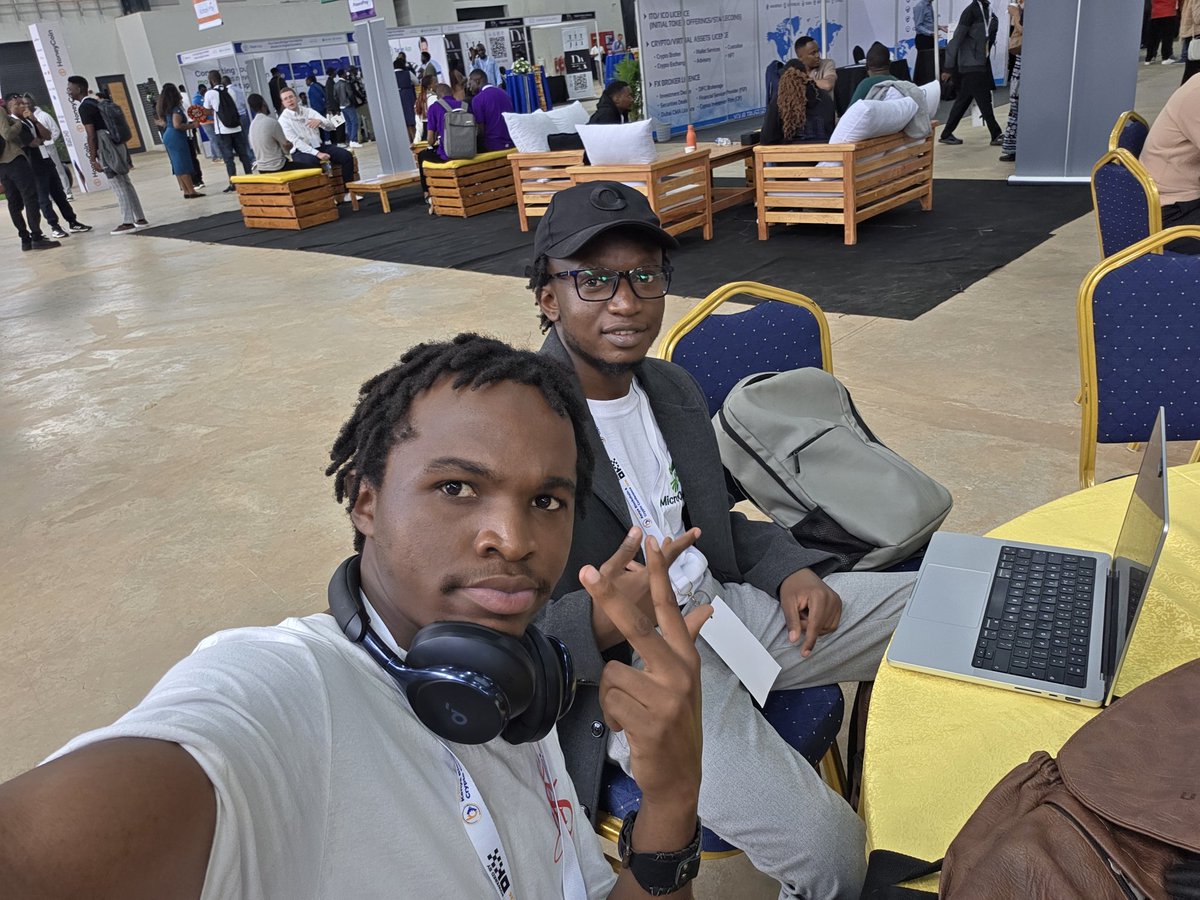
Live at Kenya Blockchain and Crypto Conference
Stablecoins will eventually become a default payment layer for businesses. Traditional financial institutions may resist at first, but over time they won’t have many better alternatives. Stable currencies bring speed, transparency, global accessibility, and lower settlement friction.
But adoption creates a second problem: FX volatility.
Businesses may import goods, settle invoices, or hold reserves in stable currencies, while their customers and revenues remain in volatile local currencies. The local currency still becomes the last-mile layer, and that mismatch quietly destroys earnings and working capital.
That’s the infrastructure gap we’re solving at @BlockFinax
We help businesses protect their earnings and capital from currency volatility through embedded FX protection infrastructure. As fintechs move money across borders, protection cannot remain a luxury product reserved for large institutions. It has to become a default layer built directly into payments, treasury, and settlement systems.
Our goal is to become the infrastructure layer behind every fintech moving money across borders, enabling businesses in emerging markets to operate with more predictability and less currency risk.
We’re looking forward to have a conversation with anyone building in the space. The future of payments is bright but volatile
Who is building the data layer for emerging markets?
Not the polished datasets everyone already tracks, but the messy, real world signals like street level FX rates, local commodity prices, hyperlocal weather, political shifts, and cultural trends.
Most of this data is fragmented