Thank you to everyone who made Bloomsday Festival 2026 happen. Thank you to all the performers, speakers, and everyone who took part in all the wonderful Joycean festivities. We hope to see you at Bloomsday Festival 2026.
#bloomsday#bloomsdayfestival
In collaboration with The James Joyce Centre and supported by Fáilte Ireland and The Department of Culture, Communications and Sport
“A Modest Proposal” is arguably Jonathan Swift’s most infamous work. Published in 1729, the satirical essay argues that the best solution to the poverty and overpopulation of Ireland was for the poor to sell their babies as food to the wealthy. The essay goes into great detail about how such as scheme could be implemented, its various social and economic benefits, and even the ways the babies could be prepared. “A young healthy child,” he writes, “is a most delicious nourishing and wholesome food, whether stewed, roasted, baked, or boiled.”
The essay caused a sensation in Ireland and Great Britain. Swift’s intention was to raise awareness of the dire poverty in Ireland and the apathy the British ruling class had towards the population. Now regarded as one of the best satires ever written, “A Modest Proposal” demonstrates the effectiveness (and complications) of irony and “shock humour,” the dangers of a detached ruling elite, and the inhumanity of modern decision-making based exclusively on numbers and data.
Learn more about “A Modest Proposal” in our hybrid online/in-person course starting this Wednesday.
The first image is the cover of the illustrated version of “A Modest Proposal” by Conor McHale, an illustrator and guest speaker on the course. It is available for purchase at https://t.co/YVIBVgfG2d
The James Joyce Centre is supported by the Department of Culture, Communications and Sport. It absolutely does NOT support eating babies. 🍽️👶🏻😋
⬇️REGISTER BELOW⬇️
https://t.co/vQcX9TnUKb
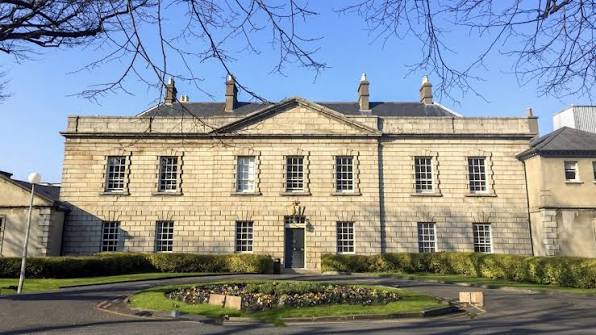
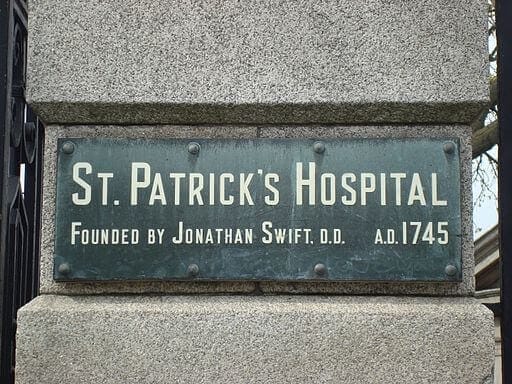
Did you know that Jonathan Swift founded the first mental hospital in Ireland? When Swift passed away in 1745, he left an endowment for the establishment of a mental hospital in Dublin. Although the original name of the hospital, “St. Patrick’s Hospital for Imbeciles,” is a tad antiquated, the hospital provided more humane conditions and treatment than were standard at the time. It has since become @StPatricks, Ireland’s largest non-profit mental health service.
“He gave the little wealth he had To build a house for fools and mad; And show’d by one satiric touch, No nation wanted it so much.”
Find out more about Swift’s extraordinary life and legacy in hybrid online/in-person course offered by @JamesJoyceCentr starting on 23rd September. Click the link below for more information.
https://t.co/4qJbtzjY2J
The James Joyce Centre is supported by the Department of Culture, Communications and Sport.
We were honoured to be featured in 'Sandi's Ireland: A Literary Journey' last night on Channel 4. Director Darina Gallagher talks to Sandi Toksvig in the James Joyce Centre about Joyce and his deep connection to Dublin.
Watch the full episode: https://t.co/jEyH87fdeU
The James Joyce Centre is supported by the Department of Culture, Communications and Sport.
Now that we have your attention, the James Joyce Centre @JamesJoyceCentr proudly presents a six-week online/in-person course on Jonathan Swift. Join your fellow Swifties in learning more about Jonathan, the first (and just as talented) Swift!
Course Details:
📍 Zoom & The James Joyce Centre
🗓️ 23 September – 28 October 2026
🕕 Every Wednesday, 6-8pm Irish Standard Time
🎟️ Registration: €100
Spaces are limited so be sure to sign up soon.
🔗 Registration Link 🔗
https://t.co/4qJbtzjY2J
Did you know that the words and idioms yahoo, lilliputian, a confederacy of dunces, and sweetness and light were all created by Jonathan Swift?
Find out more about Swift in the James Joyce Centre’s online course starting on 23rd September.
@JamesJoyceCentr
https://t.co/4qJbtzjY2J
In honour of the 300th anniversary of Gulliver’s Travels, the James Joyce Centre @JamesJoyceCentr is proud to present a six-week course on Jonathan Swift starting on 23 September.
Gulliver’s Travels holds the distinction of being one of the best works of satire ever written and the most read work of Irish literature. This course will examine the man behind Gulliver and the great body of work he produced before and after his magnum opus.
The course will include his famous and lesser-known works: essays, pamphlets, letters, poems, sermons, vignettes. The course will examine Swift’s legacy and influence of writers and works as disparate as Voltaire and George Orwell to The Boys and South Park.
In an age of post truth, fake news and headlines that seem more satirical than real, Swift’s legacy is as relevant as ever. Led by Dr. Josh Q. Newman, the course will consist of readings, group discussions, presentations, supplementary materials and guest lectures.
Course Details:
📍 Zoom & The James Joyce Centre (35 North Great George’s Street)
🗓️ 23 September – 28 October 2026
🕕 Every Wednesday, 6-8pm Irish Standard Time
🎟️ Registration: €100
Each session will be livestreamed on Zoom, recorded and made available for view on Moodle. Please email [email protected] for more information.
Spaces are limited so to be sure to register soon. We look forward to seeing you in class!
The James Joyce Centre is supported by the Department of Culture, Communications and Sport.
https://t.co/4qJbtzjY2J
In honour of the 300th anniversary of Gulliver’s Travels, the James Joyce Centre is proud to present a six-week course on Jonathan Swift starting on 23 September.
Gulliver’s Travels holds the distinction of being one of the best works of satire ever written and the most read work of Irish literature. This course will examine the man behind Gulliver and the great body of work he produced before and after his magnum opus.
The course will include his famous and lesser-known works: essays, pamphlets, letters, poems, sermons, vignettes. The course will examine Swift’s legacy and influence of writers and works as disparate as Voltaire and George Orwell to The Boys and South Park.
In an age of post truth, fake news and headlines that seem more satirical than real, Swift’s legacy is as relevant as ever. Led by Dr. Josh Q. Newman, the course will consist of readings, group discussions, presentations, supplementary materials and guest lectures.
Course Details:
📍 Zoom & The James Joyce Centre (35 North Great George’s Street)
🗓️ 23 September – 28 October 2026
🕕 Every Wednesday, 6-8pm Irish Standard Time
🎟️ Registration: €100
Each session will be livestreamed on Zoom, recorded and made available for view on Moodle. Please email [email protected] for more information.
Spaces are limited so to be sure to register soon. We look forward to seeing you in class!
The James Joyce Centre is supported by the Department of Culture, Communications and Sport.
https://t.co/lM821sZx1s
Joyce is being funny, in his jocoserious way, by casting an essentially passive, non-confrontational Jew who'd been baptized Catholic (but not very effectively: Leopold doesn't grasp essential Catholic dogma) as his "Ulysses." where Odysseus slaughters the suitors, Leopold avoids even seeing his wife's lover & meekly accommodates him. we never see if he gets breakfast in bed nor do we ever "see" Molly Bloom except in glimpses.
though Joyce identified with Stephen Daedalus at the outset of the novel he'd said in letters over the course of years writing it that, as the day progresses, it is Leopold Bloom who emerges as the true hero-- "As the day wears on Bloom should overshadow them all."
(Frank Budgen, p. 116)
so wonderful how James Joyce, who personally abhorred violence, directs Leopold Bloom on his non-violent odyssey through Dublin: a hero who repays insults with kindness, never loses his temper, shrinks from confrontations; returns home at last to the slovenly bedroom of the wife who has betrayed him with a brazenly macho suitor, quietly prepares for bed & next day's resumption of a the pacifist life. ("Ulysses")
One epic. Two interpretations. Two mediums. Two very different commutes.
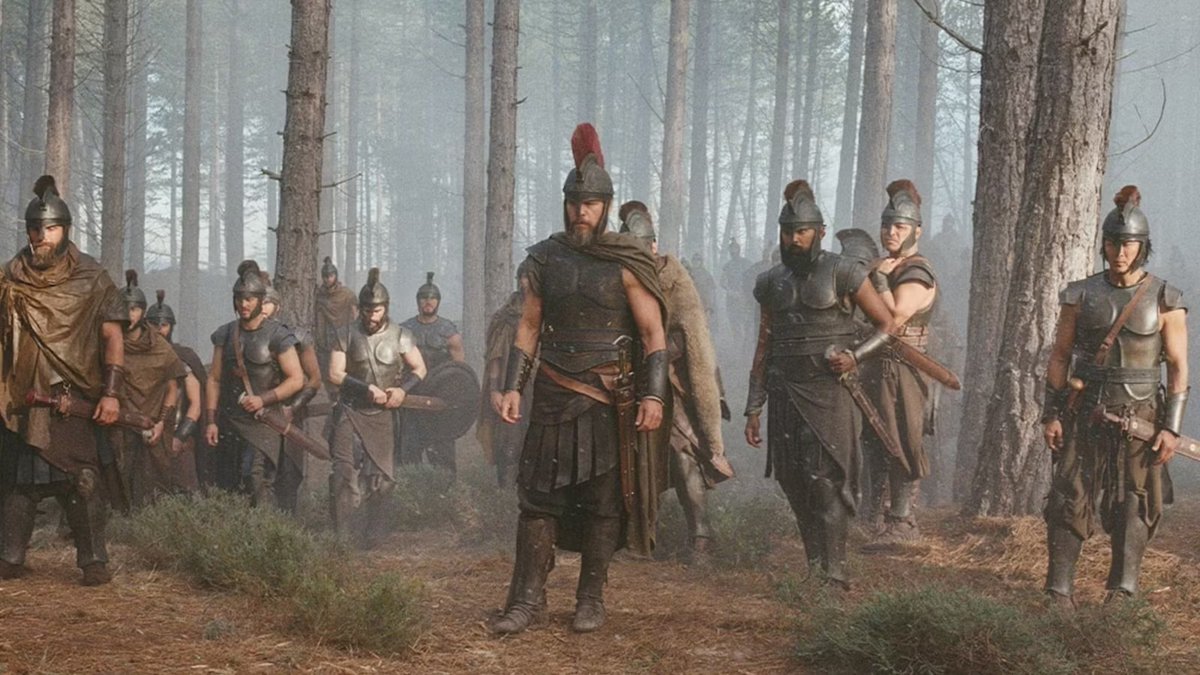
Christopher Nolan's The Odyssey sails into theatres this weekend. It is the latest adaptation of the Homeric tale. Matt Damon's Odysseus spends ten years getting home. There are kings and monsters. There is a furious sea god. He has, figuratively and literally, a boatload to deal with.
James Joyce retold the same story but with a modernist twist. Ulysses follows Leopold Bloom through one ordinary day in Dublin. There are no mythical lands or sorcerers but rather a chemist's shop and a funeral. There is no Cyclops but a one-eyed man in a pub who starts a fight. There is no sea monster but a very judgmental cat that wants breakfast.
A warrior-king, Odysseus spends much of his time slaying people, fighting monsters, sailing the seas and defying the gods. Bloom, a mild-mannered, part-time advertisement canvasser, abhors violence and avoids confrontation. He cannot even bring himself to pass his wife's lover on the street. Odysseus's decade-long journey is replete with extraordinary trials. Bloom's day, although amusing and not without colourful moments, is rather ordinary.
And yet, they are both men of principle who find themselves far from home, having to navigate treacherous worlds on their journeys back to their families. They are intelligent and curious, crafty and imperfect. They both return home, but not before having to deal with the barriers placed in front of them by people, nature and the higher powers that be, along with the consequences of their own flaws. They are both unworldly and entirely human.
Moreover, their stories are told by bards in ways that changed the literature that came after. Whether in the Bronze Age Mediterranean or Edwardian Dublin, there is something about the epic that people find moving. Nolan and Joyce are just two of the artists over the centuries who were inspired by Homer. From modernist stream of consciousness to 70mm IMAX film, the adaptations continue to reinvigorate a tale as old as storytelling itself.
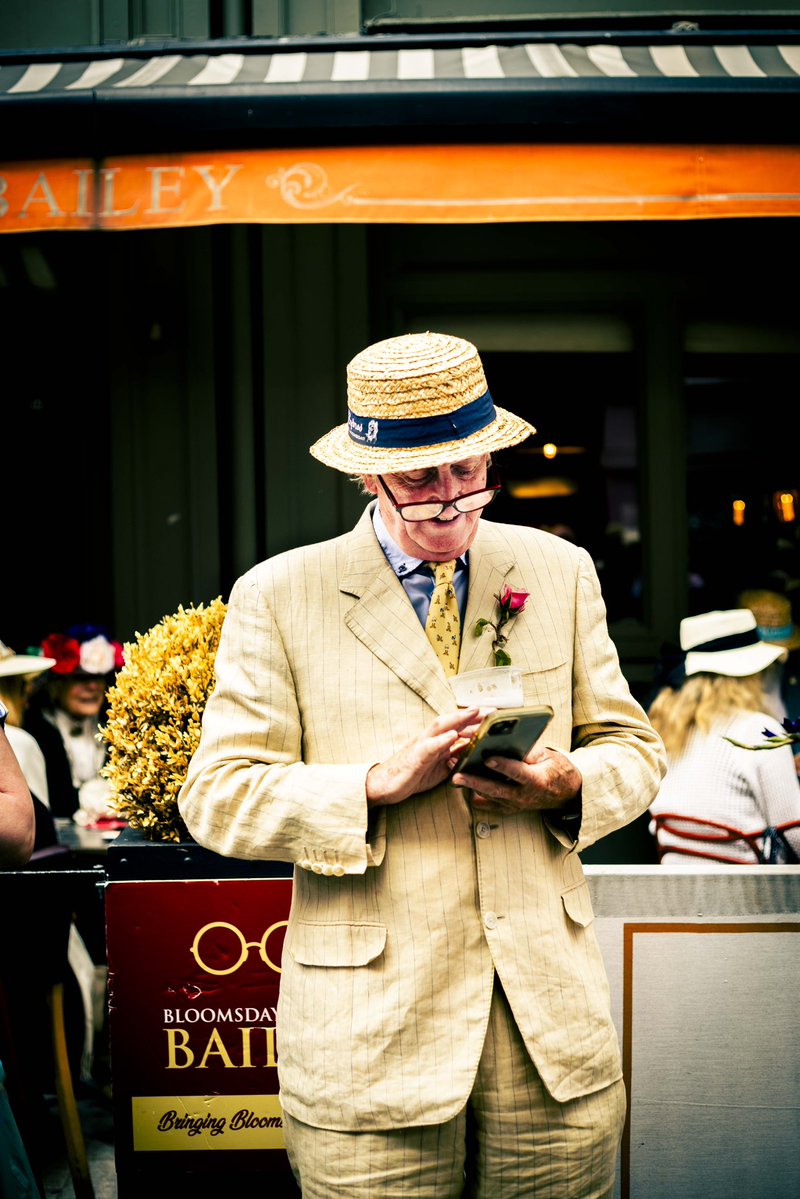
See our photos to see both odysseys side by side. Let us know in the comments who did it better: Nolan or Joyce.
Only kidding! Enjoy the movie 🍿😎⛴️
If you think three hours is a long time, try getting through Ulysses.
The James Joyce Centre and The Write Stuff are delighted to continue our collaboration with Dublin by Dusk, in partnership with the @DeptCultureIRL@Failte_Ireland@DubCityCouncil and @DublinTown on Thursday, 30 July at 7pm. The Write Stuff are gatherings in collaborative storytelling, poetry & music. Curated & hosted by Dublin writer Steve O’Toole. At each gathering, storytellers, and poets, are joined by showcase musicians, working to a pre-agreed theme. Thus, delivering a continuous, collaborative flow of original work.
Tickets are €12.50. For tickets, click the Eventbrite link in our bio.
Steve O’Toole
A street stalking creative, poet, storyteller, artist, and the creative force behind The Write Stuff. Not one to sit on the fence, Steve firmly wears both his heart & mind on his sleeve, delivering forceful versed commentary by the page full. Originally performing in the mid 90’s as support to Irish writer ‘Pat Ingoldsby’.
Luke Clerkin
An award-winning singer songwriter from Tallaght whose music has taken him from major festivals like Electric Picnic, Body & Soul, and Stendhal to headline shows at iconic Irish venues including Whelan’s and The Workman’s Club.
Danila
An Italian singer/songwriter based in Dublin. She started off as a singer, then added the ukulele to put her own spin on covers. Now, she writes songs about self-love, self-acceptance, all in a soft and honest package.
Sean Corrigan
A sporty lad first and foremost, who in recent years sought an alternative form of self-expression and found it through poetry and fashion. His poetry is written with the aim of creating and maintaining a rhythm more so than through as an outlet of impressive vocabulary, as one can tell from this bio!
The James Joyce Centre is supported by the Department of Culture, Communications, and Sport.
https://t.co/zBTKsQjWZO
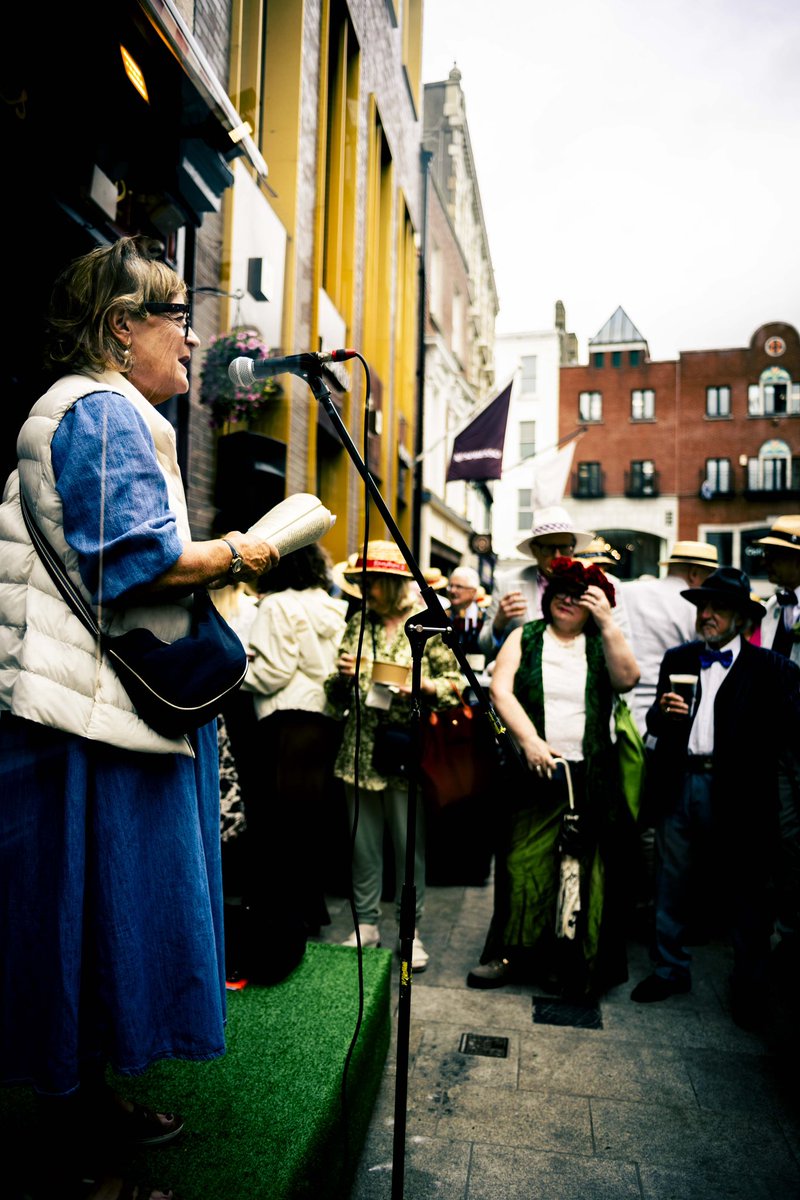
Bloomsday celebrations at Davy Byrne’s.
📸: Marcelline Roulleau
#bloomsday#bloomsdayfestival
In collaboration with The James Joyce Centre and supported by Fáilte Ireland and The Department of Culture, Communications and Sport
Former @SenDavidNorris officially opened our first #LiteraryFestival back in 2014 and his story of how he and others started the @bloomsdayfest is certainly an inspiration to our organisation.
https://t.co/lhtyhXUqOb
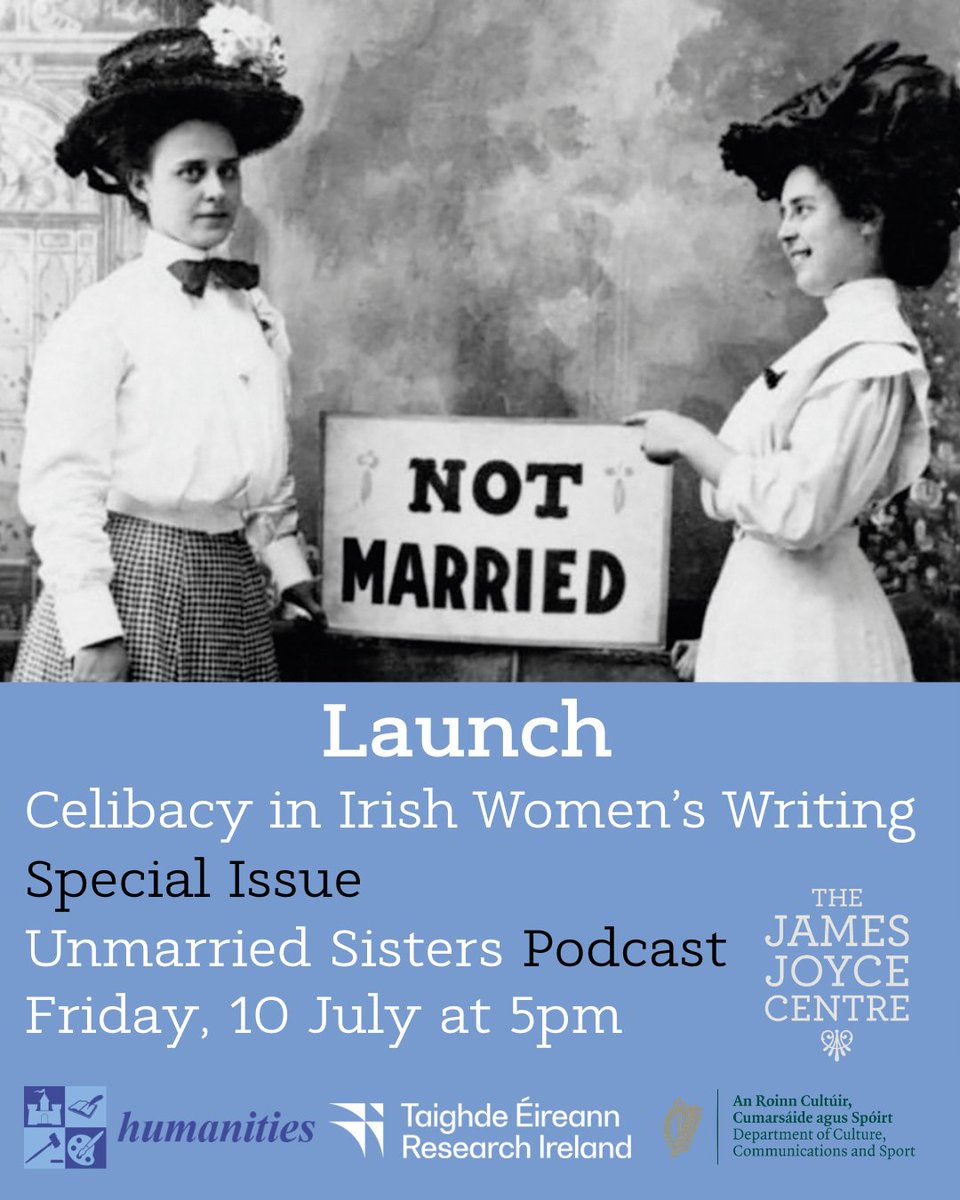
Please join us for the launch of a new special issue and podcast series dedicated to the untold history of Ireland's unmarried women on Friday, 10 July at 5pm.
Celibacy in Irish Women's Writing, edited by Dr. Paul Fagan, is an open-access @MDPIOpenAccess Humanities special issue dedicated to less familiar feminist, queer, and activist versions of celibacy in Irish women’s movements and literature. Boasting new research from leading experts in Irish women's writing, the essays explore representations of unmarried and widowed women in writing by Elizabeth Bowen, Kate O’Brien, Mary Lavin, Molly Keane, Eva Gore-Booth, Edna O’Brien, and more, in order to better understand the historical trajectories of the 'female celibate' as a political and cultural figure in Ireland.
In the accompanying podcast series Unmarried Sisters, Paul speaks to leading figures in Irish, gender, and sexuality studies to learn more about historical collaborations and the bonds formed between differently celibate Irish women—whether in friendships, romantic relationships, creative collaborations or forms of political and revolutionary organisation—and to explore celibacy’s imbrications with first-wave feminist politics, patterns of queer kinship, and Irish literary modernism.
The special collection and podcast will be launched by Prof. Katherine Ebury (incoming UCD James Joyce Chair), with additional remarks by the editor Dr. Paul Fagan (University of Vienna) and contributors Prof. Anne Fogarty (UCD), Prof. Maureen O'Connor (UCC), Dr. Deirdre Foley (TCD) and Dr. Fae McNamara (Teesside University).
The special issue and podcast series were made possible by the support of the @Researchirel project Celibacy in Irish Women’s Writing, 1860s–1950s (GOIPD/2022/634).
Refreshments will be provided. The event is free but booking is essential.
The James Joyce Centre is supported by the Department of Culture, Communications and Sport.
https://t.co/JEmsvB754P
Archival footage of Dublin in 1915, capturing the city's streets, trams, horse drawn carriages and people going about their daily lives before the Easter Rising.
Footage: J. Gordon Lewis for British Pathe
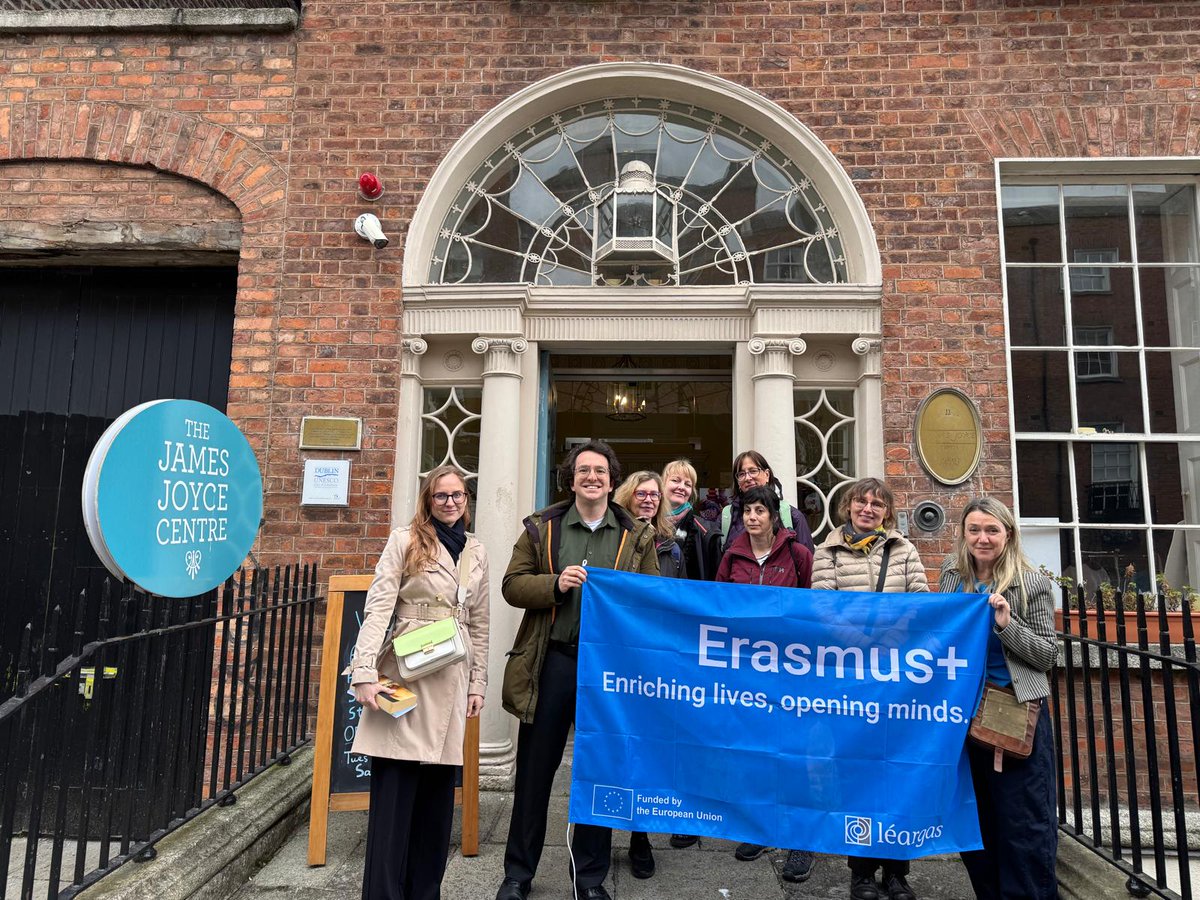
On 5-10 May 2026, The James Joyce Centre hosted curators from The Under and Tuglas Literature Institute of the Estonian Academy of Sciences and The Petőfi Literary Museum for an invited experts programme. The programme was part of an @EUErasmusPlus short-term mobility project, “Digital Transformation in European Writers’ Museum."
The six-month project aims to improve digitisation competences, facilitate the accessibility and usability of collections, reach a wider audience through online platforms, enable an exciting museum experience for all people, expand the circle of cooperation partners and present the project results internationally. The project hopes to significantly improve the digitisation knowledge and skills of memory institutions in order to present the literary and cultural history of 20th-century Europe in a broader and more inclusive way.
You can read more about our experiences in our blog published in EPALE: https://t.co/bQ07JUivlC
Our special thanks to the curators and @Leargas for their support. The project is funded by the European Union.
#ErasmusPlus #europeanunion #leargas
A few photos from last night's launch of the collaboration between the James Joyce Centre and The Write Stuff for Dublin by Dusk, in partnership with
@DeptCultureIRL@Failte_Ireland@DubCityCouncil and
@DublinTown.
On the last Thursday of every month, we gather storytellers, poets, and showcase musicians for a themed performance, delivering a continuous, collaborative flow of original work.
Our special thanks to Steve O'Toole, Eddie Winston, Tom Tierney, Kaycii and Two Prong for their inspiring acts. Check out The Write Stuff's website at https://t.co/kU6kLjydkp
Our next Dublin by Dusk event will be on 30 July. Stay tuned for more info!