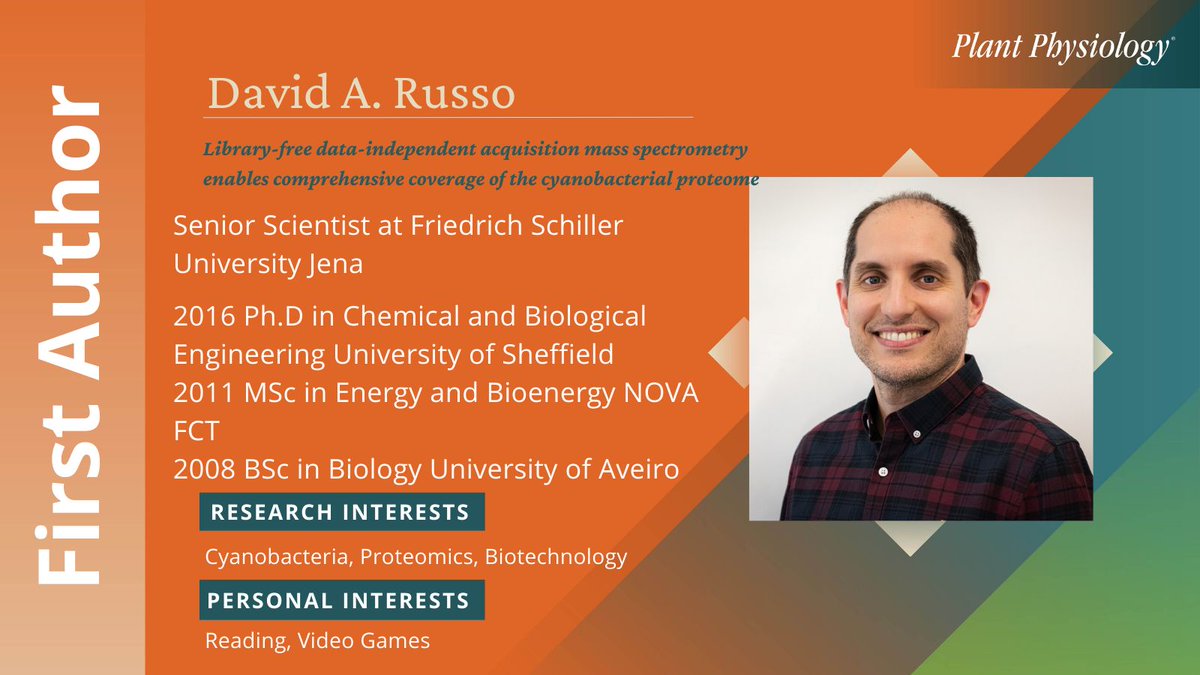
Library-free data-independent acquisition mass spectrometry enables comprehensive coverage of the cyanobacterial proteome (David A Russo, Felix R Schneidmadel, Julie A Z Zedler) https://t.co/I3xTLA17HQ @BlueGreenDR@F_Schneidmadel @SynBioJazz@ASPB#PlantSci
Fancy joining two labs at the University of Sheffield to convert sunlight into high value chemicals by engineering cyanobacteria? #PhD#biotech CASE PhD studentship opportunity in Sunny Sheff...https://t.co/K0ZXehF0Nw
Library-free data-independent acquisition mass spectrometry enables comprehensive coverage of the cyanobacterial proteome (David A Russo, Felix R Schneidmadel, Julie A Z Zedler) https://t.co/I3xTLA17HQ @BlueGreenDR@F_Schneidmadel @SynBioJazz@ASPB#PlantSci
Why did chloroplasts retain some genes from their free-living ancestors rather than transferring all of them to the nucleus following endosymbiosis?
Possibly, mRNA targeting explains gene retention in chloroplasts? https://t.co/LG69DF2vcK
very excited to share my recent collab with @SynBioJazz, @fmeierX, @oliinyk_denys. Here we take a deep dive into the exoproteome of cyanobacteria with our MS workflow EXCRETE. It’s fast, cheap and only needs a couple of hundred microlitres. Take a look:
https://t.co/PB9Nm9wqJH
What a great and inspiring meeting! Our ICRC2024 @CeBiTec Algae Biotech conference is coming to an end. Thanks to the Chairs @Kylelauersen and EonSeon Jin and all participants! See you again in three years at @unibielefeld
Our @CeBiTec conference on microalgae biotech just started at @unibielefeld. Great honor to host 100 algae experts from 16 countries and 4 continents in Bielefeld!
Incredibly proud to share this work, almost 6 years in the making, out in @ScienceMagazine!!! 🎇
We've known for over a century that eukaryotes of all kinds anticipate the seasons (think: hibernation, flowering, reproduction), but what about bacteria?🦠
https://t.co/I9vw5ZTKbT
Great collaboration with @DittmannElke. Here we show that Nostoc are happy to have bacteria around but not everything is rosy in their relationship.. read more to find out!
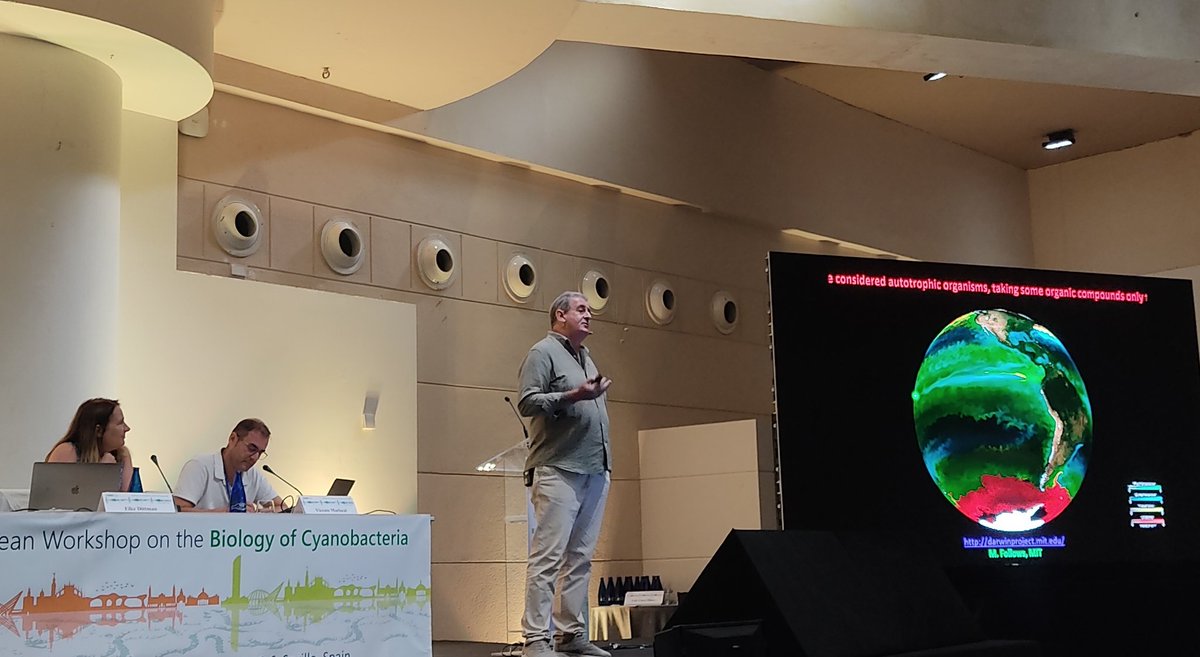
@Selim_Khaled_@CyanoWorld1 In my recent preprint I wrote "at least 10%" based on Longhurst, 1995 and Flombaum, 2013. 25% is likely to be a maximum registered during high productivity season.
very excited to share my recent collab with @SynBioJazz, @fmeierX, @oliinyk_denys. Here we take a deep dive into the exoproteome of cyanobacteria with our MS workflow EXCRETE. It’s fast, cheap and only needs a couple of hundred microlitres. Take a look:
https://t.co/PB9Nm9wqJH