@ms_ezell@Mrgunsngear So black people will murder white people for using public roadways if they do not comply with the unlawful orders of black people?
@jyzg@CompletedStreet “In places without significant black populations, people don’t engage in the behaviors American whites do avoid significant black populations.”
@__Siffa@shortmagsmle Every institution in American public life supports white genocide.
Every belief you hold is pushed by the most powerful oligarchy in the history of humanity.
Its success is so ubiquitous you view it as centrist.
@GPrime85@Jdkoa That you are a cringe Reddit atheist with other 90s liberal values doesn’t actually make you the arbiter of what is appropriate in right wing spaces
This is the asteroid's impact risk corridor atm. Current estimates suggest it could release the equivalent of about 7.7 megatonnes of TNT, about the same as a B53 nuclear bomb.
Still a low chance though.
We're done with your faggy little fake debate club where we stake out principles while you just do whatever you want
We're going to do what we want and we aren't going to apologize for it or justify it to people who can't be convinced
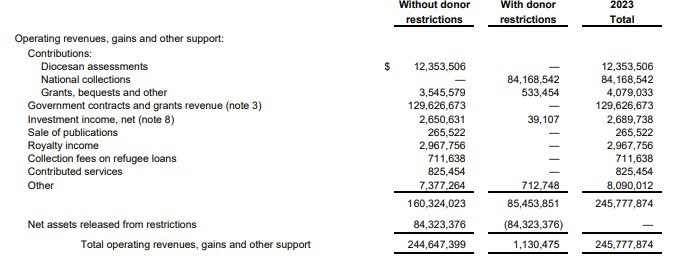
Bishop Seitz conveniently leaves out the fact that his organization rakes in hundreds of millions of dollars in federal funding every year to facilitate human trafficking:
Trump is of course right about birthright citizenship, and here's why.
The Fourteenth Amendment begins, "All persons born or naturalized in the United States, and subject to the jurisdiction thereof, are citizens of the United States and of the State wherein they reside."
The key phrase to consider there when considering who is a "natural-born citizen" is "subject to the jurisdiction thereof." The argument of Trump's legal supporters is that illegal immigrants are subject to a foreign sovereignty, are therefore not subject to U.S. jurisdiction, and thus the citizenship clause above does not apply.
The "subject to the jurisdiction thereof" clause, effectively ignored by birthright citizenship advocates, has to have some meaning or it wouldn't have been included, and the number of children of foreign diplomats being vanishingly small, we can assume it extended beyond that extremely rare case (so rare as hardly to be worth mentioning).
What was meant by the clause was that you had to be subject to no other sovereign.
Senator Jacob Howard drafted the citizenship clause of the Fourteenth Amendment. Here is what he said it meant: "This will not, of course, include persons born in the United States who are foreigners, aliens, who belong to the families of ambassadors or foreign ministers accredited to the Government of the United States, but will include every other class of persons." (Emphasis added.)
Well, if we value honesty, that right there should settle it.
Congressman John Bingham, sometimes called the father of the Fourteenth Amendment itself, held that its meaning was that "every human being born within the jurisdiction of the United States of parents not owing allegiance to any foreign sovereignty is, in the language of your Constitution itself, a natural born citizen." (Emphasis added.)
Beyond this evidence, two Ivy League professors, Peter Schuck and Rogers Smith, in Citizenship Without Consent: Illegal Aliens in the American Polity, published by Yale University Press, make a compelling case that the Fourteenth Amendment does not mandate birthright citizenship.
The two scholars begin a Summer 2018 article in National Affairs this way:
If an unauthorized alien gives birth to a child on American soil, is the child automatically a United States citizen? Americans have long assumed that the answer is yes — that the child is a birthright citizen regardless of the parent's legal status, and that such citizenship is required and guaranteed by the Constitution. But a closer examination of the matter suggests that this answer is actually incorrect, and that birthright citizenship for the children of immigrants here illegally is better understood as a matter for Congress and the American people to resolve.
What makes their conclusion especially interesting is that Schuck and Smith describe themselves as scholars who "strongly favor even more legal immigration than the U.S. now accepts, and a generous amnesty for those now here illegally."
So even though their conclusion runs counter to their personal political beliefs, and they are not Trump sympathizers in the least, they contend that the evidence is so strong against birthright citizenship that scholarly honesty compels them to say so: "The fact that many opponents of birthright citizenship for the children of unauthorized parents harbor anti-immigrant views does not mean that their bottom-line position is wrong."
They argue that because the Constitution does not mandate birthright citizenship, the matter may be regulated by congressional statute instead.
There was no "illegal immigration" problem at the time the Fourteenth Amendment was drafted, so (even though we have the testimony of Jacob Howard, which would seem to settle the matter), Schuck and Smith suggest using the example of Native Americans to shed light on the issue:
The framers vested such discretion [regarding the citizenship question] in Congress with respect to Native Americans, whose presence in the country (which of course long predated that of the framers themselves) was manifestly accepted. This was recognized in the 14th Amendment's own text, a long line of treaties with the tribes, and legislation regulating their citizenship. We doubt the framers would have denied Congress that same policy choice with respect to a group whose very presence in the country — by definition — violates federal law. Basic constitutional protections for this group would certainly have been granted, as in Plyler. But automatic citizenship without public debate and congressional consent would probably not have been. [Emphasis added.]
This is one very good reason that history matters. Not so much because we can always draw neat little "lessons" from it, but because if we have a deep knowledge of history we will be better equipped to respond to shysters trying to pull one over on us. (1/2)
@dferris1961@BokoHarambe Why aren’t Japan and Singapore plagued by this horrific violent crime you claim prohibition inevitably results in? Both nations have far stricter drug laws.
Could it be this is just a thing libertarians say but there is no data to support it?