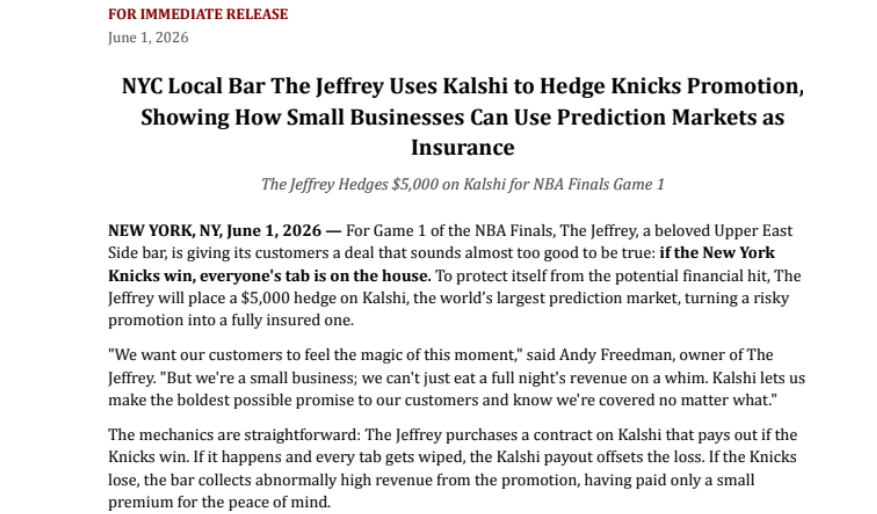
Kalshi's first example of a small business using it as hedging tool is The Jeffrey, an NYC bar that's promising free drinks to all customers if New York Knicks wins NBA Finals Game 1 on Wednesday
"I want to give a shoutout to Jeremy Lin - he had me at Modell's going crazy trying to find his jersey" 😭
KAT shouts out Jeremy Lin and the impact he had on his own Knicks fandom
CEOs are uniquely prone to AI psychosis because they’re sufficiently distant from the last mile of work that still has to happen to generate most value with AI.
So when they play with AI, they see the happy path results, often not considering the next 10 or 20 things that have to happen to get sustainable results from agents.
“Look I made this awesome product prototype”. Yes but you didn’t have to review the code before it went into production and fix a bunch of issues.
“Look I generated a contract”. Yes but you didn’t verify all the terms before it goes out to the counterparty and didn’t have to wire up all the past contracts to work with.
The best thing you can do as a CEO is to use AI a *ton* to figure out the real implications of agents in the enterprise, and come out the other side with an appreciation for both the upside and the real work that goes into them.
There’s a strange and under-discussed side effect of the AI boom: what it’s doing to family dynamics. By which we mean: how it’s potentially destroying family dynamics. https://t.co/exgPqh8tla
AI is supposed to make knowledge workers feel like they are wearing an Iron Man suit
Instead, everyone's running 2x as fast to go nowhere
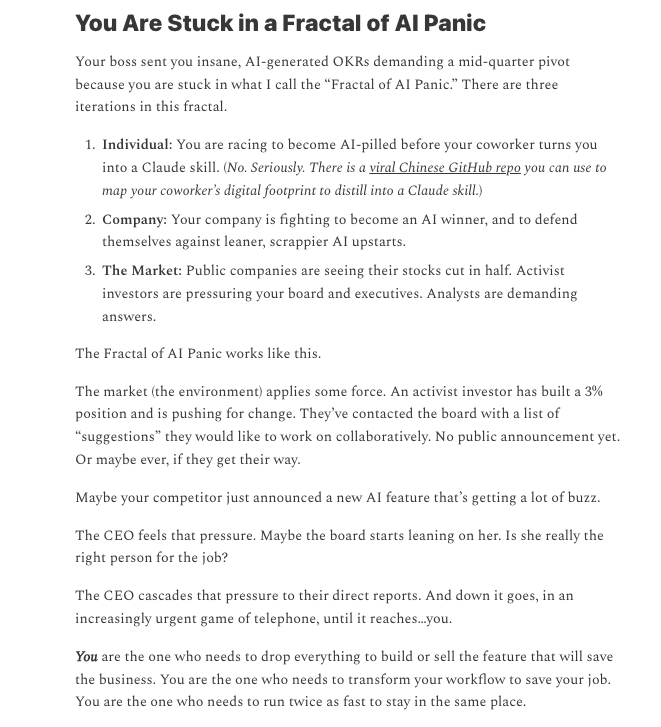
I wrote about why people, their companies, and the market are trapped in an AI Fractal of Panic that is pushing them to run the wrong race