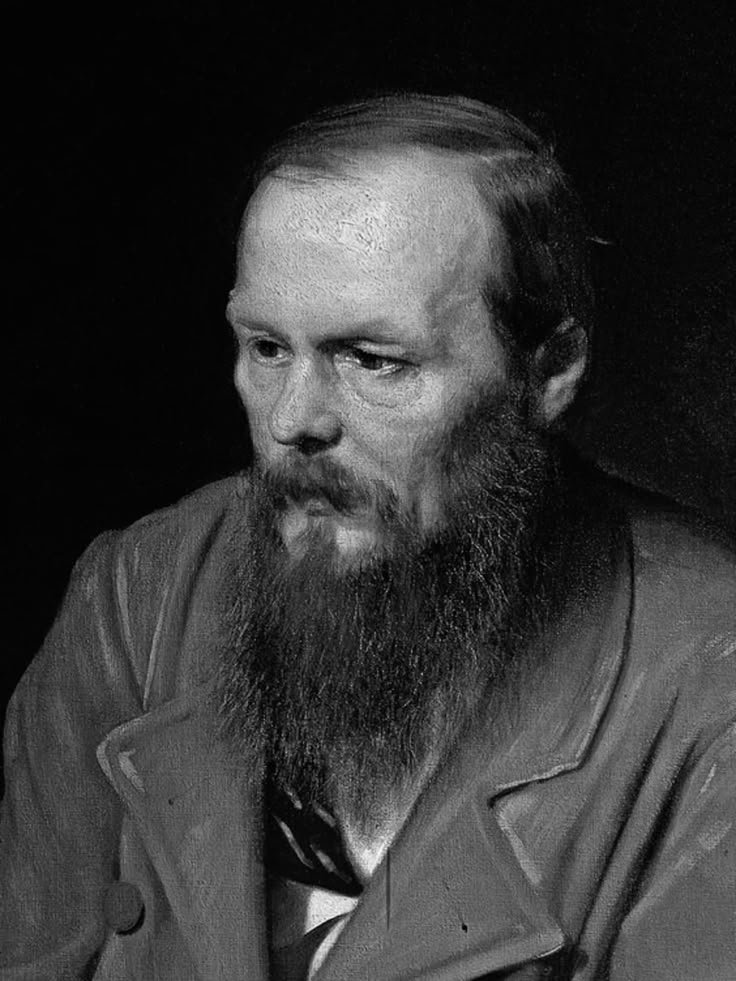
Dostoevsky was 28 when they stood him in front of a firing squad. Blindfolded. Hands tied. He could hear the rifles being loaded.
At the last second, a messenger on horseback arrived. The Tsar had commuted the sentence. The entire execution was staged. Psychological torture designed to break him.
It worked. He had a seizure on the spot.
They sent him to a labor camp in Siberia for four years. Freezing. Starving. Sleeping on wooden planks next to murderers. His epilepsy got worse. He had no paper. No pen. Nothing.
When he got out, he was broke. His first wife died. His brother died. He inherited his brother’s debts. He was so desperate for money that he signed a contract with a publisher that would have given away the rights to everything he’d ever write if he missed the deadline.
He wrote The Gambler in 26 days to make it. Dictated it to a 20-year-old stenographer named Anna. Married her three months later.
Then the real work started. Crime and Punishment. The Idiot. Demons. The Brothers Karamazov. The greatest novels in the history of the Russian language. Maybe any language.
The man who stood blindfolded before the firing squad, who convulsed on the ground while soldiers watched, who slept next to killers in Siberia for four years, who was buried in debt and grief.
That man wrote: "Every minute can be an eternity of happiness."
He earned the right to say it.
It's never over. Never give up, friend.
MUSLIM MINDSET: The world belongs to Allah. The world must submit to Allah. Islam must dominate, and everyone should live under its authority. Those who refuse to submit are enemies of Allah.
CHRISTIAN MINDSET: Christians understand that their citizenship is in heaven. We are pilgrims passing through this world. God calls people to Himself, but He does not force anyone to love or serve Him. He calls us to preach the Gospel and allow people to respond.
MUSLIM MINDSET: Every country must be governed by Sharia. Society must conform to Islamic religious laws, and Islamic authority must be established.
CHRISTIAN MINDSET: We influence society through truth, righteousness, love, justice and godly living. We stand for biblical principles, but we do not need to force people to convert to demonstrate the power of Christ.
MUSLIM MINDSET: The culture must change. The dressing, language, traditions and institutions must conform to Islamic standards. Everything must reflect Islam.
CHRISTIAN MINDSET: We influence culture through the Gospel, our character, our conduct and our love for humanity. We do not need to erase people’s cultural identities to introduce them to Jesus Christ.
MUSLIM MINDSET: Wants the world to submit to Allah.
CHRISTIAN MINDSET: Wants the world to know Jesus Christ.
MUSLIM MINDSET: Religious supremacy.
CHRISTIAN MINDSET: Spiritual transformation.
MUSLIM MINDSET: Establish religious authority over society.
CHRISTIAN MINDSET: Establish Christ’s authority in the hearts of those who believe.
MUSLIM MINDSET: Submission enforced through religious and political authority.
CHRISTIAN MINDSET: Submission to God through faith, love and a transformed heart.
HERE IS THE DIFFERENCE:
Jesus never commissioned His disciples to establish His Kingdom through military conquest or forced conversion.
When Peter drew his sword, Jesus told him to put it away (Matthew 26:52).
When the disciples wanted to call down fire on those who rejected Jesus, He rebuked them (Luke 9:54–56).
When Jesus described His Kingdom, He made it clear that it was not of this world (John 18:36).
Jesus commanded His followers to love their enemies (Matthew 5:44), preach the Gospel to every creature (Mark 16:15) and make disciples of all nations (Matthew 28:19).
Notice the difference: we are commanded to preach, not persecute; to persuade, not force; to love, not hate.
Christianity is not a call to conquer people so that they will profess Christ. It is a call to proclaim Christ so that people can believe in Him.
Hay algo en Israel que incomoda a la gente, y no es lo que dicen que es. Señalan la política, los asentamientos, las fronteras y las guerras; pero, si se rasca bajo la superficie de esa indignación, se encuentra algo más profundo. Una incomodidad no con lo que Israel hace, sino con lo que Israel es.
Una nación tan pequeña no debería ser tan fuerte, punto. Israel no tiene petróleo, ni recursos naturales especiales, y su población es apenas comparable a la de una ciudad estadounidense de tamaño mediano.
Están rodeados de enemigos, son odiados en las Naciones Unidas, blanco del terrorismo, condenados por celebridades, boicoteados, calumniados y atacados; y, aun así, prosperan como si no hubiera un mañana.
En el ámbito militar, la medicina, la seguridad, la tecnología, la agricultura, la inteligencia, la moral y en una voluntad absoluta e inquebrantable.
Convierten el desierto en tierras de cultivo, extraen agua del aire, interceptan cohetes en pleno vuelo y rescatan rehenes ante las mismas narices de los peores regímenes del mundo.
Sobreviven a guerras que debían haberlos aniquilado, y ganan. El mundo observa esto y no logra darle sentido. Así que hacen lo que la gente suele hacer cuando presencia una fortaleza que no puede comprender: asumen que debe haber trampa. Que es la ayuda estadounidense, el cabildeo extranjero, la opresión; algún truco oscuro que les ha otorgado a los judíos este tipo de poder. Porque, ¡ni Dios lo quiera!, no sea que se trate de otra cosa. ¡Ni Dios lo quiera! Que sea real. Que sea algo ganado. O, peor aún, algo predestinado.
Se suponía que el pueblo judío debía haber desaparecido hace muchísimo tiempo. Así es como, supuestamente, terminan las historias de las minorías exiliadas, esclavizadas y odiadas. Pero los judíos no desaparecieron. De hecho, regresaron a su hogar, reconstruyeron su tierra, revivieron su idioma y devolvieron la vida a sus muertos a través de la memoria, la identidad y la fortaleza.
Eso no es normal. No es algo político. Es bíblico. No existe ningún «truco» que explique cómo un pueblo pudo regresar a su tierra natal después de 2.000 años». No existe un camino racional que lleve de las cámaras de gas a la influencia global. Tampoco hay precedente histórico de un pueblo que, tras sobrevivir a los babilonios, los romanos, los cruzados, la Inquisición, los pogromos y el Holocausto, siga presentándose a trabajar un lunes cualquiera en Tel Aviv.
Israel no tiene sentido, a menos que uno crea en algo que trasciende la lógica matemática.
Esto es lo que vuelve loco al mundo. Porque si Israel es real —si esta nación antigua, improbable y odiada sigue, de algún modo, siendo elegida, protegida y próspera—, entonces tal vez Dios no sea un mito después de todo. Quizás Él siga presente en la historia. Quizás la historia no sea fruto del azar. Quizás el mal no tenga la última palabra. Quizás los judíos no sean solo un pueblo, sino un testimonio. Eso es precisamente lo que no pueden soportar. Porque, en el momento en que uno admite que la supervivencia de Israel no es solo impresionante, sino divina, todo cambia. La brújula moral debe reajustarse. Las suposiciones sobre la historia, el poder y la justicia se desmoronan. Uno se da cuenta de que no está presenciando el fin de un imperio, sino el comienzo de algo eterno.
Por eso lo niegan, lo difaman y arremeten contra él; porque resulta más sencillo calificar un milagro de «trampa» que enfrentarse a la posibilidad de que Dios cumple sus promesas, y de que, de hecho, las sigue cumpliendo.
Vía @StealthIntelOps
Long before European ships dropped anchor off the West African coast, slavery was already an established institution across Africa.
What changed in the 1500s wasn't the morality, it was the scale.
Foreign traders arrived with global demand, and powerful African kingdoms saw an economic opportunity. They turned their neighbors into an export commodity.
Dahomey, Ashanti, Oyo, Kongo, Zanzibar, these empires didn't build their wealth by defending their borders against foreign invaders. They built it by raiding rival towns, capturing prisoners of war, and marching them to coastal forts in chains.
For over three centuries, Europeans rarely stepped far inland. Tropical diseases killed them, and African armies were too strong to conquer.
They didn't need to invade; they simply anchored offshore and waited. Local rulers supplied the market.
The business model was brutally simple: sell captives for muskets, use the muskets to capture more people, and trade them for more weapons.
When Britain finally abolished the slave trade in 1807, the Ashanti king didn't celebrate. He sent envoys to ask why the British were ruining a profitable partnership.
This is the uncomfortable truth that disrupts the simple narrative of pure victimhood. There was no unified "Africa" that was suddenly betrayed.
There were rival kingdoms competing for dominance, willing to trade away their neighbors for short-term wealth and military advantage.
The real tragedy isn't just what happened centuries ago, it's that the business model never changed.
When the trade in human beings ended, the elite simply switched commodities. First it was ivory and rubber. Then gold and diamonds. Today, it is cobalt, platinum, and lithium.
The formula remains identical: extract raw value, hand it over to foreign buyers for a quick payout, and fight internally over the scraps while the rest of the world builds empires off our resources.
Blaming the buyer is easy, because a pure victim carries no responsibility to change.
Facing the truth is harder. Until we confront why African leaders consistently trade away long-term sovereignty for short-term profit, history will keep repeating itself.
The ships will change. The buyers will change. The raw materials will change.
The only thing that stays the same is the willingness to sell.
https://t.co/3HsbFrA4eZ
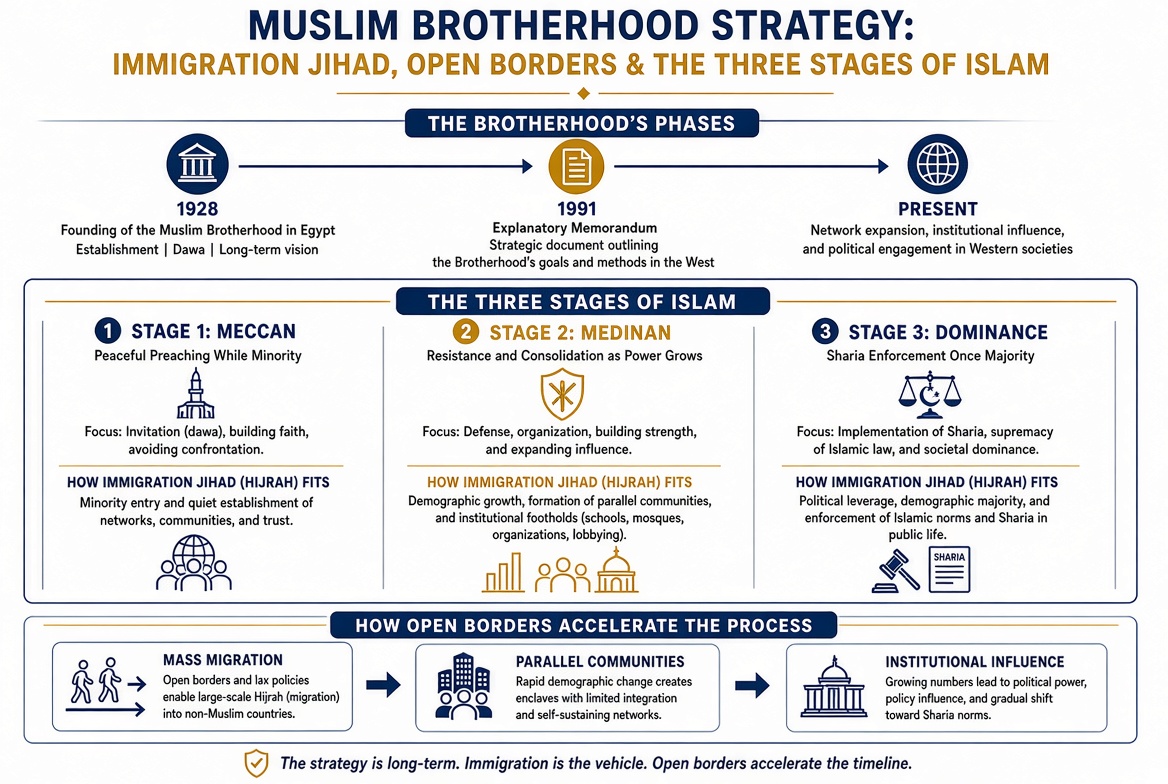
@TexanLoyal 1400yrs of history has shown the same cycle, immigration jihad➡️Consolidation of power (defending the community, consolidating institutions, and resisting opposition. Use islamphobia) ➡️Involvement in Politics➡️Dominance (shaping policy and norms according to Islamic standards)
@TexanLoyal They've gotten more sophisticated in modern Western countries by using the suicidal empathy of low information liberals to do their work for them and their relentless infiltration into the government where they can accomplish their goals with less bloodshed and resistance.
When some Muslims in the West accuse our societies of “lacking tolerance,” it is sometimes useful to recall the actual history—not the history of slogans, but the history of facts.
This painting, dating from 1595 and housed in the National Museum of Serbia, depicts a very real scene from Ottoman rule in the Balkans: the Serbian Orthodox Bishop Teodor of Vršac is shown being flayed alive—while still conscious—by Ottoman soldiers for refusing to renounce his Christian faith.
This was neither an isolated act nor an occasional excess.
Historical sources show that, within the Ottoman Empire, Christians who refused to convert to Islam could be subjected to tortures...
...that were extreme and exemplary:
— flaying alive
— impalement
— beheading
— burning at the stake
— slow dismemberment
— being sawn in two
The objective was clear: to terrorize, to force conversions, or to eliminate those who resisted.
The Muslims of Bosnia and Herzegovina and Kosovo today are, for the most part, the descendants of Serbs, Croats, and other Slavic Christians who converted over the centuries.
Their ancestors faced the sword, the whip, slavery, violence, forced marriages, the abduction of children through the *devshirme* system—which tore Christian boys from their families to turn them into Janissaries—or precisely this type of torture, until they either converted to survive or were put to death.
This is not a “peaceful spread of religion.”
It is conquest through violence, conversion under terror, and systematic cultural and religious erasure. Recalling these facts is not an act of intolerance toward Muslims today.
It is a rejection of historical amnesia and one-sided moralizing.
Modern Western societies allow Islam to be practiced freely.
This painting reminds us that, historically, the opposite was not always true.
The painting does not lie.
The scene it depicts does not lie.
History does not lie.
Un hombre afgano compra a una niña de 10 años como su tercera esposa, tras asesinar a sus dos primeras esposas menores de edad por "deshonrar" a su familia musulmana al desobedecer y no complacer a su dueño.
Como su tercera esposa, la niña sufrió años de tortura, violación y abusos inimaginables hasta que finalmente logró escapar.
Esta espeluznante historia se presenta en el documental "Valía por 50 ovejas", que narra la valiente historia de Sabere y su lucha por la supervivencia en Afganistán antes de la llegada de los talibanes al poder.
La vida de las mujeres y las niñas ya era brutal bajo las normas islámicas. Desde la toma del poder por los talibanes y la imposición total de la estricta ley islámica, la situación ha empeorado infinitamente:
• Las niñas tienen prohibido el acceso a escuelas y universidades.
• Las mujeres son obligadas a cubrirse completamente y permanecen encerradas en sus casas.
• Los matrimonios infantiles, las palizas y los crímenes de honor se han disparado.
Esto no son "diferencias culturales".
Esto es opresión islámica sancionada por el Estado.
Sin embargo, el mundo permanece en gran medida en silencio.
Reconocer este horror implicaría admitir la verdad sobre el islam político: trata a las mujeres y niñas como propiedad, no como seres humanos.
Occidente sigue importando esta ideología mientras pretende que todas las culturas son iguales.
No lo son.
Compartan esta verdad.
El abuso sistemático de niñas bajo el islam debe ser denunciado, no ocultado tras la corrección política.
@LizaRosen0000
Absolutely true .
But sadly the first world country and infrastructure built up during the past 100 years ,is crumbling and decaying by the day .
This due to cadre deployment,
incompetence ,and endemic corruption.
By
In 1652, the Dutch East India Company sent Jan van Riebeeck to the Cape to build a refreshment station for ships going to India.
Not an empire. A vegetable garden and a fort.
Those first Dutch farmers, later joined by French Huguenots fleeing religious persecution and Germans, became the Boers.
They were not sent by a king to conquer. They were left behind by a company that went bankrupt. They had to survive or die.
When they landed in the Cape, the land was inhabited by the Khoikhoi and the San. Hunter-gatherers and herders. Not by Bantu-speaking black groups.
The Bantu migration had come down Africa from the north, but by 1652 it had only reached as far south as the Eastern Cape. It had not yet reached the Western Cape where the Boers landed.
So in the Cape, the Boers were there before the Xhosa, Zulu, Sotho, and Tswana arrived in that specific region.
The British took the Cape in 1806. They tried to anglicize the Boers, and impose British law.
The Boers refused to become British. In 1835-1840, over 12,000 of them loaded ox-wagons and left in the Great Trek. They crossed the Orange River and the Drakensberg on foot, with women and children, fighting Zulu impis at Blood River, fighting Matabele, fighting drought, disease, and lions.
They founded two republics: the Orange Free State and the Transvaal. They wrote constitutions. They built schools and churches with nothing.
Then Britain wanted their gold. The discovery of gold on the Witwatersrand in 1886 brought the Anglo-Boer War. The most powerful empire on earth sent 450,000 soldiers against 70,000 Boer farmers.
The Boers fought a guerrilla war for 3 years. The British burned 30,000 Boer farms, slaughtered their livestock, and put 120,000 Boer women and children in concentration camps. 26,000 Boer children died there.
They lost the war, but they never surrendered their identity.
After 1910, the Boers, now called Afrikaners, built the modern state.
They built the farms that fed the country. The Karoo sheep farms, the Free State maize belt, the Western Cape wine farms. All built by hand, in a dry land with no rivers.
They built the mines' engineering, the railways, the power stations, the universities; Stellenbosch, Pretoria, Free State. The legal system, Roman-Dutch law, the Afrikaans language itself, created from Dutch, Malay, Khoi, and French.
They did not inherit a working country. They built one in a place the world considered uninhabitable.
A Boer has no other home. A British South African can "go back" to Britain. A Boer cannot. His language exists nowhere else. His church, his songs, his graveyards, his family for 10 generations are in the Free State dust, in the Karoo, in the Transvaal.
He did not come to South Africa for 5 years to make money. He was born there when there was no electricity, no South Africa, no passport. His great-grandfather died in a British camp for that land.
South Africa is not where he lives. South Africa is what he is.
https://t.co/VF6hQhHqmE
Los musulmanes de toda Europa están conmocionados tras la histórica y valiente decisión de Suecia: dejará de usar el término «islamofobia», acuñado por los Hermanos Musulmanes, por considerarlo un concepto manipulado políticamente para silenciar las críticas al islam.
La ministra de Asuntos Exteriores sueca, Maria Malmer Stenergard, anunció que su gobierno presionará a la Unión Europea y a las Naciones Unidas para que dejen de usar este término fraudulento.
El concepto de «islamofobia» fue diseñado deliberadamente para equiparar la crítica legítima a la doctrina islámica con el racismo. Se utilizó como arma para silenciar el debate sobre textos islámicos fundamentales que contienen mandamientos para hacer la guerra, violar y someter a los no musulmanes.
Suecia acaba de reconocer lo que millones de europeos ya saben: criticar una religión que abiertamente llama al asesinato y la esclavitud sexual de los no creyentes no es una fobia, sino sentido común y autoconservación.
Esto supone un duro golpe para el lobby islamista en toda Europa.
¿Estás de acuerdo con la decisión de Suecia?
Before Britain came, Malawi was not a paradise. It was a hunting ground.
Arab slave traders were raiding villages.
They were chaining men, women, and children and marching them to the coast. Mothers watched their children taken. Villages were burned. People lived in fear.
Then came David Livingstone. He saw it with his own eyes. He saw the slave caravans. He saw the suffering. He went back to Britain and said Britain must stop this.
And Britain listened.
Britain did not come to Malawi to steal. Britain came to stop the slave trade. The Royal Navy patrolled the coast. British missionaries built schools. British doctors built clinics. British administrators built roads, courts, and order.
Malawi was called Nyasaland. Under Britain, the slave raids stopped. For the first time in generations, people could farm in peace. Children could go to school. People could worship without fear of being captured.
Britain gave Malawi the English language. Britain gave Malawi the rule of law. Britain gave Malawi Christianity. Britain gave Malawi a border, a flag, and a government that worked.
Then independence came. And the new leaders blamed Britain for everything. They said Britain was the problem. They said colonialism was evil.
But look at Malawi today. The schools Britain built are crumbling. The hospitals Britain built have no medicine. The roads Britain built have potholes. The country that was saved by Britain is now poor, hungry, and begging for aid.
Britain did not destroy Malawi. Britain saved Malawi from slavery. Malawi destroyed itself after Britain left.
https://t.co/VF6hQhHqmE
He told her he wasn't accustomed to dealing with women.
She apologized, saying she had forgotten to bring her husband—so he would just have to deal with her.
Adolf Eichmann looked across his desk in Vienna at the 42-year-old Dutch housewife and decided to play a cruel joke.
He told her she could take 600 Jewish children out of Austria.
There was just one catch: she had to do it by Saturday. Five days away.
He expected her to drown in paperwork and fail. As she walked out, he muttered, "So purely Aryan and then so crazy."
Five days later, on December 10, 1938, a *New York Times* headline read: **"630 Children Quit Vienna."**
Her name was Geertruida Wijsmuller—known to everyone as Truus.
She wasn't Jewish. She wasn't a diplomat. She held no official title.
She and her husband, Joop, couldn't have children of their own, so she poured her life into social work. And as one historian noted, she had a rare gift: she didn't find powerful men frightening, and she treated impossible obstacles like simple logistics problems.
Just one month before walking into Eichmann's office, she had traveled to the German border after Kristallnacht and smuggled a Polish boy to safety in Amsterdam—hidden underneath her skirts.
So when Jewish and British organizations needed someone to negotiate in Vienna in December 1938, they sent Truus.
The Gestapo arrested her the moment she arrived, holding her for hours before letting her go. She walked straight to Eichmann's headquarters anyway.
He tried to humiliate her. He inspected her hands and ordered her to remove her coat and shoes. When he told her to pull up her skirt and walk around the room, she stopped him cold.
"Enough," she said. "Now let's talk business."
When Eichmann laughed and handed her the five-day deadline, he thought he was rid of her. Instead, Truus walked out and started making phone calls.
She reserved trains. She found 600 children.
At the station, desperate parents handed their sons and daughters over to a Dutch stranger they had met only days earlier—pressing small suitcases into small hands, knowing they might never see their children again.
Truus got every single one of them onto the train. Thirty hours later, she arrived at the Dutch coast. Five hundred children sailed immediately to England; a hundred stayed in the Netherlands.
The British official waiting at the port stared at the hundreds of children in shock.
"But you were only sent to talk?" he asked.
Truus didn't stop there. She went back.
For the next 18 months, she ran a relentless rescue operation. She traveled into Nazi territory multiple times a week, organizing 49 separate transports by train and plane. Whenever a rescue mission seemed impossible, European aid groups had one answer: *"Ask Mrs. Wijsmuller."*
The children called her *Tante Truus*—Auntie Truus. She brought them to her home for Shabbat dinners and arranged swimming lessons so they could feel like kids again.
In May 1940, Germany invaded the Netherlands. With just one hour to spare before the Dutch surrendered, Truus stood at the port of IJmuiden, loading the final group of refugee children onto a cargo ship.
Her own coat and bag were already on board.
At ten minutes to eight, the ship pulled away from the pier. From the deck, the children looked around for Auntie Truus.
She wasn't there. She was standing on the dock, waving goodbye. At the last second, she had realized she couldn't leave her husband behind.
She stayed in occupied Amsterdam, surviving a Gestapo arrest in 1942 without giving up a single name, smuggling food to camps, and helping refugees escape to Spain and France until the war ended.
Truus Wijsmuller died in 1978. A monument in her hometown calls her the "Mother of 1,001 children."
In truth, she helped save 10,000.
All because an ordinary housewife walked into one of history's darkest offices, refused to blink, and told a monster she had forgotten to bring her husband.
Had you ever heard of Tante Truus before today?
🚨TRAGIC: In Iran, an innocent mother of four was buried in the ground and stoned to death after her husband falsely accused her of adultery so he could marry a younger woman.
Soraya Manutchehri, 35, was convicted under Islamic law after her husband manipulated witnesses. She was buried and killed by stones thrown by a mob that included her own father and, according to accounts, her children who were pressured to join.
An innocent woman was condemned by lies and executed in the name of “religious justice.”
This is what Sharia looks like when it has power. No due process. No presumption of innocence. Just a husband who wanted a new wife and a system that let him bury his first one alive and watch her die.
Muhammad’s system has produced this outcome for centuries. It still does.