Paris Bosphorus Institute
🌐
Franco-Turkish think tank
🇪🇺
Global economy, international relations, European integration
🟠
Centre de réflexion franco-turc
Je veux vous parler d’un roman qui commence comme une histoire d’amour et finit en méditation sur le temps : « Le Musée de l’innocence » d’Orhan Pamuk.
Istanbul, des années 1970 aux décennies suivantes. Salons, codes, pudeurs, mensonges, une ville où l’on s’aime sous le regard des autres. Kemal est promis à Sibel. Puis surgit Füsun. La passion éclate. Elle est choc, obsession, bonheur comme une fulgurance, puis la peur, puis la perte.
L’innocence du titre, c’est celle du moment, cet instant où l’on croit encore que le bonheur peut durer. C’est celle d’un homme qui collectionne chaque fragment de son amour dans une ville et une société qui changent.
L’amour est un travail de mémoire. Les objets sont les archives de la vie. La société fabrique des tragédies intimes. Enfin, la nostalgie peut devenir une œuvre Voilà les leçons de ce livre, et à le lire on comprend que la modernité n’est pas seulement un progrès ; elle est aussi une disparition.
L’innocence est fragile, et Pamuk en fait une manière d’habiter la vie. Là où le Taj Mahal élevait l’amour dans un palais de marbre, lui l’enferme dans un palais de poussière.
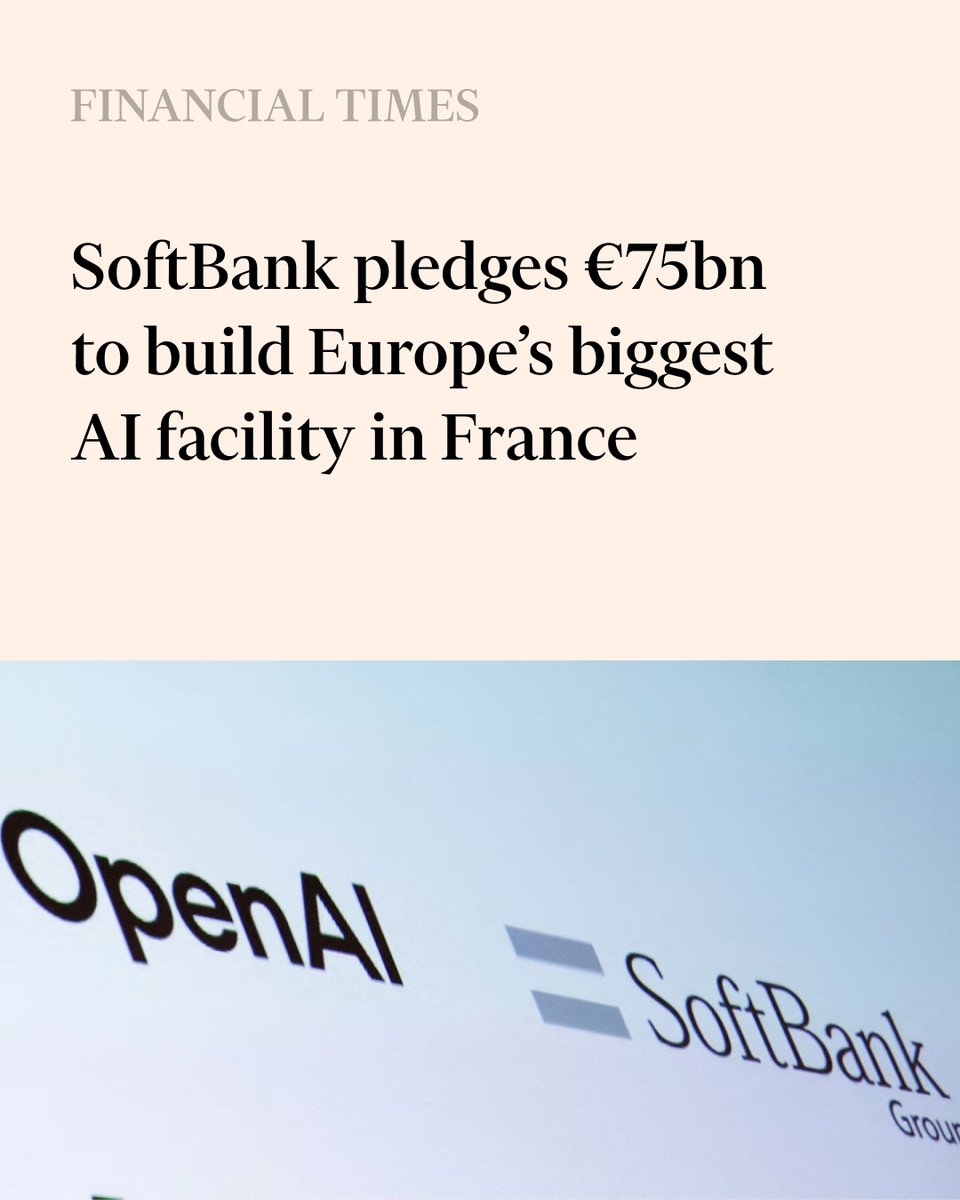
SoftBank’s commitment marks the largest AI investment by Masayoshi Son’s group outside the US and delivers a boost to Emmanuel Macron ahead of the French president’s Choose France event next week, an annual gathering of dealmakers and executives.
https://t.co/9GWbpHUCbu
The Middle East crisis is leading countries to review their energy policies, investment priorities & strategies to improve energy security
And a key factor in these critical decisions now and in the months & years to come will be trust
New @IEA report: https://t.co/wOllPO9lGC
No women, no cry?
At the China-US "G2" table, no real representation of humanity’s talent, perspectives, and leadership.
In the AI age, global diplomacy still sometimes looks like a meeting from the previous century.
vers une maturité européenne assumée ! Découvrez notre dernière position @Europa_Nova@GuillaumeKlossa sur la position européenne face aux dernières crises qui renforce sa maturité et sa singularité ! L ‘Europe se renforce et grandit !
@jnbarrot@BenjHaddadParis@EmmanuelMacron
“Deepening EU–Turkey Integration Is the Key
to a Stronger Common Future”
TÜSİAD issued a statement on the occasion of Europe Day. The statement included the following views:
The European Union was founded on a vision of unity, solidarity, and shared prosperity. Today, Europe faces accelerating geopolitical, economic, and technological transformation. The EU’s future competitiveness, security, resilience, and global influence will depend on its ability to pursue a more ambitious, forward-looking, and inclusive model for the next phase of European integration.
A truly comprehensive and consistent European project capable of delivering unity, security, democracy, and prosperity requires deep and strategic integration with Türkiye. As a candidate country, Customs Union partner, and NATO ally, Türkiye is already an integral part of EU’s industrial, economic, and security architecture. The highly intertwined value chains and closely interlinked production and investment ecosystems between the EU and the Turkish economy are built upon this deep structural integration. EU–Türkiye relations should move beyond fragmented and transactional engagement. A coherent and strategic framework, anchored in long-term alignment while preserving the accession perspective, should be reinstated.
EU’s ability to act as an effective global actor depends on strengthening both its political and economic cohesion and its capacity for strategic integration with its wider neighbourhood.
A clear political commitment is needed to translate the recognised strategic importance of EU–Türkiye relations into concrete action across all pillars of the EU agenda. This requires EU narratives and policies grounded in inclusion and integration, capable of strengthening EU’s coherence and credibility in an increasingly contested global environment.
A structured and actionable roadmap for EU–Türkiye relations should focus on:
- Deeper industrial and technological integration, including the full recognition of the unique legal and economic foundations of the EU–Türkiye Customs Union within “Made-in-EU” initiatives such as the Industrial Accelerator Act, including Türkiye’s full inclusion in the “Union origin” definition;
- Structured EU-Türkiye cooperation in defence, innovation, and advanced technologies, without creating new barriers, including in Horizon Europe, to strengthen Europe’s collective security, technological resilience, and innovation capacity, while supporting the reduction of capability gaps and strengthening Europe’s strategic resilience contributing to peace and stability;
- Launching the modernisation of the Customs Union without political or technical preconditions, providing the necessary legal and regulatory foundation for deeper integration and a more coherent common economic agenda;
- Stronger connectivity across transport, energy, and digitalisation linked to industrial strategy, enabling connectivity corridors to evolve into platforms for joint production that strengthen industrial capacity and resilience;
- The resumption of High-Level Political Dialogue to enhance EU-Türkiye policy coordination, the reactivation of the Association Council to strengthen regulatory alignment, and the relaunch of High-Level Dialogues on energy and transport to support the momentum in connectivity cooperation.
Together, these elements supported by continued progress in Türkiye’s economic, democratic, and social reform agenda can provide the basis for a more coherent, effective, and future-oriented EU–Türkiye integration partnership capable of strengthening Europe today while shaping its future.
Europe Day reminds us that lasting progress is achieved when vision is matched by political will and concrete action. As the business community, we remain committed to contributing to EU-Türkiye integration partnership.
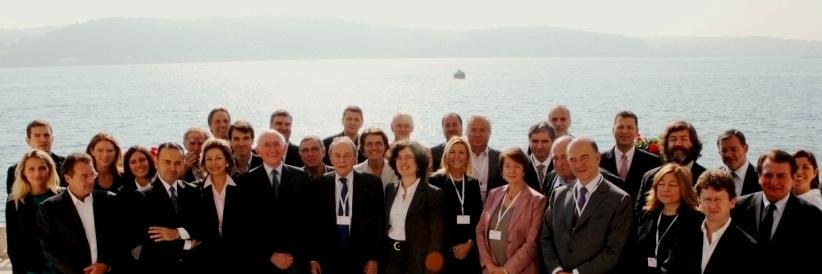
Ahead of 9 May #EuropeDay, the Galatasaray University–Bosphorus Prize 2026 Award Ceremony brought together reflections on Europe’s future, highlighting the next generation of leadership.
🇹🇷 🇫🇷 🇪🇺
Congratulations to Jean-François Laborde and Bilal Atar.
https://t.co/lyEnBSIXI9
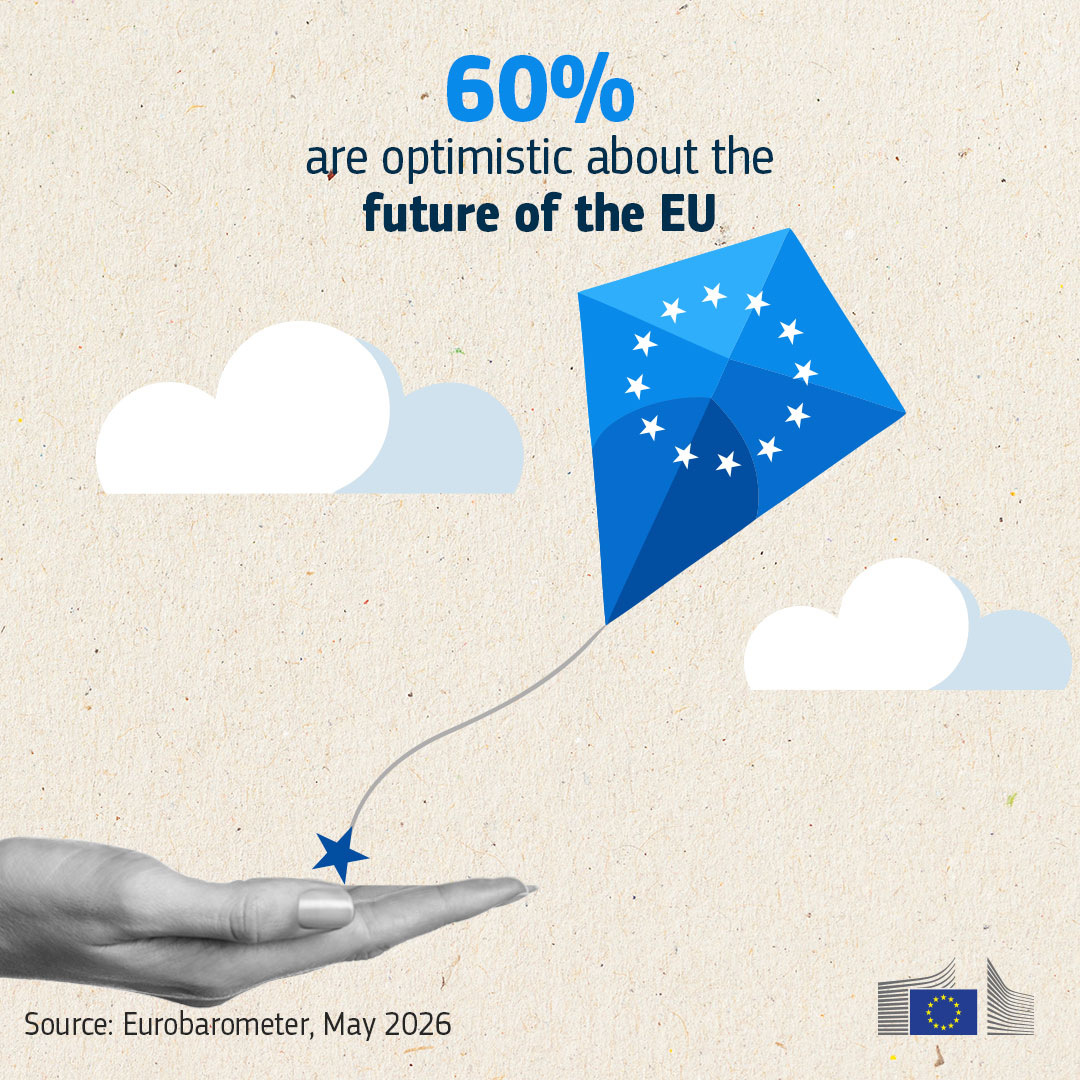
72% of you see the EU's value.
Our latest Eurobarometer survey shows that protecting democracy is why you trust us most.
Optimism for the EU’s future is at 60% andsatisfaction with the way democracy works in the EU is at 57%.
No matter the challenge, the EU has your back ↓
🇫🇷🇪🇺 Today, on 8 May, we honour the memory of those who gave their lives for victory in 1945 and opened the way towards a world order founded on peace and international law.
81 years on, France and Europe are preserving that legacy, so that our continent may never again be
divided by war.
Peace is our greatest victory.
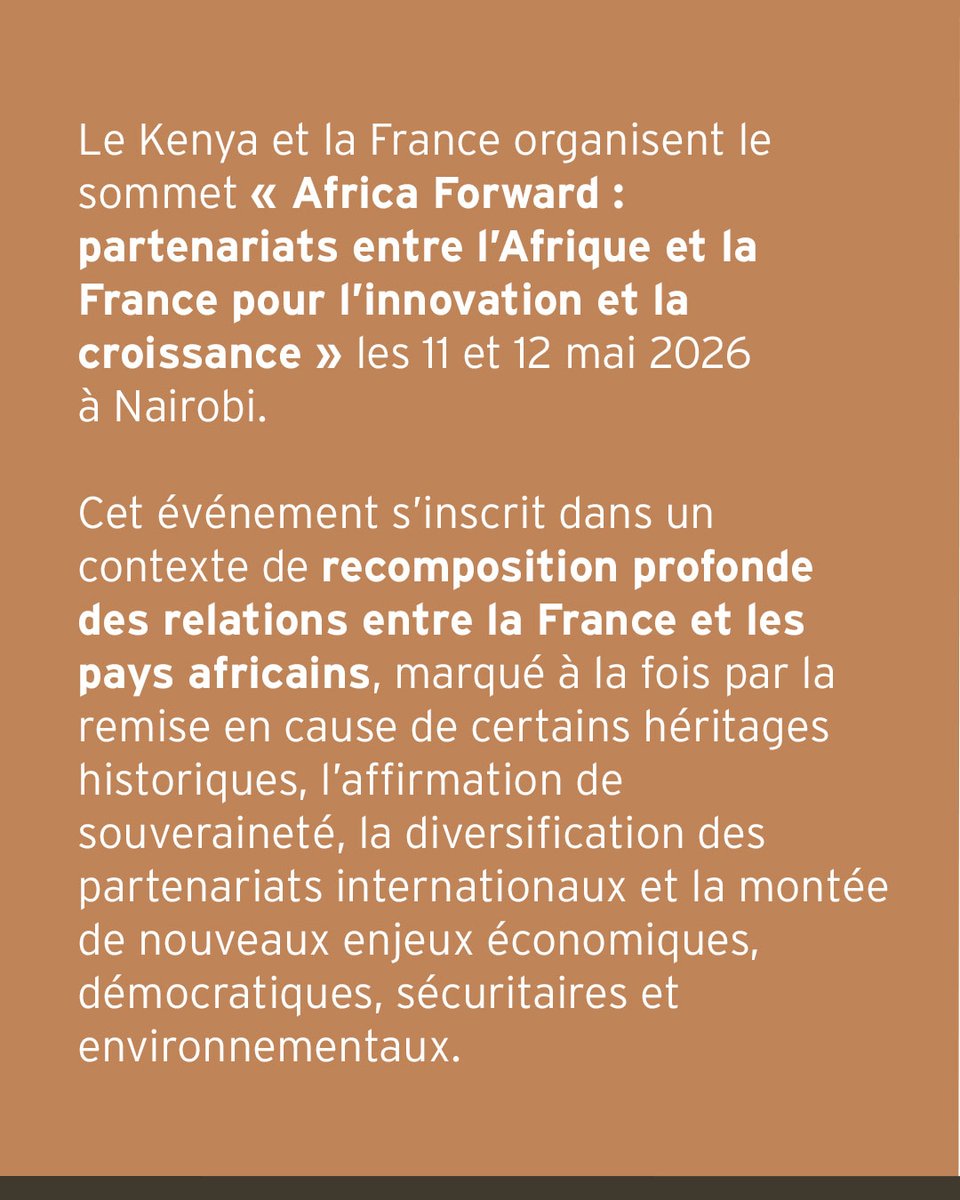
🌍 Africa Forward : pour un renouveau des relations entre les pays africains et la France ?
🔎Consulter le dossier d'archives de l'IRIS en lien avec ce dossier : https://t.co/OJvyBDC7tH
📌 Reading Turkish Foreign Policy Through Its Own Words 🇹🇷
🔺 Together with Chiara Boldrini, we have penned a short Substack post introducing our newly published academic article, "Introducing the Turkish Foreign Policy Dataset (TFPD): text-as-data on Turkish foreign policy."
🔺 We reflect on why official discourse matters for studying Turkish foreign policy, especially at a time when access to officials, diplomats, and practitioners is becoming increasingly difficult.
🔺 The TFPD includes 5,000+ official documents from the Presidency, MFA, and National Security Council, covering Turkish foreign policy from 2000 to 2023.
🔺 Our core point is simple: official statements do not tell the whole story, but they offer a structured way to study how Turkey presents its priorities, frames crises, and explains its role in the world.
🔗 Link to the Substack: https://t.co/GhpDVPQqdp
🔗 Link to the academic article: https://t.co/kC4ojfsEvH
Ahead of 9 May #EuropeDay, the Galatasaray University–Bosphorus Prize 2026 Award Ceremony brought together reflections on Europe’s future, highlighting the next generation of leadership.
🇹🇷 🇫🇷 🇪🇺
Congratulations to Jean-François Laborde and Bilal Atar.
https://t.co/lyEnBSIXI9
Today, Ambassador Yaprak Balkan has presented her Credentials to Mr António Costa, President of the European Council and Ms Ursula von der Leyen, President of the European Commission 🇹🇷🇪🇺 @vonderleyen@antoniocostapm@TC_AVBIRDT
🇪🇺🇹🇷 | There are several areas where EU-Turkey cooperation could be quite ambitious.
But even this positive agenda is seriously hindered by the union's indecision on how it views the future of its relations with Ankara, writes @sinanulgen1.
https://t.co/INnL8IKzVn
Security and defence policy needs to be integrated into Europe’s competitiveness strategy.
Today, we are publishing our first paper on this.
While Europe’s defence ambition is accelerating, its industrial base must catch up. Urgent action is needed to accelerate industrial scaling.
But what is needed to turn ambition into reality?
Read our paper: https://t.co/hcRf1yO5fn
“Cyprus Confidential” exposes how deeply entrenched Russian financial influence in Southern Cyprus enabled oligarchs and close allies of Vladimir Putin to shield assets and circumvent Western sanctions.
Beyond finance, it reflects a broader pattern. For years, parts of Southern Cyprus acted as a key offshore gateway for Russian capital, creating layers of economic and political dependency that inevitably shaped strategic choices.
This context is not disconnected from politics. In 2004, the Annan Plan for Cyprus reunification 2004, supported by the EU, Greece, Türkiye, and the Turkish Cypriot community, was rejected in the South, closing a rare window for reunification.
And yet, viewed from today’s perspective, the Cyprus issue appears increasingly disproportionate when set against Europe’s systemic challenges. The continent is navigating a historic transition, from AI and technological sovereignty to energy security, defense, and global competitiveness. In that landscape, a frozen conflict on a small island continues to absorb political bandwidth and block strategic coherence in EU external relations.
The contrast is striking. While Europe seeks to position itself in the global AI race and manage great-power competition, legacy disputes such as Cyprus still constrain decision-making, institutional agility, and the ability to act with unity and scale.
https://t.co/uZiLJHye26…