The Hormuz crisis has delivered a huge shock to the energy system, dwarfing the scale of past crises
The longer it lasts, the deeper the effects. Diversification, domestically available resources & electrification = the big winners
Read @IEA's WEO 2026: https://t.co/Hf2jiaskjm
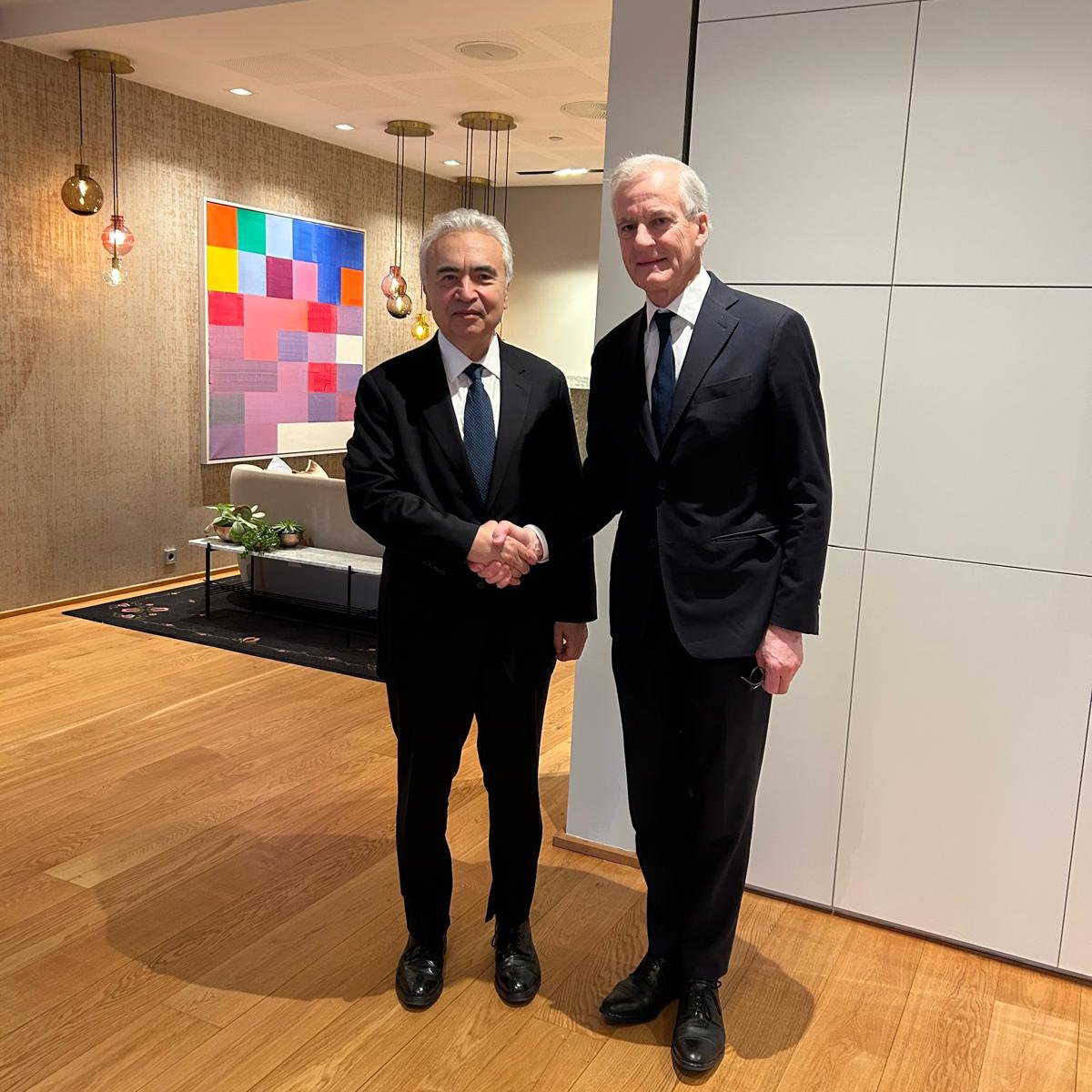
A great pleasure to speak alongside Prime Minister @jonasgahrstore of Norway at the Autumn Conference in Oslo
I highlighted how the unprecedented shock from the Hormuz crisis is reshaping the energy world and how the crisis increases the importance of trusted producers and partners like Norway
Very pleased to meet with Norway’s Energy Minister Terje Aasland today in Oslo
We had a wide-ranging discussion on energy market developments amid the Hormuz crisis, Norwegian and European energy priorities, and our joint efforts to expand clean cooking access across Africa
Excellent meeting with Norway’s Minister of Industry & Commerce Cecilie Myrseth in Oslo
We discussed the importance of critical minerals for energy & economic security – and how unlocking 🇳🇴’s minerals potential could help support more reliable & diversified supply chains
Honoured to meet with Prime Minister @jonasgahrstore of Norway in Oslo
We discussed the pressures the Hormuz crisis is placing on European & global energy security, 🇳🇴's contribution to reliable supplies, and our 2nd Clean Cooking Summit – taking place in Nairobi this January
The momentum behind electrification is already strong, with more & more countries introducing new policies this year, and it is set to accelerate further thanks to the 35-by-35 Pledge.
The world has entered the Age of Electricity, and the Hormuz crisis is reinforcing the strategic case for electrification, as @IEA's World Energy Outlook 2026 highlights: https://t.co/u56eeC75Mo
And our recent Special Report on Electrification assesses the implications of faster electrification for energy security & climate goals, as well as the broader benefits & trade-offs: https://t.co/4VF7jfy5gH
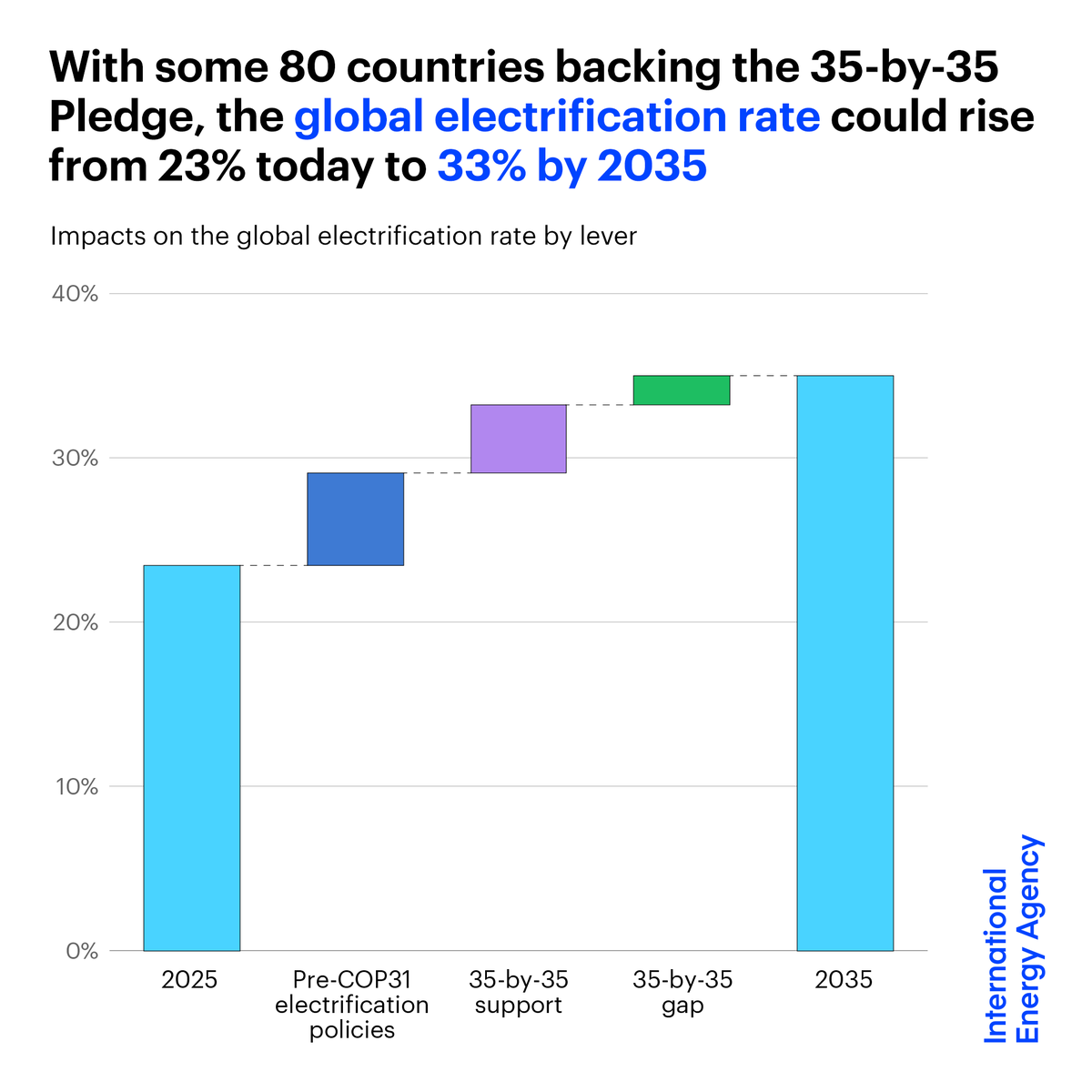
COP31 put electrification firmly on the map, with some 80 countries backing the 35-by-35 Electrification Pledge that was built on @IEA analysis.
Implementation of the electrification Pledge and commitments can raise the global electrification rate from 23% to over 33% by 2035, new IEA analysis shows – and it could go even higher if more countries join the Pledge.
Reaching the 35% electrification rate globally has the potential to reduce emissions by at least 8 gigatonnes, even if transitions in the power mix move slowly. If they move faster, the emissions reductions could be significantly larger.
Read more in @IEA’s Special Report on Electrification – produced at the request of the COP31 Presidencies of Türkiye and Australia: https://t.co/cMVaM6aj5J
Electrification is in focus at #COP31 & our Special Report sets out the implications of the growing momentum behind raising the rate to 35%
Even if transitions in the power mix move slowly, reaching 35% electrification globally by 2035 cuts emissions by at least 8 gigatonnes
India is emerging as an increasingly important force in global renewable energy markets
Its rapid expansion of renewable power is helping boost energy security by reducing reliance on fuel imports while opening new opportunities in manufacturing
More 👇 https://t.co/hQEJSiMT95
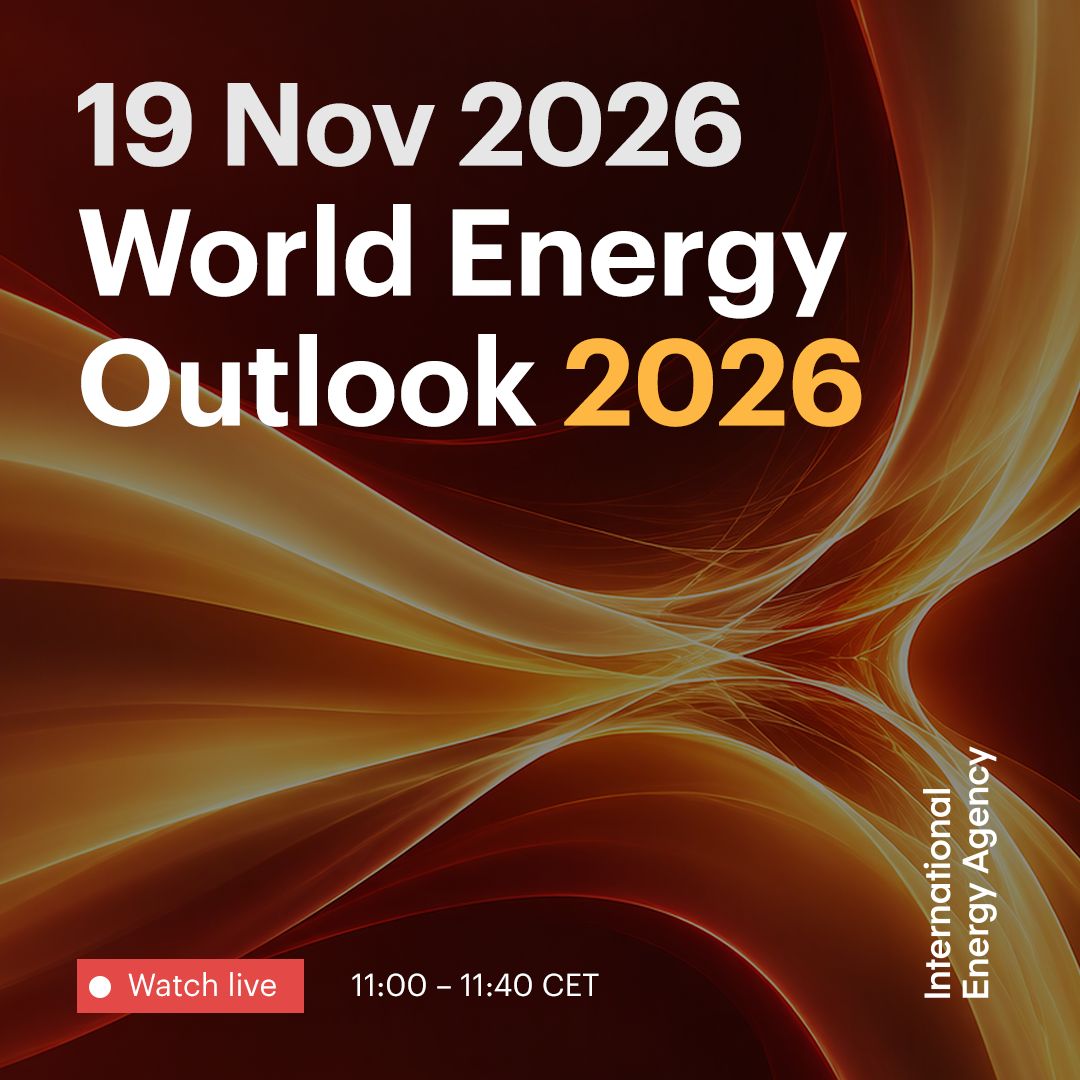
We’re LIVE from the launch of @IEA’s World Energy Outlook 2026! 🔴
Join #WEO26 lead authors, @Laura_Cozzi_ & Tim Gould, and me as we discuss how the unprecedented shock from the Hormuz crisis could reshape the energy landscape for years to come 👇 https://t.co/AFCLbm1vH8
@IEA To delve into the wealth of energy analysis in #WEO26, take a look at the entire report, freely available on our website ➡️ https://t.co/K5P0CWlToF
And join the lead authors, @Laura_Cozzi_ & Tim Gould, and me for our LIVE launch at 11am Paris time ➡️ https://t.co/mrv3HxYXlz
The Hormuz crisis has delivered a huge shock to the energy system, dwarfing the scale of past crises
The longer it lasts, the deeper the effects. Diversification, domestically available resources & electrification = the big winners
Read @IEA's WEO 2026: https://t.co/Hf2jiaskjm
@IEA In many countries, the crisis is aligning energy security & energy transition goals more closely than ever, helped by the falling cost of renewables, batteries & other key technologies
But energy security concerns alone aren't enough to close the gap with a 1.5C-aligned pathway