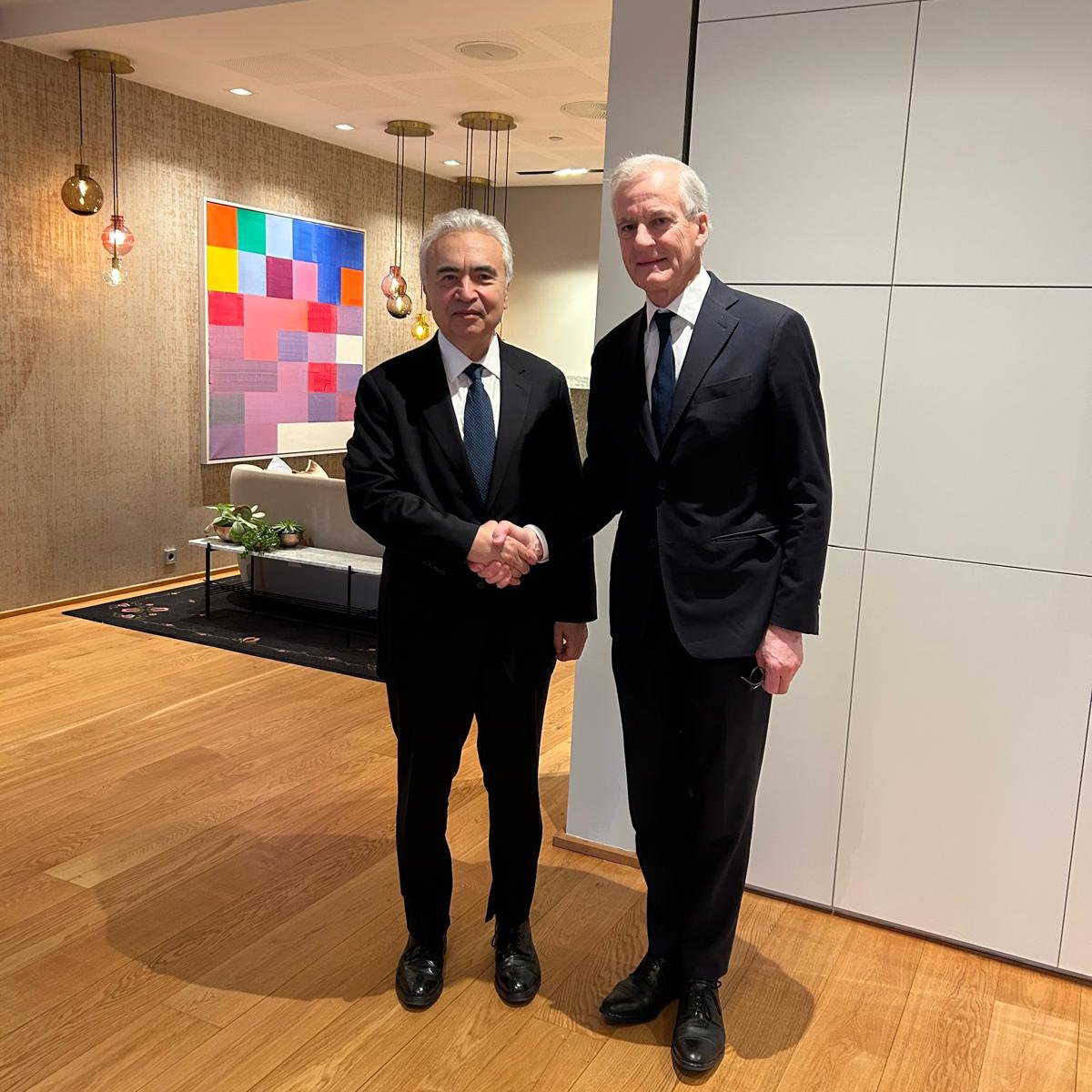
Honoured to meet with Prime Minister @jonasgahrstore of Norway in Oslo
We discussed the pressures the Hormuz crisis is placing on European & global energy security, 🇳🇴's contribution to reliable supplies, and our 2nd Clean Cooking Summit – taking place in Nairobi this January
Very pleased to meet with Norway’s Energy Minister Terje Aasland today in Oslo
We had a wide-ranging discussion on energy market developments amid the Hormuz crisis, Norwegian and European energy priorities, and our joint efforts to expand clean cooking access across Africa
Excellent meeting with Norway’s Minister of Industry & Commerce Cecilie Myrseth in Oslo
We discussed the importance of critical minerals for energy & economic security – and how unlocking 🇳🇴’s minerals potential could help support more reliable & diversified supply chains
The momentum behind electrification is already strong, with more & more countries introducing new policies this year, and it is set to accelerate further thanks to the 35-by-35 Pledge.
The world has entered the Age of Electricity, and the Hormuz crisis is reinforcing the strategic case for electrification, as @IEA's World Energy Outlook 2026 highlights: https://t.co/u56eeC75Mo
And our recent Special Report on Electrification assesses the implications of faster electrification for energy security & climate goals, as well as the broader benefits & trade-offs: https://t.co/4VF7jfy5gH
COP31 put electrification firmly on the map, with some 80 countries backing the 35-by-35 Electrification Pledge that was built on @IEA analysis.
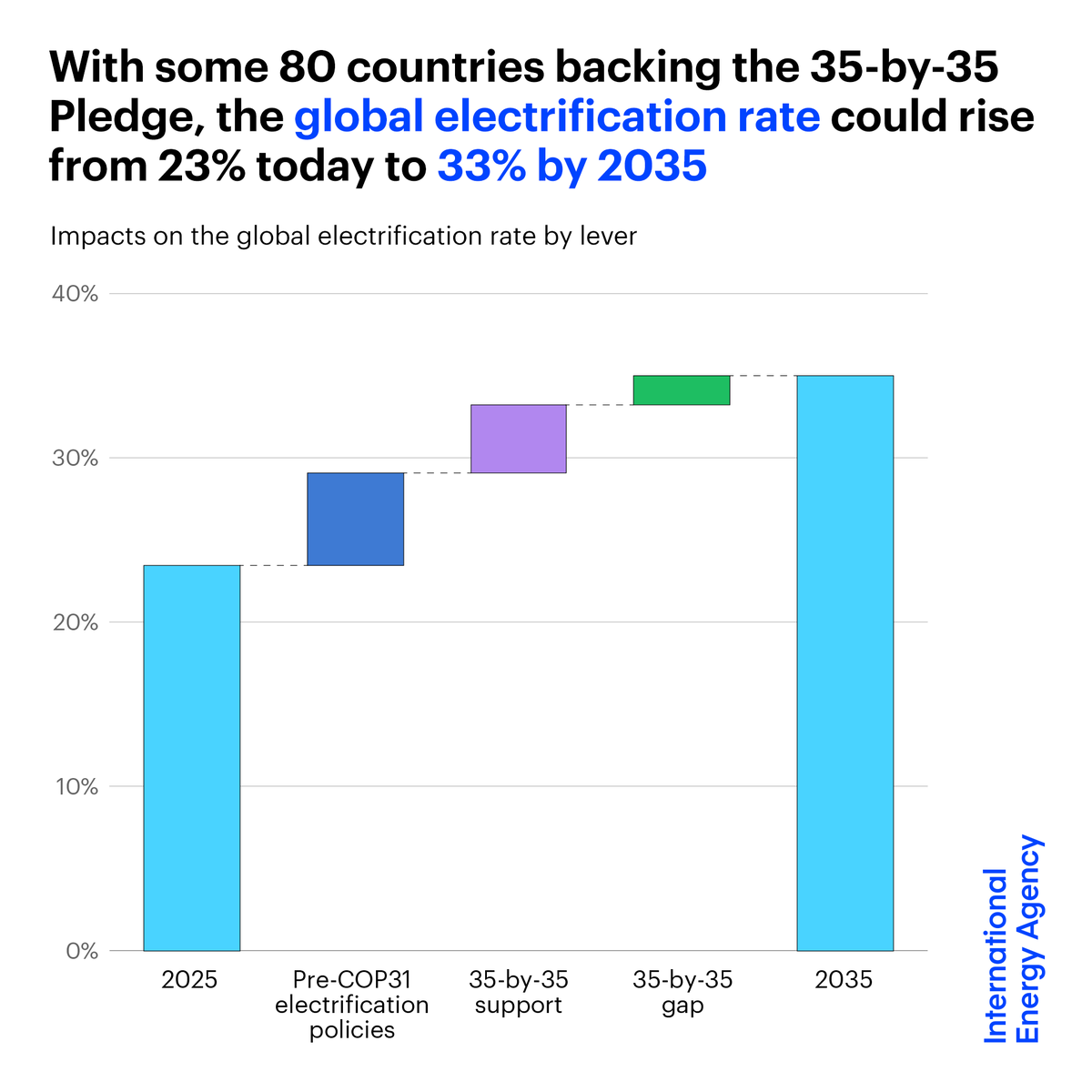
Implementation of the electrification Pledge and commitments can raise the global electrification rate from 23% to over 33% by 2035, new IEA analysis shows – and it could go even higher if more countries join the Pledge.
Reaching the 35% electrification rate globally has the potential to reduce emissions by at least 8 gigatonnes, even if transitions in the power mix move slowly. If they move faster, the emissions reductions could be significantly larger.
Read more in @IEA’s Special Report on Electrification – produced at the request of the COP31 Presidencies of Türkiye and Australia: https://t.co/cMVaM6aj5J
@IEA The current crisis has upended energy trade patterns
If disruptions are prolonged & diversification efforts extensive, they could dramatically lower the need to ship oil through the Strait of Hormuz, but exports from the Middle East will still be vital for global energy security
@IEA In the Age of Electricity, renewables, led by solar PV, and nuclear are set to benefit most from a shift to domestic energy due to energy security concerns. They grow robustly in all scenarios.
Use of domestic fossil fuels could rise too – notably coal in some Asian markets.
@IEA Today’s energy crisis is moving the world deeper into the Age of Electricity with many countries looking to reduce reliance on fuel imports
By 2035, electricity is set to be closing in on 30% of final energy use, up from 23% now
The 35x35 Pledge at COP31 can accelerate progress
@IEA The full extent of policy, investment & trade responses is still unfolding
The longer the Middle East conflict persists, the more likely governments are to turn today’s preference for domestic resources into lasting policy – with renewables, nuclear & efficiency all benefitting
@IEA No matter what path the world takes, higher incomes & a growing population are set to boost energy demand, especially in emerging economies
Rising temperatures add to pressures, with cooling needs for buildings overtaking heating needs
More in #WEO26 ➡️ https://t.co/K5P0CWlToF
The Hormuz crisis has delivered a huge shock to the energy system, dwarfing the scale of past crises
The longer it lasts, the deeper the effects. Diversification, domestically available resources & electrification = the big winners
Read @IEA's WEO 2026: https://t.co/Hf2jiaskjm
Electrification is in focus at #COP31 & our Special Report sets out the implications of the growing momentum behind raising the rate to 35%
Even if transitions in the power mix move slowly, reaching 35% electrification globally by 2035 cuts emissions by at least 8 gigatonnes
Very pleased to deliver opening remarks at today’s @IEA Oil Security Workshop, bringing together government & industry participants from around the world
The workshop, facilitated by @tchiling, was an opportunity to discuss the implications of & response to the Hormuz crisis
For countries that have not yet reached universal access to modern energy, expanding access is the most important action they can take to raise the share of electricity in their energy mix
For those countries, electrification means energy access
This will require more policy action in those countries and scaled up support from international partners
For more, read @IEA's latest analysis on electricity access trends: https://t.co/kF4xzLEWuq
And our Special Report on Electrification: https://t.co/4VF7jfy5gH
The world has entered the Age of Electricity – but 700 mln people still lack electricity access, depriving them of things most of us take for granted, such as the use of fridges to store food & medicine and lighting at the flick of a switch
Recent energy shocks have slowed progress on expanding electricity access, but COP31 and its emphasis on electrification can drive new momentum
The number of people without electricity access fell by 15 million in 2025.
A record 8 million of them were in sub-Saharan Africa – the largest yearly improvement since @IEA began tracking.
Our new commentary looks at what helped drive this progress 👉 https://t.co/uUz1LWST24
Excellent meeting with UN Secretary-General @antonioguterres at #COP31 in Antalya
We discussed the major strains on energy systems around the world and the implications for building a more secure, affordable & sustainable energy future
Very productive discussions at #COP31 in Antalya this week with decision-makers from around the world, including:
🇦🇺 Minister Chris Bowen
@WorldBankGroup President Ajay Banga
🇨🇳 Minister Huang Runqiu
🇧🇷 COP30 CEO Ana Toni
🇬🇧 Minister Katie White
Global media press conference
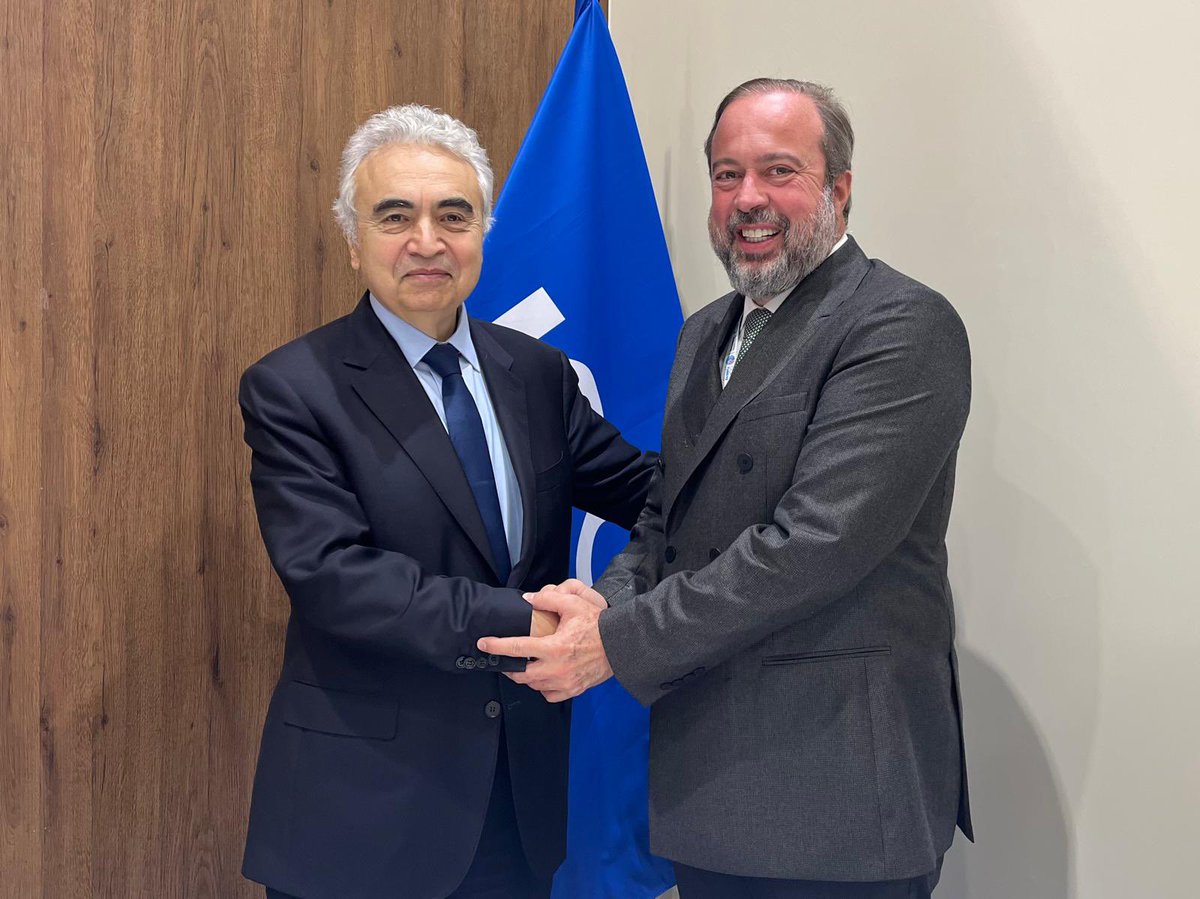
Great pleasure to meet with my friend Minister Alexandre Silveira (@asilveiramg) of Brazil at #COP31 in Antalya
We discussed developments in global energy markets, as well as 🇧🇷’s plans to expand sustainable energy, drawing on its significant strengths & leadership from #COP30