Our original account, @BourseBazaar is compromised and X Support has been unable to help regain access.
So we are starting anew with @BourseBazaarFdn!
Follow us for wide ranging analysis on economic diplomacy and economic development in West and Central Asia.
Coastal communities depend on the sea for jobs, trade, and food, and Gulf investment can help sustain those livelihoods by strengthening infrastructure and protecting marine resources.
At the Rihla Summit on 29 September, our Blue Economy session explored how Gulf investment and expertise can support coastal economies across the Global South. The discussion looked at opportunities for Gulf investment and partnerships in ports, water infrastructure, and offshore energy, and how investment in these sectors can strengthen trade and support the sustainable use of marine resources.
Thank you to @mostafabayoumi of the @AGDAUAE for moderating the discussion with panelists @HalaHamawi, Reem Alhashmi, Saurabh Jain Punamiya, Deema Almasri, and Ainur Zhakupova.
In an article for @BreakingDefense, @agneshelou27 quoted Bourse & Bazaar Foundation Associate Fellow @frencio_schiavi on Turkey’s planned handover from the Bashiqa-Zilkan military base, and how it could ease a longstanding source of tension with Iraq.
With progress Iraq has made through its security measures, Turkish President Recep Tayyip Erdoğan and Iraqi Prime Minister Ali al-Zaidi agreed to the base transfer in September, and troops are expected to begin the withdrawal this month.
Shiavi described the agreement as a step toward restoring Iraqi sovereignty and improving security relations between Ankara and Baghdad.
He cautioned that the handover’s immediate military impact should be kept in perspective. The test will be whether Iraqi forces can maintain a presence at the base and prevent armed groups from exploiting gaps during the transition.
Read the full article: https://t.co/GjxowgSlhD
The way cities build public transit, treat wastewater, and cool buildings will shape both their emissions and the cost of essential services for residents.
Our Green Urban Development session at the Rihla Summit on 29 September looked at where Gulf investment could support projects such as public transit and wastewater treatment. Panelists discussed what cities need to work out before seeking funding, including who will operate and maintain these services and how to keep them affordable for residents.
Nguyen Dang Dao of the Bourse & Bazaar Foundation moderated the discussion with Jane Lumumba, @Gabriel35146280, Zamira Ataniyazova, and Siti Nurwala.
Watch the full discussion on YouTube below: https://t.co/N7JL4mvLeq
In a recent episode of Order From Ashes, a podcast by @TCFdotorg, @tcambanis and @rohadvani interviewed @yarbatman about how sanctions have reshaped Iran’s economy and increased the power of some of its largest firms and wealthiest households.
Batmanghelidj traced how U.S. energy and financial sanctions imposed in 2012 stalled Iran’s economic progress. From the mid-1990s through the early 2000s, Iran had seen falling income inequality and an expanding middle class.
He noted how despite rising prices, companies have been able to suppress wages due to unemployment and limited competition for workers in certain sectors, creating a loss in purchasing power among households. Further, some exporters have kept their foreign-currency earnings abroad, where those funds gain value in rial terms as the rial depreciates, although it is mandated that they repatriate the funds to supply Iran’s foreign exchange market.
This highlights how sanctions have allowed dominant firms and asset owners to gain a larger share of a weakening economy while harming ordinary households.
Looking forward, Batmanghelidj called on U.S. policymakers to respect Iranians’ agency and ability to determine their country’s future on their own terms.
Listen to the full episode: https://t.co/c0vMCe95xr
Iranian manufacturers are turning to bank-backed credit to pay suppliers as revenues are disrupted and the central bank tries to curb new lending. By September 2026, just halfway through the Iranian year, e-bill issuance had already reached 90% of the annual cap.
In our latest Critical Questions research note, @yarbatman and @tedla_ezana examine how automakers, steel producers, and other manufacturers are using these instruments to keep paying suppliers. Raising the cap would give manufacturers more room to finance purchases while exposing banks to more risk. Keeping it in place could leave manufacturers short of financing.
Get in touch with Darius Barik if you’re interested in accessing the full piece or discussing any related matters.
Link to the CQ piece: https://t.co/MULCBryveM
Earlier this week, the Bologna Initiative for Sanctions Relief convened its second annual conference at the @SAISHopkins Europe Campus in Bologna, Italy.
The conference convened 25 sanctions experts, researchers, and practitioners for 3 days of practical discussions on sanctions relief.
Over the past year, sanctions on Iran and Cuba intensified, and economic pressure increasingly featured in disputes among allies. The year also saw major moves toward relief in Syria and Venezuela.
Participants discussed how these developments are shaping sanctions policy and where opportunities for relief could emerge in 2027. Regional breakout sessions covered Latin America, Africa, Iran, Syria, and Russia.
Thank you to the lead for the Bologna Initiative for Sanctions Relief, Josefine Petrick, and colleagues @frencio_schiavi, Prachi Adhikari, and Aaditya Subramanian for their immense efforts in putting this conference together, with support from @tedla_ezana during the event. Josefine led the discussions alongside our founder and CEO, @yarbatman.
Stay tuned for more on the conference discussions and participant takeaways.
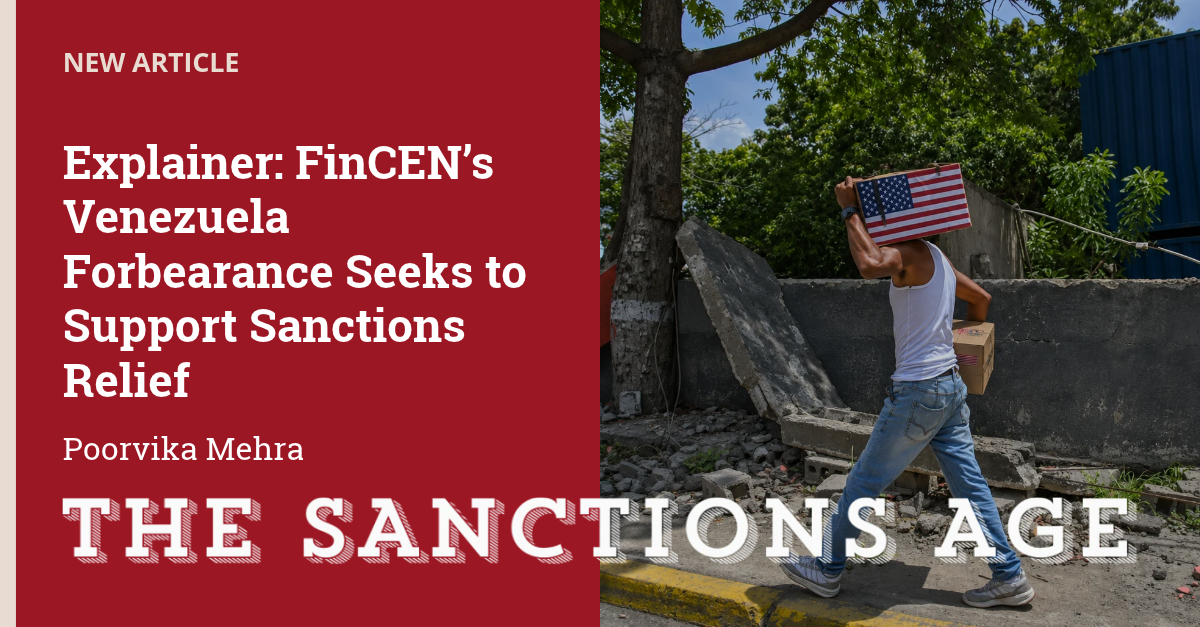
Even after sanctions are eased, banks can still hesitate to process authorized transactions if they’re unsure how U.S. regulators will enforce separate anti-money laundering rules.
In our latest Explainer for The Sanctions Age, @PoorvikaMehra examines how the U.S. Financial Crimes Enforcement Network (FinCEN) is addressing that uncertainty in Venezuela. Through January 29, 2027, its policy gives eligible U.S. financial institutions conditional protection from certain enforcement actions when they provide authorized financial services in Venezuela.
Mehra argues that U.S. sanctions authorities and banking regulators should coordinate their guidance so banks can process authorized payments with greater confidence and relief can reach the people it’s intended to help.
Read the full explainer below: https://t.co/iReKNj8yGe
Gulf sovereign wealth funds are projected to invest a record $136 billion in 2026 despite contracting economies and widening fiscal deficits, but if disruption to energy and commodities trade continues, it could strain Gulf budgets and push sovereign funds to prioritize domestic projects, leaving less capital to invest abroad.
In our latest analysis, @richgrayer examines how a pullback in Gulf investment could make it harder for emerging economies with few other sources of funding to finance new industries, especially as the number of new manufacturing projects is already declining and foreign aid is being cut.
The article highlights how the implications of the war extend beyond the Gulf: the contraction of Gulf economies and a decrease in funds could inhibit industrial development and weaken the investment ties linking the Gulf to emerging markets.
Read the full piece: https://t.co/fNzeFL67AL
Iran is preparing next year’s budget for the possibility of zero oil revenue, as payments for earlier oil shipments could cease by mid-December if the U.S. naval blockade remains in place.
In a recent report for @OilandEnergy, Charles Kennedy quoted a post on X by @yarbatman describing Iran’s downturn as a deep recession caused by an external shock.
Kennedy also cited our recent research note Bourse & Bazaar Foundation Critical Question (CQ), where @yarbatman and @tedla_ezana examine how Iran’s economy has held up after six months of war. Their analysis found that the contraction in Iran’s non-oil output was about one-seventh the size of Ukraine’s economic contraction after Russia’s invasion.
The CQ puts Iran’s wartime contraction in perspective as the government braces for further pressure on its finances.
Read the report: https://t.co/OFgSJ7c5KV
Read the CQ: https://t.co/FMVN7dNN0W
As participants begin convening today at the SAIS Europe campus for the Bologna Conference on Sanctions Relief, we continue to introduce some of the experts who will be sharing their insights.
@vittoriomaresc1 is the Sanctions Lead Analyst at Karam Shaar Advisory LTD, where he examines how UN, U.S., EU, and UK sanctions interact and affect the Syrian economy. Vittorio points to the reluctance of international banks to restore ties with Syrian banks, which makes it harder for businesses to trade with and invest in Syria.
One outcome he’d like to see from the conference is a set of guiding principles for sanctions relief, including planning for how sanctions will be lifted when they are first imposed and working with banks to help them manage risk as they re-enter the market.
How governments talk about sanctions can shape how difficult they are to lift. This is one of the issues Neda Jahanbani is bringing to the Bologna Conference on Sanctions Relief, taking place on November 16-17 at the SAIS Europe campus in Bologna, Italy.
In her own research, she examines how the language used to justify sanctions can come to portray an entire country as a permanent adversary. When that happens, it becomes harder to define what the targeted government would need to do to secure relief.
What it takes to lift sanctions was also the focus of an episode of The Sanctions Age podcast, where Josefine Petrick spoke with @grauvogelj and @HanaSaadAttia about the political and economic conditions that make relief possible.
Neda has also written for The Sanctions Age about how the 2015 Iran nuclear deal unraveled and what negotiators can learn from it to make a future agreement more durable.
Read the analysis: https://t.co/pnuErvnQpm
Listen to the episode: https://t.co/ySu3DgPuhT
Our original account, @BourseBazaar is compromised and X Support has been unable to help regain access.
So we are starting anew with @BourseBazaarFdn!
Follow us for wide ranging analysis on economic diplomacy and economic development in West and Central Asia.
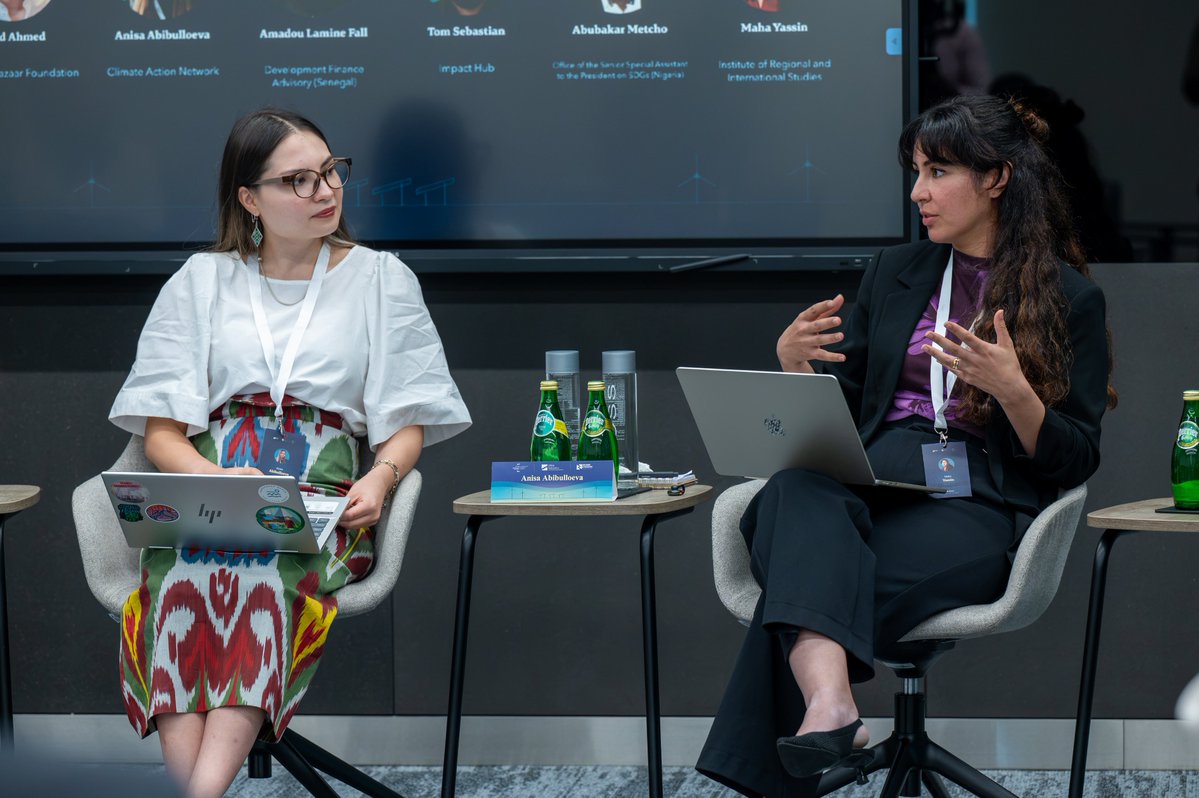
Food security depends on how much farmers can grow and whether they have the storage, processing facilities, and transport to get food to buyers.
At the Rihla Summit’s food security session, Tom Sebastian, Amadou Lamine Fall, and @abumetcho discussed how Gulf investment in irrigation, storage, and processing could help farmers reduce post-harvest losses and reach new buyers.
@anisa_rock emphasized the need for projects that consider water, energy, and agriculture together, and Maha Yassin called on investors to listen to local farmers' needs. Thanks to @ImadAhmed for moderating the discussion.
The Bologna Conference for Sanctions Relief is set to take place on November 16-17 on the SAIS Europe Campus in Bologna, Italy. Ahead of the event, we are introducing some of our participants who will be sharing their insights and expertise.
Niccolò Lanzoni is a Postdoctoral Researcher and Adjunct Professor of Public International Law at the University of Bologna, where he holds a PhD in International Law.
At the conference, he is most looking forward to discussing what happens on the day after sanctions are lifted, and wants to understand how international investment law, from treaty protection to investment facilitation, can help rebuild trust and contribute to making sanctions relief into real recovery for the population.
Ahead of the Bologna Conference for Sanctions Relief, we are introducing some of the participants who will be sharing their insights at next week’s event.
At the conference, @majdzadehr is most looking forward to discussing why the effects of sanctions on access to essential medicines remain at the margins of sanctions policy and receive limited sustained attention from institutions responsible for health and humanitarian protection.
This topic has become increasingly important in discussions about the effects of sanctions policy and has been covered in our work on the impact of aviation sanctions on Iran’s medical supply chains by @yarbatman and Josefine Petrick, as well as in a piece on the effects of the U.S. oil embargo on access to vaccines in Cuba by Petrick, who leads the Bologna Initiative.
We look forward to working with sanctions experts at the conference to find practical solutions to these pressing issues.
Read the article on aviation sanctions here: https://t.co/u3EQLIRDVc
Read the article on the effects of U.S. sanctions on vaccine access in Cuba: https://t.co/dDJ47ApZJ2
On 16–17 November, the Bologna Initiative for Sanctions Relief will bring together scholars, policy experts, and practitioners at the Johns Hopkins SAIS Europe campus in Bologna, Italy. Participants bring perspectives from law, diplomacy, economics, and public health to the discussion on sanctions relief.
At last year’s inaugural conference, participants discussed how to better understand the effects of sanctions, how to reform them to reduce harm to civilians, and how to lift them in ways that can endure. This year’s conference builds on those conversations and the initiative’s work to understand what it takes for relief to reach the people and communities affected by sanctions.
Ahead of the event, we’ll share perspectives from some participants on what they hope to discuss in Bologna.
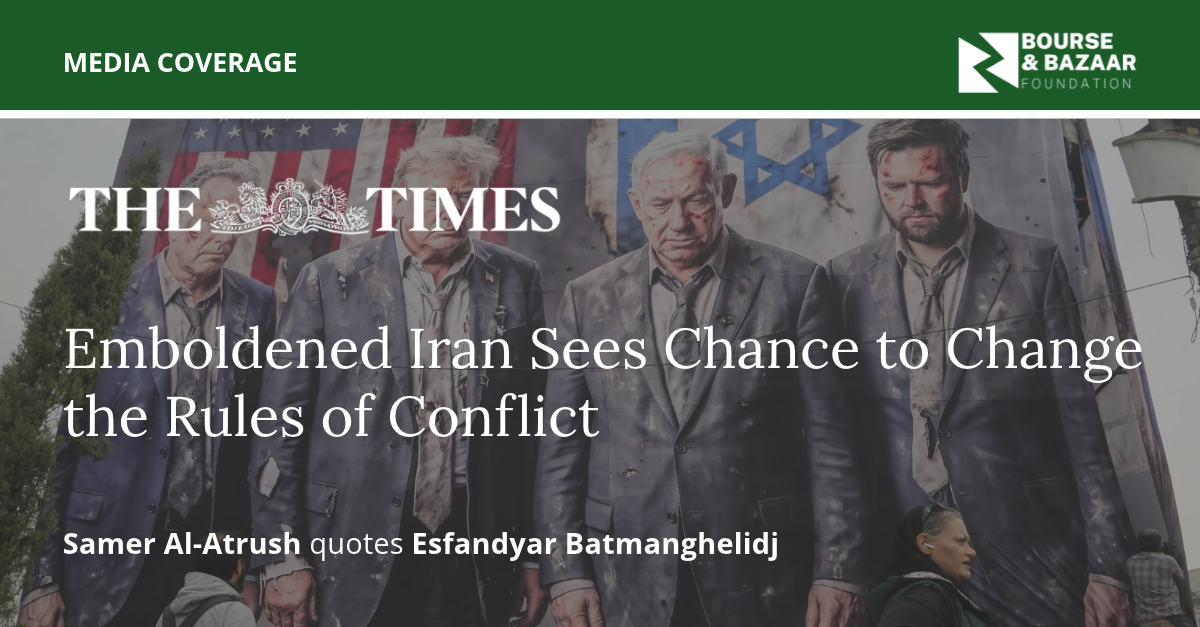
In a recent article for @thetimes on how the Iranian regime feels emboldened after Democrats’ gains in the U.S. midterm elections, @SameralAtrush quoted @yarbatman on the possibility of Iran cutting deals with countries in the region.
While Washington believes tightening its naval blockade will cause enough economic damage to pressure Iran into making concessions, Batmanghelidj argued that Gulf states, Pakistan, and Turkey may seek arrangements with Iran to help it withstand the blockade and reduce the risk of renewed conflict.
Read the full article: https://t.co/N7mmFkbg0o
Our Rihla Summit hydrogen session focused on building demand through domestic industries as export markets develop more slowly than expected.
@RumaithaBusaidi emphasized that exports and local industrial development should go hand in hand. @me_albreiki highlighted opportunities to use hydrogen in existing industries and develop clusters linking producers with nearby buyers. @ouedraogo_nadia stressed the importance of retaining value, jobs, and expertise in producer countries, while Louis Skyner emphasized the need for projects to have reliable buyers and a realistic plan to make them financially viable.
Moderated by @dawud_ansari, the discussion also explored cooperation among producer countries on standards and market development, including through a proposed Organisation of Hydrogen Exporting Countries.
Watch the full session on our YouTube channel: https://t.co/qljuQTf9PW
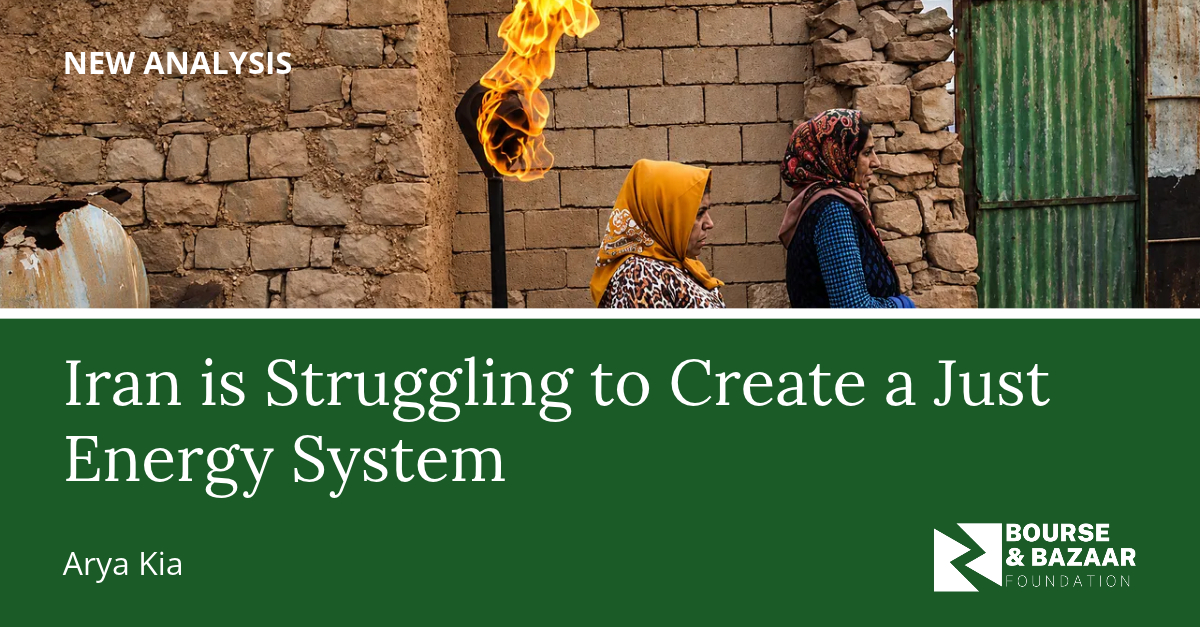
Despite being one of the world’s largest producers of natural gas, Iran struggles to meet domestic demand, particularly in winter, when residential and commercial consumption rises.
In the final article of our three-part series on Iran’s energy system, Arya Kia notes that while near-universal electricity access is a significant achievement, the number of people connected to the grid tells us little about energy justice in Iran.
Kia discusses three different kinds of energy justice and outlines where Iran is struggling to create a more equitable energy system. A household may be connected to the grid yet still face repeated blackouts; heavily subsidized energy can still distribute benefits unevenly; and an energy-producing region can generate national wealth while bearing a disproportionate share of the environmental costs.
Read the full analysis: https://t.co/ap0FMxAgyw