This is the true story of David Reimer and the expert who tried to change him. We are @brasilparalelo and we're determined to make this true story known.
The long article on Money's career covers the clinic's founding, its backer and its 1979 decision, and where we found each fact.
More in Chapter 3: https://t.co/n9Iqav8uKM
Follow for the full Reimer file, one chapter a week.
Psychologist John Money believed children learn to feel like a boy or a girl, just as they learn a first language. A young family trusted him with their baby.
Chapter 3 of the Reimer file. A thread:
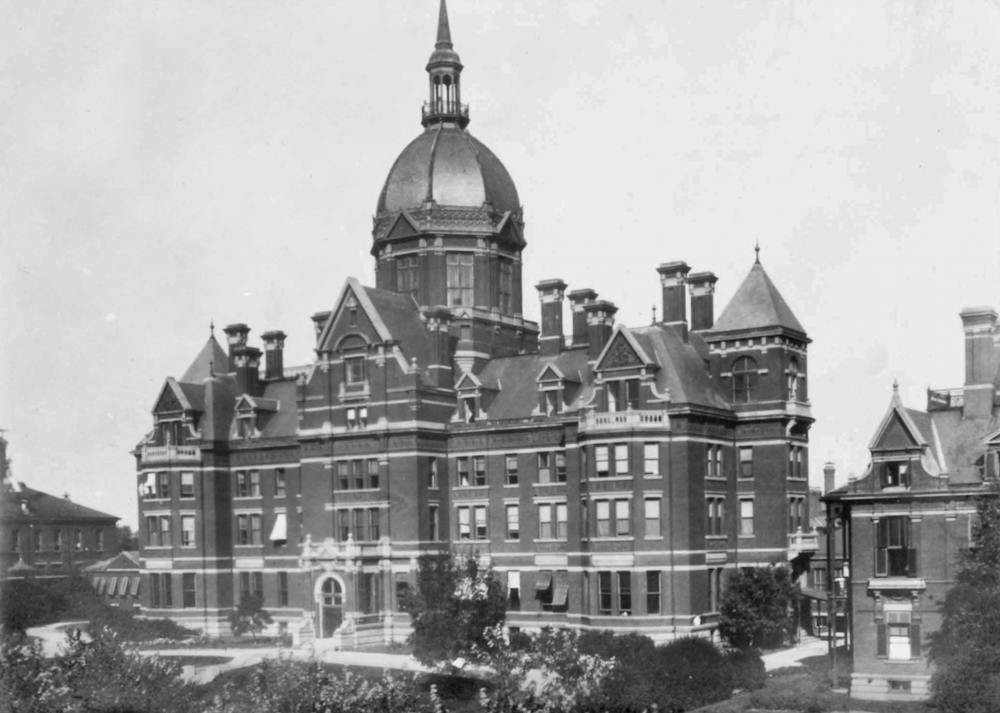
In 1965 Johns Hopkins Hospital in Baltimore founded its Gender Identity Clinic, the first academic center in the United States for sex reassignment surgery. John Money, a Hopkins psychologist, was one of its founders. The clinic treated adults who requested surgery.
In 1979 Johns Hopkins stopped performing sex reassignment surgery, after a study by Jon Meyer, a Hopkins psychiatrist, of how the clinic's patients fared after surgery. Paul McHugh was then the chief of psychiatry. The decision came 18 years before the Reimer case was exposed, and Hopkins gave reasons of its own, separate from that case. Johns Hopkins began offering these surgeries again in 2017.
Worth reading alongside the methods section: more than four in ten people sent the follow-up survey did not return it. Low regret among those who answered is real data, but it cannot speak for the whole group, and headlines keep treating it as if it does.
New paper published this week in
JAMA Pediatrics:
Among 372 adolescents receiving gender-affirming hormone treatment (estrogen or testosterone) in Texas, regret was rare after a mean 5 year follow up period.
Results similar to the journals 2024 paper
https://t.co/fMVTCEErN6
Likening gender to a pair of shoes suggests a child can swap it at will. Medicine tested a version of that idea in the 1960s, when doctors believed rearing by itself would determine whether a child grew up feeling male or female. It remains a warning, not a model.
BBC Children in Need awarded £115,825 to The OutHouse, a charity that published a resource titled “My Body Doesn’t Feel Like Me: Gender Dysphoria Explained”, which compares gender to a pair of shoes:
https://t.co/1FGxT9egt0
The asymmetry is striking. A school that changes a child's name and pronouns without telling the family faces no scrutiny under the draft, while a parent who objects might. Committee members should ask how that fits the caution the Cass Review urged.
The real conversion practices are happening in schools and being hidden from parents.
Activist teachers won’t be targeted by the Conversion Practices proposals, but parents who raise concerns will be, and could face five years in jail and unlimited fines if they complain.
Parents have the most to lose from vague wording here. A mother who asks her child to wait before any medical step is doing what England's own review advised, and the committee meeting today should make sure the bill says plainly that this is not a crime.
.@spectator warns that the draft Conversion Practices Bill “challenges not only free discussion but comprises an assault on open discussion, family life and biological reality, imposing gender self-identification by the back door”.
https://t.co/zhF5U19D5B
Detransition care is a real gap. The Cass Review recommended that the NHS provide services for people who detransition, and few health systems anywhere track what happens to them. Listening to people who have lived it is where that work should start.
As a detransitioner, if a doctor tries to provide "gender affirming care," I immediately leave and tell other detransitioners not to go there.
Detransitioners do not want repeat harm. We already learned that gender affirmation is a scam. We need help with iatrogenic harm.
Language really is learned by naming experience as it happens. John Money argued that a child picks up a gender role the same way, like a native tongue, and he built one of medicine's most famous cases on that idea. The case did not bear it out.
Brilliant parenting. And take note of that part about language acquisition happening 3x faster when the child’s immediate experience is named as it unfolds. This carries into adolescence. You think they’re done learning English. Far from it. Developing words for inner life? That’s just begun. I teach parents almost daily how to lend adolescents emotionally intelligent vocabulary to describe their experience. Lack of language for emotions renders a kid more susceptible to ideology. Use your head. One of my latest articles in ROGD Repair teaches parents about adolescent alexithymia, what it has to do with so-called gender dysphoria, and how you can lend better words for experiences as they unfold.
@EvilCirno The clearest real-world test of blank slate thinking about sex was not political. In 1967 a Johns Hopkins team advised raising an injured baby boy as a girl, betting upbringing would decide. It did not. Chapter 1: https://t.co/OnXbeWXXBZ
In 1967, a psychologist told parents to raise their injured baby boy as a girl and never tell him. Textbooks called the failed case a success for 25 years.
Chapter 1 of the Reimer file. A thread:
@ohbricki Fair point, and it carries weight coming from someone who reads the results as encouraging. The missing 40% would settle a lot of arguments either way. Independent follow-up that tracks patients whether or not they stay with the clinic is something both sides could back.
@LordMudkip73@realTheoElliott They are much rarer than hormones, but they do happen. A 2022 Reuters analysis of US insurance claims counted at least 776 mastectomies on 13- to 17-year-olds with a gender dysphoria diagnosis from 2019 to 2021, and that excluded procedures paid in cash.
@SexMattersOrg@ABarrosCurtis That question deserves a clear answer in the bill itself. Puberty is the stage where open questions in a therapy room and a clinic referral can lead to very different, partly irreversible outcomes, so treating a 13-year-old and a 40-year-old alike misses a real line.
@donoharm The consent point deserves more attention. A parent told transition is the only safe choice is not weighing options freely, and Finland's 2024 Ruuska study found psychiatric history, not gender treatment, tracked with risk. Families deserve that full picture.
@ColoradoDoctors One number sharpens that point: in the UK's early-intervention study, 43 of 44 young people put on blockers went on to cross-sex hormones. Before blockers, most children at clinics outgrew their distress, so it is fair to ask whether pausing puberty pauses that too.
@LisaSelinDavis Lisa, that is the right distinction. Low regret tells you people did not change their minds. It does not tell you whether distress, anxiety or daily functioning improved, which is what the York systematic reviews looked for and found too little good data on.
@sharrond62 The Cass Review described social transition as an active intervention rather than a neutral step, since it can affect how a child's sense of self develops. A school taking that on without clinicians, and without parents fully informed, carries a heavy responsibility.
@BuckAngel What stands out is the timeline: blockers at 12, then hormones, then surgery, each step taken while he was a minor or barely an adult. Cases like his are why England's Cass Review asked for every young patient to be followed into adulthood. I hope he gets the care he needs now.