What will soon become clear is that the Frontier Labs are no longer the optimal place to allocate capital. The best index portfolio for The Great Compression is instead as follows:
1) bets on pure "capabilities", super-intelligent general learning algorithms, a God Model, etc: Core Automation, Oaklab, Standard Intelligence, SSI, Flappy.
2) bets on compute/infrastructure: nvidia, spacex, etc.
3) bets on economic version control / pole position: Jai & Co (and a couple others in stealth), HoldCos, Bending Spoons, Palantir, Formation Bio, OpenEvidence etc.
The "labs" no longer give you the most convex upside in any of the salient areas. That's what the market is starting to see.
1) is mostly a hedge, if somehow there's a way for a true God Model to be born, I think it happens inside these research organizations focused exclusively on radically novel learning paradigms (not turning the economy into code).
Chamath reveals 1% of companies are 90% of AI token spend, and 80% of them are spending money from unprofitable VCs
"So the cycle here, is VCs raise from pension funds and LPs and foundations and family offices. They put money into a startup. That startup takes that money and invests in growth."
"Part of growing is by consuming other people's AIs. And so that company then starts to show revenue traction. Those folks then say, 'Hey, look how well we're doing,' raises a bunch of money from the same VCs. And it's just this circularity."
"Why that's important is what Ken Griffin is pointing out is that for AI to really scale as a predictable driver of long term earnings, it has to diffuse out of the startup ecosystem."
"You can't be in a situation where on the one hand, you're talking about breathtaking valuations, but 75 cents of every dollar is actually just a startup sending it back and forth so that they can mark themselves up. That's, I think, a structural problem."
"We've seen that structural problem in the past. That happened in the early days of cloud, when AWS initially started to expose EC2 and S3. The consumers of an EC2 instance or an S3 bucket were startups.”
“But the difference there is that AWS was abstracted from Amazon retail, which was already then a roughly break-even profitable business, at least on a free cash flow basis."
"So what's different here is you have a bunch of money-losing entities just spinning a bunch of money around and it has to diffuse more broadly."
I think one of the biggest opportunities in AI right now is fixing boring businesses that nobody in Silicon Valley wants to talk about.
Everyone wants to build the next AI coding assistant.
Or another AI search engine.
Or an AI agent that schedules meetings with other AI agents.
Very exciting.
Meanwhile, there are companies doing $50M in revenue that still run their entire operations on Excel, email, PDFs, and employees manually copying information between systems.
And nobody seems particularly interested in helping them.
I’ve spent years looking at startups, and one thing I’ve learned is that some of the best businesses solve problems that aren’t especially interesting to talk about at dinner.
Insurance claims.
Construction permits.
Freight invoices.
Property management.
Manufacturing.
Accounting for industries that haven’t updated their software since 2008.
These businesses don’t necessarily need another AI chatbot.
They need someone to eliminate the 15 manual steps required to complete a task that should take two minutes.
And here’s where I think things get interesting.
The biggest opportunity might not be selling these companies another $99/month software subscription.
It might be charging them based on the actual work you’re eliminating.
If a company spends $500K a year processing paperwork, and your software can reduce that cost by $300K, suddenly charging $50K or $100K a year doesn’t sound unreasonable.
That’s a much better sales pitch than telling a 60-year-old business owner that your product uses the latest large language model.
They don’t care.
They want to save money, make more money, and stop dealing with the same headaches every Monday morning.
I think we’re going to see some enormous AI companies built in industries that most VCs have never worked in and probably couldn’t explain.
And that’s exactly why the opportunity is so interesting.
The next great AI startup might not look particularly impressive in a demo.
It might just make a boring business dramatically more profitable.
And personally, I’d rather invest in that than another AI wrapper with a beautiful landing page and 47 competitors.
Heard of a top law firm completely cutting off Harvey and all API calls to Claude/OpenAI after they saw what openAI did with navier strokes
Now hosting everything locally with GPUs they own, running Kimi and deepseek
Think you’ll see a lot more of this going forward
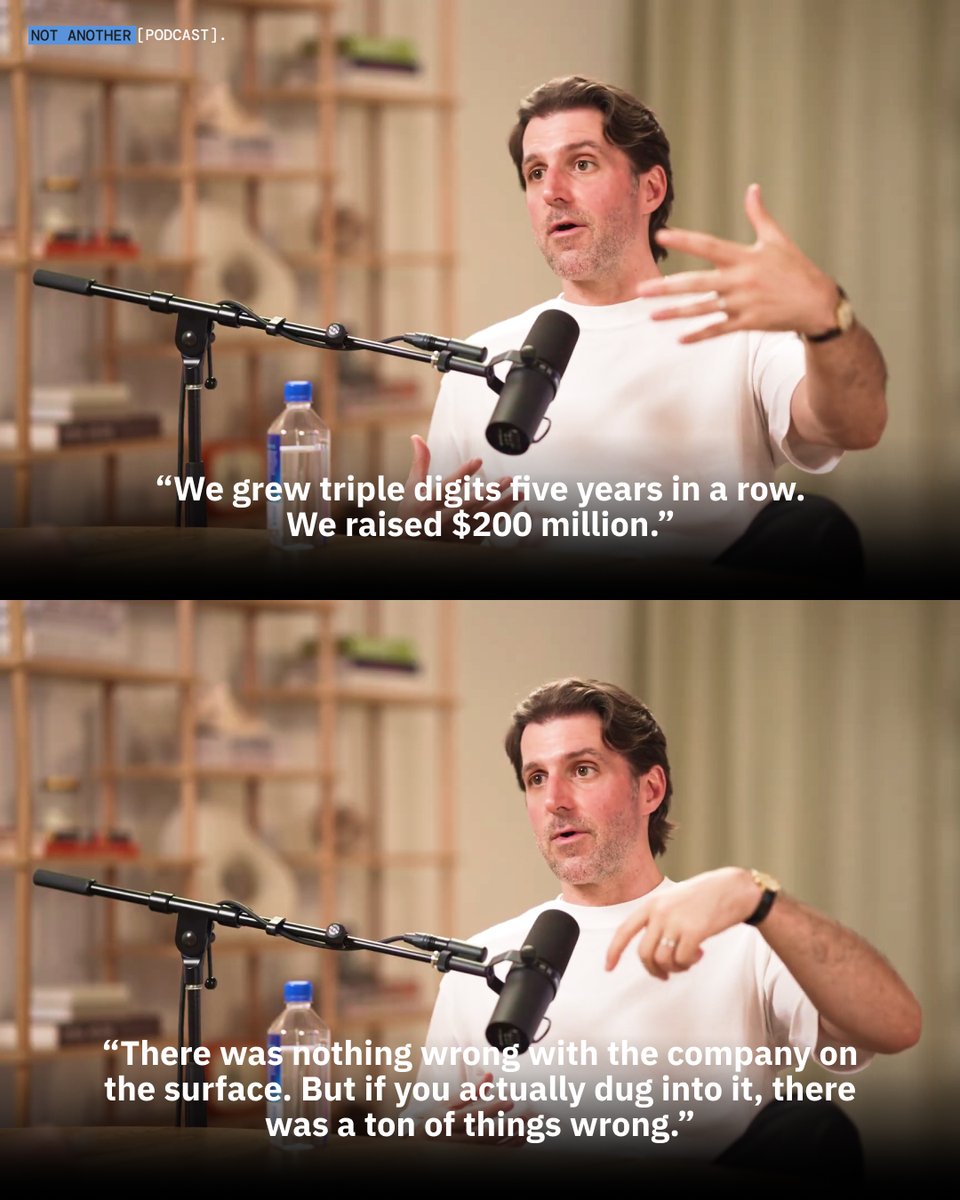
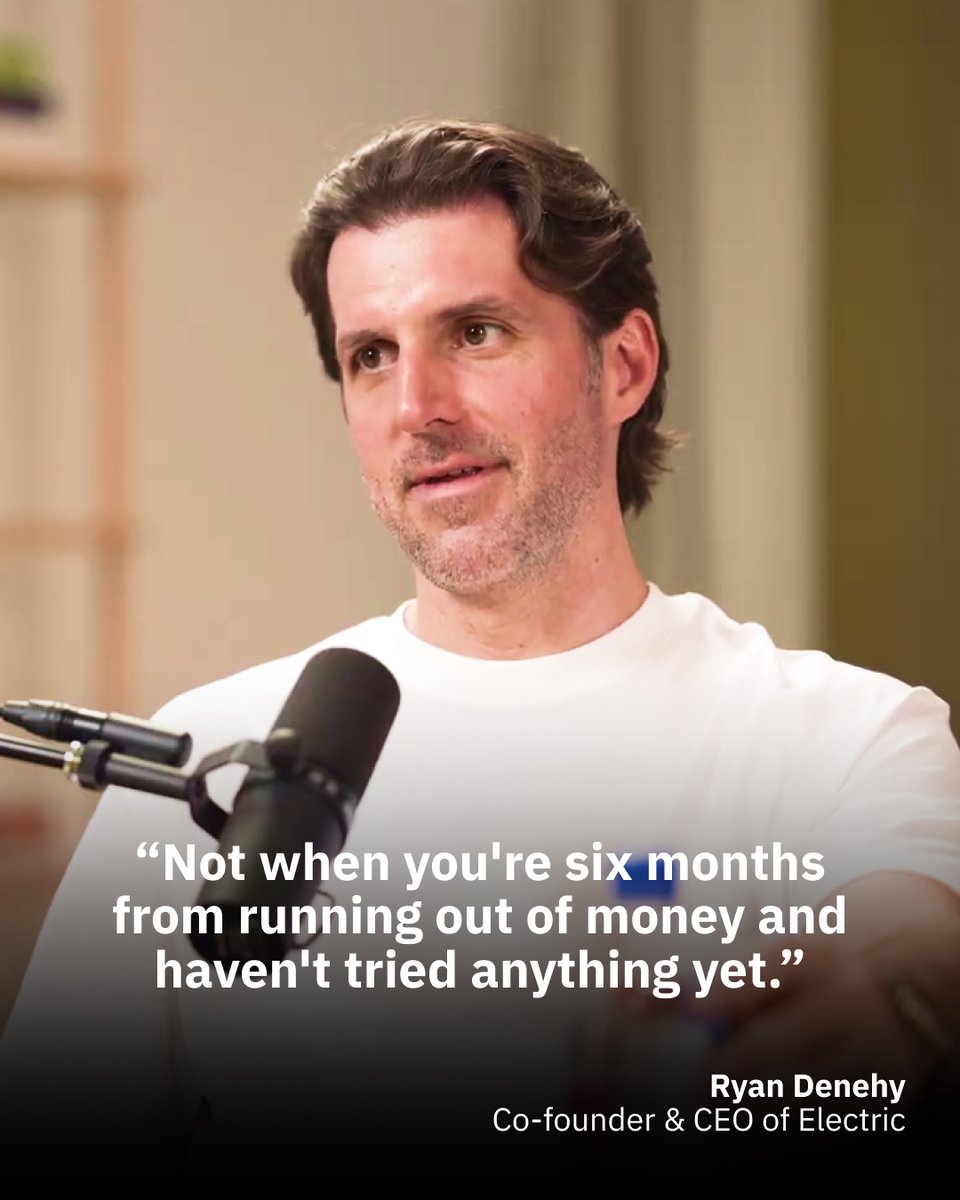
Triple-digit growth five years in a row. $200M raised. @DenehyXXL still decided the business had to change.
Swipe through for why he moved while the money was still in the bank. Save it for the day your numbers look fine and your gut says otherwise.
Full ep with Ryan is live everywhere! https://t.co/HDrvdGmaYm
Peter Thiel on the AI race: “It is the furthest thing from monopoly imaginable. And if it's not a monopoly, that's where I think the benefits will be likely distributed pretty widely in society.”
“[The AI labs] are incredibly weak on the monopoly story. There’s the felt sense that it's like this incredibly fast, dynamic race where it's been changing a lot. You know, DeepMind, in a sense, was in the lead in the early 2010s.”
“Then OpenAI with ChatGPT and the transformer models was able to replace that. And then in some ways, Altman locked up a lot of the chips and built the data centers preemptively. So there were sort of all sorts of ways he correctly leaned into this incredibly capex-intensive strategy.”
“There still is a sense where, maybe Anthropic is a little bit more in the pole position now than OpenAI was. It’s always hard to exactly score these things. But I would say that it also still feels that Google and Meta and Grok are not that far behind. I'm not sure China is that far behind.”
“Or if we describe it on the level of the Shakespearean drama among these people, it's like really crazy. So they're acting like, man, it is a fight to the death. It is the furthest thing from monopoly imaginable. And if it's not a monopoly, that's where I think the benefits will be likely distributed pretty widely in society.”
Lots of VCs kindof sound like this: "Your basketball team doesn't have a moat, any healthy human can throw the ball into the basket thingy. "
People who have not run companies before don't understand how much the team matters more than some imagined structural moat.
“You can’t just take a services business and inject it with AI.”
@DenehyXXL would know. He built @Electric_AI into an outsourced IT department for thousands of companies. It grew triple digits five years in a row, raised $200M, and hit $50M in revenue.
Then he tore it down and rebuilt it from scratch as an AI-native company, while it was still growing.
On its best day under the old model, Electric ran at 50% gross margins. Today it’s 80%.
I’ve bet the farm on AI services, so I asked Ryan to take the other side and tell me why I’m wrong. He did not hold back.
What you’ll take away:
• Why he pivoted a $50M business before the numbers forced him to
• How Electric went from 50% to 80% gross margins
• Why he’s skeptical of the AI roll-up boom
• Why no big leap in technology has ever cut total jobs
• The Got Milk campaign he thinks AI desperately needs
New episode of Not Another Podcast is live everywhere! Loved this one and hope you do too. Links below.
@DenehyXXL@Electric_AI NEW episode of NAP with Ryan is live!
Spotify: https://t.co/5REQPgcKiR
Apple: https://t.co/vTZ13qK0Rg
YouTube: https://t.co/IHwserTskT
I know I blinked but dear god, founders are choosing to raise $15M seed rounds at $75M-100M post?
Insert “I could have raised less money!?” Silicon Valley bar scene.
My second conversation with Christina Cacioppo (@christinacaci), Vanta's cofounder and CEO.
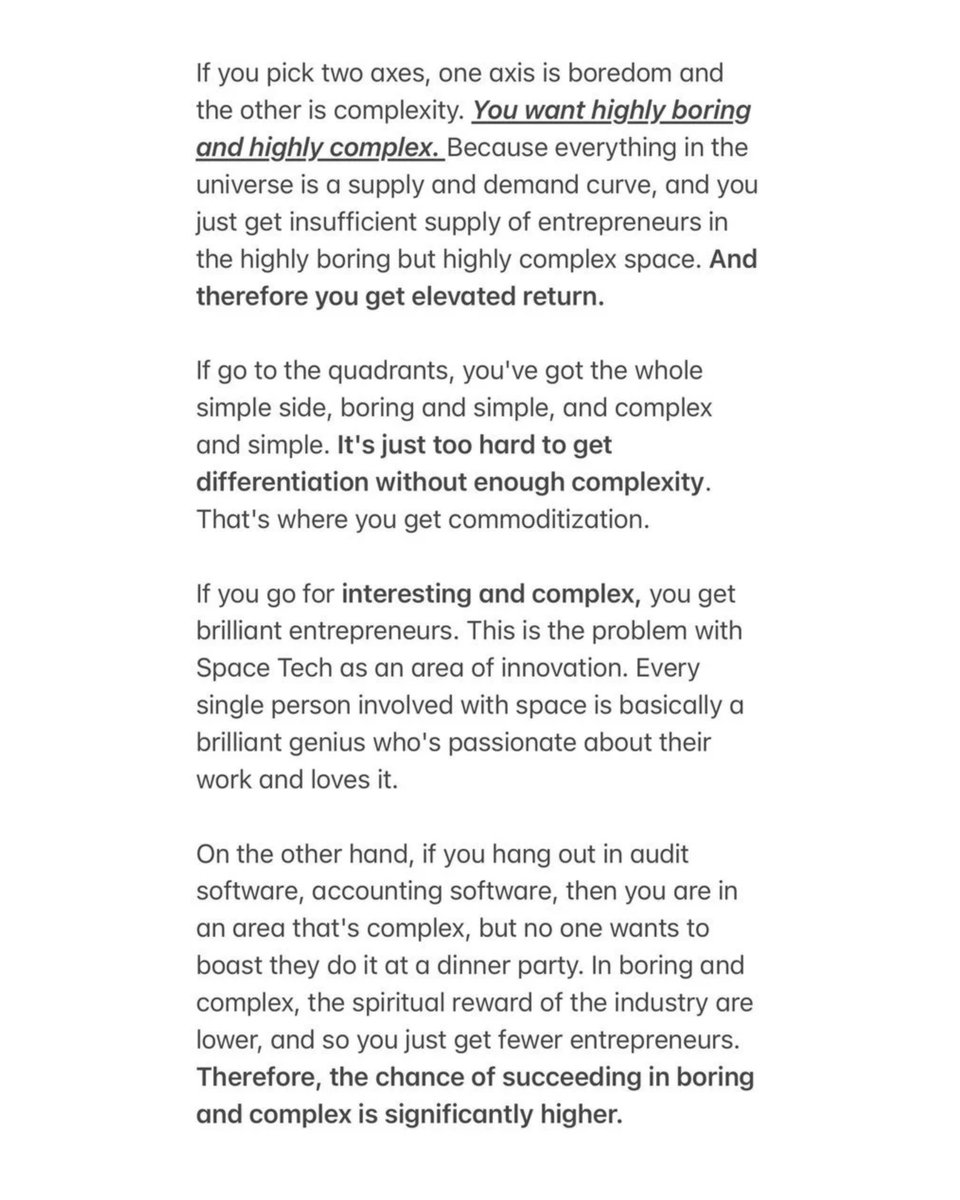
Charlie Songhurst says the best returns come from companies that are highly boring and highly complex, because fewer founders want to build them.
Vanta is one of those companies.
When we first talked five years ago, Christina told me about building the first version of Vanta in Excel.
Since then she has turned it into the category leader in security compliance. Now she is rebuilding it around AI.
We discuss:
- Why great software businesses got cheap
- Why Vanta eats the cost of AI instead of marking it up
- Why comp for top people is up 10X in five years
- What is over/under hyped in AI
- How AI attackers are changing security
- Vanta marketing + billboards
- Building trust in an era of low trust
Enjoy!
TIMESTAMPS
0:00 Intro
4:17 Surviving the SaaSpocalypse
9:40 The AI Pricing Trap
16:17 Rebuilding Software for AI
22:43 Silicon Valley's Talent Wars
31:57 What's Overhyped in AI
38:39 Security at Machine Speed
47:16 Reinventing Software
55:37 The Billboard War
60:38 Rebuilding Trust in Technology