Love this: "Ukrainian soldiers used a "Vampire" drone to evacuate a cat and her five kittens from the frontline. The operation, which the troops dubbed "Operation Meow-Meow," was carried out by pilots from the 118th Separate Mechanized Brigade on June 8." https://t.co/2obrP5djtO
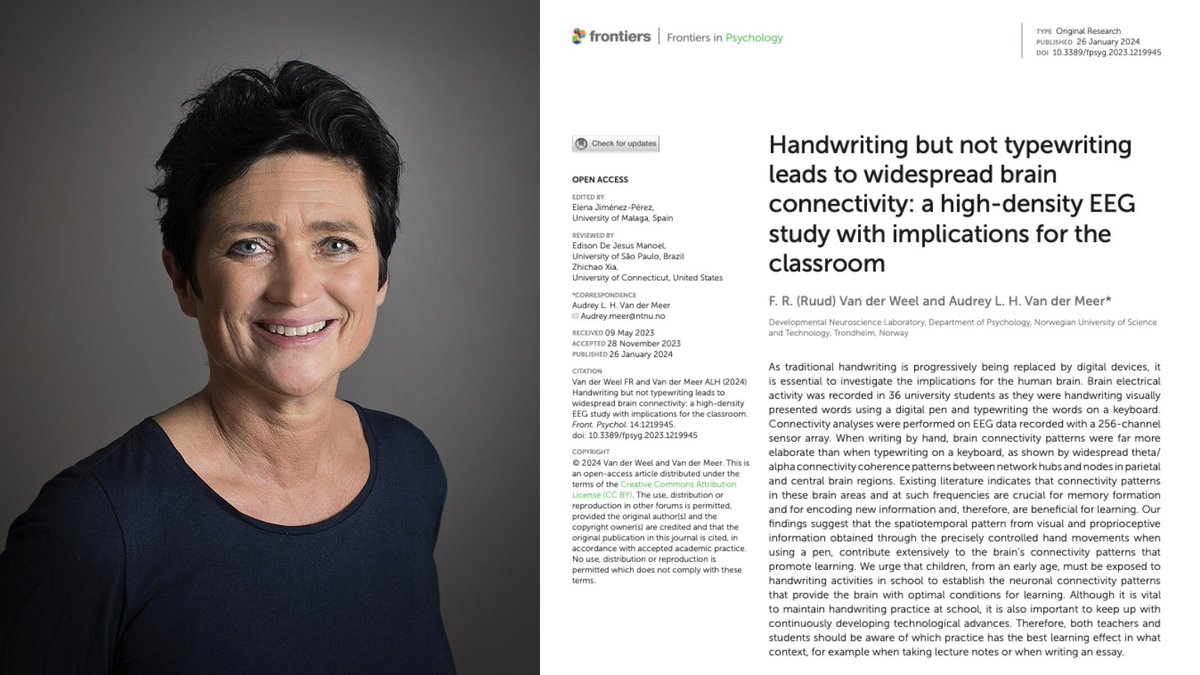
A Norwegian neuroscientist spent 20 years proving that the act of writing by hand changes the human brain in ways typing physically cannot, and almost nobody outside her field has read the paper.
Her name is Audrey van der Meer.
She runs a brain research lab in Trondheim, and the paper that closed the argument was published in 2024 in a journal called Frontiers in Psychology. The finding is brutal enough that it should have changed every classroom on Earth.
The experiment was simple. She recruited 36 university students and put each one in a cap with 256 sensors pressed against their scalp to record brain activity. Words flashed on a screen one at a time.
Sometimes the students wrote the word by hand on a touchscreen using a digital pen, and sometimes they typed the same word on a keyboard. Every neural response was recorded for the full five seconds the word stayed on screen.
Then her team looked at the part of the data most researchers had ignored for years, which is how different parts of the brain were communicating with each other during the task.
When the students wrote by hand, the brain lit up everywhere at once.
The regions responsible for memory, sensory integration, and the encoding of new information were all firing together in a coordinated pattern that spread across the entire cortex. The whole network was awake and connected.
When the same students typed the same word, that pattern collapsed almost completely.
Most of the brain went quiet, and the connections between regions that had been alive seconds earlier were nowhere to be found on the EEG.
Same word, same brain, same person, and two completely different neurological events.
The reason turned out to be something nobody had really paid attention to before her work. Writing by hand is not one motion but a sequence of thousands of tiny micro-movements coordinated with your eyes in real time, where each letter is a different shape that requires the brain to solve a slightly different spatial problem.
Your fingers, wrist, vision, and the parts of your brain that track position in space are all working together to produce one letter, then the next, then the next.
Typing throws all of that away. Every key on a keyboard requires the exact same finger motion regardless of which letter you are pressing, which means the brain has almost nothing to integrate and almost no problem to solve.
Van der Meer said it plainly in her interviews.
Pressing the same key with the same finger over and over does not stimulate the brain in any meaningful way, and she pointed out something that should scare every parent who handed their kid an iPad.
Children who learn to read and write on tablets often cannot tell letters like b and d apart, because they have never physically felt with their bodies what it takes to actually produce those letters on a page.
A decade before her, two researchers at Princeton ran the same fight using a completely different method and ended up at the same answer. Pam Mueller and Daniel Oppenheimer tested 327 students across three experiments, where half took notes on laptops with the internet disabled and half took notes by hand, before testing everyone on what they actually understood from the lectures they had watched.
The handwriting group won by a wide margin on every question that required real understanding rather than surface recall.
The reason was hiding in the transcripts of what the two groups had actually written down.
The laptop students typed almost word for word, capturing more total content but processing almost none of it as they went, while the handwriting students physically could not write fast enough to transcribe a lecture in real time, which forced them to listen carefully, decide what actually mattered, and put it in their own words on the page.
That single act of choosing what to keep was the learning itself, and the keyboard had quietly skipped the choosing and skipped the learning along with it.
Two studies. Two countries. Same answer.
Handwriting makes the brain work. Typing lets it coast.
Every note you have ever typed instead of written went into your brain through a thinner pipe. Every meeting, every book highlight, every idea you captured on your phone instead of on paper was processed at half depth.
You did not forget those things because your memory is bad. You forgot them because typing never woke the part of the brain that would have made them stick.
The fix is the thing your grandmother already knew.
Pick up a pen. Write the thing down. The slower road is the faster one.
Donald Trump allowed himself to be outplayed in China, according to the academic and author @peterfrankopan. From accepting a lower seat beside Xi Jinping to showing gratitude and respect to him, Trump acted like the humble number two. Just what Xi wanted him to portray. ‘Poor preparation; lack of expertise; the total conviction that business deals are the way to do foreign policy all play a part in what will go down one day as a set-piece of how not to do a summit.’
SOUTH AFRICA IS SET TO HARVEST ITS LARGEST GRAIN HARVEST ON RECORD
We are still early in the season, but the recent crop forecasts suggest that South Africa is likely to have its largest summer grain and oilseed harvest on record in the 2025-26 production season. This is on the back of the expansion in area plantings and the large yields due to favourable summer rains.
The data released by the Crop Estimates Committee this afternoon places the country’s 2025-26 summer grain and oilseed harvest at 20.8 million tonnes, up 2% from the previous month, and 1% up year-on-year (y/y).
This monthly and yearly improvement in the overall harvest is underpinned by upward revisions to major grains and oilseeds, particularly maize, soybeans, and sunflower seed.
South African farming group Karoo Pistachios is ramping up output to capitalize on surging prices and compete with the world’s biggest producers https://t.co/lOCMfrbptQ
“We’ve had a very apolitical military, and we want that. We don’t want Republican and Democratic generals.” I speak to Retired Four-Star General Stanley McChrystal about Pentagon personnel decisions based on DEI and other political factors.
“Yes, I lost my parents on October 7, but I won this. I won Aziz as a brother.” Palestinian Aziz Abu Sarah and Israeli Maoz Inon tell the personal story behind their inspiring new book, “The Future is Peace.”
Palestinian author Aziz Abu Sarah reads me a passage from his book “The Future is Peace,” co-written with Israeli Maoz Inon. He calls for all of us to travel with them on the path of peace.
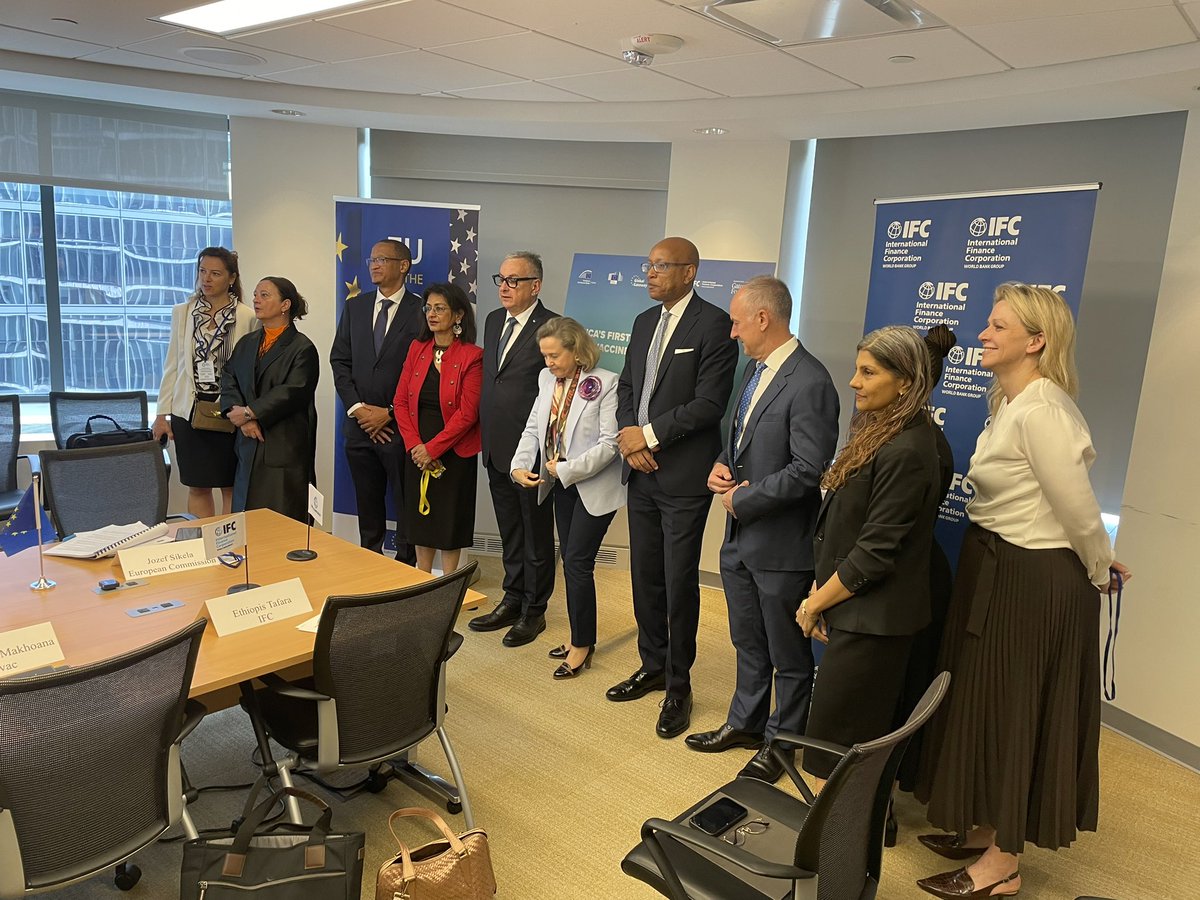
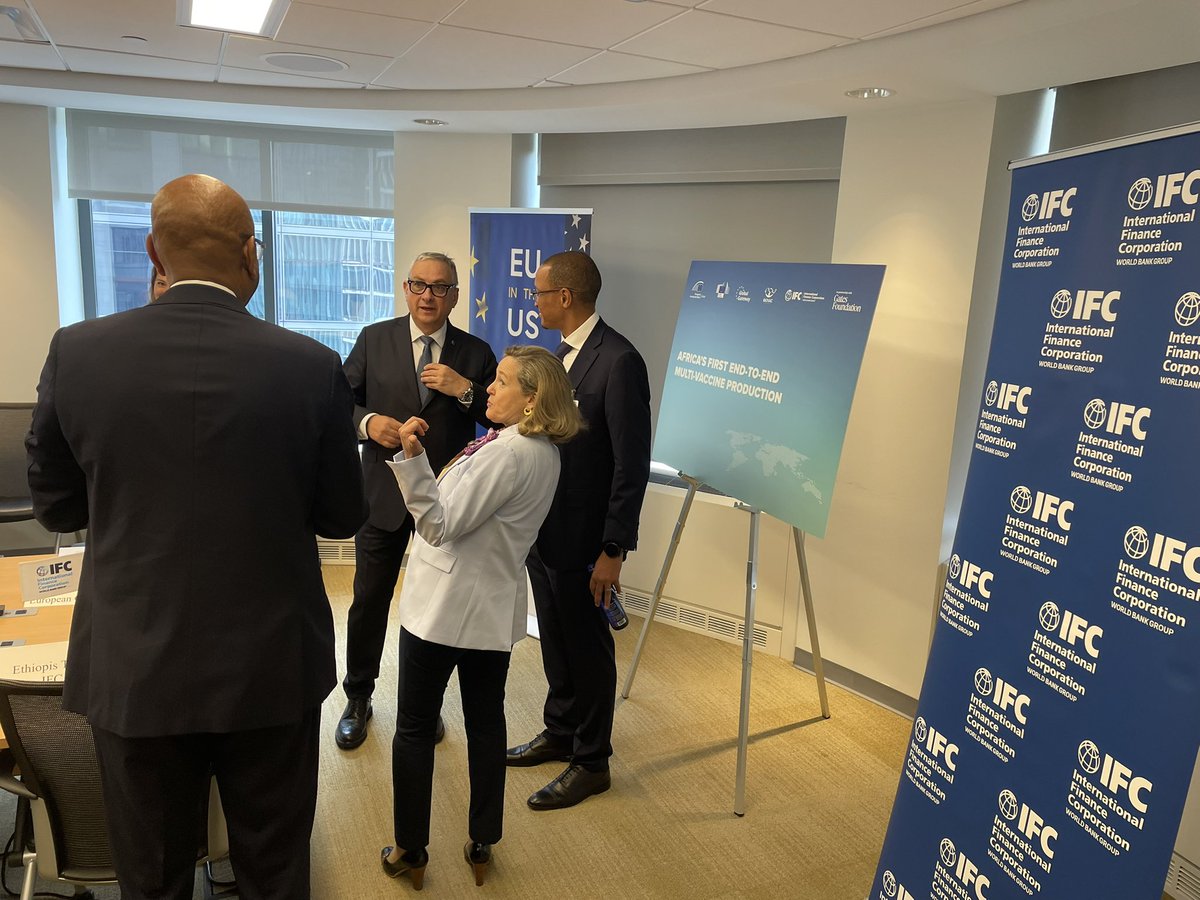
SA vaccine manufacturer BIOVAC has today secured a financing package of R1.8 billion rand from the International Finance Corporation and European Investment Bank to build Africa’s first end to end multi-vaccine manufacturing site that will advance self-reliance in vaccine production for South Africa and Africa.
We attended the signing ceremony in Washington earlier today
#sabcnews
And South Africa’s health department wants us to trust them with trillions in NHI funding
- Health DG accused of stealing R1m from fund that fights AIDS, TB and malaria
https://t.co/UjuUe5KkxH
Sky’s @EdConwaySky is shown inside the Bank of England's gold vault, one of the 12 vast vaults where the world's largest single deposit of gold is kept on behalf of its many owners
"I fear sometimes that few people really care about journalism, but we are dead without it.... You have to think of it as part of your country’s survival system." A Lament for the Washington Post by the peerless @Peggynoonannyc https://t.co/RyFxiAyKCt