When we want more consistency from a hitter, do we really know what we’re looking for?
In the mocap lab, bat speed was more consistent from swing to swing than the movements that produced it.
Do the best hitters really repeat their mechanics, or is there more to the story?
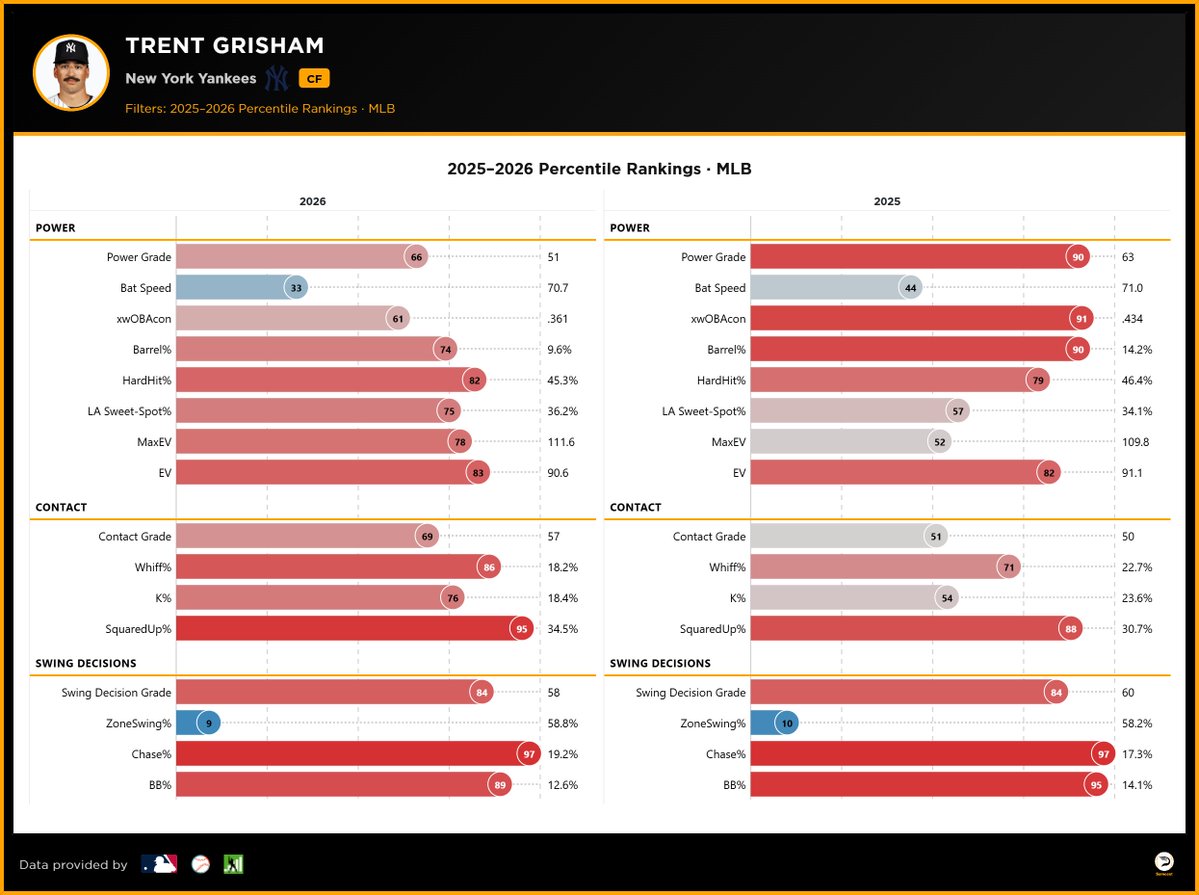
Trent Grisham went from a 129 wRC+ in 2025 to a 98 wRC+ in 2026.
Of the Driveline big 3, his Power Grade took the biggest hit, going from a 66 to a 52. His Contact Grade got better and his Swing Decision Grade saw a small tick down.
Let’s take a quick look at what changed for Grisham in 2026 that led to less power output... 🧵
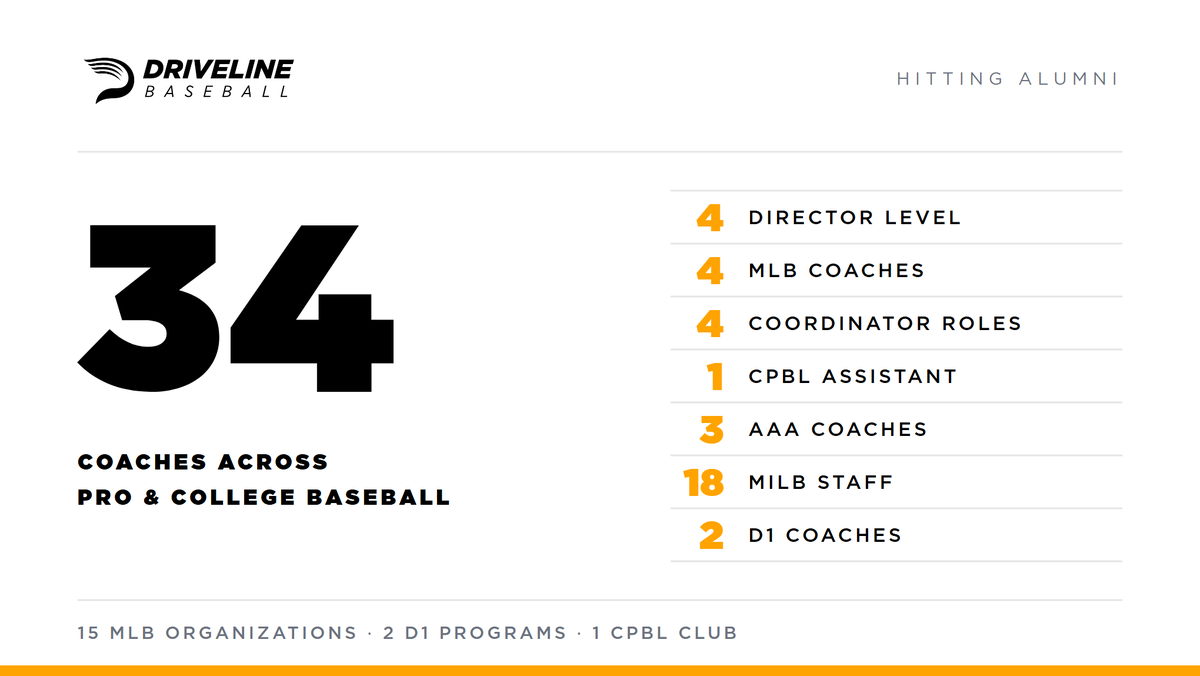
Driveline is hiring Hitting Coaches at all four of our locations.
No better place to accelerate your coaching career than here.
Take a look where some of our hitting alumni have gone ⬇️
Where does this quickness come from?
Keeping the barrel in line with the lead humerus in the frontal plane (umpire view) gets the barrel to contact 13.2 ms quicker, with 27% more early barrel acceleration at the same bat speed
In line = efficient path
#ProjectBows
For hitters who are remote/haven't been in gym for awhile we are also able to detect path anomalies (⬇️) using our full signal Blast Motion visuals.
Just another way that we are able to provide one of the best training experiences in the world for our athletes @DrivelineBB.
Tried changing everything in your swing and still not squaring it up?
You're fixing the wrong thing.
Mechanics are how your body moves the barrel.
Speed is how fast it moves.
Path is where it goes.
Most hitters only train the first one.
.@AFredericks2027 was already hitting .450 with a .702 SLG, 4 triples, and 2 home runs, and committed to Nevada.
But she still wanted more.
After 7 weeks of training at Driveline:
Max EV: 73.2 ➡️ 77.6 mph (+4.4)
Avg EV: 64.0 ➡️ 66.6 mph (+2.6)
Bat Speed: 58.5 ➡️ 60.5 mph (+2.0)
Max Distance: 241 ➡️ 261 ft (+20)
Been an absolute blast working with Addison. Her willingness to try new things, fail in tough environments, and ask good questions has allowed for some sick jumps in a short period of time.
More gains to be made
@AFredericks2027
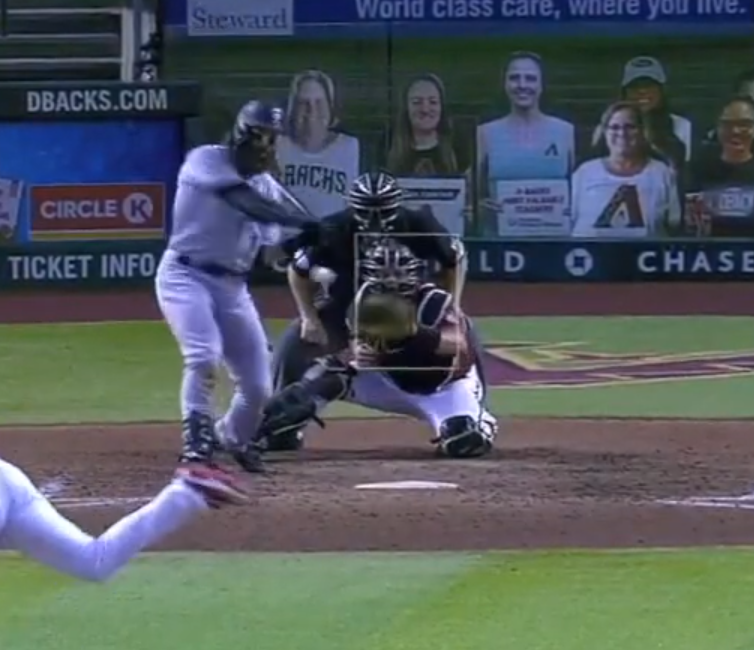
Alex squats in his load. Once he squats, he can't hold his posture as he moves forward, so there's no connection early in the swing or at contact. The barrel just rips flat and across.
Set-Up
- Oppo angle SL
- Underload bat + Smash Bat
Step Back Pivot Pick
- Loads him into his backside with a hinge instead of a squat
- Teaches him to hold that posture into foot plant
- Keeps him connected early so the barrel doesn't rip flat and across
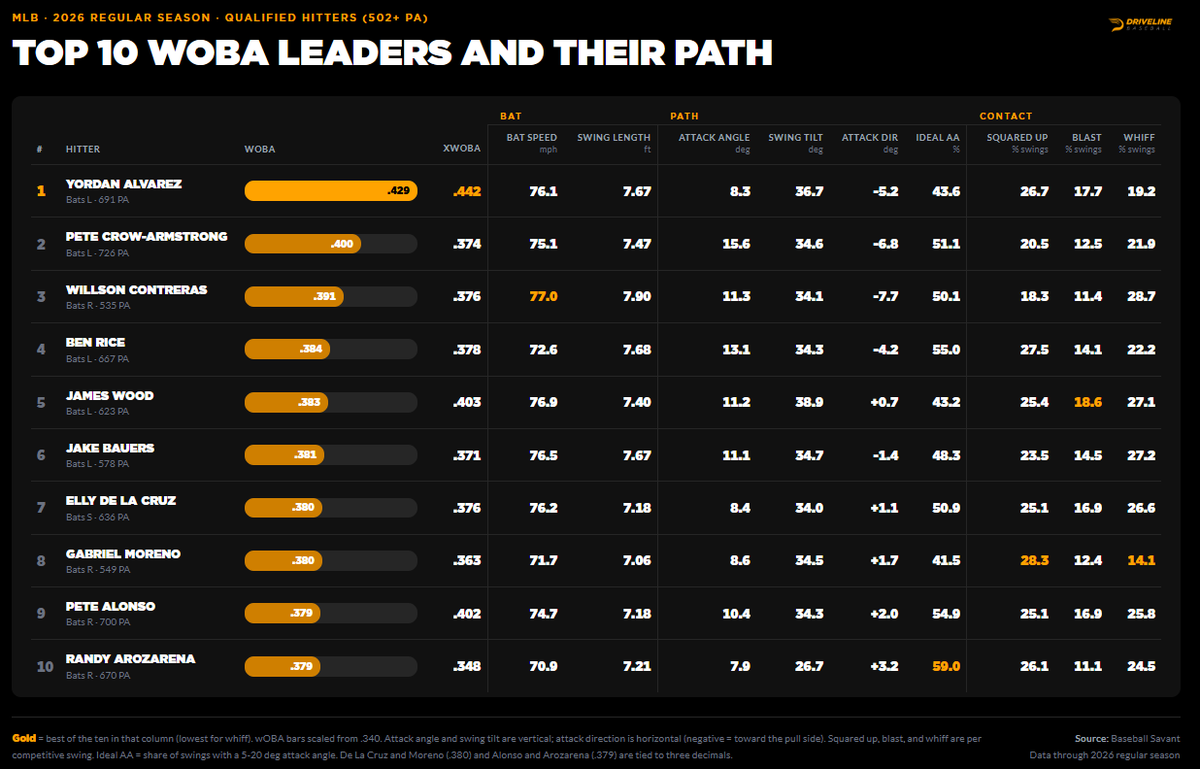
Quickest and Slowest to the ball in 2026 (300+ swings)
Time to contact = 1.3636 × swing length / bat speed
Swing acceleration = 0.03343 × bat speed² / swing length
What do you see?
What I'd take from it as a coach:
The miss should shape the adjustment. Build an environment and assign tasks that challenge the direction of the miss. Lots of variables feed a miss, so mix heights, locations, speeds and pitch types. That's how strategies carry into the game.
Dylan Crews has yet to establish himself in the Bigs
High Whiff and low HH EV LA (8.4° 90th% LA, League Average 12°), have led to production not matching his tools (Which are very LOUD)
A quick look at why and how we'd go about making the adjustment🧵🧵
VAA isn't one number
It changes every inch the barrel travels
Space the three phases 18 in apart along the path:
Current swing spends ~14 in at 9-19 deg
The optimal swing spends ~22 in.
More margin for error!
Braden Montgomery has an awesome lefty swing!
Our bat path optimizer says he needs just 0.60 inches of path change away from 1.29 more Run Value per 100 swings
1.56 runs per 100 swings per inch, #6 of 351 MLB hitters
Small change, big value🧵
Upper body Sequencing and Torso-Bat Relationship:
When the upper body sequences well, the barrel works “behind” the torso. You’ll see it "fall" behind the back shoulder and follow the plane of the shoulders as the torso rotates.
Notice when and where the barrel "falls" behind.