This container is filled with bitcoin mining computers on a fenced gravel lot deep in the Alberta, Canada wilderness.
The site is operated by AlbertaHash, and is one of three one-acre facilities the company owns. It is connected to Alberta’s wholesale electricity market and can reduce or stop load when power prices rise.
The operator plans to build a new 149 kW solar farm array there to sell power back to the grid in expensive hours and to offset its own consumption.
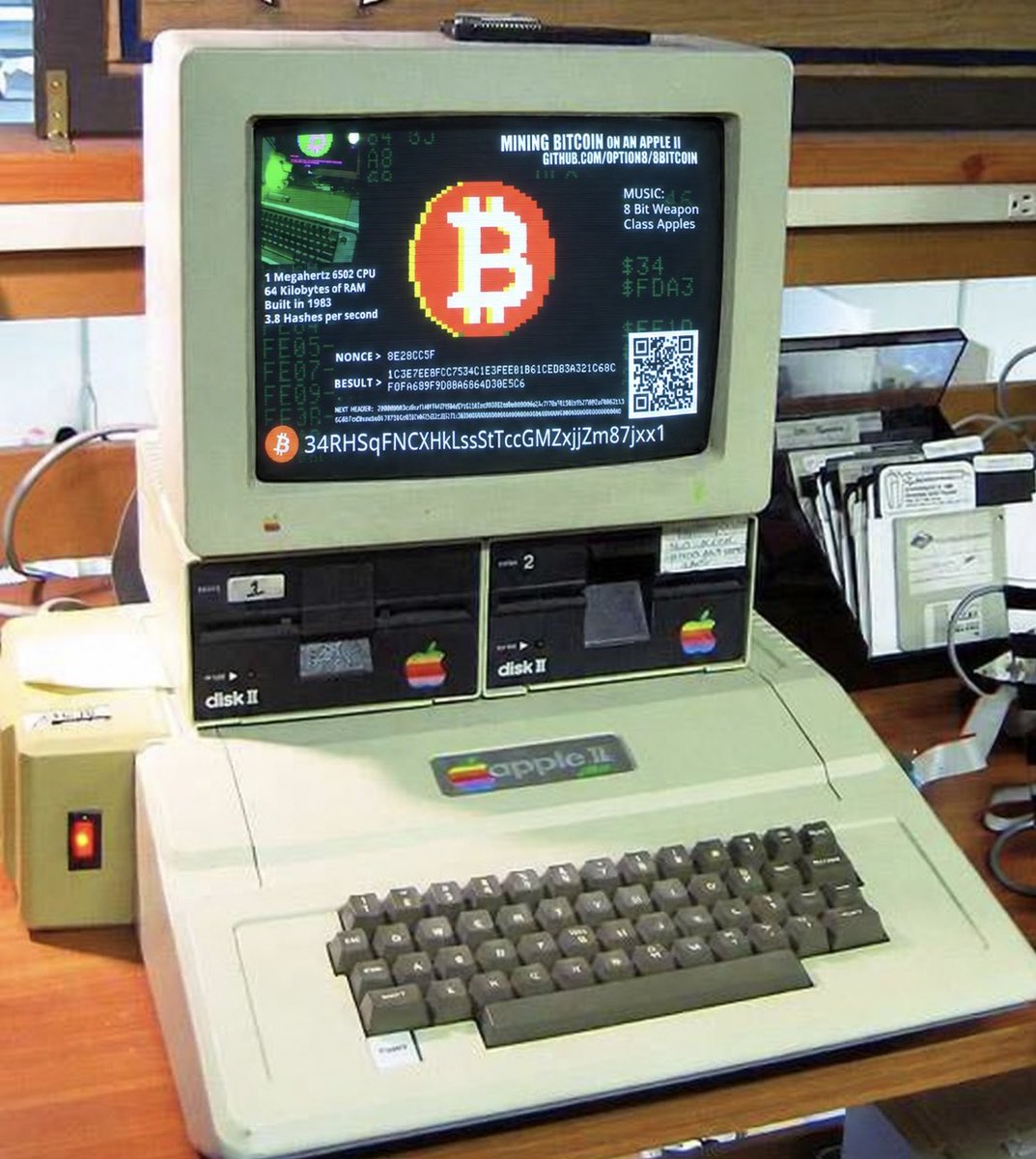
A developer mined bitcoin on an Apple II, a home computer built in 1983 with an eight-bit processor.
Bitcoin’s hashing algorithm uses thirty-two-bit operations, so the program had to construct those operations from smaller pieces.
Programmer Peter Ferrie helped optimize the code until it reached approximately 3.8 hashes per second.
A modern Mac obtained mining work and passed it to the Apple II through a virtual floppy disk over a serial connection. A low-resolution Bitcoin symbol rotated when new work arrived.
The developer estimated an average of 256 trillion years to find a block at the difficulty then prevailing.
💰 Vitalik Buterin says roughly 90% of his net worth is in crypto — effectively betting that crypto can survive the AI era.
His argument: AI will make attacks more powerful, but it can also make cybersecurity and verification far stronger.
The real battle may be AI vs. crypto security.
Do you think crypto will emerge stronger from the AI era?