Professor of law @DukeLaw, Director @WilsonCSJ_, Author Convicting the Innocent (2011), Too Big to Jail (2014), End of its Rope (2017), Autopsy of a Crime Lab
The U.S. should enact legislation requiring that law enforcement agencies that use AI in criminal investigations use "glass box" AI, @brandonlgarrett of @DukeLaw and @CynthiaRudin of @dukecompsci argue.
https://t.co/CJBm8swFFh
In a recent article, @brandonlgarrett of @DukeLaw and @CynthiaRudin of @dukecompsci argue that only “glass box” AI, models whose calculations are inherently understandable, should be used in criminal cases. https://t.co/CJBm8swFFh
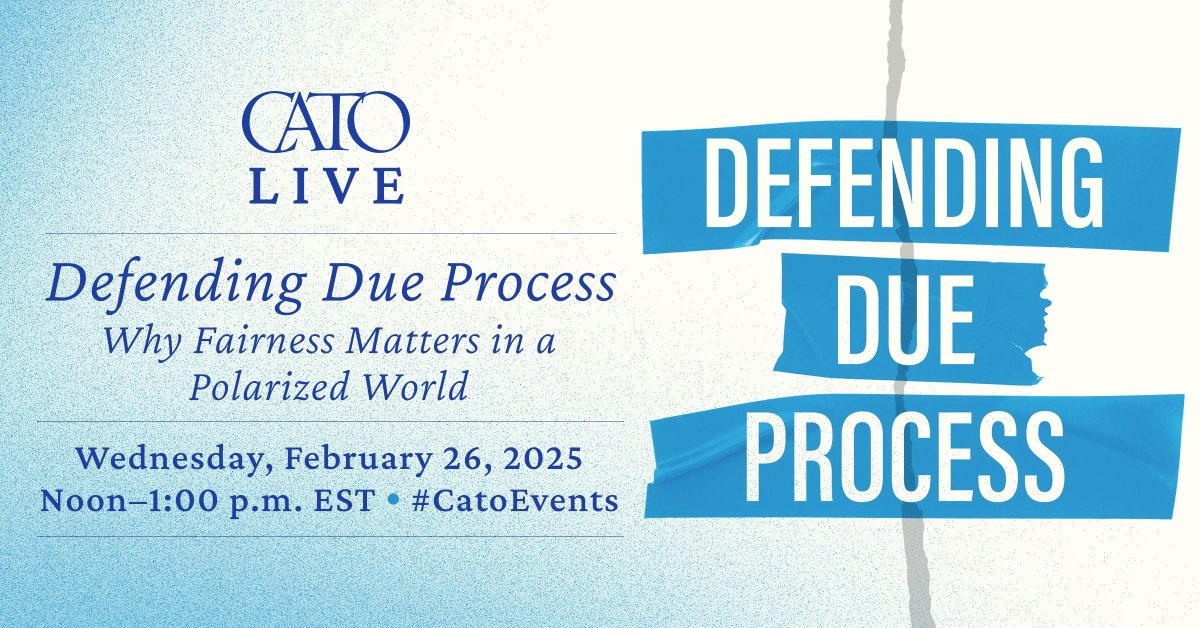
LIVE TODAY AT 12PM ET: “Defending Due Process: Why Fairness Matters in a Polarized World” with @vpreddy and @brandonlgarrett.
WATCH: https://t.co/2SbV4PjIEN
👨⚖️ Due process is the foundation of justice—so why is it under attack?
From AI bias to political pressure, fairness is at risk. But there’s hope.
@brandonlgarrett (author of "Defending Due Process") & @vpreddy will break down today’s threats & how we can fight back.
Details & registration: https://t.co/70vzSnCeVQ
“The potential for mistaken identification, false accusations and racial profiling to result in lengthy detention without any safeguards is deeply troubling.”
Check out my op-Ed with @brandonlgarrett and Kate Evans breaking down some of the many issues with the Laken Riley Act
A new paper, forthcoming later this year and building on my "Defending Due Process" book - comments welcome: Artificial Intelligence and Procedural Due Process @SSRN https://t.co/TutHJ5Nrwj
Another good take emphasizing the due process problem with the Laken Riley Act:
"the key word here is 'accused.' It means detaining or deporting without due process, without letting the criminal justice system adjudicate each case, which is a cornerstone of America." azcentral