What is really happening to the Pacific?
Earthquakes have not been occurring along the Atlantic coast.
However earthquakes have been occurring frequently along the Pacific coast.
Can anyone explain why it is happening.
🇯🇵 Stack Japanese kanji. Watch what happens.
木 = tree
林 = two trees = woods / grove
森 = three trees = dense forest
火 = fire
炎 = two fires = blazing flame
焱 = three fires = raging inferno
口 = mouth
呂 = two mouths = pitch / harmony
品 = three mouths = quality / goods
A new type of broad-acting cancer vaccine has now moved into early human clinical trials.
Unlike most current cancer therapies which are often designed for a specific tumour type or even customised for individual patients, this experimental approach aims to work across a wide range of cancers.
The vaccine uses mRNA technology, the same platform used in COVID-19 vaccines. However, instead of training the immune system to recognise one specific cancer marker, it stimulates a much earlier defence mechanism: the innate immune system.
Rather than focusing on tumour-specific proteins, the treatment is designed to prompt the body to produce type I interferons-strong signalling molecules that alert and activate immune defences against abnormal cells, including cancer.
Most cancer vaccines today rely on teaching the immune system to identify unique features on tumours. The challenge is that these features can differ greatly between patients, making many therapies slow and highly personalised.
This newer strategy bypasses that limitation by broadly “priming” immune activity, helping the body respond faster and more aggressively to cancer presence.
In preclinical studies, this immune activation slowed or halted tumour growth in several cancer models, including melanoma, brain tumours, and metastatic bone cancer in the lungs. It also seemed to improve the performance of existing immunotherapies such as checkpoint inhibitors, which keep immune cells active for longer.
Clinical trials in humans are now underway, focusing on patients with aggressive or returning cancers. Researchers are also testing it alongside personalised treatments to evaluate whether the combined approach can generate a stronger and faster anti-cancer response.
If successful, this could represent a major shift in oncology, from highly tailored treatments toward a more universal, ready-to-use cancer vaccine strategy.
Study reference:
“Sensitization of tumours to immunotherapy by boosting early type-I interferon responses enables epitope spreading,” Nature Biomedical Engineering
A new Banksy sculpture has appeared overnight in central London
Installed in Waterloo Place, the sculpture shows a suited man stepping forward from a plinth, his face completely hidden by a large flag
There are over 33,000 Japanese companies with histories of 100 years or more. These long-standing firms are known as 'shinise'. They are governed by a management philosophy that prioritizes long-term continuity and generational succession over short-term profits.
Japan is home to an extraordinary number of long-lived businesses, often referred to as shinise (老舗). Many are small, family-run enterprises that have survived wars, economic upheaval, and technological change by focusing on stewardship rather than expansion.
At the heart of shinise culture is a different idea of success. Instead of maximizing short-term profit, these businesses prioritize generational succession, reputation, and stability. Leadership is often passed down, or even adopted into, families to ensure continuity. In fact, Japan has a long tradition of adult adoption (mukoyōshi), where capable successors are brought into the family to carry the business forward.
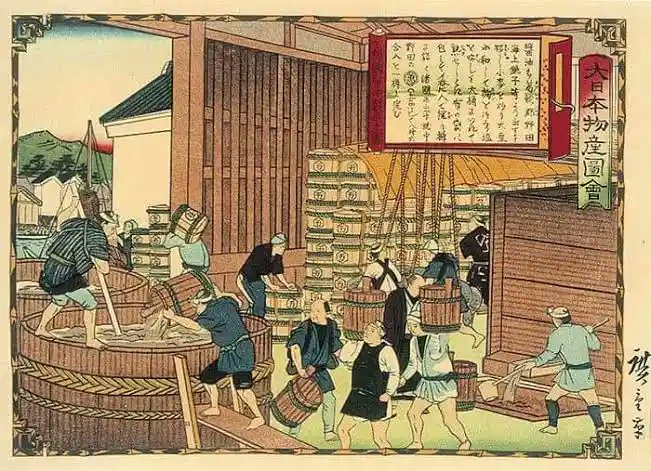
Some companies have operated for centuries. The construction firm Kongō Gumi lasted over 1,400 years before being absorbed in 2006. Others, like traditional inns, tea houses, and sake breweries, have quietly persisted for 200–300 years or more.
This long-view mindset reflects a broader cultural principle: a business is not just an asset to be optimized, but a legacy to be preserved.
Japan accounts for over 40% of the world’s companies older than 100 years, more than any other country by a wide margin.
#drthehistories