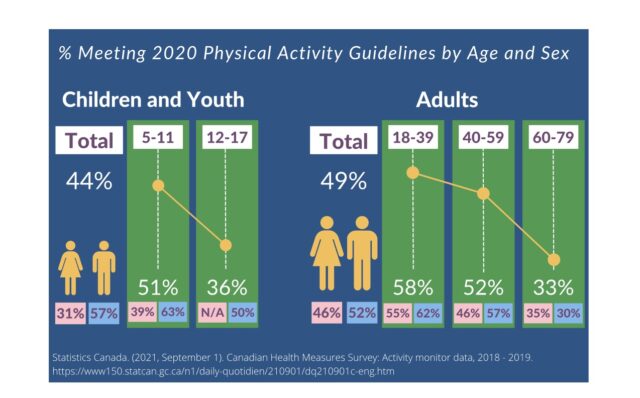
Half (49%) of Canadian adults (18–79 years) and fewer than half (44%) of children and youth (5–17 years) meet national #physicalactivity guidelines for their health.
Via @BJSM_BMJ blog @JaneSThornton, @Chlobobs_
https://t.co/l0axSz45bF
How can we improve the areas of access, availability, & affordability to better support Canadians aging at home? Complete this survey to share your thoughts! https://t.co/Zvfjxm9ZY0
Investing in #PhysicalActivity improves individual and population health, while returning 1.7 EUR in economic benefits for every 1 EUR invested.
New @WHO_Europe@OECD report funded by the #EU shares ideas for policy makers to consider. #BeActive
👇
https://t.co/nXkzy7cwyn
"[T]he number of supportive adult allies in school settings increases self-esteem, grade point averages, reduces absenteeism, and limits marginalization and negative treatment of Alberta’s youth" #education#Alberta https://t.co/D1YC04iURl
In this 🧵, we share what vigilant care means in a play setting.
Dr. Mariana Brussoni encourages parents to act like a lifeguard watching swimmers at the beach when they watch their child at play: the lifeguard doesn’t intervene unless someone is really at risk for harm.
Vancouver-based company matches anyone needing home-based care with caregivers in the neighbourhood. Another option to support older adults in ageing in place. #SeniorsInCanada
Our health is largely shaped by public policy, living conditions, and working conditions. The social determinants of health continue to be inadequately addressed by those in power (gov’t & employers) to ensure health promotion and wellness.
Marie-Philip Poulin (@pou29), "one of the greatest clutch performers this country has ever produced," picked up her 2nd major award, named Canada's top female athlete by @CanadianPress
https://t.co/gKdlYV1Ved
Good stuff: “Natural Is Better”: How the Appeal To Nature Fallacy Derails Public Health https://t.co/8iYfbLEAFx by @sofia_deleniv@danariely@KellyBEworks
This frustrating and science-free trend "is catering to our ever-growing, and irrational, preference for the natural."
Primary care is the front door of the health care system
But for too many people in Canada, that front door is now closed
In my latest commentary @CMAJ, I propose some bold reforms to keep the door wide open 🧵 1/
https://t.co/kzgcvay1eI
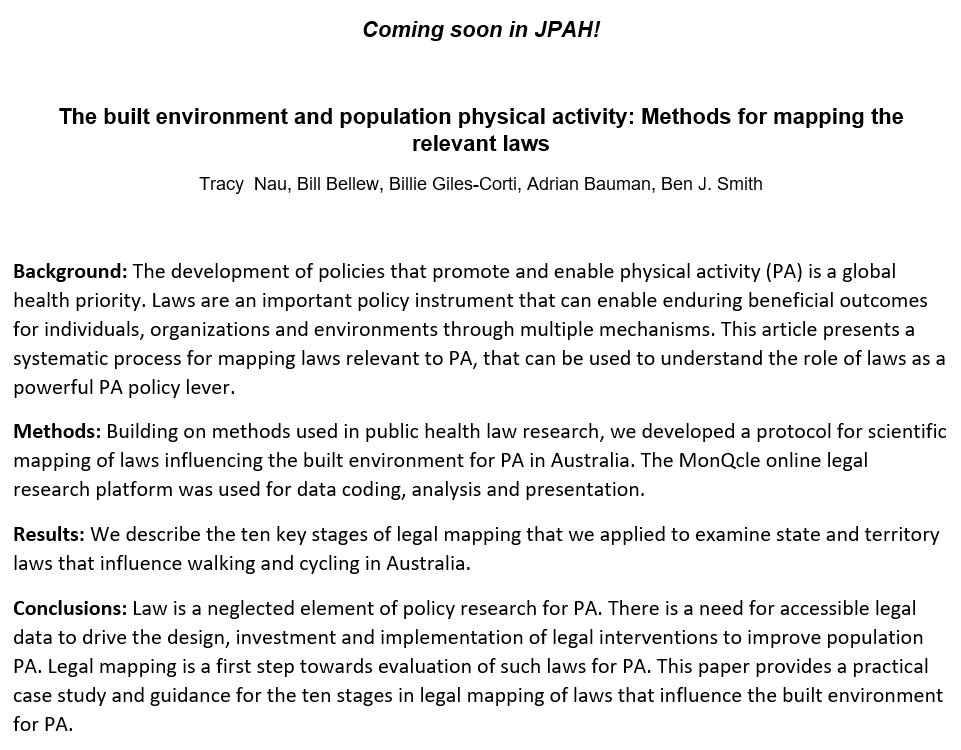
Global policy guidance docs recommend the use of law as an important tool for mandating improvements to built environments. But there is a lack of accessible info about current laws, which is where legal mapping comes in.
✍️@NauTracy@billbellew@billiegc@AdrianBauman Ben Smith
Findings from our Early Movers study showed Movement Guideline adherence in the first 6 months of life was low across all demographic groups. However, healthy movement behaviour patterns enhanced development. See our infographic for more details!
Ageing in the Right Place means enabling healthy ageing in the most appropriate setting based on an older person’s preferences, circumstances and care needs. Our new report identifies four pillars that are fundamental to this. https://t.co/k4SUbX0uig
If you spend even a few minutes on the topic with him, Dr. Lafontaine will remind you that Canada’s current health care problems date back decades and that the solutions have been clear for just as long. https://t.co/BZKCWNFY3o
4 pillars to support older Canadians to age in the right place (home/community!) = promote preventative health, strengthen home care and supports for caregivers, develop more accessible living spaces, & improve social connections to reduce loneliness/isolation. #healthyaging
Today the NIA launches a new research series examining how to enable more older Canadians to age in their own homes and communities for as long as possible. Learn more about Ageing in the Right Place and how we can achieve it in our inaugural report: https://t.co/k4SUbXi59O
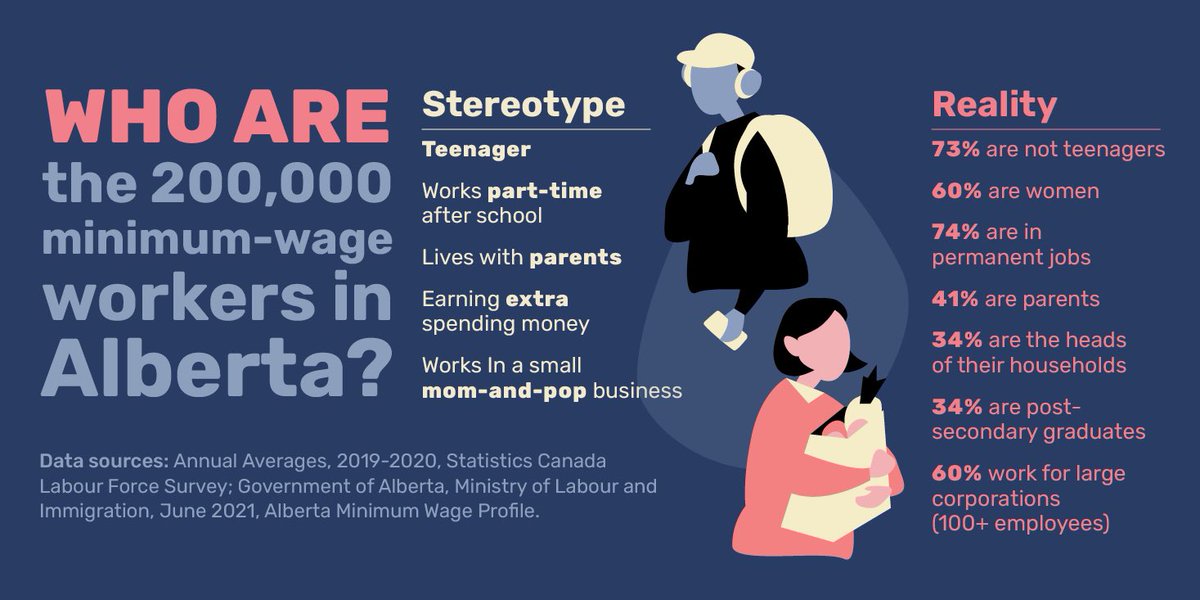
"Minimum-wage hikes don’t hurt our economy. They help ensure more working Albertans are fairly compensated for doing essential jobs that our entire society and economy rely on."
Read more from the @ParklandInst article here: https://t.co/MxYiuJgB7H
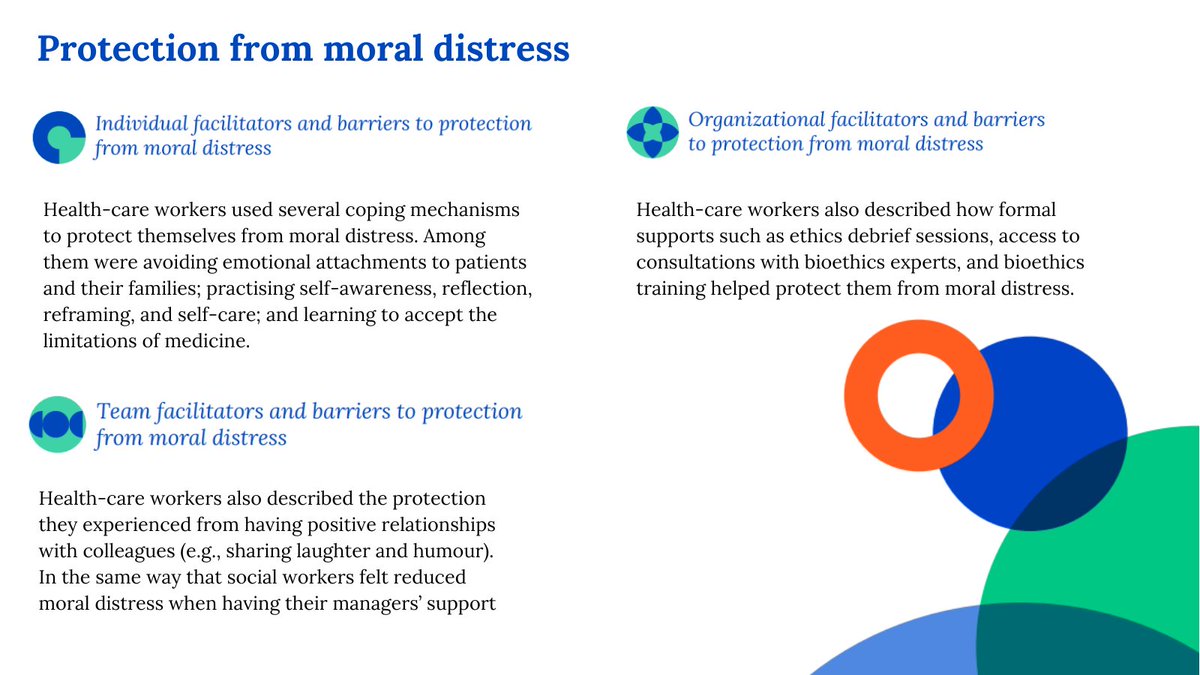
We developed a new report that focuses on 2 psychosocial factors that were recently developed for the health-care sector. It explores facilitators and barriers in addressing those two unique psychosocial factors for health-care workers. Learn more: https://t.co/alJXZgQpAx