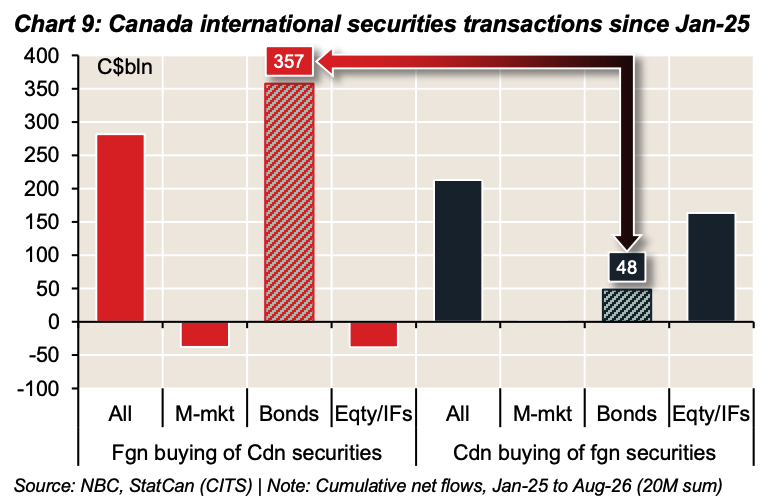
Excellent piece from the @nationalbank team, myth-busting recent Twitter/X narratives surrounding Canada's holdings of US Treasuries: https://t.co/hFPfzp1Fpl
There was no risk discount embedded in the Canadian dollar ahead of yesterday's Alberta separation referendum, leaving nothing to unwind. Firming odds on a rate hike at next week's BoC meeting - now near 90% - are doing the work in lifting the loonie:
The economist job market is up and running! Last year the economics job market was the toughest in recent memory, as JOE listings were down 20%. This was below even Covid levels.
A bit of good news for PhD economists this year in that I am noticing some green shoots in my discussions with employers! And, in the data, we have a bit of good news as well: JOE listings are up 5.5% over this time last year (see below).
Under the hood is where it gets interesting, however:
**Full-time US academic jobs: +14.4%. Liberal arts colleges +16.1%, universities with graduate programs +13.8%. The segment that took the biggest hit last year is leading the recovery.
**Full-time academic jobs outside the US: -12%. The rebound so far seems to be a domestic story.
**Nonacademic jobs: +7.5% overall. Yet, this hides a ton of heterogeneity. Consulting/research +21.6%, Banking/finance/industry -25%, US federal government: -44.4%. A side note is that for my entire career, the federal agencies were a stabilizer of this market, the last few years we have seen this buffer disappear.
At this point, a candidate might ask: how should I respond to all this news? Considering the data and my chats with people around several markets, I would still turn to the science. Back when I was on the market it was difficult too (at least for me…I had 1 interview from 150 applications!). The next year we studied the search market (paper downloadable here: https://t.co/nznykWXa0b).
We compared a boom market to a bust market through the lens of optimal search across multiple markets. Candidates adjust on two margins: which markets they enter, and how many applications they send into each. In busts, we found graduates of elite programs broadened their search down the academic ladder, graduates of lower-ranked programs shifted toward the business sector, and employers everywhere raised their hiring standards.
So far the data in 2026-27 is neither a boom nor the bust in our paper, it is both at once. Today academia is loosening while government has effectively closed and finance has tightened. Even with those changes, my advice is no different than it was back then: adjust both margins. This means that you should re-enter markets you may have written off. This is because the academic window is wider than many feared, especially at liberal arts colleges. In addition, perhaps redirect applications from DC toward consulting.
In the end, the deepest lesson for me remains: there is no “the market,” we live in the world of “many markets.” Treat this like a portfolio problem, and thus the key question of the day is “how are YOUR markets doing?”
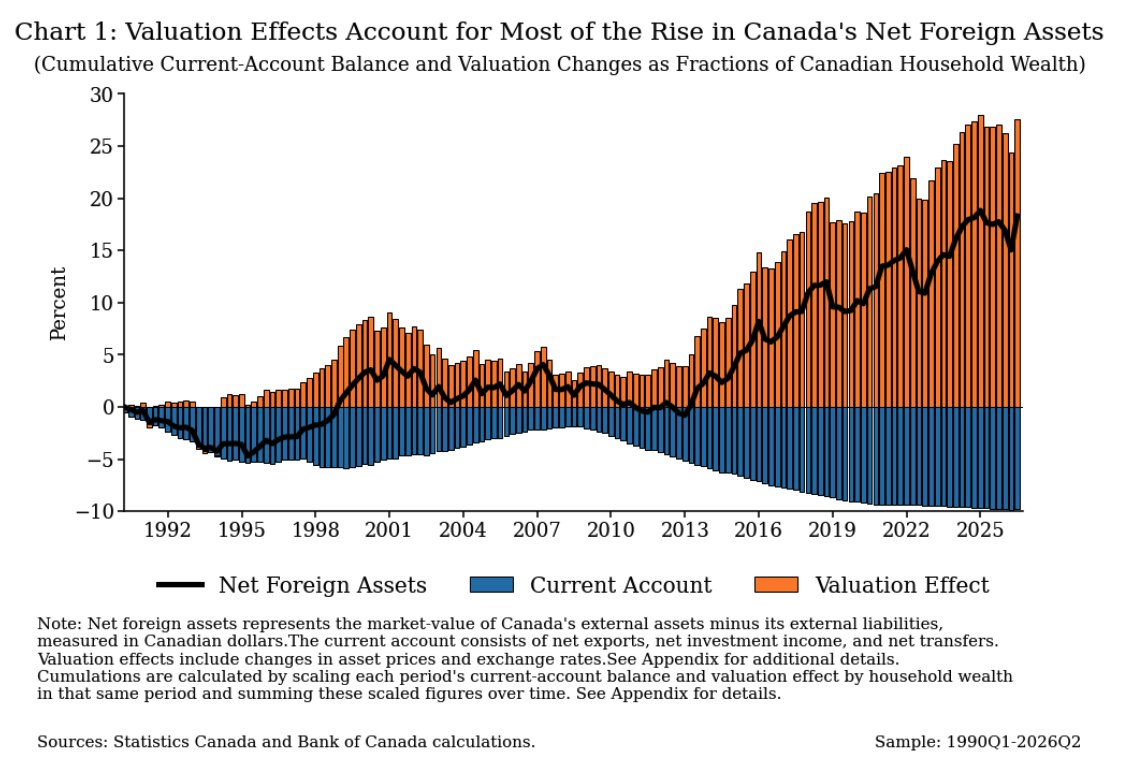
Fun* paper from the BoC: Canada has been running a more polite version of the “exorbitant privilege” in recent decades, running persistent current account deficits while also growing its net asset position through asset price appreciation and FX. One wonders how long this bet on US exceptionalism can last: https://t.co/BRPuNzggUx
A moment to celebrate! Members of the Columbia community gathered to honor Professor Michael Woodford after he received the @NobelPrize in Economic Sciences earlier today, including President Jennifer L. Mnookin, Provost Angela Olinto, Executive Vice President of Arts and Sciences Amy Hungerford, and Nobel laureates Joseph Stiglitz and Martin Chalfie. Congratulations, Professor Woodford!
📹 Columbia University
"Perhaps the survey’s single most telling result is the collapse of support for tariffs among blue-collar workers — the policy’s intended beneficiaries." 👀 https://t.co/4HtivHx7hx
BREAKING NEWS
The Royal Swedish Academy of Sciences has decided to award the 2026 Sveriges Riksbank Prize in Economic Sciences in Memory of Alfred Nobel to Robert E. Hall and Michael Woodford “for microeconomic foundations of macroeconomic stabilisation.”
#NobelPrize
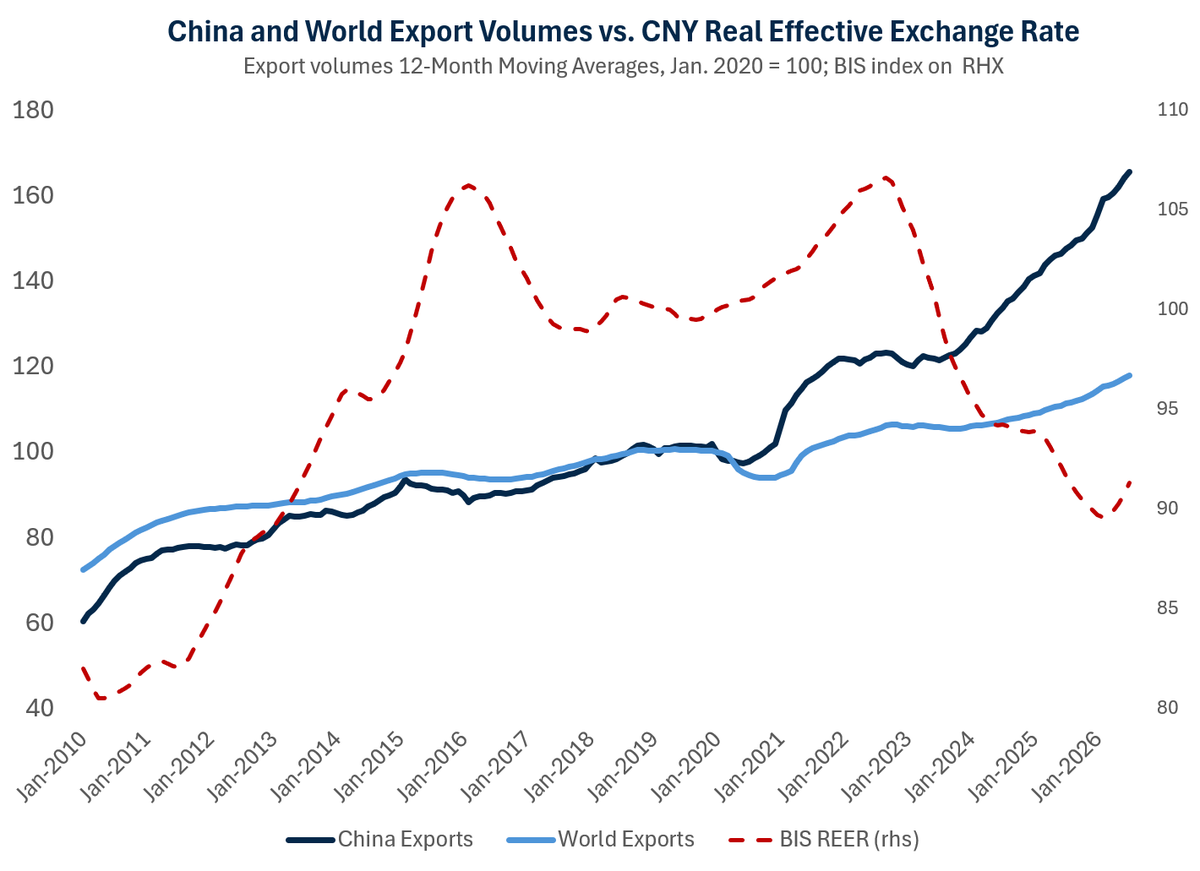
A chart that says more than a thousand words
The acceleration in China's export volume growth clearly followed the RMB's depreciation.
Sometimes international economics is simple (even if the PBOC and a few others want to fuzz it up)
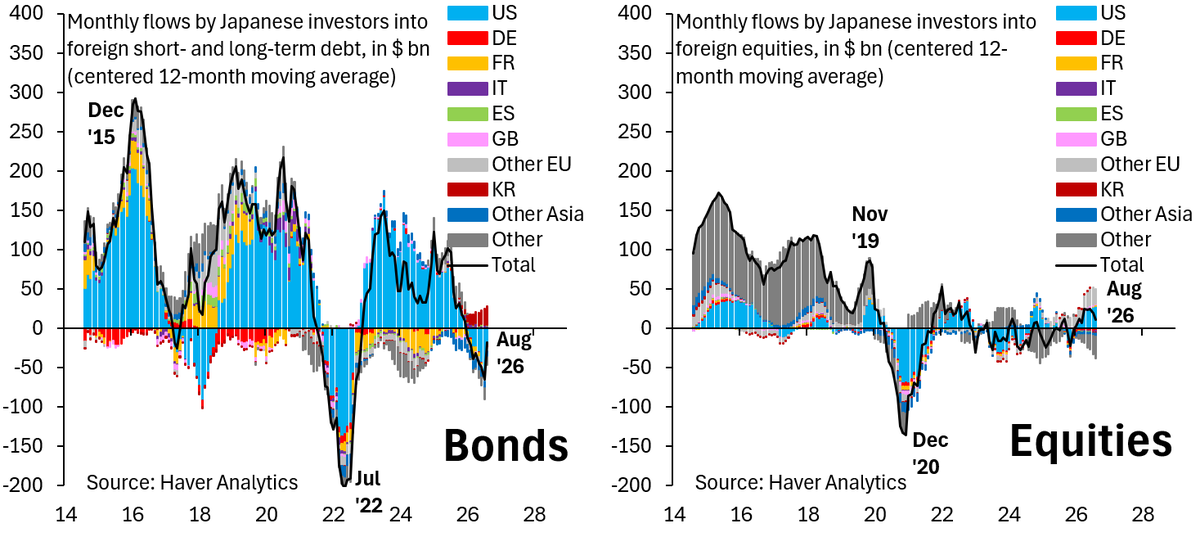
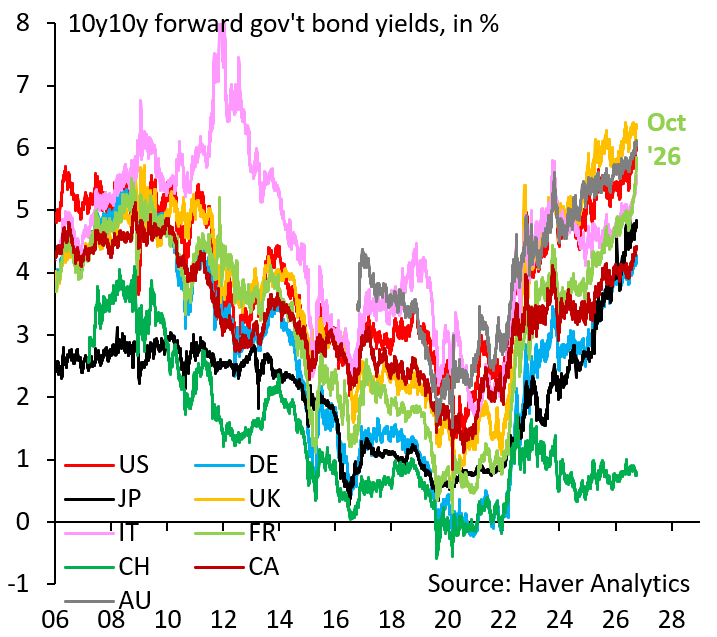
I did yesterday's live stream on bond market flows, i.e. who's buying and selling. There's a lot of chatter that Japanese investors have been dumping French debt, but there's no sign of that in data through August when the spike in yields got started...
https://t.co/8L4CwBh4Uy
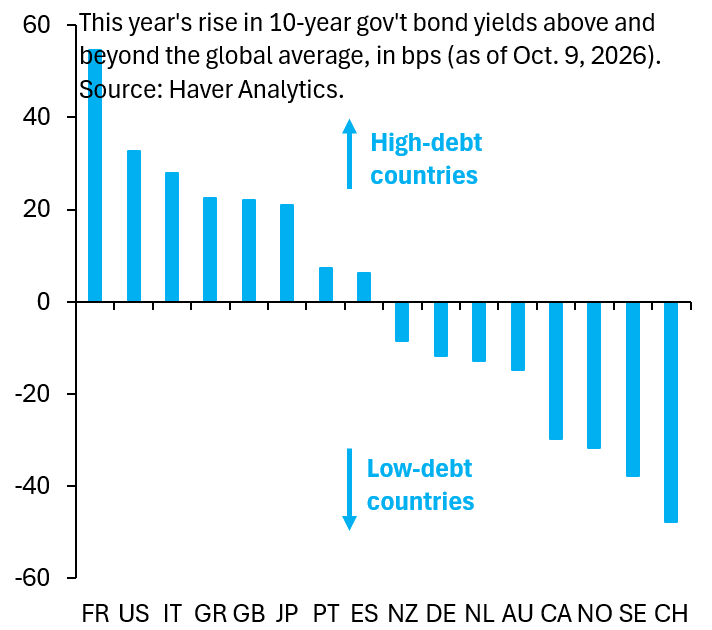
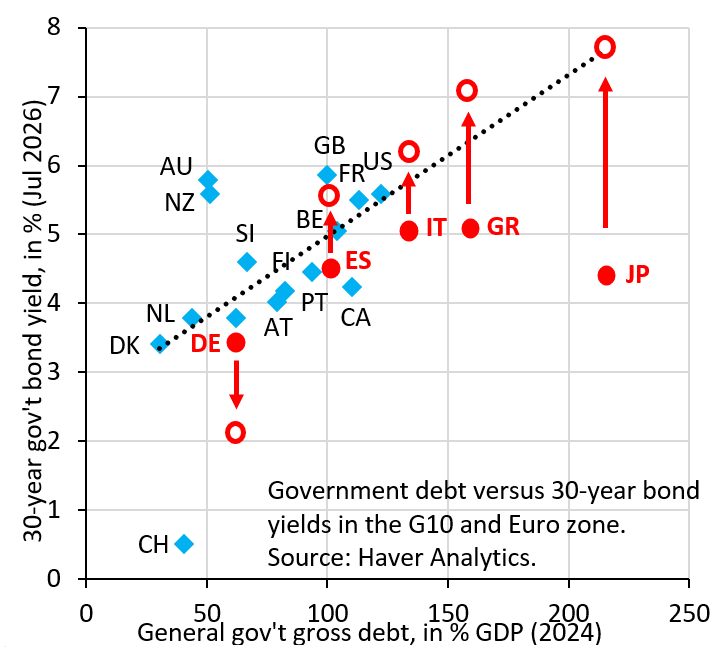
If the ECB ends up intervening to cap yields - which of course it will - it has to explain what exactly the market dysfunction is that it's fixing. So far, high-debt countries have been hit hardest. That's not dysfunction. That's totally rational...
https://t.co/baRf64PJ1i
I did this morning's live stream on how the US funds the current account and budget deficits. The US certainly has issues, but it's still the cleanest shirt in the closet. That's why this week, as the Euro zone blows up, Treasuries got safe haven inflows.
https://t.co/SoEBG4VZXd
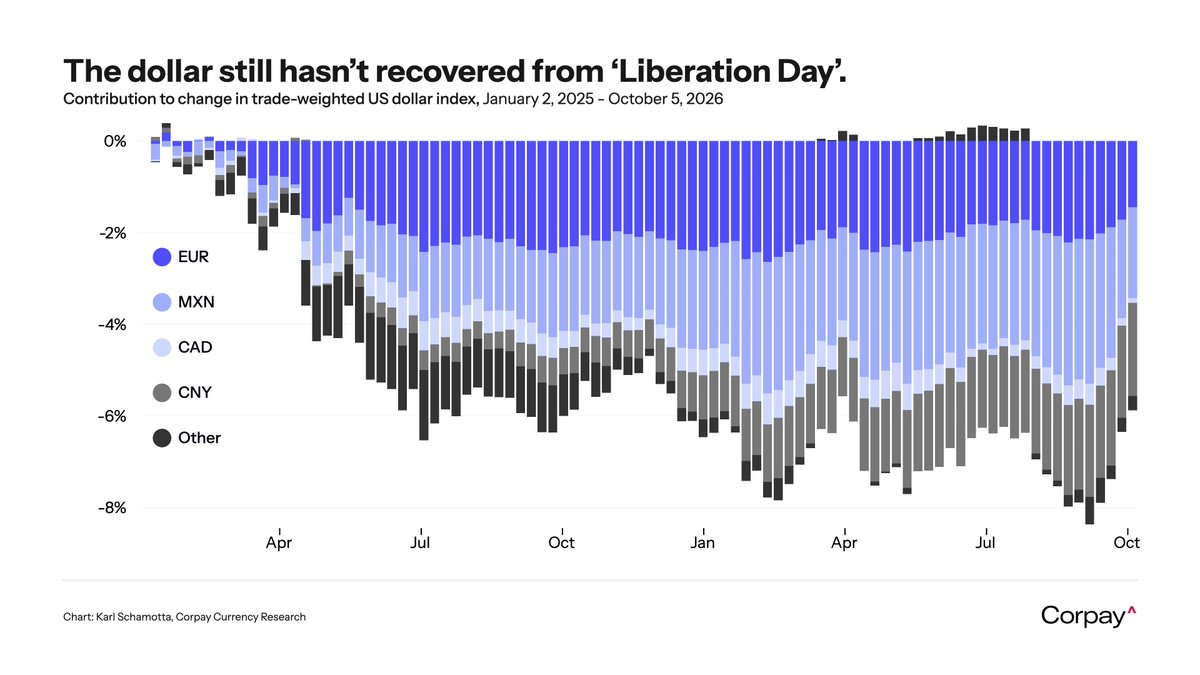
Much gets made of low foreign demand for Treasuries, but foreign demand is always low when the Dollar is strong, which it is since the war with Iran began. Foreign central banks are intervening to support their currencies, so they're selling Treasuries...
https://t.co/jF6KxmmGXl
I wrote about shadow yields - what yields would be without constant central bank interference - in this post from July. Euro zone yields for high debt countries would be much higher without ECB yield caps. What we're now seeing is vindication of that...
https://t.co/AfcZwpvwHb
Canada has recently made significant steps in diversifying its global economic relations. I joined @ppforumca's WONK podcast with @GitaneDeSilva and host @michaelserapio to discuss global interest in Canada and how it can lead to investment and growth that serves Canadians. https://t.co/CkffPWX3TD
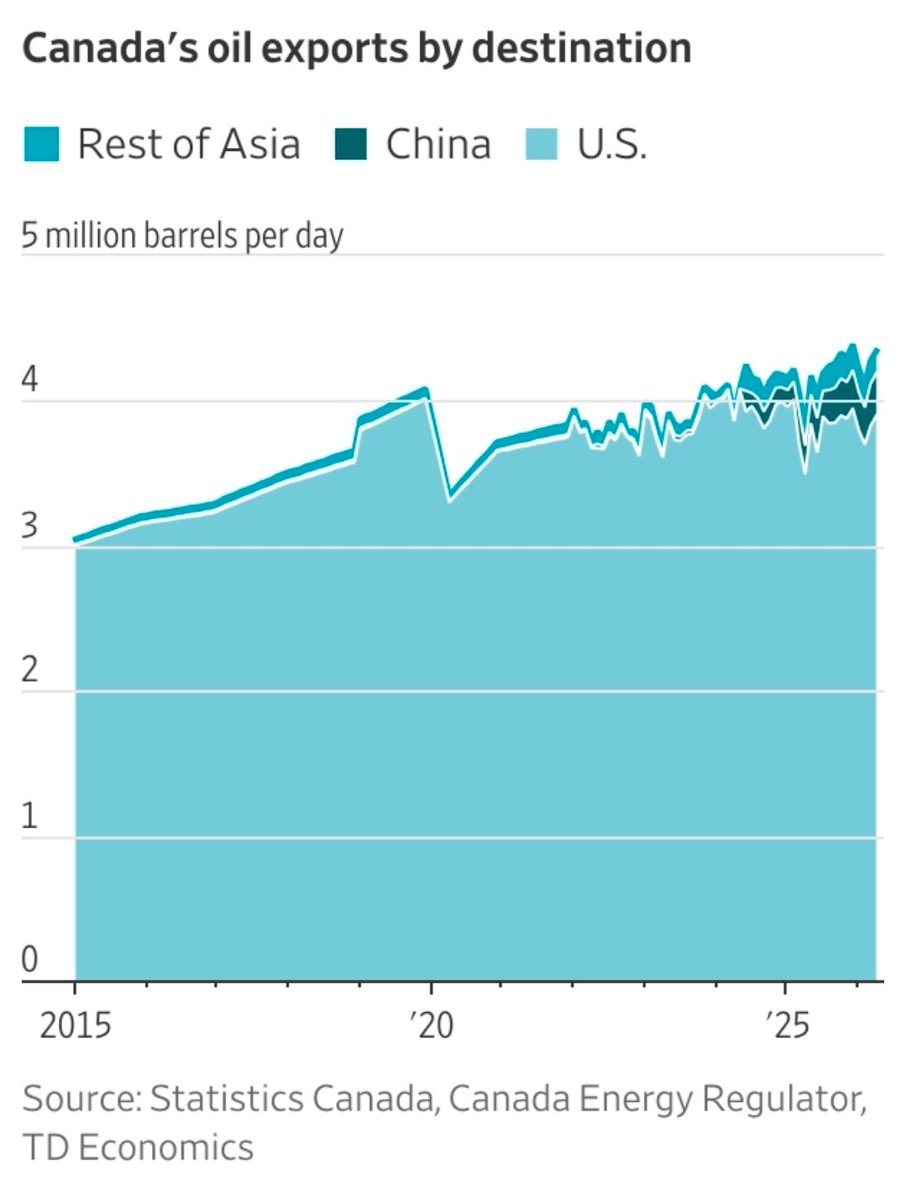
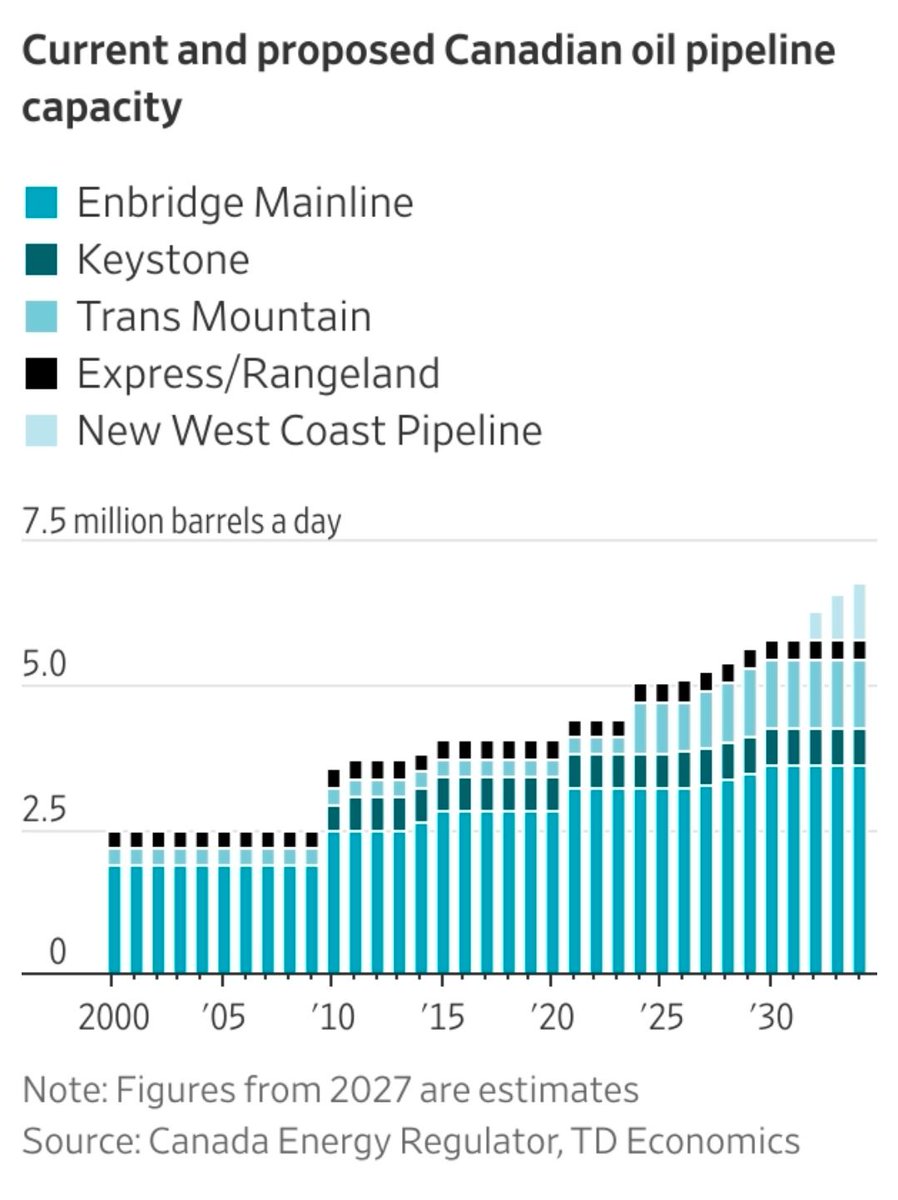
"U.S. Pressure Is Awakening an Energy Giant in Canada" https://t.co/gFiKK6WUaI
"President Trump’s trade war and the Iran conflict have ignited Canada’s ambition to diversify its energy exports."