Professor, Wake Forest University School of Medicine. Focus: Cell Fate Mechanisms, Genetic Toolsets, Tumor Models, and Neural Protection. Opinions are my own.
Link to our recent Cell paper: "Rapid Generation of Somatic Mouse Mosaics with Locus-Specific, Stably Integrated Transgenic Elements"
https://t.co/WweowAbfWg
Excited to share our discovery of a convergent mechanism for cognitive restoration and seizure suppression in neurodevelopment disorders published on this day of a total solar eclipse, August 12, 2026 (“Procognitive restoration of PV neuron plasticity in neurodevelopmental disorders”, Open Access in Nature https://t.co/071ahaaoI1). This work was spearheaded by two amazing neuroscientists, Yu-Tzu Shih PhD (Assistant Professor, TBA) and @Jason_Alipio, + other major contributors from the Sahay lab: @al0k_91 (in vivo physiology), Nathaniel Green (ensemble tagging) and terrific collaborators, @DullaChris and Zin-Juan Klaft PhD (Tufts, ECoG recordings), @omarahmedlab (University of Michigan, SWR analysis), @Hyun_neuron_10Jung(DGIST, reagents).
Background and the Challenge
Cognitive impairment and seizures are hallmarks of neurodevelopmental disorders or NDDs and represent a large clinical unmet need. Significant advances in the genetics of neurodevelopmental disorders have identified high confidence risk genes for autism spectrum disorder (many of which define rare diseases, https://t.co/UAIuXvwVhC), bipolar disorder, schizophrenia and epilepsy. Additionally, these sequencing efforts have revealed shared genetic architectures underlying these NDDs. Two major challenges emerge from these findings. First, defining circuit-based instantiations of shared genetic architectures as they relate to cognition and regulation of network excitability. Second, identifying convergent circuit mechanisms that may be reinstated for cognitive restoration and seizure suppression in NDDs.
The discovery
Impaired experience-dependent refinement of inhibitory circuits during the early postnatal period is thought to contribute to NDDs. Parvalbumin inhibitory neurons (PV INs) dynamically change their intrinsic excitability, input-output connectivity, synaptic physiology and synaptic plasticity in response to experience (referred to here as “Experience-dependent parvalbumin inhibitory neuron plasticity”)to precisely control neuronal spiking, neuronal ensembles, network oscillations and network excitability. Our knowledge of regulators of experience-dependent parvalbumin inhibitory neuron plasticity in the hippocampus is scant.
In a first of its kind input-specific translatome screen designed to identify regulators of experience-dependent parvalbumin inhibitory neuron plasticity or XPGs in the adult hippocampus (region CA3/CA2) of mice, we discovered a large suite of ultra-high confidence risk genes for ASD, bipolar disorder, schizophrenia and epilepsy as candidate XPGs. Many of these candidate XPGs encode for transcription factors and chromatin regulators whose functions in PV INs are not known. The expression of these XPGs is negligibly low but is upregulated by experience. Understanding how XPGs in the hippocampus control PV IN properties, feed-forward inhibition, and synaptic plasticity will generate insights into formation and storage of spatial and social memories, as well as hippocampal communication with different brain regions to calibrate many different behaviors including social behavior.
We show in proof-of-concept studies that selectively expressing one candidate XPG, the transcription factor Meis2, in PV INs of hippocampal subregion CA3/CA2 in a widely used NDD risk mouse model is sufficient to re-instate experience-dependent parvalbumin inhibitory neuron plasticity and reverse developmental deficits in feed-forward inhibition, synaptic plasticity (iLTD), neuronal ensembles, sharp wave-ripples, spatial and social cognition. Boosting Meis2 expression in PV INs also suppressed seizures. MEIS2 regulates a module of genes encoding for chromatin regulators, synaptic proteins, synaptic adhesion molecules, cytoskeletal proteins, ion channels, and axon guidance factors that together define a distinct PV inhibitory neuron cell state.
Is your favorite gene a candidate XPG? Check out our XPG NDD portal: XPG site: https://t.co/XAvGm0slAk)
Impact and next steps
This study builds on our prior work and suggests that PV INs transition through distinct cell states in response to experience to expand the capacity for cognitive operations. Ongoing efforts are aimed at linking cell states with emergent network states. Deciphering the XPG code within PV INs will inform how PV INs toggle between different modes of inhibition (blanket vs. sculpted) of principal cells to dictate neuronal spiking, ensembles and sharp wave-ripples. Since the principal cell-PV IN-principal cell feed-forward inhibition motif is found in circuits supporting memory, sensory processing, cognitive flexibility, decision making and attention, targeting experience-dependent PV IN plasticity may impact different domains of cognition in NDDs and memory loss in aging and AD.
The development of new therapeutics for NDDs is critically dependent on a deep understanding of mechanisms by which risk genes impair cognition and cause seizures. Our prior and ongoing studies in the hippocampus and work by others in sensory cortices suggest that PV IN hypofunction and impaired feed-forward inhibition are hallmarks of ASD and other NDDs. Our discovery creates a pathway for mechanism-to-therapeutic intervention using gene therapy for individuals who harbor loss of function mutations in XPGs, many of which define rare diseases, and who exhibit seizures and intellectual disability. We hope that our ongoing AI+Bio efforts to engage XPGs using different therapeutic modalities will ultimately enable us design, engineer and harness PV IN cell states for cognitive restoration in brain disorders. Stay tuned.
In our newest study from @HippenmeyerLab@ISTAustria we quantitatively assessed emergence and development of cortical projection neuron lineages in self-organizing organoid system side-by-side in vivo cerebral cortex development.
https://t.co/GaTZdSW4l4
Our new Future Leader, Dr. @antoniocafufa, is studying the immunopeptidome - tiny proteins that can activate the immune system - to develop better treatments for high-grade brain tumours. His work aims to create personalised immunotherapies for patients. https://t.co/JOpEHnmyzz
Preprint alert! How do brainstem neuromodulatory circuits influence the pathophysiology of H3K27M+ diffuse midline #gliomas#DIPG/#DMG? New #CancerNeuroscience work led by exceptional postdoctoral fellow @RDrexler_
https://t.co/ZKleyWzExy
Truely hornored to be part of this collaboration! very grateful for the continuous support from the amazing @michelle_monje@GutmannLab and our wonderful team! Thanks to the hard work from @BelginYalcin_ Jared, and James, and all co-authors! We made it 💪
Neurofibromatosis (#NF1) is a neurogenetic syndrome associated with learning impairments and a predisposition for glial tumors. We find that NF1 mutation causes an intrinsic deficit in oligodendrocyte precursor cell (OPC) differentiation. A thread 🧵 1/
https://t.co/kJP9eNAKpF
🥳Excited to share our new paper in its final form: https://t.co/9C3kfBt8Fj. If your research would benefit from intersectional tools (a way to target cells based on multiple features), then ConVERGD might be of interest. Doesn't need to be 🧠-related!
Just finished teaching another semester of genomic #datavisualization 🥳
Discover the awesome #dataviz made by students in the class for various #singlecell#spatialtranscriptomics data
Check out the course notes + #Rstats code to explore for yourself: https://t.co/eikhx46fOb
We're excited to share our latest paper on @sarcoma microenvironment, published in @NatureComms! A huge congratulations to @marina_broz for her outstanding work, and thanks to all our collaborators, especially to @doldivizio for the moral support. https://t.co/XqiaK29P0f.
Today is my birthday and also 14 yrs since brain surgery, 33 rounds of radiation plus 4 cycles of high-dose alkylating chemotherapy. It hasn't been easy, but I don't regret the person I've become as a result of what I went through. So deeply grateful. Sending love & light to all!
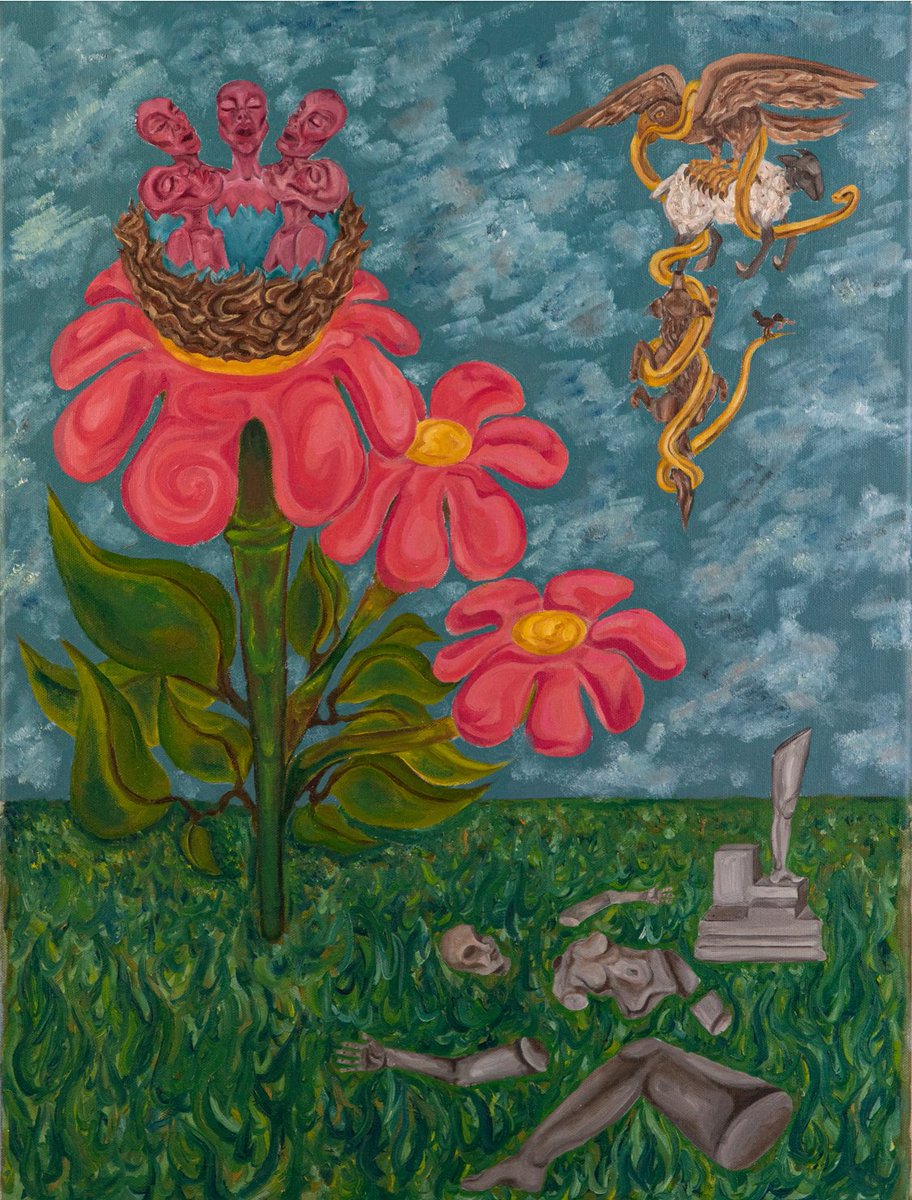
My daughter just launched her portfolio website! She dreams abt sharing her creations with the world. Each piece tells a story, capturing moments of beauty, resilience, and imagination
Check it out here: https://t.co/Q7NViyF4J2
Could we make her day with some retweets? #SupportArt #YoungArtist #EmergingArtist
Loving how the CRIMSON-CAAX (https://t.co/fQoqQ1kMK4) plasmid looks in my in vitro neurons. Beautiful (and mostly in focus) dendritic spines imaged over a few hours for #FluorescenceFriday
Thrilled to start off the new year with a new lab publication, titled: "Human Cerebellar Organoids with Functional Purkinje Cells", led by the exceptionally talented PhD candidate @AlexanderAtami1 @CellStemCell https://t.co/MdHBx5SBf0 🧵 1/11
Excited to share ehrapy, our data & software framework for exploratory electronic health record (EHR) analysis. Led by @LukasHeumos and inspired by scanpy, we enable vendor-independent exploratory end-to-end analysis of EHR data. https://t.co/nKKEpe2sly
https://t.co/CJRIsM8jzi
From Sean Biagiotti and Samara Santiago in my lab, and a wonderful collaboration with @marcosanascim in the Alvarez-Buylla lab: We are excited to share our discovery of a stream of interneurons that migrate into the human entorhinal cortex in toddlers. https://t.co/MTblsDIyqD
Check out this new exciting discovery from @HippenmeyerLab@ISTAustria by @GiselleTYCheung@pauler_m and co-authors. They established MADM-CloneSeq which enables in vivo tracing of cell lineage and determination of cell-type identity while preserving full spatial information.