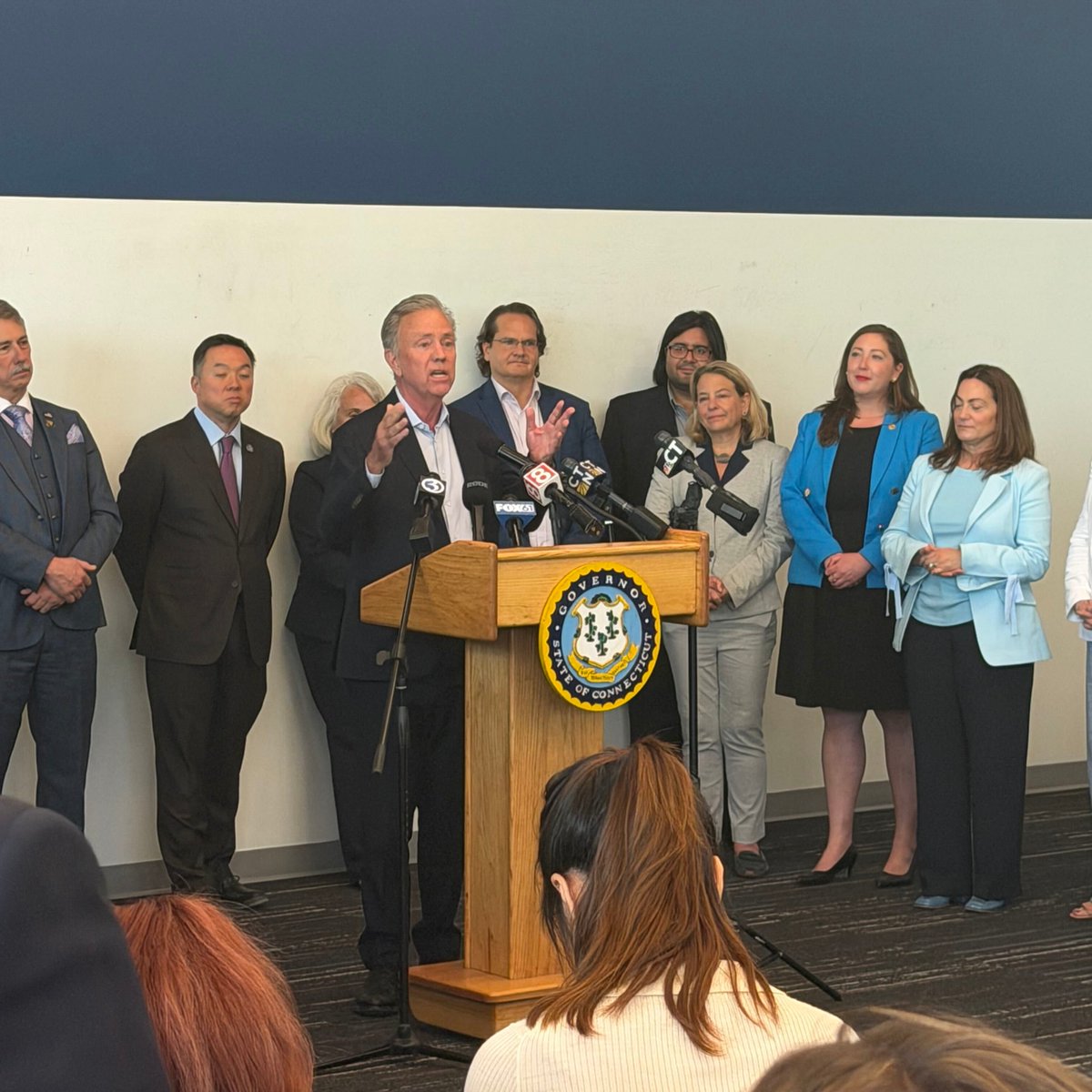
Today, Gov. Lamont signed SB 5 into law, officially establishing a voluntary pilot program for Independent Verification Organizations (IVOs).
The government sets safety outcomes. Independent experts verify whether AI products meet them.
Companies that voluntarily participate earn a trusted signal in the market, building consumer confidence while supporting innovation.
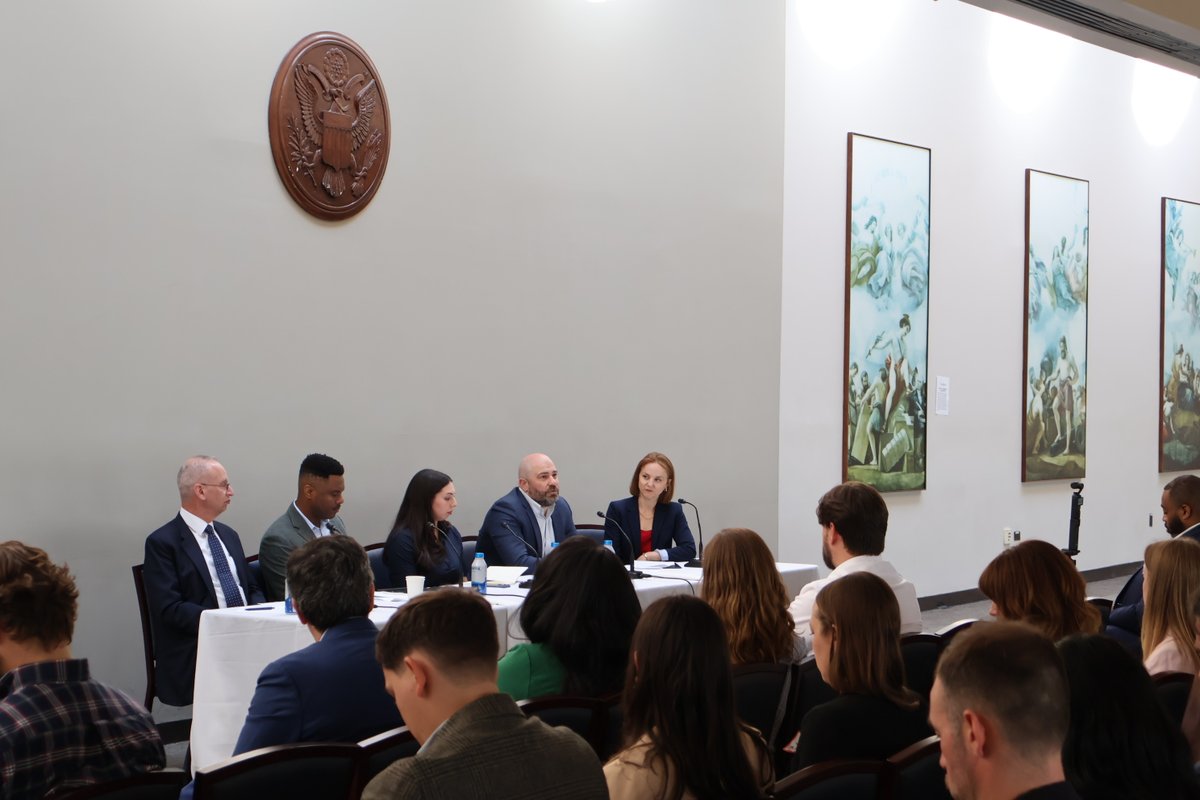
Yesterday on the Hill, @Fathom_org convened a Congressional Briefing: "Where AI Goes from Here: The Deployers Shaping the Future of the American Economy."
🧵
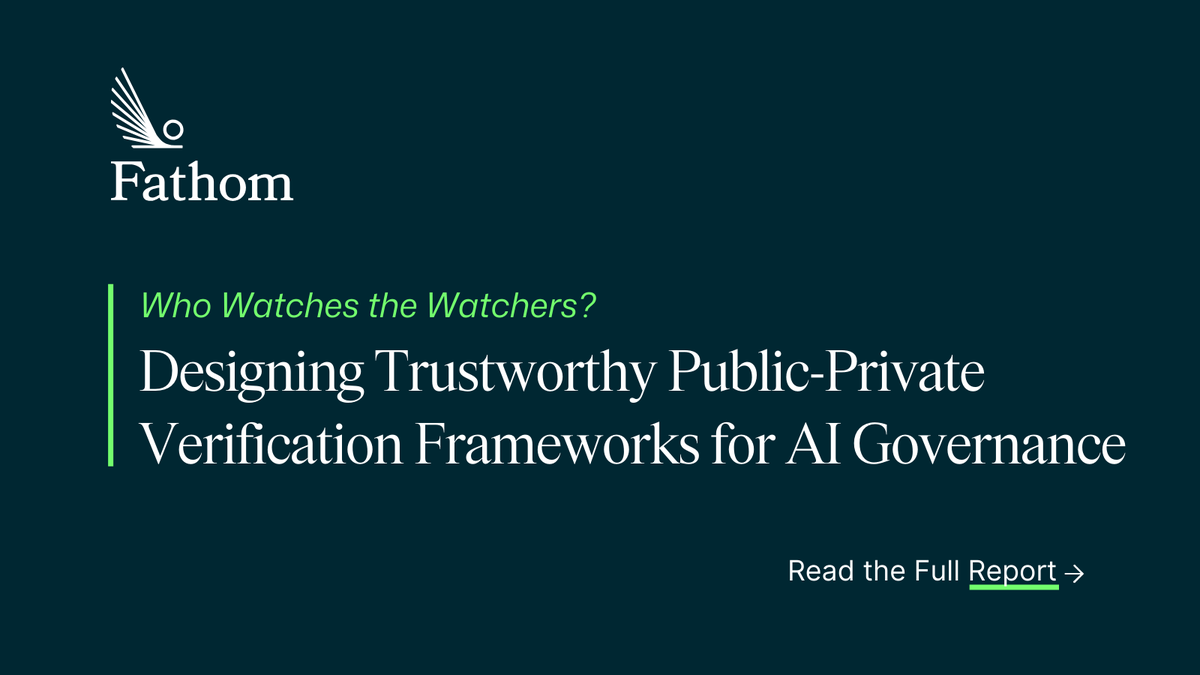
New @Fathom_org report: “Who Watches the Watchers”
How do we build a governance infrastructure for AI that actually works, that keeps pace with the technology, produces meaningful safety outcomes, and scales beyond what governments can do alone?
We brought that question to a full-day workshop at the International Association for Safe and Ethical AI (@IASEAIorg) conference in Paris.
🧵
Every AI lab watching this now understands the implicit message: comply fully, or be made an example of. This the most consequential relationships of our generation. Today's decision makes it dramatically harder to get that relationship right.
We at Fathom are deeply troubled by reports that the federal government is designating Anthropic a "supply chain risk" for refusing to renegotiate contract terms that prohibit the use of its technology in autonomous weapons systems or the surveillance of Americans.
Think about the power Hegseth is asserting here. He is claiming that the DoD can force all contractors to stop doing business of any kind with arbitrary other companies.
In other words, every operating system vendor, every manufacturer of hardware, every hyperscaler, every type of firm the DoD contracts with—all their services and products can be denied to any economic actor at will by the Secretary of War.
This is obviously a psychotic power grab. It is almost surely illegal, but the message it sends is that the United States Government is a completely unreliable partner for any kind of business. The damage done to our business environment is profound. No amount of deregulatory vibes sent by this administration matters compared to this arson.
The costs to Anthropic will be significant. But the deeper damage is not to any single firm. It is to the broader ecosystem of trust that must exist if frontier AI and democratic governance are going to coexist responsibly.
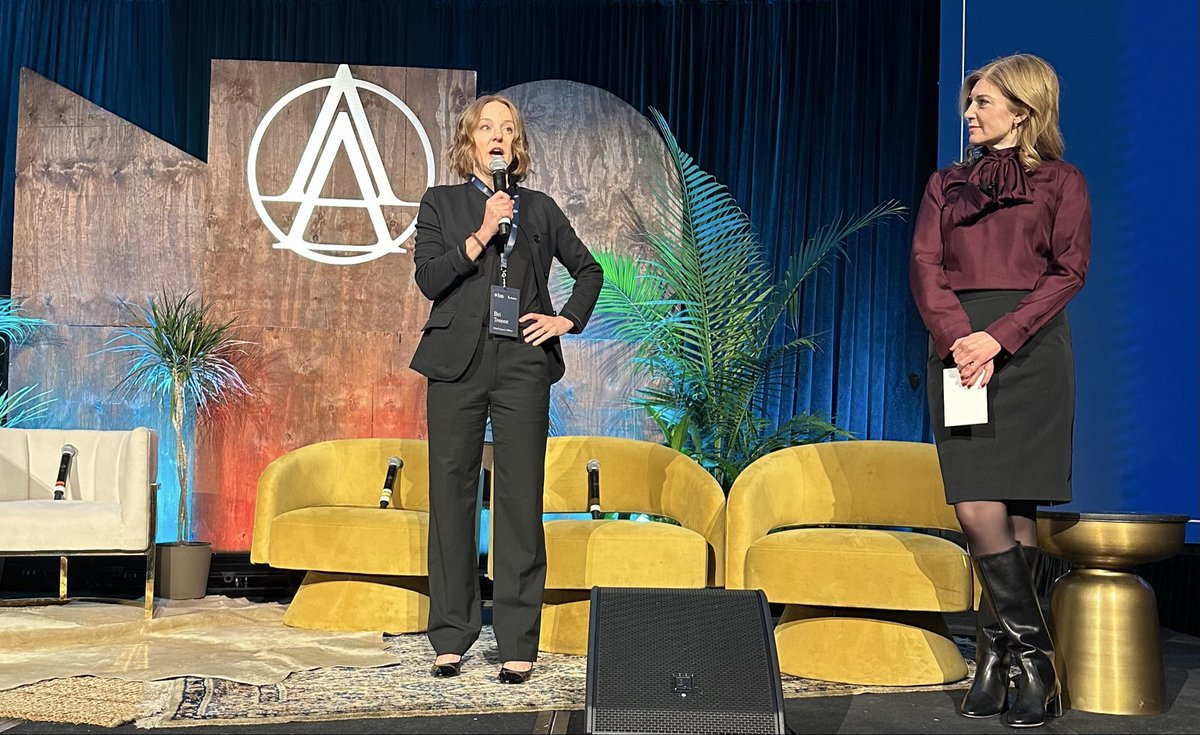
Final day. @BriTreece21 takes the stage to kick off Day 3 of The Ashby Workshops 2026 presented by @Fathom_org.
The question: Which societal-level challenges raised by AI will require our greatest collective action to solve?
One final push to turn conversations into action.
Worth reading. From Davos, @AndrewFATHOM maps the gap between AI certainty on the surface and uncertainty in the rooms where decisions get made, including for workers and communities. Governance is how we close it.
We just published our vision for the AI Century.
At @Fathom_org, we’ve been asking the same questions many of you have:
➡️ What kind of future are we building?
➡️ What type of world will our children inherit?
➡️ Are we doing enough?
➡️ Can we even do anything at all?
This essay is our answer, grounded in historical precedent, economic data, and a clear-eyed view of what’s coming.
AI is unlike any technological revolution that came before, and it's moving faster than any transition in history.
But here's what history also teaches us: we've been here before. Every industrial revolution brought dislocation, unrest, and uncertainty – until we rebuilt the social contract and reestablished an equilibrium. Labor protections. Social insurance. Public education. None of it was inevitable. People built it.
That's what Fathom is for. We're developing the policies, institutions, and frameworks to make this transition work for everyone. The window for action is open. We intend to seize it.
AI’s failures around teen self-harm demand better oversight.
Our latest blog explores how Independent Verification Organizations (IVOs) could help prevent tragedies and create a safer, better future with AI.
Read the full explainer here 👇
#AI#AIGovernance#Safety
Our co-founder and Chief Strategy Officer @AndrewFATHOM on America's AI Action Plan:
"The Action Plan’s call to build an AI evaluation ecosystem is critical for increasing public trust and adoption of AI."
Full statement below.
1/ 🔥 AI agents are reaching a breakthrough moment in cybersecurity.
In our latest work:
🔓 CyberGym: AI agents discovered 15 zero-days in major open-source projects
💰 BountyBench: AI agents solved real-world bug bounty tasks worth tens of thousands of dollars
🤖 Autonomously.
A pivotal shift is underway — AI agents can now autonomously do what only elite human hackers could before.
I view SB 813 as a step forward—particularly in fostering innovation in AI safety through the creation of independent multi-stakeholder regulatory organizations (MROs). It would also set in motion crucial work to establish the legal infrastructure and adaptive standards needed to keep pace with the rapid evolution of AI. However, to build on this momentum, I believe certain changes are essential, including:
1⃣Set up robust safeguards to ensure that MROs remain truly independent from market pressures, along with the possibility of public comments on the methodology proposed and published by each MRO.
2⃣Develop clear liability insurance requirements for developers who opt out of the certification process, along with reporting and transparency requirements to enable effective liability lawsuits if needed.
3⃣Affirm that AI developers can be held liable if their systems cause catastrophic harm that could have been plausibly anticipated and thus could have been prevented.
4⃣Restrict the protection from liability so that it is not a total and blanket protection but only covers ordinary negligence, not gross negligence, to keep an incentive for AI developers to improve their safety methodology.
5⃣Find ways to ensure state oversight of standards proposed by each MRO, including the creation of an independent expert panel to review their plans, public comments and set outcome-based safety principles and targets.