Another 9-11 and another great showing by our kids. We are so proud of what they chose to do and always want to emphasize that this is 100% student organized and student run.
Joseph of Arimathea pulled a corpse off a cross with his bare hands.
Blood under his fingernails. The weight of a dead man sagging into his arms.
He wrapped God in linen, pressed the fabric into wounds that were still wet.
Nicodemus brought seventy-five pounds of burial spice. A king's funeral for a man the world just murdered.
They carried Him into a hole in the rock and rolled the stone shut.
And everything you've ever done went in with Him.
Every night you can't sleep because of what you did. Every morning, you can't look in the mirror. The thing you did to her. The thing you did to them. The
lie you've been carrying so long it feels like bone.
The version of you that drinks alone and pretends tomorrow will be different.
That man was buried with Christ.
Stone sealed. Done.
Not managed. Not in therapy. Not on a payment plan with God where you slowly earn your way back. Buried. In a tomb. Under rock. Gone.
Three days of silence. Three days of a cold body in the dark.
Then the stone moved.
And when He walked out, the grave clothes were folded on the slab. He didn't stumble out tangled in death. He left it sitting there like a man who's done
with the clothes he used to wear.
Lazarus needed someone to unwrap him. Death still clung to him even after he was breathing.
Jesus folded His own burial linen and walked out clean.
That's the difference between religion and resurrection. Religion unwraps you slowly. Asks you to manage your sin. Attend the class. Read the book. Try harder next week.
Resurrection says the man who walked into that tomb is dead. The man who walked out doesn't know him.
You're not fixing the old you. The old you is in a sealed tomb in Jerusalem, and he's not coming back.
The man reading this, the one who thinks he's too far gone, you're not too far. You're already buried. The funeral happened two thousand years
ago.
Now get up. The stone's already moved. The linen's already folded.
Walk out.
I needed to hear this today 💖
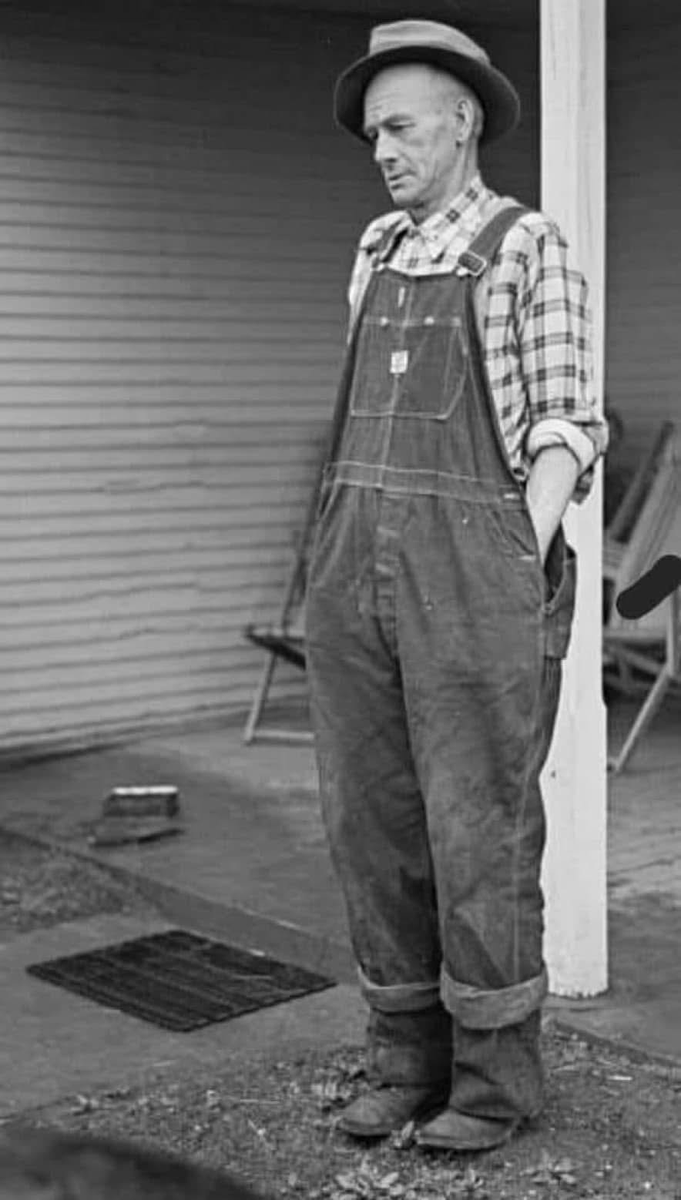
A pastor asked an older farmer, decked out in bib overalls, to say grace for the morning breakfast.
"Lord, I hate buttermilk", the farmer began. The visiting pastor opened one eye to glance at the farmer and wonder where this was going.
The farmer loudly proclaimed, "Lord, I hate lard." Now the pastor was growing concerned.
Without missing a beat, the farmer continued, "And Lord, you know I don't much care for raw white flour". The pastor once again opened an eye to glance around the room and saw that he wasn't the only one to feel uncomfortable.
Then the farmer added, "But Lord, when you mix them all together and bake them, I do love warm fresh biscuits. So Lord, when things come up that we don't like, when life gets hard, when we don't understand what you're saying to us, help us to just relax and wait until you are done mixing.
It will probably be even better than biscuits. Amen."
Within that prayer there is great wisdom for all when it comes to complicated situations like we are experiencing in the world today.
Stay strong, my friends, because our LORD is mixing several things that we don't really care for, but something even better is going to come when HE is done with it.
💝💝💝💝💝💝💝💝💝💝💝
General Washington really was chosen to lead our nation by a higher power. Even the Native Americans knew it.
This painting of Gen Washington at Valley Forge, praying for guidance when the fight for America's independence seemed lost. The painting was from the brutal winter of 1777-1778. The "fragile army" of colonists needed to fight to make the independence from Britain declared on July 4th, 1776, stick. The problem was they were freezing to death, without winter clothing, many without shoes.
In July 1755, a 23-year-old Washington escaped a harrowing death at the Battle of Monongahela, when he was shot by an expert marksman and survived. In a letter to his younger brother John the future first president wrote, "By the all-powerful dispensations of Providence, I have been protected beyond all human probability and expectations; for I had 4 bullets through my coat, and 2 horses shot out from under me, yet escaped unhurt, although death was leveling my companions on every side." He then realized God had saved him for a reason.
Years later, before Washington became president, an Indian chief who was at the battle asked to be brought to Washington. He said, "Sir, I just needed to meet you because I am an expert marksman and I shot you 17 times and my men shot you, and pretty soon I told them to stop wasting their bullets, because this is a man who is protected by the great spirit above. I just wanted to see you before I died, knowing you will become the father of a great nation." This used to be in all the history books.
Put American history back in our classroom so that our children will know what our forefathers did to leave a godfilled legacy for us!🇺🇸
https://t.co/pkvGdNHFbQ
I simply cannot believe that I had NEVER learned this in a textbook or anywhere else. You're watching me hear it from @TimDavidBarton for the first time.
This seems like a pretty big deal.
A church in Atlanta was honoring one of its senior pastors who had been retired many years. He was 92 at that time and I wondered why the church even bothered to ask the old gentleman to preach at that age.
After a warm welcome, introduction of this speaker, and as the applause quieted down, he rose from his high back chair and walked slowly, with great effort and a sliding gait to the podium.
Without a note or written paper of any kind he placed both hands on the pulpit to steady himself and then quietly and slowly he began to speak....
"When I was asked to come here today and talk to you, your pastor asked me to tell you what was the greatest lesson ever learned in my 50-odd years of preaching. I thought about it for a few days and boiled it down to just one thing that made the most difference in my life and sustained me through all my trials. The one thing that I could always rely on when tears and heartbreak and pain and fear and sorrow paralyzed me...
The only thing that would comfort was this verse....
"Jesus loves me this I know.
For the Bible tells me so.
Little ones to Him belong,
We are weak but He is strong.....
Yes, Jesus loves me....
The Bible tells me so."
The old pastor stated, "I always noticed that it was the adults who chose the children's hymn 'Jesus Loves Me' (for the children of course) during a hymn sing, and it was the adults who sang the loudest because I could see they knew it the best."
"Here for you now is a Senior version of Jesus Loves Me":
JESUS LOVES ME
Jesus loves me, this I know,
Though my hair is white as snow
Though my sight is growing dim,
Still He bids me trust in Him.
(CHORUS)
YES, JESUS LOVES ME.. YES, JESUS LOVES ME..
YES, JESUS LOVES ME, FOR THE BIBLE TELLS ME SO.
Though my steps are oh, so slow,
With my hand in His I'll go
On through life, let come what may,
He'll be there to lead the way.
(verse 2)
When the nights are dark and long,
In my heart He puts a song..
Telling me in words so clear,
"Have no fear, for I am near."
(Verse 3)
When my work on earth is done,
And life's victories have been won.
He will take me home above,
Then I'll understand His love.
(CHORUS)
I love Jesus, does He know?
Have I ever told Him so?
Jesus loves to hear me say,
That I love Him every day.
If you think this is neat, please pass it on to your friends. If you do not pass it on, nothing bad will happen, but you will have missed an opportunity to "reach out and touch" a friend or a loved one. God Bless Us All!!! AMEN!
Today we remember that God washes our feet.
The fingers that crafted the universe scrub scum from between toes.
The hands that painted the cosmos wash feet painted with dirt and sweat.
The One before whom all angels bow gets on his knees to labor as a slave.
We become clean, he becomes filthy.
In doing this, Jesus our God gives us a humble epiphany, a revelation of who he is. He is the God who makes his glory visible in lowliness and servitude.
He is the God who gives
-his cheek to the betraying lips of Judas
-his face to the slapping hand of the high priest
-his countenance to the spit of the Sanhedrin.
He is the God who gives
-his head to the thorns
-his feet to the spikes
-his side to the spear.
He is the God who embraces rejection, shame, torture, and death, to give himself to you.
And here is why: because that’s who God is. He is the God who is love. Therefore he loves you by giving to you. For God so loved the world that he gave his only Son. What he gives you is nothing less than himself.
God gives, you receive. This is everything.
He not only washes your feet; he washes you clean, body and soul, through the holy bath in his name. He fills the baptismal font with water from his spear-pierced side and kneels there to wash off the dirt and sweat and grime of your evil.
He feeds you himself, his body, his blood. Every natural food we take into our bodies is transformed into our bodies. We don't become corn on the cob or hamburgers. But the supper of our Lord is different. This food transforms you into that which it is. You, the church, are the body of Christ. You are what you eat.
So, come and eat. Come and drink. Come to the lowly God who has joined you in your lowliness that he might exalt you in himself.
On Maundy Thursday, let us recall, with thanksgiving, how fitting it all is:
How fitting that humanity, which plunged into death by eating forbidden fruit, should receive life and immortality by a meal provided by our Savior, the Last Adam.
How fitting that sinners, their unity rent asunder by hatred and violence, should be gathered into one communion by partaking of the one loaf, baked from many scattered grains.
How fitting that we, who are hard pressed and beaten down by evil, should be comforted and uplifted by drinking from the Lord’s cup, filled with the blood of grapes that have been trampled and pressed underfoot.
How divinely and beautifully fitting, on this holy Thursday, that we have our feet lovingly washed by the very God from whom we once ran in terror and shame.
Here is our God, Jesus Christ, who comes not to be served, but to serve, and to give his life as a ransom for many.
Let us thank God for all the ordinary Christians who daily love their neighbors and live by faith in the resurrected Christ.
They are the secret and sacred agents in the kingdom of God. The world will never know them, and it’s much better that way.
They work openly, yet in secret, in small acts of self-sacrifice that subvert the reigning egocentric ethos of a world saturated with emotion and dry of truth.
They consider others more important than themselves. They make it their ambition to lead quiet lives. And they raise their children to believe a life well lived is in the pursuit of serving others.
They daily pray, confess their sins, and cast themselves upon the mercy of Christ. He forgives and raises them up to forgive others, to show mercy, to speak the truth in love.
No one will reward them or applaud them. Nor do they seek such recognition.
They are simply living as children of God, content with his approval in Christ.
Their lives are an ongoing doxology whispered in holy anonymity while passing through this dying world on the way to resurrection.
More Than You Can Handle - 1 Corinthians 10. Head to https://t.co/Yrg5F0EFv5 for the reading guide and to catch up on previous posts from the Bible in One Year series.
Happy Studying! #BibleinOneYear#Biblestudy
When Jesus was asked about the greatest commandment, He replied:
“Love the Lord your God… and love your neighbor as yourself.”
A question that’s been sitting with me is does “loving yourself” here function as an assumption or an instruction?
And if it’s assumed, what does that mean for people who genuinely don’t love themselves; the traumatized, the depressed, the self-loathing?
At first glance, it looks assumed. Jesus doesn’t issue a third command: “love yourself”. He presumes some form of self-reference already exists.
But that raises a problem, cos many people do not experience self-love at all. Trauma distorts self-perception. Depression collapses value. Some people survive without believing their life is worth much.
So what’s going on?
Jesus isn’t assuming you love yourself.
He’s assuming something darker and more universal: that you’re obsessed with yourself; your pain, your worth, your survival.
Even self-hatred is a kind of self-preoccupation. The depressed person knows their suffering intimately. The self-loathing person catalogs their failures in exhaustive detail. We are all deeply attuned to our own wounds, needs, and longings.
Jesus takes this self-orientation as a given. Then He does something unexpected.
Instead of commanding wounded people to fix their self-image, He gives them a sequence:
Love God.
Love your neighbor.
As yourself.
Why this order?
The modern solution runs the opposite direction: go inward, do the work, heal yourself, then love others from that healed place.
But for the truly broken, this is a trap.
The depressed person staring into themselves finds only more darkness. Self-love as a prerequisite becomes another standard they’re failing to meet.
Christianity reverses the equation.
Loving God means your worth is no longer negotiated internally or earned through performance, it’s received from outside yourself.
Loving your neighbor means love becomes a practice before it’s a feeling, something embodied before it’s analyzed.
And only then does love return inward; not as a demand, but as a discovery.
You don’t heal by commanding yourself to feel differently. You heal by re-ordering love itself.
Somewhere in the hundredth small act of care for another, in the accumulated weight of being loved by God, you notice the voice that says you’re worthless has gone quiet.
Not because you defeated it in argument, but cos you stopped organizing your life around it.
Self-love isn’t commanded because it isn’t the foundation. It’s the consequence.
You don’t start with “love yourself.”
You start with God.
You move outward to others.
And somewhere along the way, the hatred loses its authority.
When we consider Joseph’s position as a slave in the house of Potiphar, we can see that God is preparing him for greater things ahead. That household was as a kind of mini-Egypt, giving Joseph a trial run for his eventual vocation as governor of Egypt.
What unfolds in the home of this Gentile is a small but meaningful fulfillment of the promise made to Abraham: that through his offspring all the nations of the earth would be blessed.
We can see this clearly because we know how the story ends. Joseph did not.
Like all of us, he was a time-bound and situation-bound human being. He knew his past and endured his present, but he had no idea what lay ahead. His earlier dreams likely felt like foolish fantasies.
A slave would never become one before whom brothers bow.
To Joseph, his life had unravelled. He had lost his family, homeland, and freedom. Under such circumstances, he was likely focused on survival, stability, and perhaps modest success. He had not read the later chapters of his life.
Yet, as the psalmist reminds us, all his days were already written in God’s book before any of them came to be (139:16).
As it was for Joseph, so it is for us. I once believed I would spend my career as a seminary professor; instead, I drove trucks for many years. I once imagined watching all my children grow old; then, I buried my son. I once longed for death during a season of deep depression; now I am grateful to be alive.
In every season, my perspective was painfully limited. I saw only a few pages of my story; God authored the whole book.
What I have learned is to hold on loosely to whatever assumptions I make about my future. What God has promised me is not a particular path, but his love, forgiveness, and faithfulness in Christ. The true direction of our lives is deeper into Jesus himself. Everything else is secondary.
As Paul says, forgetting what lies behind and straining forward to what lies ahead, we press on toward the upward call of God in Christ Jesus (Phil. 3:13-14). Press on, friends.
The divine author of your biography knows exactly what he is doing.
____
We read Genesis 39-40 today in Bible in One Year. Join us at https://t.co/XxNvEtNH7e
I’m worn out hearing people moan, “Our grandparents could buy a house on one paycheck, but now we can’t even afford rent on two!”
Yeah, maybe because Grandma wasn’t dropping half her income on $14 iced lattes and avocado toast shaped like art projects. Back then, if they wanted coffee, they boiled it at home in a dented pot. It tasted like burnt rubber and regret — but it woke you up and cleaned your pipes.
And Grandma wasn’t “out to brunch.” You think she had time for mimosas and hashtags? She was making something called whatever’s left in the fridge and feeding six people with it.
Don’t even start with Uber Eats. You think Grandpa was out here paying $38 to have a burger delivered three blocks away? Please. He grilled mystery meat on a rusted barbecue, and everyone called it dinner.
Now people cry about being broke while sitting in a house full of gadgets. Two SUVs in the driveway, six streaming services, three air fryers, and matching tattoos that cost more than their light bill. You think Grandpa had a tattoo? He did. It said “Korea, 1951,” and it came with trauma, not Instagram likes.
And the kids—Lord help us. “We can’t make ends meet, but Brayden needs the new iPhone!” No, he doesn’t. You’re handing an $1100 device to a child who still eats crayons and forgets to flush.
When we were kids, there was one phone. It hung on the wall like a family relic. The cord stretched just far enough for you to whisper secrets before someone yelled, “Get off, I need to make a call!” And guess what? We lived.
The TV? One. In the living room. With three channels and a dial that clicked like a safe. And if Dad wanted to watch bowling, you were a fan of bowling, end of story.
Now there’s a flat screen in every room, the baby’s got an iPad, the dog’s got a camera, and everyone’s wondering why they can’t afford rent.
Because you’re living like rock stars on retail salaries, that’s why.
Grandpa wasn’t leasing Teslas or buying $12 smoothies called “Green Zen Awakening.” He drove a truck that coughed smoke, rattled like a storm, and smelled like oil and hard work.
They lived within their means. Whatever Grandpa brought home on Friday — that’s what they had. They weren’t keeping up with the Joneses; they were keeping the lights on.
So yeah, Grandpa bought a house on one salary. But he also didn’t have a gym membership, three delivery apps, and emotional support crystals on his nightstand. His only support system was Grandma, who told him to quit whining and mow the yard.
Nowadays, everyone’s broke, anxious, and “manifesting abundance” while ordering tacos on DoorDash for the fourth time this week.
It’s not the economy — it’s the lifestyle.
Wake up, turn off your subscriptions, make your own coffee, and maybe—just maybe—you’ll smell the truth.
Credit to original author, unknown
In the story of Sodom and Gomorrah, there is a single Hebrew word that powerfully captures our tendency to cling to our sins rather than flee from them. The word is וַיִּתְמַהְמָהּ (vayyitmahmah), usually translated “and he lingered” (Genesis 19:16). We read this chapter today in Bible in One Year.
Lot has been clearly warned by the two messengers about the coming destruction of the city (Genesis 19:12–13). He knows the danger he is in, and yet he hesitates. He delays. He lingers.
Lot does not want to leave Sodom.
That hesitation describes us all too well. When we find ourselves living in our own “Sodoms,” whatever form they take, we know we are in spiritual danger. We know we should repent. We know we should flee.
And yet, instead of hastening away, we stall. We linger in unrepentance. We cling to what is destroying us.
This is the ongoing spiritual reality within us that Paul describes so memorably in Romans 7, which we also read today in Bible in One Year. We know the good we ought to do, and we do not do it. We know the evil we should not do, and yet we do it (Romans 7:15–19). Why? Because even after we become Christians, our old sinful nature still lingers, fighting to keep our souls in Sodom.
But here is the beautiful turn in the story of Lot. We are told that the angels seized Lot, his wife, and his daughters and led them out of the city, because the Lord was merciful to him (Genesis 19:16).
Their rescue does not depend on Lot’s decisiveness or spiritual strength. It depends entirely on God’s mercy.
This is the heart of the gospel. We are not rescued because we manage to pull ourselves together, or even because we repent well enough. Repentance itself is God’s gift (Acts 11:18; 2 Timothy 2:25). Salvation is not our achievement but God’s gracious gift. When we linger, God lays hold of us. When we hesitate, he acts.
God seizes sinners and leads them out of danger because he is merciful. And that mercy is finally and fully revealed in his Son, Jesus Christ, who rescues us not by our resolve, but by his grace (Ephesians 2:4–9).
____
Join us for Bible in One Year! https://t.co/XxNvEtNH7e
The Bethlehem manger wasn't random; it was prophetic.
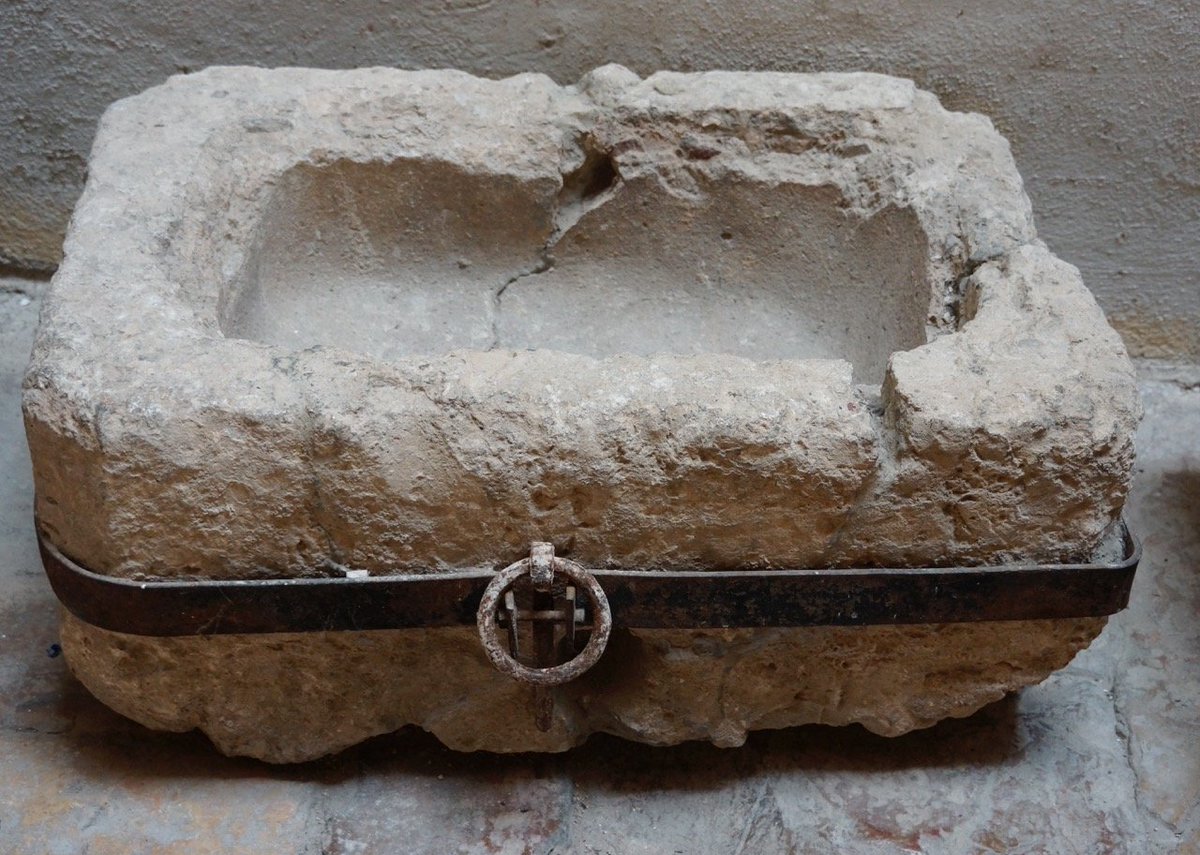
A lot of folks don't realize that when the Bible talks about Jesus being laid in a manger, the Greek word for it is "phatne," which just means a feeding trough. In Bethlehem back then, these were often carved from stone.
What's really striking about this is the shepherds around there. They raised lambs specifically for Temple sacrifices. Right after birth, they'd check each lamb for any flaws and put the perfect ones in a manger to keep them safe from getting hurt, since only spotless lambs could be used in offerings to God.
So here comes the Lamb of God himself, placed in the exact spot where those sacrificial lambs were protected.
And who do the angels tell about his birth? Not rulers or religious leaders, but these shepherds, guys who knew all about sacrifice, blood, purity, and flawless lambs.
When the angels said, "You'll find a baby wrapped in swaddling cloths and lying in a manger" (Luke 2:12), it clicked for them right away.
This wasn't some ordinary child. He was the ultimate Lamb, the one who'd remove the world's sin. From day one, Jesus was set apart for sacrifice, not by people, but by God.
"Behold, the Lamb of God, who takes away the sin of the world." (John 1:29)
*Jesus is the reason for the season.
Merry Christmas!
Peter didn't sink because the storm was strong.
He sank because his faith was weak.
You're drowning in 6 inches of problems while standing next to an ocean of power.
Your depression isn't bigger than His hand.
Your addiction isn't stronger than His grip.
Your failure isn't final when He's reaching for you.
But here's what modern Christianity won't tell you:
Jesus let Peter sink first.
He let the fear hit.
He let the water rise.
He let the panic set in.
Because sometimes you need to drown in your own strength before you'll grab His.
Romans 8:18 isn't a greeting card.
It's a warrior's promise written in scars.
The pain you're feeling? It's real.
The joy that's coming? It's bigger.
But you have to stop trying to walk on water in your own power and start letting Him pull you up from the waves you created.
Your storm is His stage.
Your sinking is His setup.
Your rescue is His reputation.
Grab the hand.
Or keep drowning.
The choice has always been yours.
📒 Did you know that a tablespoon of 🍯 honey is enough to keep a person alive for 24 hours?
📒 Did you know that one of the world's first coins featured the symbol of a bee?
📒 Did you know that honey contains living enzymes?
📒 Did you know that when it comes into contact with a metal spoon, these enzymes die?
▪️ The best way to eat honey is with a wooden spoon; if you can't find one, use a plastic spoon.
📒 Did you know that honey contains a substance that helps the brain function better?
📒 Did you know that honey is one of the few foods on Earth that can sustain human life on its own?
📒 Did you know that bees saved people from starvation in Africa?
📒 Did you know that propolis, produced by bees, is one of the most powerful natural antibiotics?
📒 Did you know that honey has no expiration date?
📒 Did you know that the bodies of the world's greatest emperors were buried in golden coffins and then covered with honey to prevent decomposition?
📒 Did you know that the term "honeymoon" comes from the tradition of newlyweds consuming honey to boost fertility after marriage?
📒 Did you know that a bee lives less than 40 days, visits at least 1,000 flowers, and produces less than a teaspoon of honey, but for the bee, it is the work of an entire lifetime?
Thank you, precious bees..! 🐝💕
"He makes grass grow for the cattle, and plants for people to cultivate—bringing forth food from the earth: wine that gladdens human hearts, oil to make their faces shine, and bread that sustains their hearts." -Psalm 104:14-15
Gods love is in our FOOD, don’t poison that love.
Farmer Joel Salatin on bird flu immunity:
"The thing that gets me about avian influenza is the response to it. In any flock that gets avian influenza, there are always survivors—many times, more survivors than not.
Now, you would think that if the people in charge were actually thinking, they would say, "Huh, we’ve got a flock here of chickens. Some got it, some didn’t. Why don’t we save the ones that didn’t?
We’ll take their genetics, breed them, and maybe we’ll actually breed in more robust immune systems. Wow, fancy that! Wouldn’t that be cool?"
"No. If you have 10,000 birds in a flock and one bird’s got avian influenza, immediately, by government decree, all of them must be exterminated."
All of them—survivors, non-survivors—everything.
Back many years ago, when a pathogenic influenza hit Indochina—remember when it came through Vietnam, Laos, Cambodia, and all that?—the UK did some experiments. They found that if a chicken eats two fresh blades of grass a day—two blades of fresh grass a day—she doesn’t get avian influenza."
EXCLUSIVE: A 40-minute compilation of President Bill Clinton and Vice President Al Gore cutting the federal workforce, eliminating agencies, slashing wasteful spending and regulations, and reducing the deficit.
You know, like Trump, Musk, and DOGE.
🔹 In his first weeks, Clinton ordered a 100,000-job reduction in government.
🔹 Over eight years, he cut 380,000 federal jobs—a 16% decrease.
🔹 This was largely driven by the Reinventing Government Initiative (RIGO), spearheaded by Gore to streamline operations and reduce bureaucracy.
🔹 The result? The deficit was erased, and the U.S. ran a budget surplus for the first time in decades.
Today, annual interest payments on the national debt have doubled in four years, reaching $1.17 trillion—now exceeding the entire U.S. defense budget.
America is $36 trillion in debt.
History proves it can be done. The real question: Will D.C. Democrats and activists judges get out of the way so @realDonaldTrump, @elonmusk, and @DOGE can do it again?
Can the modern Democratic Party put country over party?
Because let’s be honest—DOGE is saving America from financial collapse. 🇺🇸
So sad to see this announcement. It seemed that it was inevitable that he was going to run out of time in his battle but you always held out hope we would see him in the booth & with his family again. Greg had so many amazing moments keeping his memory alive for decades to come.