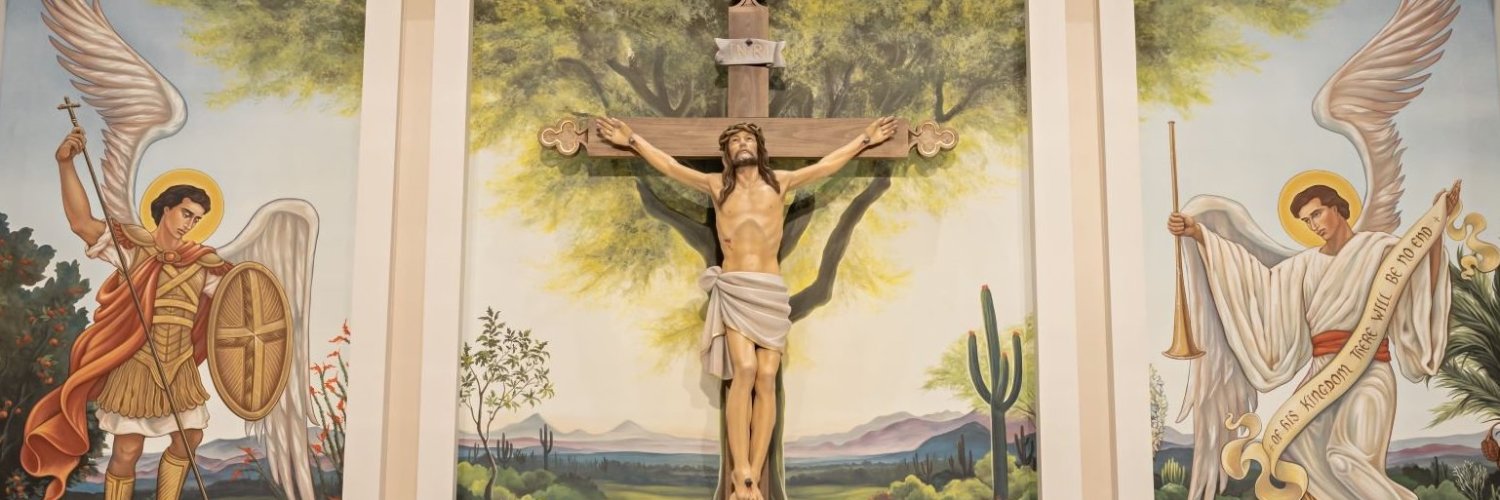
@rightscholar@ghostowlredux@stinekey It’s like a tree in that the branches are in some way related to the roots, and we can assume there are limits but we can’t say what exactly those limits are. Revelation is like a new and weird tree that we have not yet been privileged to see in its fully realized grandeur.
@stinekey Revelation has always been incarnate and so immersed in experience. It’s not a set of encyclopedias. But also the “Revelation crowd” doesn’t actually seem to believe in revelation. That’s why they are in practice creating an alternative magisterium. They don’t trust the church.
@bluh_bluhhh@Fightincowboy@Wario64 Why do people care so much that some will buy a steam machine because of its form factor and user experience, and don’t mind playing their games at 45 fps.
Does Bishop Barron really think that Bishop Paglia’s moral theology holds that there are no absolute moral truths? Seriously? Lmao
What a gross oversimplification of the issues.
In a recent interview, Archbishop Vincenzo Paglia, former grand chancellor of the John Paul II Institute on Marriage and Family Life, confirmed the worst suspicions that many of us had.
He admitted that the changes he made at the Institute during the Pope Francis years were designed to initiate a "very profound" reform of the idea of the natural law.
Instead of absolute moral norms grounded in a keen understanding of the basic goods, he and his colleagues were proposing a moral theory rooted in historical discernment of subjective and cultural experience--not an "armchair theology" but one operating "within history and within people's lives."
This, of course, is the language of trendy postmodernism, and it is dangerous indeed.
Allow me to illustrate the principle with one example. Is slavery wrong?
Intrinsically wrong? Wrong no matter what public opinion polls say about it, no matter what the current consensus on it might be? I imagine any decent person would say yes.
But that yes is predicated upon precisely what the tradition calls the natural law and the basic goods. There are some values so fundamental that acts repugnant to them are by their very nature wicked.
If you want a highly articulate presentation of this idea, go to St. John Paul II's Veritatis Splendor.
If we say that this is just "armchair theologizing" and that morality is a function of ever-shifting cultural and experiential data, then why couldn't slavery be justified?
One of the very smartest persons that ever lived, the philosopher Aristotle, thought it was; extremely bright and morally upright persons in our country, well into the 19th century, thought it was permissible.
Who is to say whether the consensus might shift back again? Who is to say that "lived experience" might come to justify it?
What any truly coherent moral program requires is the very thing that Archbishop Paglia and his colleagues were endeavoring to eliminate, namely, absolute moral norms.
Ridding ourselves of these in the name of freedom or pastoral sensitivity actually renders moral discourse dysfunctional, just as relativizing the basic principle of logic would render any rational conversation impossible.
The Archbishop's interview, frankly, reminded me of the discussions I had at the Synod on Synodality with some of my German colleagues. Under the rubric of the development of doctrine, they were eager to relativize or radically change the principles undergirding classical morality. If this was and is truly the game, we have ventured onto perilous seas.
Link to the article below.
Whatever Happened to Natural Law? | Richard A. Spinello: Today we are faced with a stark choice between the theology of Veritatis splendor or the theology of Amoris Laetitia. #Veritatissplendor#AmorisLaetitia#naturallaw
https://t.co/JloIJFttBt
The Dicastery for Divine Worship and the Discipline of the Sacraments responds to a request made by the German Bishops, denying their petition for a layperson to preach the homily during Mass, even in exceptional cases.
https://t.co/6o9T7iC4ov
@WalkingHymnal The hypocrisy only exists in your mind. Since “rolling with the church” is kinda WPI’s whole thing, why would you think that Mike has some kind of ideological investment in what the conclusion of the commission was about women deacons? And who is “disobeying” the church on this?