Write the Room: Posting words or pictures related to the unit vocabulary around the room for students to find and record. Students are able to develop vocabulary acquisition, and writing skills in a fun and interactive way. @PJLanguageArts
Using a word of the day is an excellent way to promote vocabulary development and critical thinking. Introducing a new word each day and discussing its meaning and usage can help students expand their vocabulary and learn connections between words and ideas. @PJLanguageArts
Journaling is a great tool for building writing skills and promoting self-expression. Students can develop stronger writing fluency and creativity by regularly reflecting on thoughts, feelings, and experiences in a safe and supportive space. @PJLanguageArts
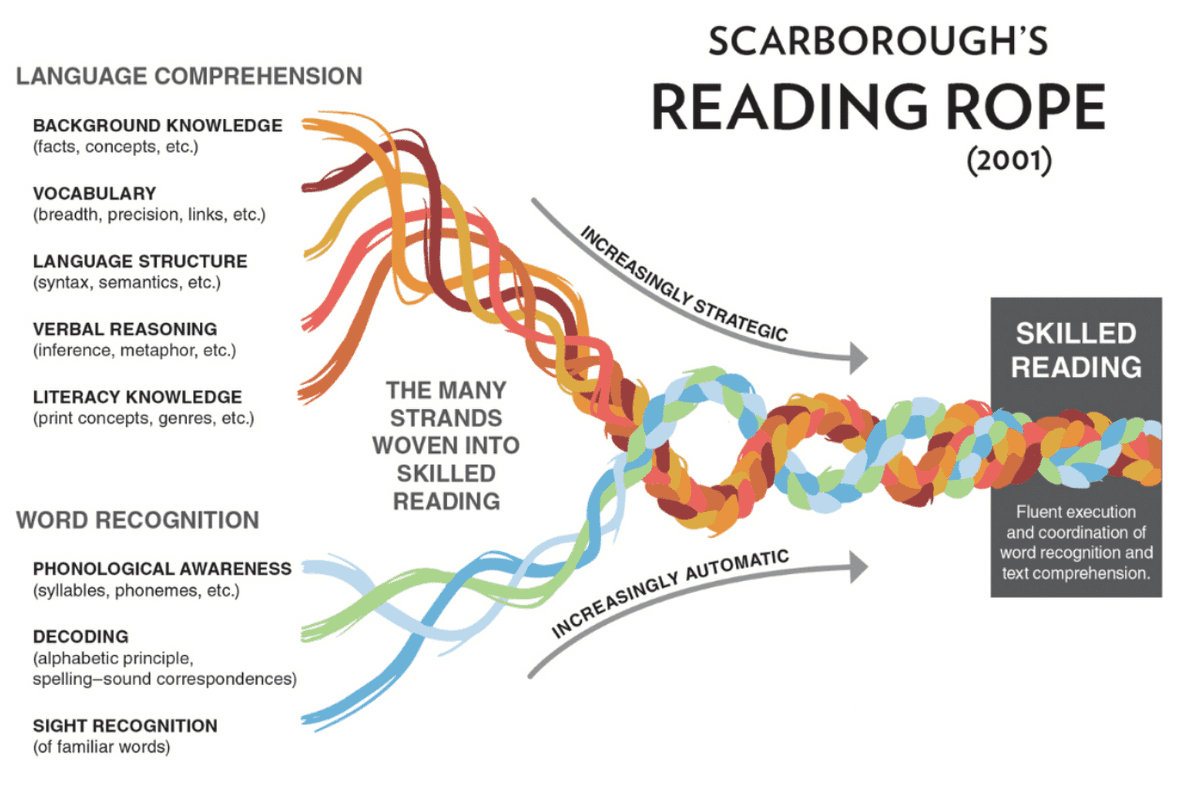
Scarborough's reading rope can show how decoding, vocabulary, and comprehension work together to build reading proficiency. With proper instructor support, students can develop a deeper understanding of the reading process. @PJLanguageArts
Teaching digraphs is a valuable strategy for building phonemic awareness and improving reading skills. Introducing letter pairs like sh, ch, and th, students learn to recognize common sounds in words and develop stronger decoding skills. @PJLanguageArts
Developing motor skills is an essential component of literacy instruction a language arts setting. By practicing handwriting, cutting, and drawing, students are strengthening the fine motor skills crucial for reading and writing success in the future. @PJLanguageArts
Guided Reading not only improves reading fluency, but also comprehension, vocabulary, and critical thinking skills. By tailoring instruction to meet each student's needs, you can foster a love for reading that lasts a lifetime. @PJLanguageArts
Writer's notebooks are a valuable tool for fostering creativity and developing writing skills. By encouraging students to collect ideas and practice writing, they're building their confidence and voice as writers.
Reading buddies are a fun and effective way to improve reading skills and build relationships in a primary language arts class! By pairing older and younger students to read together, they develop social skills and a love of reading. @PJLanguageArts
Student portfolios showcase growth in primary language arts classes. By collecting and reflecting on their work, students have the opportunity to develop metacognition and take ownership of learning. @PJLanguageArts
Personal dictionaries are a fantastic tool for building vocabulary and writing skills in primary language arts classes! By encouraging students to create their own dictionary with new words they encounter, they are taking ownership of their learning and expanding their language.
Independent reading is a powerful tool for building reading fluency, comprehension, and a love of books in a primary language arts class! By giving students choice and time to read, they can discover the joys of reading and become lifelong readers. @PJLanguageArts
Word walls are a fantastic tool for reinforcing vocabulary in my primary language arts class! By displaying key words and concepts, students are constantly exposed to important language and can easily refer back to them during class activities.
@PJLanguageArts
Playdoh is a great resource for language development, it can help with: building motor skills, developing vocabulary, stimulating the creative process by asking students to make a story about what they create and many more ways. Just as playdoh is moldable so are the uses of it.
#GECDSB is offering after school Homework Help for virtual secondary students! You can log on from 3:30-4:30 from Mon-Thurs and receive help in any subject area each day. Just use the link in your VSS Student Success Edsby Group to access Homework Help.
The National Centre for Truth and Reconciliation is hosting a 4 day program for students grade 1-12 during Truth and Reconciliation Week. This is an excellent resource for students to learn about and honour survivors of Residential Schools.@PJLanguageArts https://t.co/mVWyfcfj1H