Super excited to share SpliceAI2! ✂️🧬
It predicts splice-site and splice-junction usage, reconstructs complete transcripts, and models tissue- and disease-specific splicing.
Proud to have contributed, and huge credit to the incredible team behind it!
Check out the tweetorial!⬇️
#SpliceAI2 technical deep dive: transcript prediction and training. We perfectly reconstructed the top transcript for 82% of held-out genes. How? Splice graphs, dynamic programming, and long-read RNA-seq. 🧬✂️🧵
Illumina's genomic AI models now enable researchers to identify 2x as many variants with predicted biological impact.
Identifying these variants and understanding their downstream effects can unlock new biological insights to advance rare disease and drug discovery research. The newest generation of our leading-edge genomic AI models are designed to help researchers assess the functional impact of splice, promoter, and missense variants.
With SpliceAI2, out today, we aim to help researchers advance rare disease research.
In the words of the vice president of BioInsight AI Lab, Kyle Farh: “Illumina is advancing AI to systematically shrink the portion of the genome that remains uninterpretable.”
🔗 Learn more: https://t.co/SpLpP5NVy1
For Research Use Only. Not for use in diagnostic procedures.
Super excited to share SpliceAI2! ✂️🧬
It predicts splice-site and splice-junction usage, reconstructs complete transcripts, and models tissue- and disease-specific splicing.
Proud to have contributed, and huge credit to the incredible team behind it!
Check out the tweetorial!⬇️
Excited to share my first contribution here at Illumina! We developed PromoterAI, a deep neural network that accurately identifies non-coding promoter variants that disrupt gene expression.🧵 (1/)
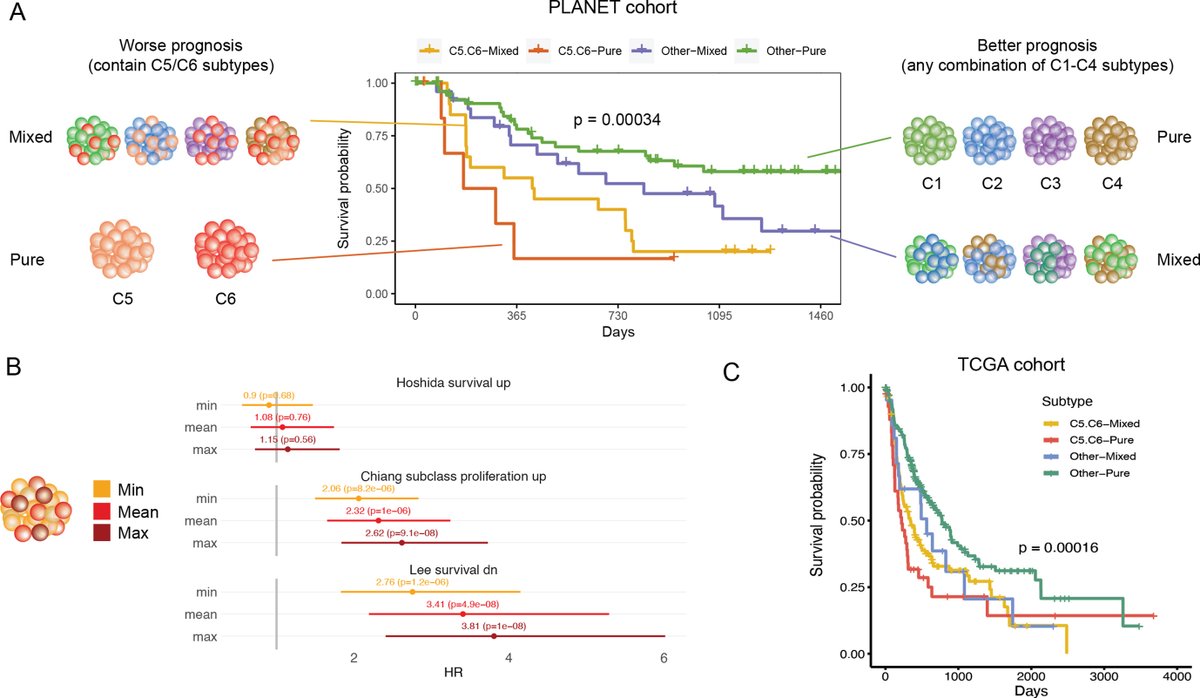
“One bad apple spoils the barrel.” The same applies to liver cancer cells 🍎
Researchers have discovered that these cells have as many as six different subtypes, and the presence of the most aggressive type is a key predictor of patient outcomes.
👉🏻 https://t.co/y684QNegaE
Although the key messages were established before I joined Illumina, it took immense effort from our multidisciplinary team to finalize them. A big thank you and congrats to all contributors @weiwei_beijing,@neslihanky Ying, Raden Indah Kendarsari,@waileongtam, Prof Chow & more!
We also confirmed the 'bad apple' effect, a long-held suspicion that the most aggressive portion of the tumor significantly impacts patient outcomes. It underscores the importance of sampling more regions of heterogeneous tumors for more accurate prognosis prediction.
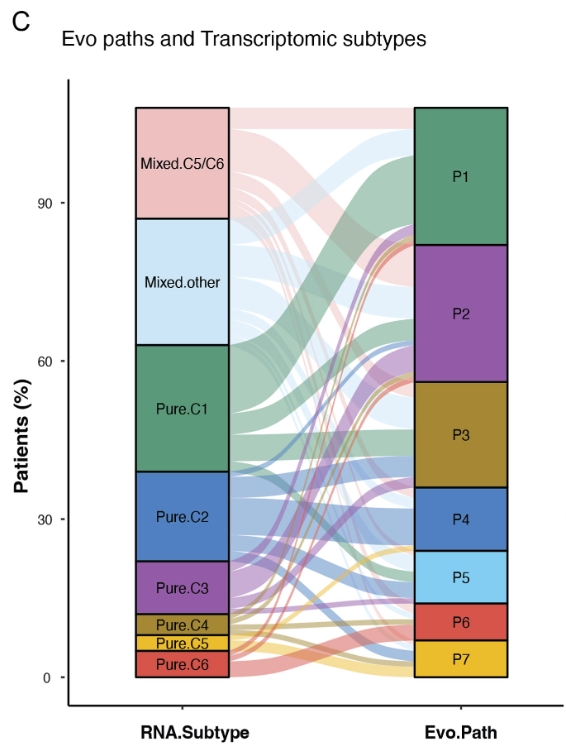
we connected genomic variations to transcriptomic phenotypes and patient prognosis. Our findings reveal several converged genomic evolutionary paths taken by early HCC, which are linked to specific phenotypes observed later at the time of surgery.
After years of pondering and coding (and addressing reviewers' insightful comments), my first corresponding paper is finally online! https://t.co/U5Mfsus53q Using the largest (so far) multi-sector WGS+RNA-seq prospective HCC (liver cancer) cohort,
🎉Big congrats to our AI lab colleagues! Four Science papers explore primate genomes & unveil PrimateAI-3D, revolutionizing disease diagnosis & treatment development. As humans are mere branches in the tree of life, wildlife protection is crucial even from pragmatic perspectives.
I might be a bit slow to know (mind-blowingly) that gpt could directly write a whole notebook for data processing now. Excellent for publicly available data
AI is empowering everyone to create data-driven documents.
We're proud to announce our @OpenAI ChatGPT plugin integrating Noteable's interactive notebook platform into ChatGPT.
Ready for the details? Buckle up for an exciting ride! 🧵
Introducing 100K Context Windows! We’ve expanded Claude’s context window to 100,000 tokens of text, corresponding to around 75K words. Submit hundreds of pages of materials for Claude to digest and analyze. Conversations with Claude can go on for hours or days.
Out today in @ScienceMagazine as part of @ZoonomiaProject : our deep dive on evolutionary DELETIONS in conserved regions. Learn about this counter-intuitive source of mammalian innovation!
Here's a tweetorial on what these surprisingly missing elements are doing in humans
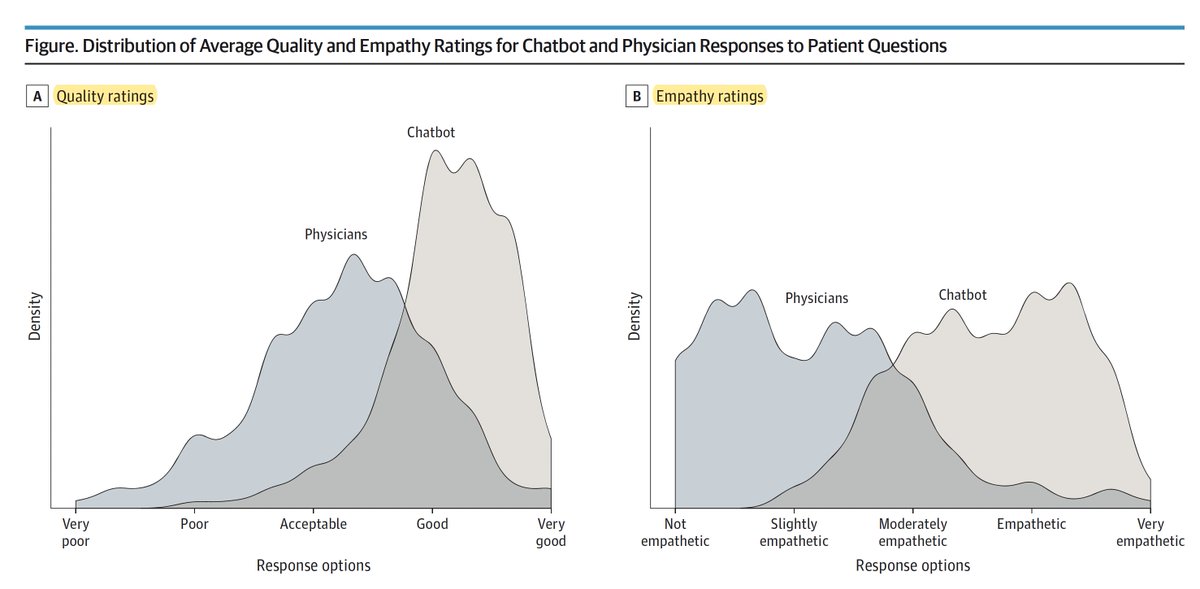
Noteworthy: a new study comparing #ChatGPT vs doctors for responding to patient queries demonstrated clearcut superiority of #AI for improved quality and empathy of responses @JAMAInternalMed
https://t.co/XLO5ripcB2