The Bristol Astronomical Society is a group of amateur astronomers dedicated to educating the public about the night sky. We meet weekly and welcome new members
Star Gazing Event Tonight!
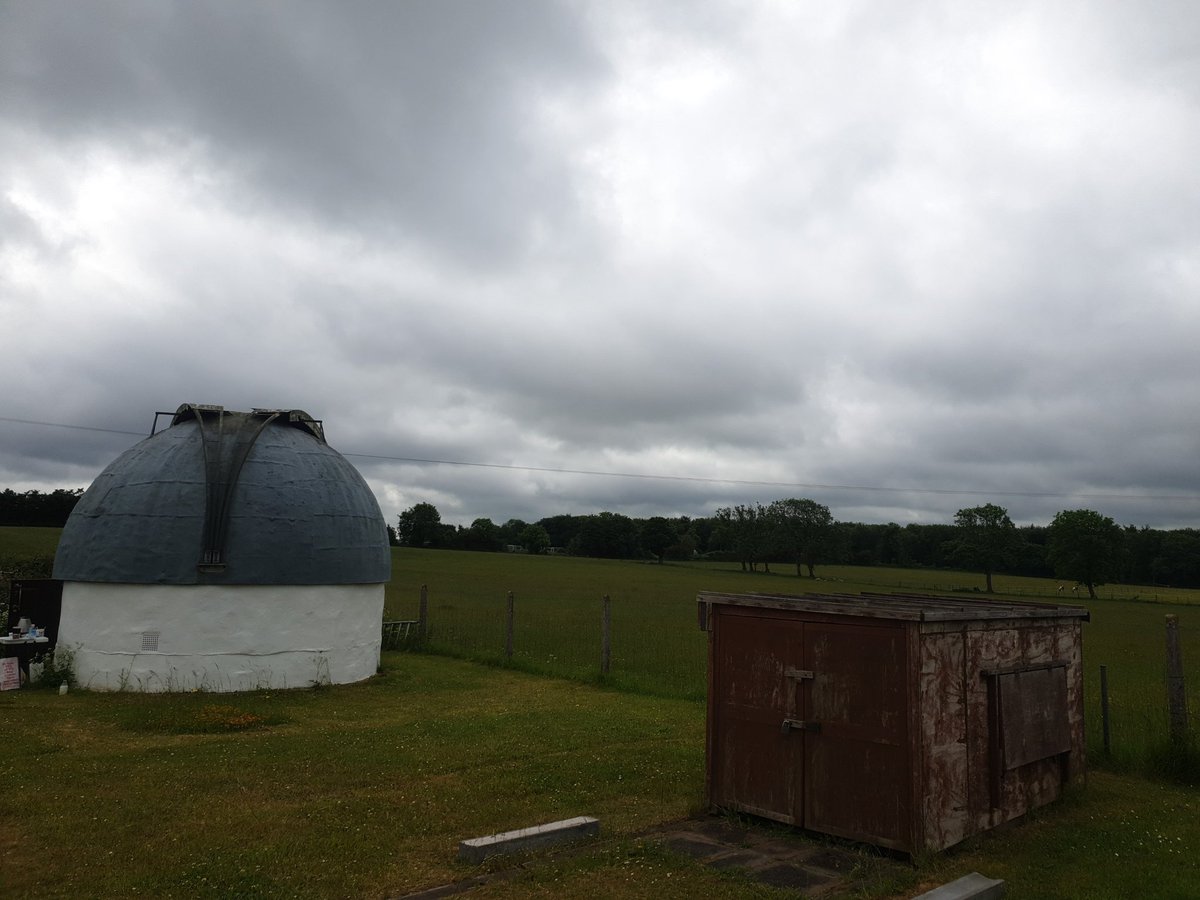
The Society will be running a star gazing event at our observatory in Failand tonight. To buy tickets, go to our EventBrite page: https://t.co/k8HrN0gWWJ
We've restarted our star parties! Open to everyone, these free events are at our Failand Observatory on clear nights each month. This time our members will be pointing telescopes at stars and planets including Jupiter and Saturn. Sign up at https://t.co/kqTNKjhxIP
After a 6 wk break from delivering my talk,I will be getting people excited again about #astronomy and #philately . Starting with the Bristol Astronomical Society on Friday, the @BritishThematic on the 10th then on the 12th, I will be Zooming over to the North Toronto Stamp Club
Writing my talk about wee Winchcombe for @BristolAstroSoc tomorrow night. Very timely to be able to chat about everyone’s fave new space rock as the name and classification just got officially approved this week!💫☄️
We're hoping to do a live stream of the eclipse next week - we'll post the link when it's ready. The last solar eclipse easily visible from the UK was back in 2015, so we're looking forward to this one!
An annular solar eclipse will be taking place on 10 June - it will be visible across the UK as a partial solar eclipse! The Moon will pass in front of the Sun, blotting out up to 38% of its disc, depending on where in the UK you're observing from.☀️🌑
Image credit: Robin Scagell
The power of #eaa amazes me. A recent “professional amateur” has imaged M13 with over 3 hrs of observation. It is wonderful and colourful thru use of filters etc👏. My 8min image can however hold its head up in this company and so bodes well for the future. @BristolAstroSoc
Here's a beautiful composite image of last night's Moon, similar to the view the eye sees through a small telescope or a pair of binoculars. From another BAS member.
Have you noticed the beautiful crescent Moon in the #Bristol sky? Do share your images from smartphones as well as telescopes. This one from @RobertMMassey shows the darker lunar surface lit by sunlight reflected off the Earth - earthshine - as the Moon set over Southville.
#Arcturus is quite near at 36.7 light yrs, or 11.3 parsecs away in the celestial equator & being the 3rd brightest individual star when compared to α Cen A, can be seen 19° north of the celestial equator & although 110 times brighter than the Sun, its output is in mostly infrared