Best way to end 2024. Our latest preprint, from @cpane94, is out today @biorxivpreprint!!
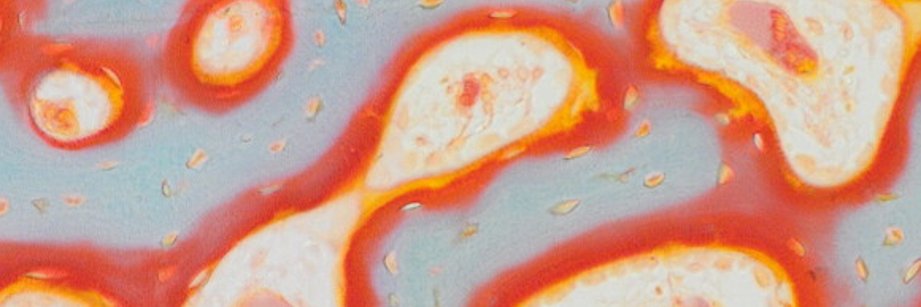
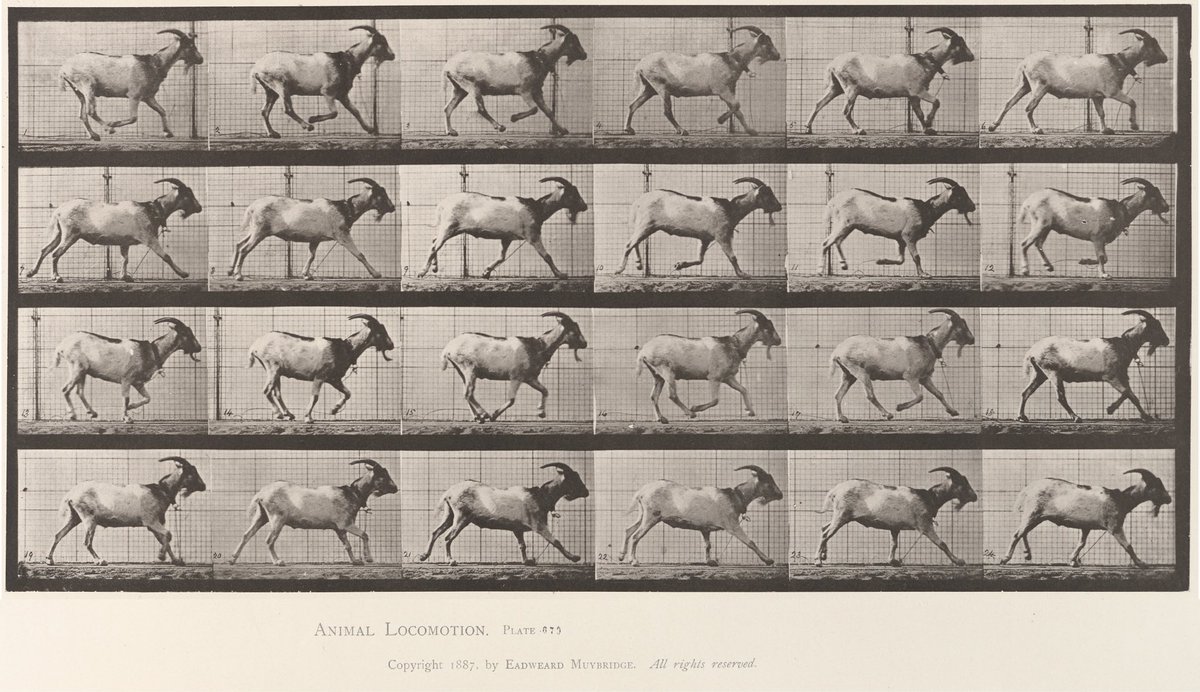
Dynamics of postnatal bone development and epiphyseal synostosis in the caprine autopod.
https://t.co/dphIVNToeF
A paper thread (complete with morphogenesis, mechanobiology, and murder):
In a surprising paper published in Nature, scientists accomplished what sounds impossible: using genes from a single-celled organism to create mouse stem cells, which eventually developed into a living, breathing mouse.
If we look at thousands of proteins (i.e., signals) in the human blood, the protein most associated with chronic physical and mental illnesses is the **same protein** as the top marker for mitochondrial diseases: GDF15
When mitochondria cannot flux energy properly, the cell makes and secretes GDF15 in the blood to alert other cells
Some highlight by Cynthia Liu in our group:
- GDF15 is the top predictor for most diseases
- GDF15 associated with diabetes is among the most significant protein-prevalent disease associations
Based on p-value, GDF15 was most significantly associated with disease.
- “GDF15 was associated with the most diseases, containing 205 prevalent and 397 incident diseases, generally acting as a risk factor except for three incident diseases (respiratory diseases affecting the interstitium, disorders of magnesium metabolism, and peripheral artery disease).”
- “GDF15, similar to its high ranking with protein-disease pleiotropy, ranked second for protein-trait associations, boasting a substantial 428 associations.”Significant associations with many lipid metabolite markers.
- Mental disorders like anxiety disorders, depression, and mood disorders, along with mental health-related traits, also exhibited substantial proteomic signatures including elevated GDF15
- “The fluid intelligence score and various types of dementia shared significant proteins such as NEFL and GDF15 (Figure 2G)”
- “GDF15, the protein with pleiotropic effects, was causally associated with several autoimmune diseases, including ulcerative colitis and rheumatoid arthritis (Figure 6B).”
Data from >53,000 people in the UK Biobank
Full paper here:
https://t.co/F3dn16E0t2
Resource to explore your favorite protein or disease/trait of interest: https://t.co/BjpilkdtHW
A central mistake in biology was to name genes.
This over-simplification made reconciling what is happening on the molecular level a mess - it's not rare to find reports of opposite mechanisms in different contexts, claimed involvement in dozens if not hundreds of different processes, sometimes inhibiting and sometimes amplifying and most of the time being oblivious to the potential for sequence-level variation.
Nobody would be surprised about this diversity of findings if we instead recognized genes as (sometimes quite lengthy and complex) pieces of sequence that carry state and interact with and are interpreted by their environment - often producing dozens of gene products that are in turn themselves context-dependent and modulated. Naturally, such a highly amorphous composition of objects has many diverse effects, and masking this complexity behind a single name more often than not ends up being a harmful abstraction.
The primary role of gene names then is to give us the false appearance of comfort in the face of enormous biological complexity.
One under-appreciated potential of the emergence of AI tools in biology is to undo this mistake, and - instead of assuming it away - extend our ability to lean further into this complexity.
⚠️Here’s yet another option other than BioRender! ⚠️
📢 SciDraw is a free repository of high quality drawings of animals, scientific setups, and anything that might be useful for scientific presentations and posters.
🔁❤️Free Science! RIP BioRender!!
Thrilled the final version of our paper is finally out! “Limited column formation in the embryonic growth plate implies divergent growth mechanisms during pre- and postnatal bone development”🦴👩🔬🧬 (🧵1/10)
Free scientific illustrations for biologists! 😍
@NIH has released a library of 500+ free scientific illustrations to create figures, presentations, and illustrations!
all freely available in the public domain.
Retweet and spread the message!
https://t.co/p1bD1kxO7H
Well. It REALLY happened. The plagiarized paper got published.
my paper from 2021 - https://t.co/F3740qBLpH
new one from 2024 - https://t.co/bmMXP4efvO
We'll look at figures in the 🧵 below.
Announcing the FIRST special issue on AI/ML in Bone Research. It will be published in Bone Reports @Els_BoneEndo. Thrilled to lead this SI with guest co-editors [@JeffryNyman, @karl_j_lewis and Cheryl Ackert-Bicknell]. Details:
https://t.co/JIujUAChiu
#boneresearch#AI#ML#bone
➡️Join us for the next ISBM ECI webinar: Targeting Tissue Quality to Improve Bone Material Properties with Dr. Joseph Wallace, MAR 12. @WallaceBoneLab 🦴🔬 Register here: https://t.co/085ZjaNgNw
It’s happening!! ISBM 2024 is underway with abstract submission deadlines, program and venue details released. When you are booking those flights to Toronto for @ASBMR, push that return date back a few days…and come join us as we explore advances in quantitative bone research 🙌🏻
➡️Join us for the next ISBM ECI webinar: Cellular organization of bone remodeling units with Dr. @LevinGeiser, DEC 19🦴🩻 Register here: https://t.co/Vq8Kx0awhi
Tomorrow we'll be welcoming Dr. Henry Kronenberg to give a seminar entitled "PTH: builder and destroyer of bone" and we're so excited about it we've decided to make it hybrid. Join us tomorrow at 11am EST! https://t.co/5rQnqh5Ww0
➡️Join us for the next ISBM ECI webinar: Advances in Spectral Computed Tomography for MSK Imaging with Dr. Graeme Campbell, Nov 2nd. 🩻 Register here: https://t.co/z3QufYDyEi
Labeling bio images just got 10x faster 🏎️
Watch our best AI model yet in action, released today as AI Detect on @BiodockAI.
You prompt one object, it finds the rest. Try it for free now!
A really exciting week for our team - we think we've made a Killer App for analysis of mouse brain histology. It's fast, it's accurate, and it's free! Check out the paper at Nature Communications:
https://t.co/BgLaQ4wHIM
For those exploring animal VR setup check this out: With @misaacson, we present the first miniaturized VR headset, MouseGoggles, for mouse neuroscience and behavior (< $200 in parts💰, open-source, highly immersive)🧵1/2
#VR@researchsquare@SN_Lab 🧠🐭🥽
https://t.co/0NteFHmBzM






![MustafaUnal85's tweet photo. Announcing the FIRST special issue on AI/ML in Bone Research. It will be published in Bone Reports @Els_BoneEndo. Thrilled to lead this SI with guest co-editors [@JeffryNyman, @karl_j_lewis and Cheryl Ackert-Bicknell]. Details:
https://t.co/JIujUAChiu
#boneresearch #AI #ML #bone https://t.co/RK6oI0Sxh9](https://pbs.twimg.com/media/GHB0mBfXAAAMayg.jpg)





