🇬🇧 Britain Remade is a campaign to promote economic growth. We put forward practical solutions to the problems holding Britain back.
Join the Campaign ⤵️
Hinkley Point C might be delayed again.
Why? Because Natural England say the £700 million spent on fish protection at Britain's next nuclear power station is not enough.
We can't go on like this.
For decades ministers have outsourced decision making; handing unelected agencies the power to veto the infrastructure we need. It’s right to reverse this trend.
But scrapping Natural England is meaningless if the rules they were enforcing remain in place. This has to be a small part of a wider reform package, including to the Habitats Regulations, so Britain can build the clean energy, homes and infrastructure the economy needs.
Shout out to insane British planning law for being the reason the 250,000 page Anthropic Riemann hypothesis proof *isn't* the longest document I've ever heard of
Very promising to see formal proposals to devolve Transport and Works Act orders.
For tramways in particular, we've long argued that the Government should give mayors the power to build.
Read the proposals here:
https://t.co/HDs0FaujPI
Delighted to win 'Killer Stat of the Year' at the @SmartThinktanks Awards.
Did you know that every £1 spent on roads, railways, and trams in Britain buys just 60p's worth of what it would on the continent?
Always a pleasure to work with @BritishProgress!
https://t.co/cUn63iTfTO
Agree with us that we should grow Britain's economy by building the stuff we need?
Join our email list now for more killer stats and updates on getting Britain building.
https://t.co/r80N2hgHVi
Brilliant to win Killer Stat Of The Year alongside @BritishProgress at last night's @SmartThinktanks Awards.
The more people who know that Britain massively overpays for infrastructure, the better chance we have of doing something about it.
Energy bills are set to rise by 26% from January, according to our final price cap forecast, the biggest increase in four years.
That would take a typical household’s annual bill to £2,166, up £443, with the conflict in the Middle East continuing to disrupt gas exports and Europe heading into winter with its gas storage at record lows.
The Government has taken steps to help households with the cost, including the removal of VAT from electricity bills, now extended to July 2027, and the £100 Household Energy Payment for homes in Council Tax bands A to D in England. However, this support can only chip away at the edges of a bill that continues to be pushed up by events beyond our control in the Middle East.
What we can control is how exposed we are to these shocks in the future.
Read the full story: https://t.co/ka3wFa37ja
Now you know where your household energy bills are heading but what about your business energy bills?
Our Business Energy Price Tool gives you a two-year forecast of electricity costs for your business type: answer four questions and in 30 seconds you will get your forecast: https://t.co/5gSWI6VJjm
Labour is set to miss its 1.5 million home target by ~500,000 homes.
Can Labour claim it ever really tried to hit that target when government policy is responsible for more than half the cost of building a new flat in London?
Droughts aren’t just about how much rain falls, they’re driven by a shortage of places to store the rain that does.
We haven’t built a new reservoir in 34 years. The Government advises the public to stockpile food, but we need new reservoirs to stockpile enough water.
Droughts aren’t just about how much rain falls, they’re driven by a shortage of places to store the rain that does.
We haven’t built a new reservoir in 34 years. The Government advises the public to stockpile food, but we need new reservoirs to stockpile enough water.
Unless something changes, Scotland's nuclear energy industry dies in 2030.
Annan Athletic FC is on the doorstep of Scotland's oldest nuclear power station.
This is the story of what banning nuclear means for Scotland's power grid, and for communities like Annan.
Agree with us that the Scottish Government should change course and embrace new nuclear energy projects? Add your name to the petition now:
https://t.co/RQn5ZsSIdE
Unless something changes, Scotland's nuclear energy industry dies in 2030.
Annan Athletic FC is on the doorstep of Scotland's oldest nuclear power station.
This is the story of what banning nuclear means for Scotland's power grid, and for communities like Annan.
Scotland has four licensed nuclear sites. These are their names, and the years their reactors were switched off or, in the case of Torness, due to be switched off.
These sites are huge assets. They should be put to use providing Scotland with good jobs and clean electricity.
Further thoughts on whether the Government is serious about taking costs off energy bills:
For years governments of different parties built a shadow tax system; quietly piling policy, grid, and other costs onto consumer bills. While our most pressing problem this winter is the cost of gas, we’ve now added so many levies to bills that cheaper gas alone wouldn’t solve our energy woes. In fact, households won't even see the full benefit if wholesale costs fall, as the top-ups we pay to renewables will mechanically increase. Ministers need to tackle the whole bill.
The Chancellor’s promise to fund new projects via bills only if they cut costs is therefore both significant and welcome. The immediate test of whether he really means it is the upcoming renewables auction, Allocation Round Eight (AR8). The Treasury have explicitly said the new approach will apply to the next auction. Five questions will determine whether they mean what they say.
1. What costs will count?
The obvious place to start is the renewable energy contracts themselves. Contracts for Difference (CfDs) guarantee generators an agreed price: when the wholesale price falls below it, we all fund the difference on our bills. When it rises above it, generators pay us back.
This hedge paid off after Putin’s invasion of Ukraine, and could prove handy again this year with gas prices high and rising. Around £346 million net was paid back by CfD generators during 2022. More often than not however, these payments have flowed the other way. According to the House of Commons Library, CfDs added around £180 to a typical household’s electricity bills between April 2019 and May 2026, even after accounting for periods when generators paid back.
But these contracts are only part of what consumers pay. New renewable generation is distributed, it means lots of new transmission lines, additional balancing services, and payments to manage bottlenecks. When wind farms produce more power than the grid can handle, we end up both paying them to turn off, and also paying gas generators to replace their output.
Last year these curtailment costs added well over £1bn to bills, this year they could hit £4bn, and the government’s own modelling suggests this figure could reach around £7bn by the end of the decade.
Those costs - alongside the benefits - should be included. Renewable generation can reduce wholesale prices when it displaces gas. Grid upgrades can reduce existing bottlenecks. The right test is therefore the additional cost or saving across the whole bill. Looking only at the strike price of a renewable contract would miss the exact problems the Chancellor says he wants to address.
2. Cheaper than what?
A claim that a project “lowers bills” doesn’t mean that much without explaining the alternative. How does the new offshore wind farm stack up vs a new gas plant, or against new nuclear after the much-promised, but yet to be delivered, Fingleton reforms have been implemented? The status quo is so bad that it represents a terrible baseline to judge future projects against. Ministers should properly test the alternatives, including both what they could cost and when they could actually deliver power.
At the same time, assumptions about future gas prices, electricity demand and grid delivery of course all matter. Ministers should publish their central estimates and show whether the proposed savings from a new deal survive cheaper gas, slower demand growth or delayed pylons.
3. What contract price would they count as a cost saving?
Once ministers have answered the first two questions, they should be able to give a clear number for the CfD strike price they’re willing to pay. This might vary project by project, with lower CfDs required for those that create greater additional grid or balancing costs.
Ministers should set out the maximum prices they believe will cut bills, publish the supporting analysis, and explain how those limits determine the auction budget.
4. How much wiggle room does the “security of supply” component offer?
The Chancellor has given himself a get out clause by saying additional policy costs must lower bills *or be essential to keeping the lights on.*
Yet what are the criteria for this security-of-supply caveat? Almost any project can be justified on these grounds if you squint hard enough. Ministers will need to show their working so independent experts can scrutinise it: why would a particular project be needed and why could it not be replaced by another option? Without this discipline, we could end up in exactly the same position, but with a new energy security justification for adding ever more costs to bills.
5. Ultimately: will ministers accept a smaller, or even an empty, auction?
Quite simply: if projects fail to pass a properly constructed and scrutinised affordability test, the government must be willing not to buy them. If none pass the test, ministers should be prepared to award no contracts unless procurement is justified by a clear and independently verifiable security need.
AR5 offers something of a precedent. Ministers held to a price ceiling and in the end secured no offshore wind bids. While it was criticised at the time, in hindsight the subsequent sky-high prices demonstrate it was the right call to let that auction fail. That does not mean failure at AR8 is inevitable. Judged against the alternatives, renewable projects may deliver net savings once all costs and benefits are counted. We need the bids and the analysis to know.
The Chancellor has set out what appears to be a significant shift in energy policy. Moving on from the Miliband era’s approach on hitting deployment targets at almost any cost is hugely welcome. AR8 will reveal whether the Chancellor is willing to follow through. Show your working, and let our energy policy follow the evidence.
An obscure legal ruling means British nuclear power stations are, by definition, legally required to include disproportionate safety measures.
This is the story of 'gross disproportion', or the time when health and safety 'went mad'.
https://t.co/yYDe9P33EJ
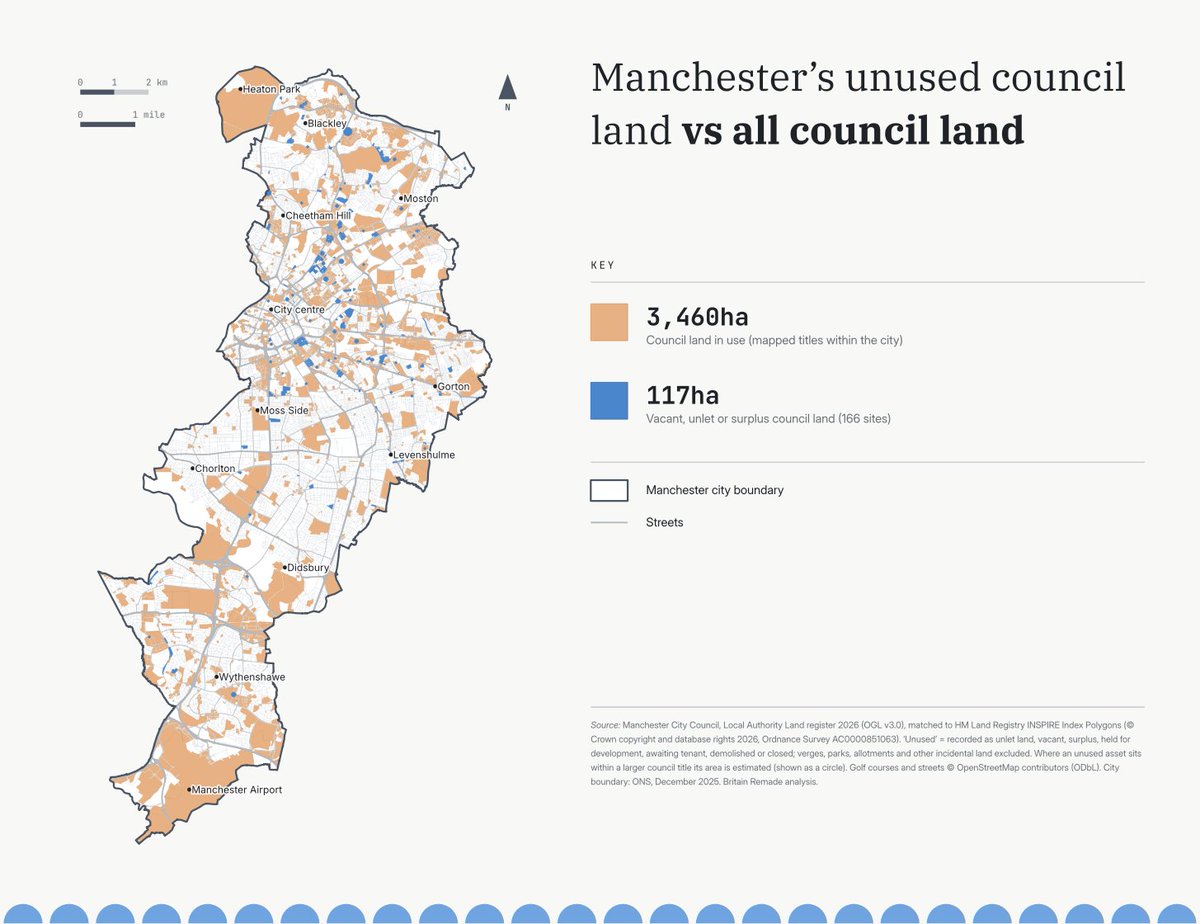
Is building on unused council land a good policy idea? Yes of course.
Is it the solution to the housing crisis?
Of course it isn't.
read my latest post in which I attempt to make some maps and do some rough maths.
In his conference speech, Burnham proposed building more council homes on unused council land.
Councils own lots of land, but how much of it is suitable for building?
@FionualaMc investigates how much of it could be built on in Manchester.
https://t.co/s7b0qN3nRC