In 2015, Jason Smith, a school principal, met a 12-year-old girl named Raven. She was sitting outside his office after being suspended from the sixth grade class. "She looked like such a sweet, innocent child, sitting there, depressed," Jason said. "I asked her what had happened, and she told me she had thrown a yogurt pot at lunch and had been sent home. She was just waiting for someone to come and get her." Jason asked her if she had ever thrown away food in a restaurant, and Raven replied that she hadn't. She also explained that she didn't really have any family, as she had spent most of her life in group homes and foster care. Jason felt that Raven really needed something good to happen to her for once. "She needed someone to help her," he said. Jason and his wife, Marybeth, struggled with infertility for a long time. From the moment they met Raven, they knew she was meant to be part of their family. Raven was happy to find a loving home and is now studying social work at the University of Kentucky.
Repost to send some love to Jason, Marybeth, and Raven. Follow for more kindness stories like this that never make the news.
Credit: MST
Pauline Hanson is said to be outraged that Sam Wood has not been granted bail again.
Pooline stated that Wood is a fine example of Aussie “monoculture” and should not be in custody.
The Ginger Whinger said that beating & strangling a woman in Australia is a “two way street”.
My twelve year old son flashes his bedroom light three times every night at nine o'clock, and across the street, Mr. Novak flashes his back. It started last year when Mr. Novak's wife moved into a care home, and he started living alone. My son noticed his house got very dark at night. Only one window lit. My son decided Mr. Novak needed someone to say good night to. So he went over and suggested the light thing. Three flashes means good night. Mr. Novak thought it was a little silly. He agreed anyway. They did it every night for a year. If my son forgot, Mr. Novak would call our house at nine fifteen to ask if everything was all right. Then in September, my son was doing a school project on World War Two, and Mr. Novak told him he'd been a signalman in the Navy during the Korean War. He'd sent messages between ships with lights, in Morse code. My son came home and spent three weeks learning Morse code. Every letter. He practiced with a flashlight under his covers. Mr. Novak was turning ninety in October. On the night of his birthday, at nine o'clock, my son went to his window with a flashlight and, very slowly, flashed out happy birthday in Morse code. It took him almost four minutes. He got the Y wrong and had to start over. Across the street, Mr. Novak's light went off. Then it came back on. Then off. Then on. He was flashing back. My son grabbed a pencil and started writing down the dots and dashes. It took him twenty minutes with his code sheet to translate it. It said thank you son. You were slow on the B. My son was outraged. He went across the street the next morning to argue about it. They spent two hours on the porch practicing. Now the nightly message is longer. Mr. Novak says he's still faster.
— Brenda, Wisconsin
Repost to send some love to Mr. Novak and his young night signal partner. Follow for more kindness stories like this that never make the news.
"I NEVER SAW
ANYONE FIGHT SO
HARD FOR HIS
COUNTRY AS
VOLODYMYR
ZELENSKYY, AND
I NEVER SAW
ANYONE BETRAY
HIS COUNTRY SO
OPENLY AS
DONALD TRUMP." so freaking true, had to share this
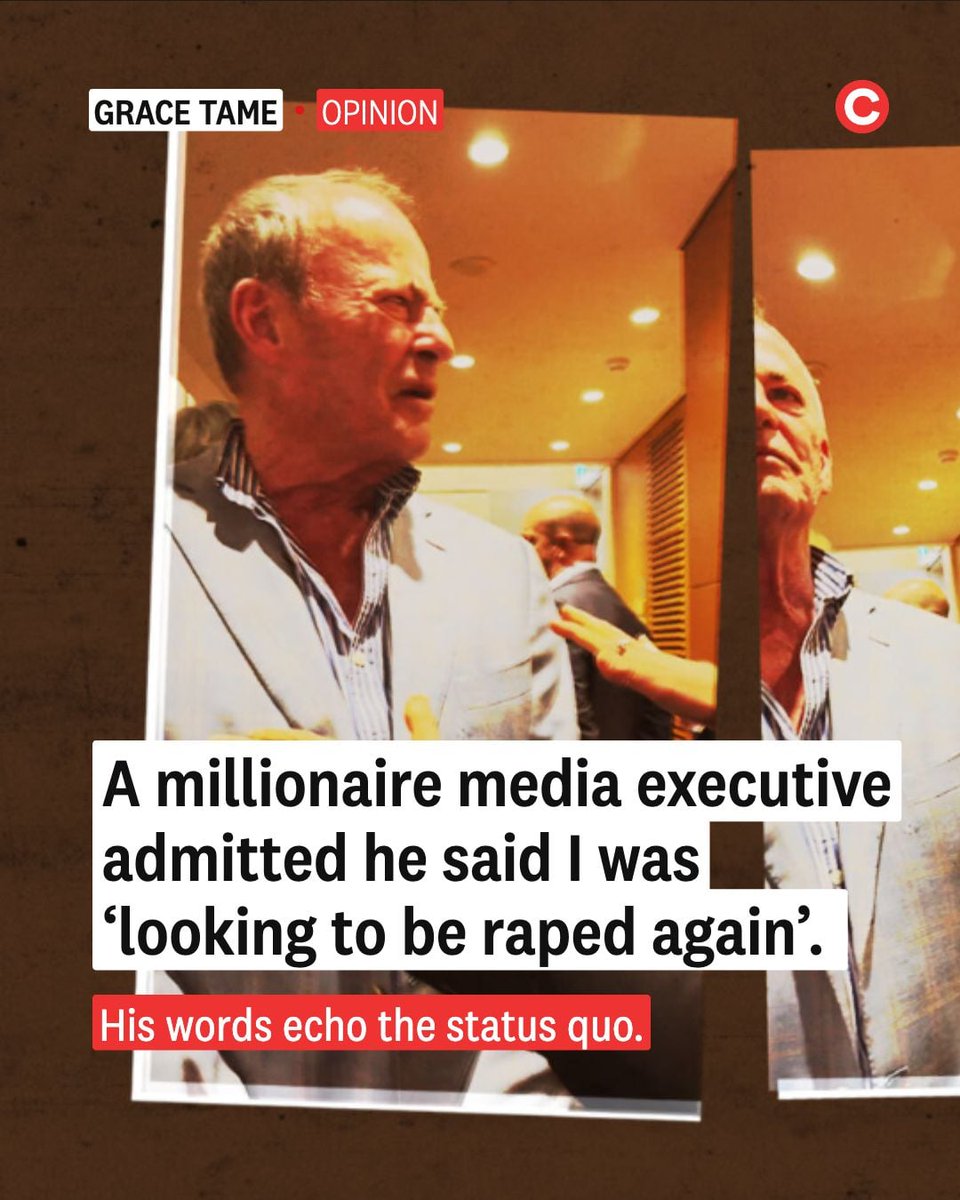
"That's Grace Tame. Look at her with her tits hanging out. She must be looking to be raped again." That’s what Grace Tame overheard a 77yo media exec say at an event last week. When she confronted him, he said, "It's just because you look so beautiful." https://t.co/jhoCqCNvpQ
@ClementEno95621 They are so precious aren't they. My moggie is 17 and slowing right down like your Foxy. I dread the day I have to say goodbye. Sending warm hugs 🫂
You can finally rest, my little Foxy....2006-2026
I don't know what to say. Way back in 06, me and my family moved to a two family building. While bringing our stuff in, I saw a kitten just playing around outside. I thought she was the cutest thing in the world, but we already had a few cats. While resting on the stairs after getting everything in, the kitten hopped up the stairs, and sat on my lap. She let me scratch her chin, and seemed really happy with how I was petting her. I later found out she was the daughter of a stray cat, that my new neighbors were kind of taking care of. The little girl in the family named her "Foxy Lady". The name kind of stuck. Eventually the neighbors left, and we took in Foxy, and she became my kitty.
Life went on. Several moves (including most recently, home ownership), relationships come and go, jobs, bad and good, family gained, family lost, for twenty years she was always there with me. I couldn't imagine life without her. Whenever a family member came to my house, the first thing they would note was the Foxy was somehow still around. I would joke that she is going to outlive all of us. Honestly, I kind of believed it a little. I never thought today would come...
Sure enough, a year ago she was really showing her age. Her fur was getting supper matted since she had a hard time cleaning herself, she complained whenever I gave her dry food, she refused to play, and just kind of relaxed in a spot on the couch. Earlier this week, she was practically limp, and had a very hard time moving. She tried to eat when I gave her wet food, but she gave up quickly. This morning I woke up to her in the cat litter, sprawled out not moving at all. Her breathing was weak, I took her to bed, and she barely moved her head. She wouldn't even blink. I decided that it was her time, so me and my wife took her to the vet. I tried to be strong, I really did, but when she breathed her last breath, I broke down. I could not handle it. I still can't. My only solace is that I know she lived a long happy life, and she is finally truly at rest. I have two other furbabies, and I love them so much, and I will do my best to make sure they live the happy life Foxy did.
Thank you for reading my rambling. Please hug your kitties, and show them all the love you can.
My 5-year-old had her first experience with bullying on the school bus. She was repeatedly called stupid and ugly. Instead of an adult stepping in to help, he threatened to call the police. This scared her so much, she was left traumatized. As we were driving home, we passed a police officer, and she covered her head, crying, terrified. I posted asking for prayers, and they were heard. That night, Officer Jonathan Luttrell and Officer Blake Burress from the Booneville MS Police Department came to our door. They had heard what happened and brought her little gifts. They made her feel safe, reminding her they were there to protect her, not to hurt her. That night, she called those officers her best friends. The next morning, Deputy Taylor Walker and Deputy Tyler Reese from the Prentiss County Sheriff's Department visited the school. Deputy Walker met her with a big smile. He took the time to kneel down to her level and talk to her. She walked back to class holding a stuffed puppy, smiling the biggest smile. He even held her hand and walked her to class. So often, law enforcement gets bad press, is blamed for things, or used as a scare tactic. But these officers showed that they're willing to put their lives on the line to protect us and that they care more than we realize. They went out of their way to make my daughter feel safe, loved, and protected after she had been threatened. This is the kind of support the world needs. People need to know that law enforcement truly cares, and these officers deserve recognition for the positive difference they made in our lives.
Repost to give these officers and deputies the recognition they deserve. Follow for more kindness stories like this that never make the news.
You can't control what happens to you. You can control how you rise afterward.
Before the scandal. Before the headlines. Before the world learned a new word — “Brangelina.”
There was a brief moment in a parking lot.
Jennifer Aniston had just finished filming another day of Friends. Angelina Jolie was about to begin work with Brad Pitt on a new movie called Mr. & Mrs. Smith.
They crossed paths.
Jennifer smiled warmly and said something simple:
“Brad is so excited about working with you. I hope you guys have a really good time.”
At that moment, she meant it.
What no one knew then was that the film would eventually become the center of one of Hollywood’s most talked-about relationship stories.
During filming, rumors began to circulate. People on set noticed the strong chemistry between Brad Pitt and Angelina Jolie. Whispers followed them through studios, trailers, and magazine columns.
At first, Jennifer dismissed the gossip.
After years in the spotlight, she knew how easily rumors could be invented. Tabloids thrived on speculation.
But slowly, something changed.
Brad seemed distant. Quiet. Preoccupied.
At the same time, Jennifer was closing an enormous chapter of her life. Friends — the show that made her Rachel Green and a global icon — was filming its final season.
Behind the scenes, their marriage was beginning to strain.
In early 2005, after a vacation meant to repair the relationship, Jennifer and Brad announced their separation. Soon after, photographs appeared showing Brad with Angelina and her son Maddox during a trip abroad.
What had once been rumor suddenly felt real to the public?
The media storm that followed was relentless.
Jennifer found herself at the center of a narrative she had never chosen. Headlines speculated endlessly about betrayal, blame, and heartbreak.
When asked about the situation later, she spoke honestly but calmly.
“There’s a sensitivity chip that’s missing,” she said in one interview, reflecting on how public everything had become.
But she never turned the situation into a public fight.
Instead, she focused on rebuilding her own life.
In the years after the split, Jennifer leaned into work, therapy, and personal growth. She even starred in the film The Break-Up shortly afterward — a project she later described as emotionally healing, almost like a “defibrillator” bringing her back to life.
She redesigned her home.
She rebuilt her routines.
She found humor again.
In 2008, she launched her own production company, Echo Films, stepping into a new role not just as an actress but as a producer and creative force.
Over time, something else happened.
The anger faded.
Years later, Jennifer and Brad surprised the public when they greeted each other warmly backstage at the 2020 Screen Actors Guild Awards. The moment went viral — not because of romance, but because it showed something rare in Hollywood.
Closure.
Jennifer later described their relationship simply:
“We’re buddies.”
Today, Jennifer Aniston’s story is no longer defined by that chapter.
She is an award-winning actress, a producer, and one of the most influential figures in entertainment. She has also spoken openly about the pressure women face regarding marriage and motherhood, reminding people that a woman’s life does not need to follow anyone else’s timeline.
Her journey carries a simple lesson.
You cannot always control what happens to you.
But you can control how you rise afterward.
Jennifer Aniston didn’t just survive one of Hollywood’s most public breakups.
She rewrote the story that came after it.
And in the end, that story belonged to her.
77 American nurses were taken prisoner. They had already spent months performing surgery in the jungle while bombs fell through the trees above them.
Every single one of them survived. The world barely noticed.
When Japan attacked the Philippines in December 1941, sixty-six Army nurses and eleven Navy nurses were suddenly in the middle of a war zone. Military rules said women shouldn't be in combat. The war didn't care.
As Japanese forces advanced, the nurses were evacuated to the Bataan Peninsula where they found no hospital waiting for them. Just dense, humid jungle. They built open-air wards under the trees with whatever they could find, treating thousands of wounded men while Japanese bombers roared overhead and artillery shells tore through the canopy above.
Twenty-hour shifts in suffocating heat. Malaria and dysentery spreading through the wards alongside the wounds of war. When the medicine ran out, they boiled old bandages to sterilize them and rationed the last drops of morphine one by one.
"We stopped thinking about comfort, about fear, about ourselves," one nurse later recalled. "There was always another soldier who needed us more than we needed sleep."
When Bataan fell, they retreated to the Malinta Tunnel on the island of Corregidor working in stifling, dusty darkness, using flashlights to see their patients while the earth shook from constant bombardment.
On May 6, 1942, Corregidor surrendered.
That was the moment they became prisoners of war. The largest group of American military women ever captured by an enemy.
For nearly three years, they endured the brutal conditions of the Santo Tomas and Los Baños internment camps. Starved on as little as 700 calories a day moldy rice, watery soup, nothing more. Most lost thirty percent of their body weight, their ribs visible through their skin.
And still, they refused to stop being soldiers.
Under the leadership of Chief Nurse Captain Maude Davison and her deputy Lieutenant Josie Nesbit, they maintained military discipline in conditions designed to break them. They organized a medical ward from nothing. They fashioned tools from bamboo. They traded their own meager rations for clean water to keep their patients alive.
"We were so hungry we dreamed about food constantly," Lieutenant Juanita Redmond later wrote. "But we never dreamed about leaving our patients."
When American forces liberated the camps in February 1945, the world witnessed something extraordinary: all seventy-seven nurses had survived. Not one lost.
They came home to a country celebrating victory — and largely expecting them to slip quietly back into traditional roles and say nothing. Their suffering was minimized. Their trauma was ignored. While male soldiers received ticker-tape parades, the Angels of Bataan were treated as footnotes.
Because in the 1940s, society didn't believe women could experience the horrors of the front lines.
It took decades for history to begin catching up with their courage. The stories came out slowly in memoirs, interviews, and small ceremonies pieces of a truth the world had been too uncomfortable to hold all at once.
The last surviving Angel, Lourdes "Lulu" Arizala, passed away in 2015. She left behind a legacy shared by seventy-six women who endured years of captivity, starvation, and suffering — and never once stopped caring for the people in their charge.
They were prisoners. They were starving. They were forgotten.
And they never stopped being nurses.
Some heroes don't carry weapons. Some hold the line with their bare hands and a boiled bandage and whatever is left of their strength at the end of a twenty-hour shift.
These women held it for years.
They deserve to be remembered by name.
“I truly believe that history will show Mr. Schmidt to be absolutely correct. Over the weekend, Republican Steve Schmidt, who ran John McCain's 2008 campaign for president, was interviewed on MSNBC.
In response to a very general question regarding the Trump Presidency, Mr. Schmidt spoke for two solid minutes and gave the most insightful and brutally honest response of what the Trump Presidency has done to our great country.
“Donald Trump has been the worst president this country has ever had. And, I don't say that hyperbolically. He is. But he is a consequential president. And, he has brought this country in three short years to a place of weakness that is simply unimaginable if you were pondering where we are today from the day where Barack Obama left office. And, there were a lot of us on that day who were deeply skeptical and very worried about what a Trump presidency would be. But this is a moment of unparalleled national humiliation, of weakness.”
"When you listen to the President, these are the musings of an imbecile. An idiot. And I don't use those words to name call. I use them because they are the precise words of the English language to describe his behavior. His comportment. His actions. We've never seen a level of incompetence, a level of ineptitude so staggering on a daily basis by anybody in the history of the country who’s ever been charged with substantial responsibilities.”
"It's just astonishing that this man is president of the United States. The man, the con man, from New York City. Many bankruptcies, failed businesses, a reality show, that branded him as something that he never was. A successful businessman. Well, he's the President of the United States now, and the man who said he would make the country great again. And he's brought death, suffering, and economic collapse on truly an epic scale."
"And, let's be clear. This isn't happening in every country around the world. This place. Our place. Our home. Our country. The United States. We are the epicenter. We are the place where you're the most likely to die from this disease. We're the ones with the most shattered economy. And we are, because of the fool that sits in the Oval Office behind the Resolute Desk.”
Credit: Goodman Mickey
In July 1886, on a small farm in the west of Ireland, a baby boy was born too early. No one expected him to live through the night.
His grandfather held him close, kept him warm and prayed.
The baby lived. He grew up to give thousands of forgotten boys in America a home.
His name was Edward Flanagan. Most Americans came to know him as Father Flanagan of Boys Town.
He was born near the village of Ballymoe, on the border of County Roscommon and County Galway. His father worked as a herdsman. Edward went to school in Ireland, and in 1904, at 17, he sailed for America with his sister Nellie.
He wanted to be a priest. His body kept getting in the way.
At the seminary in New York, he came down with double pneumonia and had to leave to recover. He went to stay with his brother, also a priest, in Omaha, Nebraska. He went to Rome to study, and his health failed again. He came home and took a job as an accountant at a meatpacking company.
Most young men would have taken the hint. Edward Flanagan went back to Europe one more time. In 1912, in Innsbruck, Austria, he was finally ordained a priest.
He was sent to small parishes in Nebraska. In 1913, when deadly tornadoes tore through Omaha, he was there caring for the dead and the injured.
Soon he was running a shelter for homeless men in Omaha. Then, moved by the boys he saw with no home and no one to guide them, he made a decision that changed his life.
In 1917 he opened a home for homeless boys in Omaha. The archbishop had his doubts, but gave his blessing.
Father Flanagan took in every boy who needed him, no matter his race, his religion or where he came from. That was rare in those days. He even reached out to boys who were already in prison for serious crimes. He believed reform schools were too harsh and too cruel, and he said so.
He had one simple belief. In his words: "There's no such thing as a bad boy."
The home in the city soon became too small. In 1921, he moved to a farm about ten miles west of Omaha. There, his boys built a whole town of their own, with schools, a chapel, a post office, cottages and a gym. The boys even elected their own mayor.
They called it Boys Town.
Then, in 1938, Hollywood told his story. In the movie "Boys Town," Spencer Tracy played Father Flanagan, with Mickey Rooney as one of the boys. Some of it was filmed at Boys Town itself.
Spencer Tracy won the Academy Award for Best Actor. He gave the credit to the priest. A special Oscar statuette was inscribed to Father Flanagan and given to Boys Town, praising his humanity, his simplicity and his courage.
Suddenly the whole country knew his name.
He used that fame for children. He wrote and spoke about how America treated its young people. In 1946, he went home to Ireland and was shocked by how children were being treated in institutions there. He said so publicly, calling it a national disgrace, and he was attacked for it in the Irish press.
After World War II, the U.S. government asked him to advise on the care of children and war orphans overseas. He traveled to Japan and Korea, and then to Austria and Germany.
While he was in Germany, on May 15, 1948, Father Flanagan died of a heart attack. He was 61. His body was brought home, and he was buried at Boys Town, among his boys.
Boys Town is still open today, more than 100 years later.
And in March 2026, Pope Leo XIV declared Father Flanagan "Venerable," one of the steps on the road toward sainthood.
This May 15 will mark 78 years since he died.
A premature baby who was not supposed to live through the night. A young man whose health kept failing him. A priest who saw the lost boys inside broken men. A farm outside Omaha that became a town.
They did not expect him to survive his first night. He spent the rest of his life making sure no boy was left out in the cold.
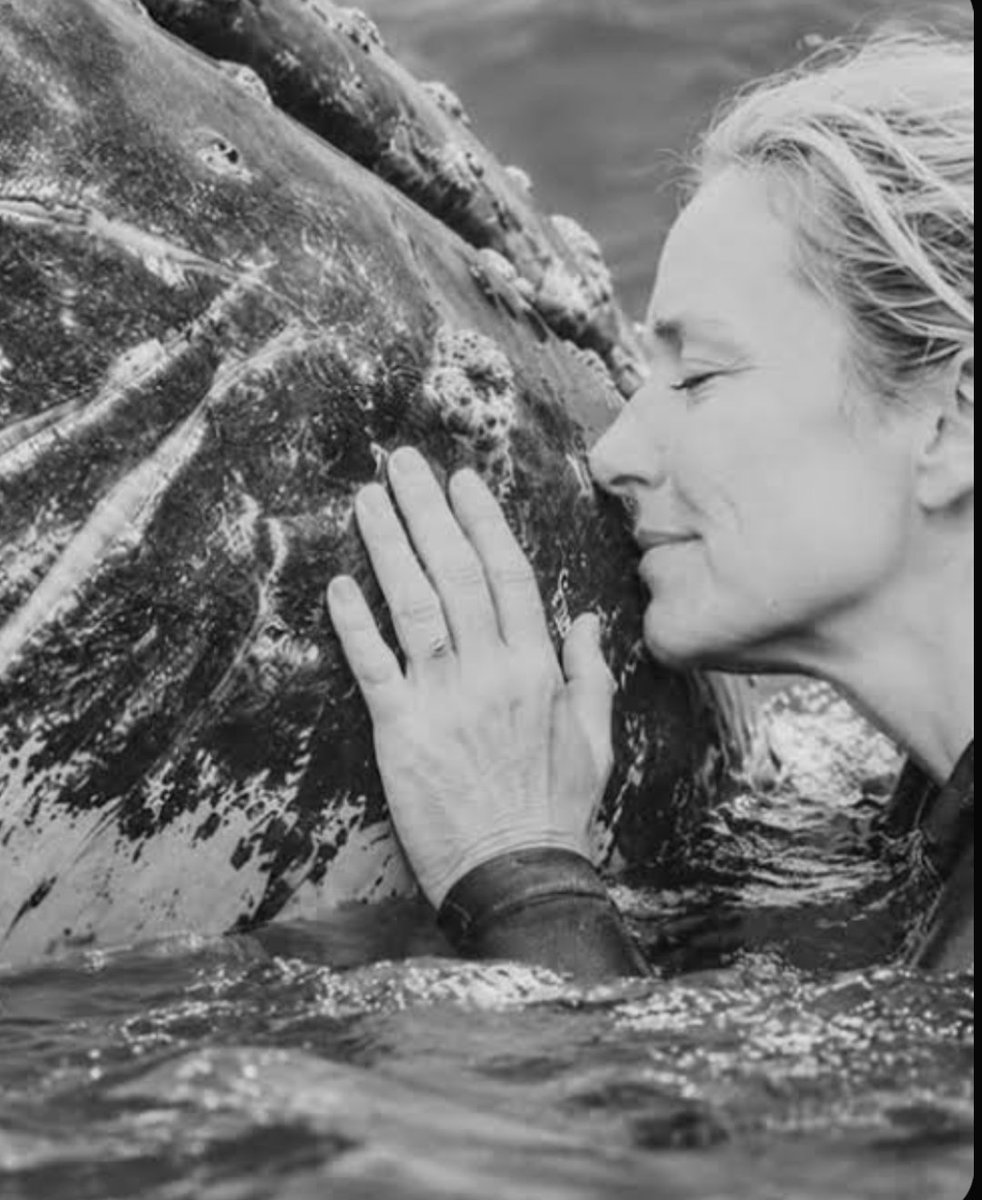
Marine biologist Nan Hauser alongside a humpback whale, referencing her famous 2017 encounter in the Cook Islands where a humpback whale nudged and shielded her near a lurking tiger shark...
She looked past the whale and saw the real threat. In that moment, everything made sense. A massive tiger shark was circling in the water just a few yards away.
Moments earlier, marine biologist Nan Hauser had been diving alone in the clear waters of the Cook Islands when a 50-ton humpback whale suddenly charged straight at her.
Having spent decades studying ocean life, she was completely comfortable around whales. Yet nothing had prepared her for this.
The giant animal did not act playful or gentle.
Instead, it pushed her forcefully through the water with its head and massive body.
When she tried to swim away, the whale blocked her path. It tucked her closely under its side and used its enormous pectoral fin to lift her completely out of the ocean.
Nan was terrified.
She was convinced that a single wrong move from this powerhouse of an animal could crush her or keep her pinned underwater until she drowned.
Once she spotted the tiger shark lurking behind the giant mammal, her fear turned into awe. The whale was not trying to hurt her at all.
It was using its massive body as a living shield to protect her from a deadly predator.
For nearly ten agonizing minutes, the humpback whale refused to leave her side.
Every time the shark moved closer, the whale positioned itself directly between Nan and the danger.
It constantly nudged her toward her research boat. It lifted her out of the water whenever the shark got too close, refusing to let the ocean current pull her away.
Finally, Nan reached her boat and scrambled safely onto the deck.
The whale lingered near the surface for a few moments, making sure she was completely out of harm's way.
Then, it silently disappeared into the deep blue.
Safe on the boat, Nan was shaking from head to toe.
Overwhelmed by emotion and gratitude, she looked out at the water where the giant had vanished and cried out, "I love you!"
That could have been the end of an unforgettable story, yet the ocean had one more surprise waiting.
Almost exactly one year later, a local fisherman called Nan to tell her that a group of whales had entered the harbor.
Nan quickly jumped on a boat and headed out to see them.
As soon as she arrived, one particular whale broke away from the rest. It ignored all the other boats and people, swimming straight up to her side.
It looked directly into her eyes.
Nan immediately recognized the distinct scars on its head.
It was the very same hero from the year before. Without hesitation, Nan slipped back into the water.
The 50-ton whale swam right up to her and gently extended its giant pectoral fin so she could rest against it and wrap her arms around it.
For several minutes, the massive creature nuzzled her over and over.
It acted just like a giant, affectionate dog that had finally reunited with its favorite person.
Nan sobbed in the water, completely overcome by the gentleness of the giant beast.
Speaking about the reunion later, Nan said, "I felt love. Pure love. I still miss him."
This incredible encounter was caught on camera and documented by a respected scientist.
While researchers know that humpback whales sometimes protect seals and other marine animals from predators, seeing one deliberately save a human life and then return a year later to say hello remains one of the most powerful moments ever recorded between our two species.
Stories like this remind us that we are never truly alone in this vast world.
There is a quiet, sacred intelligence woven into all of creation, connecting every living soul in ways our minds cannot fully measure.
Sometimes, grace arrives in the most unexpected forms to watch over us and remind us that love is the ultimate language of the universe.
At pre-poll yesterday. ON volunteer shoved a HTV into the hands of the bloke in front of me. His loud response "F*ck off you racist c*nt". ON took the HTV and tried to give it to me. My response "no thanks. I agree with him".
#auspol
Murdoch wants to get rid of Chalmers.
Chalmers should be Leader and is the brightest light in the Labor Party.
The Murdoch Media doesn’t pay their fair share of tax.
Neither does a lot of big American Companies.
Murdoch backed Trump and helped make the mess the world is in.